

Epsilon Carbon Integrates Five Electric Trucks Into Its Logistics Operations
- By MT Bureau
- September 05, 2024
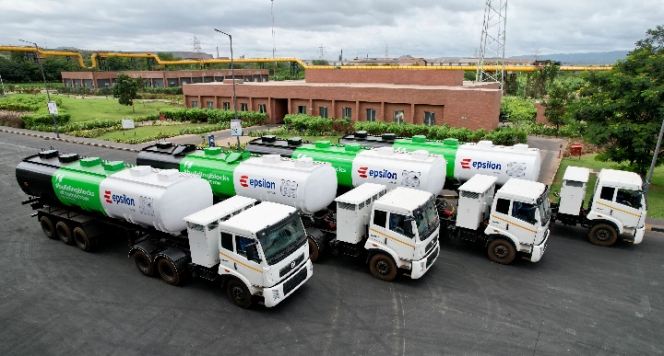
Epsilon Carbon has integrated a fleet of five electric trucks into its logistics operations. This initiative is in line with its support towards India's ambitious goal of achieving Net Zero emissions by 2070 and makes it the first Indian company in the sector to implement electric trucks for its raw material-coal tar logistics.
The electric vehicle (EV) market in India is poised for explosive growth, with a compound annual growth rate (CAGR) of approximately 66 percent, putting the industry's valuation at USD 200 billion by 2030. Last year, Epsilon Carbon made its debut with a single electric vehicle, transporting over 29,000 MT of coal tar, or 16 percent of its annual major raw material requirement, while reducing CO2 emissions by 25.4 metric tonnes. The company projects that the addition of new electric trucks will result in a 127 metric tonnes of CO2 emissions reduction.
With a 258-kWh battery capacity and 185 km of range, all five of the vehicles are heavy-duty models that will facilitate an easy transition to electric logistics. The incorporation of electric trucks is in line with Epsilon Carbon's overarching sustainability objectives, which also include lowering its operational carbon footprint, implementing greener technology throughout the value chain and supporting India's more ambitious climate action targets.
Vikram Handa, Managing Director, Epsilon Carbon, said, “India’s road logistics industry plays a vital role in the overall economy, handling 70 percent of domestic freight. As responsible leaders in the chemical industry, we recognise the importance of integrating sustainability considerations through electric trucks, which shows our proactive commitment to minimising our environmental impact. This initiative also showcases our support towards India's ambitious goal of achieving Net Zero emissions by 2070. As our fully integrated carbon black and specialty carbon facility in Bellary, Karnataka thus stands as a testament to this commitment, showcasing how sustainable practices can be seamlessly woven into large-scale industrial operations, we plan to executive the initiative from this plant."
- Honda Cars India
- HCIL
- Adani TotalEnergies E-mobility
- ATEL
- Reliance bp Mobility
- Jio-bp
- Tata Power
- GO EC
- ElectreeFi
- Honda Alpha
- Kunal Behl
- Sarthak Behuria
- Sanjay Pandita
- P.G Ramnath
- Sumit Ahuja
Honda Cars India Ropes In Partners To Build EV Charging Network Ahead Of ALPHA Launch
- By MT Bureau
- November 27, 2026
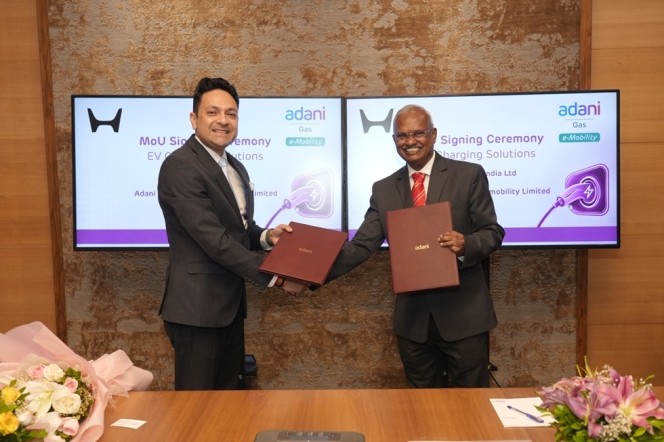
Honda Cars India (HCIL) has entered into partnerships with charging infrastructure operators Adani TotalEnergies E-mobility (ATEL), Reliance bp Mobility (Jio-bp), Tata Power and GO EC, alongside e-Mobility Service Provider ElectreeFi, to establish an EV charging network across India ahead of the launch of its SUV, the Honda ALPHA, on 2 December 2026.
By linking charging stations across cities, highways, and destinations with the Honda Connect platform, the collaboration allows drivers to locate stations, check charger availability, initiate charging sessions and process payments through a platform. ElectreeFi serves as the technology partner enabling the integration of charging networks nationwide.
Kunal Behl, Vice-President, Marketing and Sales, Honda Cars India, said, “As we prepare to embark on our electric mobility journey in India with all new Electric SUV Honda ALPHA, our focus extends beyond introducing an electric vehicle to creating a comprehensive and one of India’s largest EV charging ecosystem that inspires customer confidence. We thank all our partners Adani Total, Jio-BP, Tata Power, GO EC and ElectreeFi in this shared endeavour of bringing together complementary strengths in charging infrastructure and technology, enabling us to deliver a seamless, convenient and reassuring EV ownership experience to our customers.”
Sarthak Behuria, Chairman, Jio-bp, said, “The transition to electric mobility globally hinges on building trust at scale. Our partnership with Honda Cars India reflects this shared commitment to accelerating the adoption of electric vehicles through the availability of accessible, reliable charging infrastructure. This partnership will do more than expanding charging access, it will help build the confidence needed to drive electric mobility adoption. By working together across the mobility ecosystem, we can accelerate India's EV with a more future-ready mobility landscape.”
Sanjay Pandita, Executive Director and Chief Executive Officer, Adani Total Gas, said, "A robust, interoperable charging infrastructure is the cornerstone of accelerating India’s e-mobility transition. Our partnership with Honda Cars India reinforces ATEL’s commitment to building an accessible, high-reliability green energy corridor for EV users. By integrating our extensive network of charge points with Honda’s connected ecosystem, we are effectively eliminating range anxiety and empowering EV drivers with confidence across both city commutes and long-distance highway travel."
P.G Ramnath, Co-Founder and CEO, GO EC Autotech, said, “Reliable charging infrastructure is the backbone of electric mobility, and at GO EC, we are proud to be building an extensive & strategically distributed network that serves as a trusted lifeline for EV users across India, particularly on their long-distance journeys. Our association with Honda represents a meaningful convergence of Indian infrastructure innovation and Japanese automotive excellence. We are proud to be part of this journey and remain committed to powering India’s electric mobility future with reliability, confidence, and scale.”
Sumit Ahuja, CEO, ElectreeFi, said, “We are excited and honoured to partner Honda Cars India as they mark their entry into the Electric Vehicle Ecosystem in India. As an established EV Ecosystem Technology Provider for OEMs, we believe Honda users will have one of the largest Indian Charging Ecosystem available to them through Honda Connect App thus eliminating range anxiety and helping accelerate clean mobility adoption across India.”
- ELILY Power Co
- Suzuki Motor Corporation
- Japan Ministry of Economy Trade and Industry
- Economic Security Promotion Act
ELIIY Power, Suzuki Receive Japanese Government Certification For Lithium-Ion Battery Production Plan
- By MT Bureau
- November 27, 2026
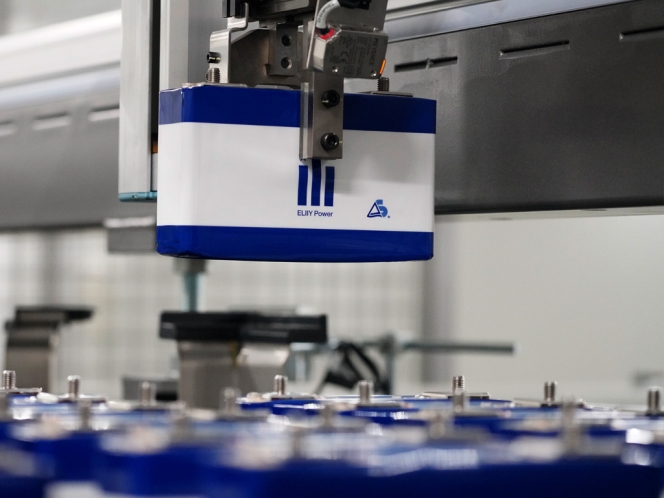
ELIIY Power Co, and Suzuki Motor Corporation have received certification from Japan's Ministry of Economy, Trade and Industry (METI) for their joint ‘Plan for Securing the Supply of Storage Batteries’ under the Economic Security Promotion Act.
The plan covers the development and mass production of cells and modules for lithium-ion batteries designed for compatibility across storage systems and applications, building on a relationship initiated by Suzuki's investment in 2012 and expanded through an investment and alliance agreement in November 2023.
Combining ELIIY Power's expertise in lithium iron-phosphate (LFP) chemistry with Suzuki's vehicle engineering and production capabilities, the batteries are engineered for charging and discharging cycles in storage alongside energy density for vehicles.
The partners will establish a manufacturing facility in Kosai City, Shizuoka Prefecture, with production scheduled to commence in October 2029 and phased deployment across residential, commercial, industrial and sectors beginning from FY2030.
Designed from the outset for repurposing in storage installations after serving in vehicles, the battery architecture aims to establish lifecycle utilisation and reduce ownership costs for battery vehicles (BEVs). Through this manufacturing base, Suzuki and ELIIY Power seek to strengthen supply chain resilience in Japan and advance the adoption of storage systems and BEVs.
Indofast Energy Crosses 100 Million Battery Swaps Across India
- By MT Bureau
- November 26, 2026

Indofast Energy, the joint venture between Sun Mobility and Indian Oil Corporation, has completed 100 million battery swaps across its network of over 2,200 stations in 24 cities in India.
The company currently supports around 163,000 electric vehicles across more than 32 partnerships with vehicle manufacturers. The network has powered 2.97 billion kilometres of travel with zero fire incidents and saved 13,277 metric tonnes of carbon dioxide emissions, reducing running costs for riders by 40 percent compared with petrol vehicles.
The milestone arrives alongside growth in India's two-wheeler and three-wheeler segments, where two-wheeler sales rose 22 percent to 1.40 million units in FY2026 and three-wheeler sales surpassed 830,000 units to account for 61 percent of all three-wheelers sold.
Indofast’s network serves two-wheelers, three-wheelers, e-loaders, and rickshaws, operating charging and inspection protocols while promoting retrofitting solutions that allow owners to convert petrol two-wheelers to electric power.
Backed by infrastructure partnerships with IndianOil, Indian Railways and Metro corporations, the company targets expanding its footprint more than fourfold by 2030 to over 10,000 swap stations across more than 50 cities, including Tier-2 and Tier-3 locations, to serve over one million users.
Kamaldeep Singh, CEO, Indofast Energy, said, "Crossing 100 million swaps shows that battery swapping works at scale for India's riders, and that the shift to clean mobility can be both affordable and practical. Our next phase will be driven by a sharper focus on the customer: stations where riders need them, batteries that are always ready, and a service that is simple to use and pay for. As we scale to more than 10,000 stations across 50+ cities by 2030, our goal is to make EVs the more affordable, accessible and convenient choice for every rider”.
PepsiCo India Doubles Electrified Fleet And Expands Operations To Three Plants
- By MT Bureau
- November 21, 2026
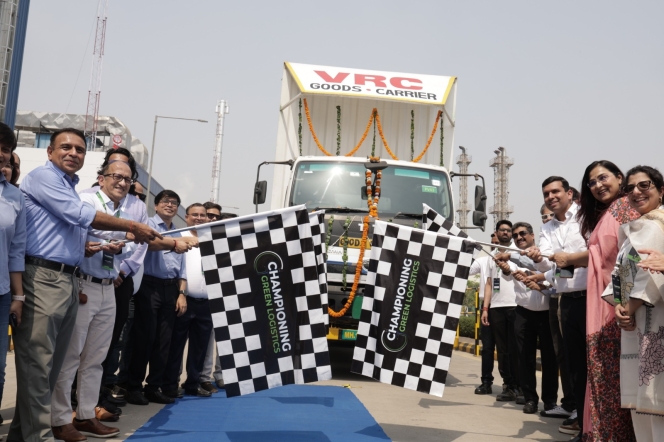
PepsiCo India has nearly doubled its fleet of 32-feet electric trucks within 6-months of launching operations in March 2026 at its Kosi plant. The initiative now operates across three plant locations – Kosi in Uttar Pradesh, Guwahati in Assam and Pune in Maharashtra – raising the distance covered to approximately 900,000 kilometres annually from an estimate of 480,000 kilometres.
The company has also electrified more than 950 distributor-linked three- and four-wheelers across markets under its Partnership of Progress model with technology providers, transport partners and distributors. Alongside logistics electrification, biomass accounts for 97 percent of PepsiCo India's fuel mix as part of its PepsiCo Positive (pep+) agenda.
Rinkesh Satija, Vice-President – Supply Chain Operations, India & South Asia, PepsiCo India, said, “At PepsiCo India, sustainability is embedded in how we operate and grow. Our efforts to electrify freight are part of a larger commitment to building a cleaner, more efficient and future-ready supply chain. We recognise that this transition requires more than just adopting new technologies; it calls for strong partnerships and collaboration across the value chain. Through our Partnership of Progress approach, we are bringing together technology providers, logistics partners, distributors and other stakeholders to explore practical solutions, address on-ground challenges and make greener mobility more viable. We believe that collective action and shared learnings are essential to driving lasting change, not just for our business but for the wider industry.”
Comments (0)
ADD COMMENT