

HS HYOSUNG ENERGY SOLUTION KOREA, Ulsan Sign MOU For Next-Gen Battery Material Plant
- By MT Bureau
- September 14, 2026
HS HYOSUNG ENERGY SOLUTION KOREA Co., Ltd. is set to formalise a partnership with Ulsan Metropolitan City through a memorandum of understanding (MoU) aimed at building a silicon anode material production facility. The signing event is scheduled for the morning of 14 September at Ulsan City Hall, where CEO Ki-soo Lee and Mayor Sang-wook Kim will be present. The agreement marks a significant step in the company’s expansion into next-generation battery materials.
The company intends to channel a total of KRW 1.2 trillion into the Ulsan-Mipo National Industrial Complex, with the goal of creating a mass production infrastructure for silicon anode materials by 2030. This investment will unfold in three distinct phases, beginning with an initial KRW 300 billion allocation to construct the MPK-1 plant. That facility is expected to achieve an annual capacity of 5,000 tonnes by the first quarter of 2028.
Silicon anode materials are gaining traction as a vital component for next-generation batteries, offering superior energy density compared to traditional graphite anodes and supporting faster charging. These benefits are anticipated to boost electric vehicle driving ranges while cutting down charging durations. The company also plans to give hiring preference to local residents during both construction and operational phases, thereby aiding job creation and stimulating the regional economy.
Ulsan Metropolitan City has committed to close cooperation with the firm to facilitate a smooth investment process and ensure the project takes root locally. The city will extend administrative support, including help with permits and approvals. HS HYOSUNG ENERGY SOLUTION KOREA operates as a joint venture between HS HYOSUNG Group and Belgium’s Umicore, focused on silicon anode materials. It stands as the first new venture launched after HS HYOSUNG Group’s separation from Hyosung Group and is viewed as a promising growth driver in next-generation battery materials.
Ki-soo Lee, CEO, HS HYOSUNG ENERGY SOLUTION KOREA, said, “Through this investment, we plan to foster the next-generation battery materials industry as a strategic national industry and contribute to strengthening the global supply chain competitiveness of key sectors, including semiconductors, shipbuilding and defence. In particular, as Ulsan, the birthplace of Hyosung Group, has been selected as our first investment location, we will establish ourselves as a company that grows together with the local community by reorganising our advanced production base and creating jobs.”
Sang-wook Kim, Mayor of Ulsan, said, “This agreement will serve as an important opportunity for Ulsan to further strengthen its competitiveness in key next-generation battery materials and take the lead in the global supply chain for the secondary battery industry. We will provide full administrative support to develop Ulsan into a hub for the future secondary battery materials industry and ensure that the investment leads to quality jobs and the shared growth of related industries in the region.”
- Ashok Leyland
- Indian Institute of Technology Madras
- IIT Madras
- Centre of Excellence for Zero Emission Trucking
- CoEZET
- GET ZET
- Boss Electric Truck
- Shenu Agarwal
- Manu Santhanam
Ashok Leyland, IIT Madras Partner For 40-City Electric Truck Demonstration Drive
- By MT Bureau
- September 29, 2026
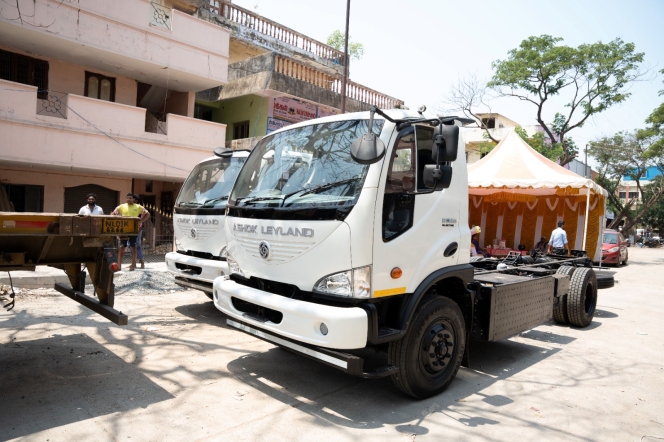
Ashok Leyland, one of the leading commercial vehicle manufacturers, has launched a nationwide initiative titled ‘GET ZET - Electric Truck Awareness to Acceptance’ in partnership with the Centre of Excellence for Zero Emission Trucking (CoEZET) at IIT Madras. The initiative will run from September 2026 to February 2027, the campaign will cover 40 cities across India to promote the commercial deployment of battery-electric trucks.
The roadshow will traverse logistics hubs and industrial corridors across 15 states, including Tamil Nadu, Kerala, Karnataka, Andhra Pradesh, Telangana, Chhattisgarh, Madhya Pradesh, Gujarat, Maharashtra, Rajasthan, Haryana, Uttar Pradesh, Delhi, Punjab and Himachal Pradesh. The events will convene fleet owners, logistics operators, financiers, freight providers, infrastructure developers and policymakers.
As part of the campaign, Ashok Leyland and CoEZET will showcase the BOSS Electric truck alongside charging infrastructure, offering trial rides and technical demonstrations to evaluate real-world vehicle performance and operational requirements.
Shenu Agarwal, MD & CEO, Ashok Leyland, said, “The transition to zero-emission mobility will be defined not just by the maturity of technology, but by the confidence of the users to adopt it at scale. At Ashok Leyland, we believe the best way to build that confidence is by taking electric trucking closer to the people who will use and enable it. Through ‘GET ZET - Electric Truck Awareness to Acceptance’, in collaboration with Centre of Excellence for Zero Emission Trucking (CoEZET), IIT Madras, we are bringing the electric truck technology to 40 cities, creating opportunities for customers and stakeholders to experience its real-world potential first-hand. This is a step towards making electric mobility more accessible, practical and ready for the future of India’s freight ecosystem.”
Manu Santhanam, Dean (ICSR) at the Indian Institute of Technology, Madras, said, “CoEZET, IIT Madras has been working towards the adoption of zero-emission trucks since 2022, with a vision of achieving 100 percent ZET penetration by Viksit Bharat 2047. Our work spans policy, technology, skilling and outreach. The current Outreach Acceptance Initiative builds on our earlier awareness activities across hundreds of locations and focuses on enabling stakeholders to experience, evaluate and build confidence in battery electric trucks, as we move towards the next phase of adoption. Through in-depth interactions and hands-on trial rides, we aim to demonstrate the quieter, smoother and more comfortable experience of electric trucks, while helping address driver concerns and build greater acceptance among the trucking community. We are glad to collaborate with industry partners such as Ashok Leyland in this effort and look forward to engaging with a wider range of stakeholders to strengthen acceptance and enable the wider adoption of zero-emission trucks in India.”
The joint programme forms part of broader efforts to support zero-emission freight transportation across key national transport corridors.
Ultraviolette Shockwave E-Motorcycle To Be Based On 100V Architecture, Launch In Q1 2027
- By MT Bureau
- September 29, 2026
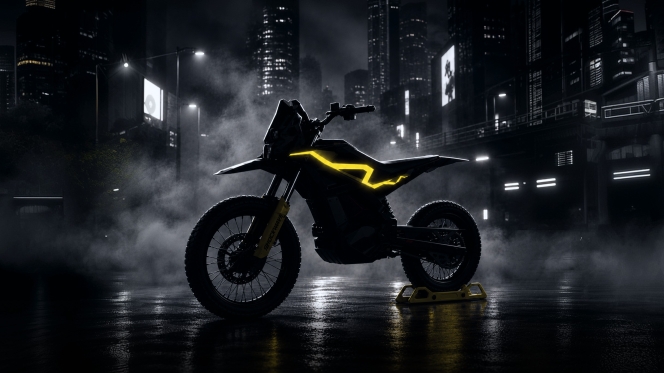
Bengaluru-based electric vehicle company Ultraviolette Automotive has confirmed that its upcoming Shockwave e-motorcycle will be built on the company's 100V architecture, with commercial launch scheduled for Q1 of 2027. The high-voltage platform is engineered to improve power delivery, thermal efficiency and charging speeds for the motorcycle.
The Shockwave, categorised under the FUNDURO platform, is designed as a lightweight model inspired by two-stroke motorcycles. Ultraviolette confirmed that the vehicle will be offered in both single-seat and dual-seat configurations. To prepare for the Q1 2027 rollout, the company has begun installing a dedicated production line within its existing manufacturing facility in Bengaluru.
The decision to utilise the 100V architecture follows Ultraviolette’s earlier announcement that the same powertrain technology would be deployed in its Tesseract model. While the Shockwave and Tesseract target different riding applications, both models have been developed in parallel over the past year as part of the manufacturer's powertrain strategy.
Narayan Subramaniam, Co-Founder and CEO, Ultraviolette Automotive, said, “From the outset, we envisioned the Shockwave as a motorcycle that would bring back the pure enjoyment of riding. Bringing our 100V architecture to the Shockwave is an important step in realising that vision. When it launches in Q1 2027, we are certain it will be an exceptionally engaging motorcycle to ride. The Shockwave and Tesseract have been in parallel development over the past year and work is already underway to set up the Shockwave production line at our existing facility.”
Switch Mobility Secures Order For 840 E-Buses From Antony Road Transport Solutions
- By MT Bureau
- September 28, 2026
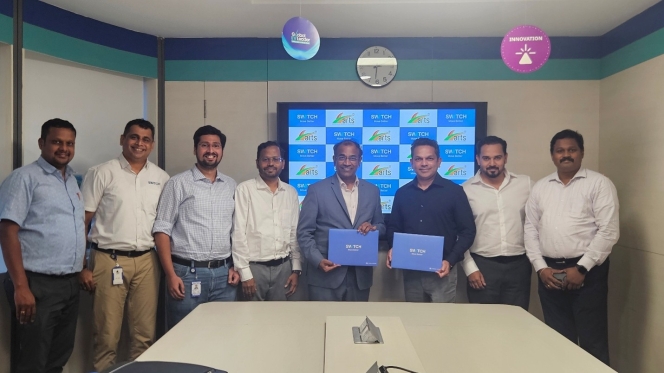
Chennai-headquartered Switch Mobility, the electric vehicle arm of Hinduja Group, has secured an order to supply 840 electric buses to Antony Road Transport Solutions under Phase I of the Government of India’s PM E-Drive scheme.
Under the agreement, Switch Mobility will supply 420 units of 9-metre and 420 units of 12-metre air-conditioned electric buses. Antony Road Transport Solutions was selected as the operator to deploy the fleet with the Delhi Transport Corporation (DTC) and the Transport Department, Delhi, for public transit operations across the National Capital Region.
Formal agreements for vehicle deployment have been executed between Switch Mobility and Antony Road Transport Solutions. The e-buses are constructed on Switch's EiV platform, which incorporates electric powertrains, modular battery layouts, regenerative braking systems and dual-gun fast-charging capabilities. Fleet monitoring and diagnostic functions are managed through the Switch iON software system. Safety and passenger features include low-floor entry, fire detection and suppression equipment, and multi-level battery protection measures.
Ganesh Mani, CEO, Switch Mobility, said, “We are pleased to partner with Antony Road Transport Solutions for deployment of 840 electric buses across Delhi by Delhi Transport Corporation & Transport Department, Delhi. This order is a strong testament to the growing confidence in electric mobility solutions for large-scale public transportation. With a mix of 9-metre and 12-metre electric buses, we are enabling operators to address diverse passenger mobility requirements while supporting the transition towards cleaner and more sustainable transportation. At Switch Mobility, we remain committed to working closely with our partners to deliver reliable, efficient and commercially viable electric mobility solutions that create long-term value for operators and communities.”
Jimmy John, Director, Antony Road Transport Solutions, said, “Our long-term relationship with Ashok Leyland and the trust we have in the Hinduja Group have led us to place this order. We believe this partnership will go a long way towards supporting the NCR’s sustainable mobility journey.”
Charge_iN by Mahindra Expands Public EV Charging Network To 50 Locations Across India
- By MT Bureau
- September 24, 2026
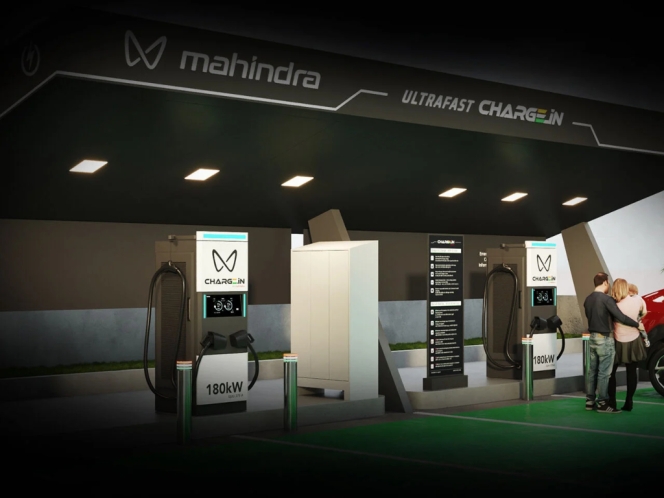
Electric vehicle charging network Charge_iN by Mahindra has expanded its public charging infrastructure to 50 locations across India, reaching 200 operational charging points. The company commissioned its latest installation at the HP Auto Care Centre in Sajgaon along the Mumbai-Pune Expressway.
The Sajgaon installation represents the first operational station resulting from a collaboration established in March 2026 between Mahindra and Hindustan Petroleum Corporation (HPCL) to deploy charging infrastructure across HPCL retail outlets in India. Additional sites under the agreement are currently under construction across highway routes. Mahindra plans to expand the Charge_iN network to 250 stations comprising approximately 1,000 charging points by December 2027.
The network utilises 180 kW dual-gun chargers designed to supply power to electric vehicles, including Mahindra models such as the XEV 9e, BE 6 Sporteq and XEV 9S. The stations are situated along highway corridors alongside commercial amenities and dining facilities.
The Charge_iN system operates as an open network accessible to electric vehicle owners of all vehicle brands through the Charge_iN by Mahindra application, the Me4U application, and third-party aggregator platforms, with integration into the HP eCharge application scheduled for release. Mahindra electric vehicle users can access approximately 35,000 public charging points, including HP eCharge sites, across charge point operators via the Me4U platform.
Comments (0)
ADD COMMENT