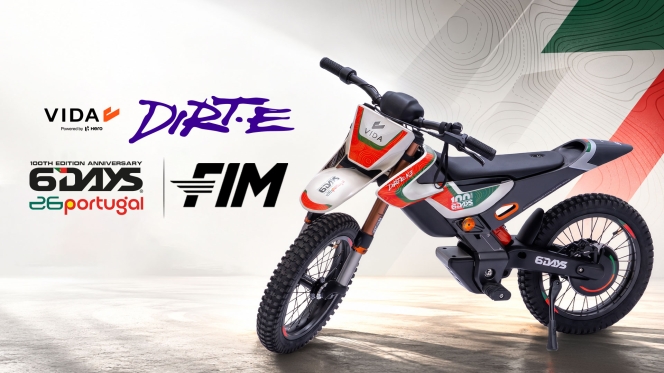
VIDA, the electric mobility brand powered by Hero MotoCorp, has unveiled the DIRT.E K3 6DAYS Limited Edition at the 100th FIM International Six Days Enduro in Grândola, Portugal.
The release marks the first collaboration between an Indian electric vehicle manufacturer and the event as an official partner of the Fédération Internationale de Motocyclisme.
The model is limited to 100 units, with each unit assigned a number corresponding to an edition of the event. The electric two-wheeler features Portuguese flag-inspired green and red livery, race competition typography and official 6DAYS branding.
First introduced in December 2025, the DIRT.E K3 is an electric off-road vehicle designed for youth riders. It incorporates a modular frame that adjusts without tools at three points, allowing handlebar height, footrest positioning, and seat height to be adjusted as the rider grows.
The DIRT.E K3 comes with a removable 360 Wh lithium-ion battery with a three-hour full charge cycle, three software-managed speed modes reaching up to 24 kmph via thumb throttle, a magnetic power cut-off kill switch and a 60 mm rear disc brake system.
Kausalya Nandakumar, CBO of the Emerging Mobility Business Unit, Hero MotoCorp, said, "Being part of the historic 100th edition of FIM ISDE is a proud milestone for VIDA and an opportunity to showcase how electric innovation can shape the future of off-road riding. The VIDA DIRT.E K3 brings together the spirit of motorsport with forward-looking technology, building on the recognition it received at CES 2026 and the Red Dot Design Award. With our Portuguese- inspired 6DAYS® Limited Edition, we are celebrating the legacy of this iconic event while bringing a fresh perspective to electric off-road mobility. At VIDA, we believe innovation should go hand in hand with a safe, engaging, and empowering riding experience for young riders."
Fabio Muner, Marketing and Digital Director, FIM, said, "On behalf of the FIM, I would like to sincerely thank Hero MotoCorp for its active participation in the 100th Edition of the FIM 6DAYS®. Thanks to the DIRT.E K3 6DAYS® Limited Edition bike, young riders have the chance to experience first-hand the beauty of motorcycling and enduro, an opportunity that is essential for building the future of our sport. The fact that these vehicles will be available on the market is a further great achievement for the FIM 6DAYS®. It is another example of how this historic FIM World Championship continues to widen its borders year after year, opening its doors to new generations and new ways of riding. Thank you, VIDA for sharing this vision with us."



Comments (0)
ADD COMMENT