

Zypp Electric Clocks 20.5 Million Green Deliveries
- By MT Bureau
- December 04, 2024
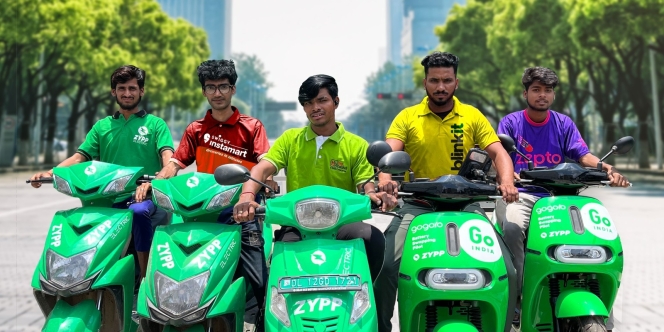
Zypp Electric, one of India’s leading electric vehicle-as-a-service platforms, has achieved a new milestone of completing 20.5 million zero-emission deliveries.
The company stated that the quick commerce market in India valued at around USD 60 billion to USD 70 billion is seeing substantial growth. It is expected to further grow by USD 25 billion and USD 55 billion by 2030. Zypp Electric is enabling last-mile delivery partners to embrace electric vehicles enabling higher earnings for them and also help reduce carbon emissions.
Zypp Electric claims that its delivery partners accounted for almost 15-20 percent of all quick commerce orders delivered in the Delhi-NCR region.
It has inked strategic partnerships with companies such as Zepto, Blinkit, Big Basket Now, and Instamart. Its fleet of EVs have helped reduce 2.5 million kilograms of carbon emissions.
The company claims during the recent festive season, top earners of Zypp Delivery Pilots have earned nearly INR 99,949 per month.
Akash Gupta, Co-Founder & CEO, Zypp Electric, said, “I remember when we had our first meeting with all our amazing quick commerce partners Zepto, Blinkit, BB Now and Swiggy Instamart, we were sure that this sector will revolutionise the delivery market. This achievement is not just a number; it signifies our relentless pursuit of sustainability in quick commerce. At Zypp Electric, we believe that quick and sustainable logistics is the future of e-commerce. Our partnerships have shown that we can break the myth that speed and sustainability are mutually exclusive. As we move forward, we are excited to lead the charge in making electric deliveries the norm in India, and I would personally cherish delivering the 21st million delivery landmark myself with my leadership team.”
Youdha Enters Commercial Cargo Sector With Launch Of ePod G Electric Three-Wheeler
- By MT Bureau
- October 24, 2026
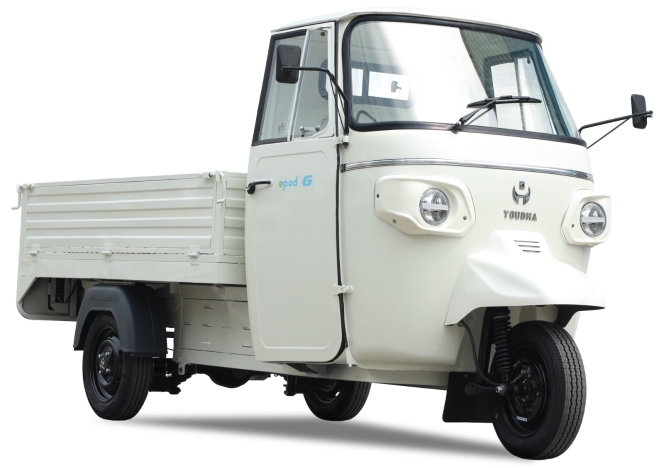
Youdha has expanded its vehicle lineup into the commercial cargo segment with the introduction of the ePod G electric three-wheeler.
Designed for last-mile logistics, e-commerce deliveries and retail distribution, the electric three-wheeler expands Youdha's ePod platform from passenger transport into goods mobility.
The ePod G features an 11.8 kWh lithium iron phosphate battery and a 6 kW three-phase permanent magnet synchronous motor. The powertrain delivers a claimed range of 170 to 180 km under standard test conditions, a payload capacity of 545 kg and a gross vehicle weight of 1,000 kg. The e3W has a top speed below 50 kmph, 22 percent gradeability and a charging duration of four to five hours.
Ayush Lohia, CEO, Youdha, said, "Our ambition is to build ePod into a trusted name across passenger and goods transportation. The positive response to our passenger vehicle gives us a strong foundation to extend the range into cargo. With ePod G, we aim to address the needs of businesses and individual operators involved in last-mile deliveries while continuing to strengthen Youdha’s product portfolio and market presence."
The ePod G will be available in half-deck and closed box configurations to accommodate varied delivery requirements. Built on a monocoque chassis, the vehicle includes hydraulic brakes, steel rims, 120/80-R12 8PR tyres, LED headlights, and a seven-inch CAN-enabled digital LED instrument cluster. The launch enables Youdha to supply individual owner-operators, commercial businesses, and delivery fleet managers across the Indian market.
Tesla Opens Reservations For New Roadster In India, Upgrades Model Y L
- By MT Bureau
- October 18, 2026
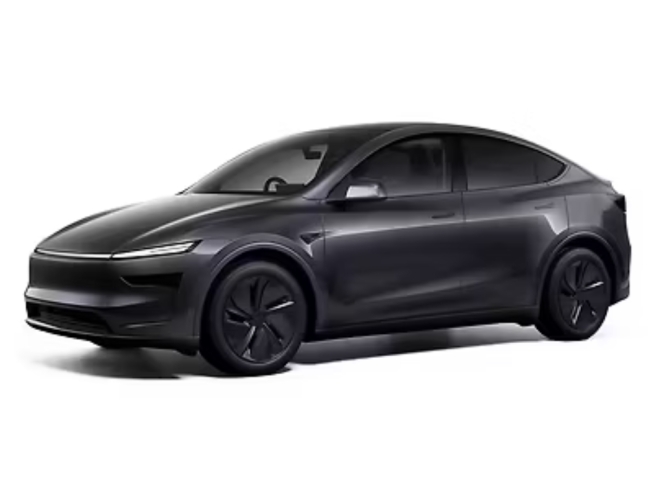
Tesla has opened online reservations for the new Roadster in select global markets, including India, with production scheduled to begin in 2028 for left-hand drive configurations. Alongside the reservation announcement, Tesla India has also introduced a complimentary Acceleration Boost for its Model Y L six-seater SUV.
The new Roadster design incorporates aerospace-inspired elements and SpaceX components. In the domestic product lineup, the Model Y L SUV receives an Acceleration Boost software update, reducing its zero-to-100 km/h acceleration time to 4.5 seconds while offering an operating range of up to 681 kilometres under WLTP testing standards.
Tesla currently offers the Model Y and Model Y L in India. The entry-level Model Y is priced at INR 5.08 million, while the Model Y L starts at INR 6.19 million. The EVs carry safety evaluations from global testing bodies, including NHTSA, Euro NCAP, ANCAP and C-IASI.
To support vehicle ownership, Tesla's domestic charging infrastructure comprises 20 Supercharger stalls and 28 Destination Charger stalls, with three additional sites planned by the end of 2026.
Home charging setup has been established for owners across 23 Indian states. The manufacturer has also introduced its Refer and Earn program in India, offering purchase discounts for buyers and referral credits for existing owners.
- VIDA
- Hero MotoCorp
- DIRT.E K3 6DAYS
- FIM International
- Fédération Internationale de Motocyclisme
- Kausalya Nandakumar
- Fabio Muner
VIDA Unveils DIRT.E K3 6DAYS Limited Edition At FIM International Six Days Enduro
- By MT Bureau
- October 16, 2026
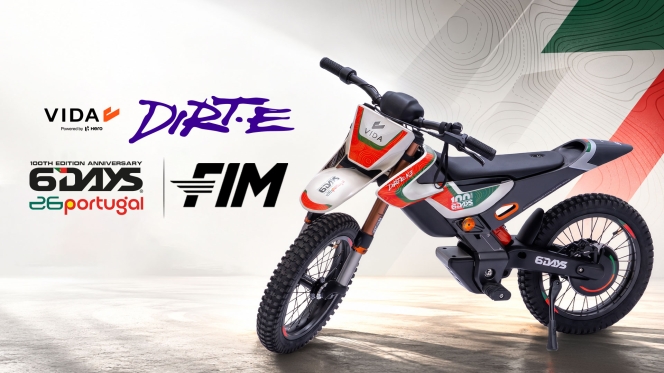
VIDA, the electric mobility brand powered by Hero MotoCorp, has unveiled the DIRT.E K3 6DAYS Limited Edition at the 100th FIM International Six Days Enduro in Grândola, Portugal.
The release marks the first collaboration between an Indian electric vehicle manufacturer and the event as an official partner of the Fédération Internationale de Motocyclisme.
The model is limited to 100 units, with each unit assigned a number corresponding to an edition of the event. The electric two-wheeler features Portuguese flag-inspired green and red livery, race competition typography and official 6DAYS branding.
First introduced in December 2025, the DIRT.E K3 is an electric off-road vehicle designed for youth riders. It incorporates a modular frame that adjusts without tools at three points, allowing handlebar height, footrest positioning, and seat height to be adjusted as the rider grows.
The DIRT.E K3 comes with a removable 360 Wh lithium-ion battery with a three-hour full charge cycle, three software-managed speed modes reaching up to 24 kmph via thumb throttle, a magnetic power cut-off kill switch and a 60 mm rear disc brake system.
Kausalya Nandakumar, CBO of the Emerging Mobility Business Unit, Hero MotoCorp, said, "Being part of the historic 100th edition of FIM ISDE is a proud milestone for VIDA and an opportunity to showcase how electric innovation can shape the future of off-road riding. The VIDA DIRT.E K3 brings together the spirit of motorsport with forward-looking technology, building on the recognition it received at CES 2026 and the Red Dot Design Award. With our Portuguese- inspired 6DAYS® Limited Edition, we are celebrating the legacy of this iconic event while bringing a fresh perspective to electric off-road mobility. At VIDA, we believe innovation should go hand in hand with a safe, engaging, and empowering riding experience for young riders."
Fabio Muner, Marketing and Digital Director, FIM, said, "On behalf of the FIM, I would like to sincerely thank Hero MotoCorp for its active participation in the 100th Edition of the FIM 6DAYS®. Thanks to the DIRT.E K3 6DAYS® Limited Edition bike, young riders have the chance to experience first-hand the beauty of motorcycling and enduro, an opportunity that is essential for building the future of our sport. The fact that these vehicles will be available on the market is a further great achievement for the FIM 6DAYS®. It is another example of how this historic FIM World Championship continues to widen its borders year after year, opening its doors to new generations and new ways of riding. Thank you, VIDA for sharing this vision with us."
Epsilon CAM And C4V Sign Agreement For Cathode Material Qualification In North America
- By MT Bureau
- October 14, 2026
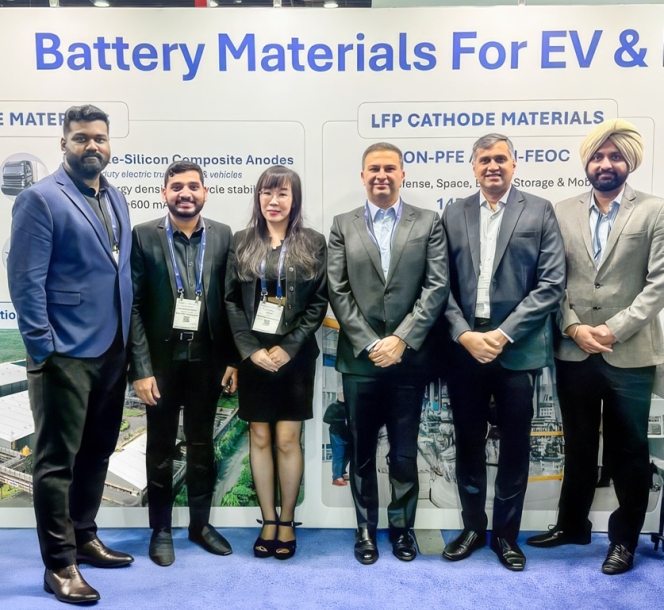
Epsilon CAM, one of the leading battery cathode active material manufacturers, and cell technology firm C4V have signed a Letter of Intent (LoI) to evaluate and qualify lithium iron phosphate and bio-mineralised lithium mixed metal phosphate cathode active materials.
The agreement establishes a framework to evaluate Epsilon CAM's cathode materials for cell-level integration across C4V's battery platforms and North American manufacturing programs, including those operated by sister company Near Prime Technologies.
As per the arrangement, Epsilon CAM will provide material samples and engineering data for testing, including electrochemical performance validation, cycle-life evaluation and process compatibility assessments. Subject to technical qualification and definitive contracts, the firms plan to explore multi-year material supply arrangements and technology integrations.
The evaluation will assess supply-chain sourcing for critical raw material inputs, including lithium, manganese and phosphorus, to align with North American content requirements.
Epsilon CAM is advancing plans for a 20,000-tonne-per-annum cathode active materials plant in India by 2028, positioning its production as a non-foreign-entity-of-concern source for global cell manufacturers.
Vikram Handa, MD, Epsilon CAM, said, "This LoI brings together complementary capabilities across cathode materials, cell technology and manufacturing. Our focus is to demonstrate material performance at the cell level and to work with C4V toward scalable, high-quality LFP and LMFP solutions that address the evolving needs of battery manufacturers and automotive customers."
Dr. Shailesh Upreti, CEO, C4V, said, "Epsilon is helping address one of the most important gaps in the U.S. battery supply chain: reliable access to scalable, ex-China phosphate cathode active materials. C4V is currently evaluating Epsilon’s materials through our Digital DNA qualification process for potential use across C4V cell platforms and U.S. manufacturing programs at Near Prime. Successful qualifications would create an important pathway connecting advanced cathode materials with C4V battery technology and domestic cell manufacturing."

Comments (0)
ADD COMMENT