

Continental to Unveil Future Automotive Company Name & Showcase New Solutions at Auto Shanghai 2025
- By MT Bureau
- April 15, 2025
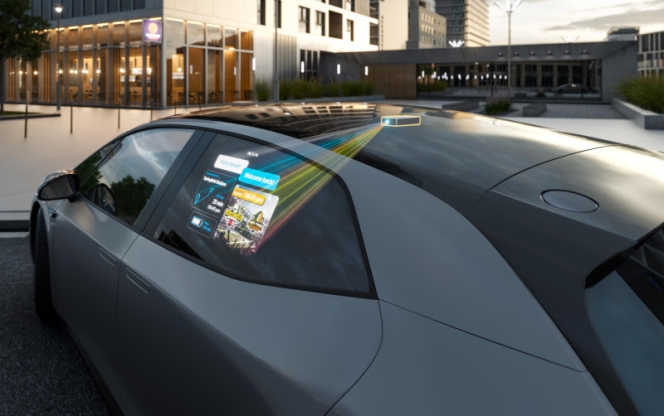
German tier 1 supplier Continental is set to unveil its latest advancements for the future of mobility on the theme ‘Advancing Mobility from Road to Cloud’ at the upcoming Auto Shanghai 2025.
The company will spotlight its cutting-edge software-defined vehicle technologies that promise to make driving safer, more exciting, autonomous, and sustainable.
A major highlight of the event is the announcement of the name for the future independent automotive company, following Continental's plan to spin off its Automotive Group Sector. This milestone will be revealed during a press conference led by Philipp von Hirschheydt, Executive Board member responsible for Automotive, scheduled for 23 April 2025.

The company will also debut several innovations at the show, including the Intelligent Driving Systems Luna and Astra, the Central Light Computer and the In2Visible Overhead Console. These technologies highlight the company’s commitment to scalable autonomous solutions, intuitive in-vehicle experiences and advanced system integration.
Enno Tang, President & CEO, Continental China, said, “Our goal is to boost innovation in China and make mobility safer, more exciting and autonomous. Auto Shanghai 2025 is the perfect platform to share our vision and collaborate with customers, partners, and consumers.”
From its powerful High-Performance Computers (HPC) and Zone Control Units (ZCU) to the intelligent Window Projection and AI-powered Night Vision Camera, Continental is building a comprehensive ecosystem that bridges the road and the cloud. The company is also pushing the boundaries of brake technology with its Future Brake System and electro-mechanical solutions that support next-gen electric vehicles.
Kinetic Communications Adds Automated Controller Manufacturing Line At Pune Facility
- By MT Bureau
- July 01, 2025
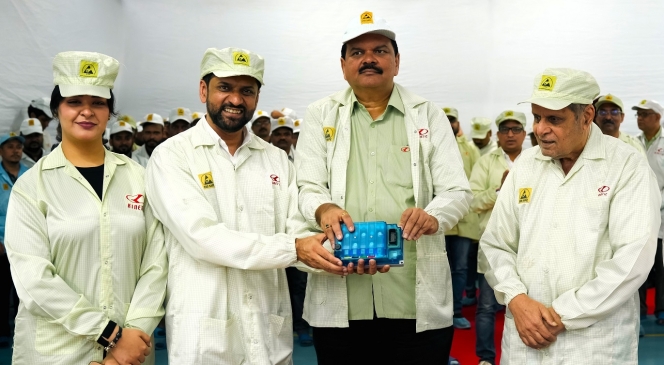
Kinetic Communications (KCL), a subsidiary of Kinetic Group, has opened an automated controller manufacturing line at its Pune facility.
The line was inaugurated by Padmashri Dr. Arun Firodia, Chairman, Kinetic Group, Deepak Shikarpur, Director, Kinetic Communication and Ajinkya Firodia, Vice-Chairman, Kinetic Group.
The set-up integrates Surface Mount Technology (SMT) and automated assembly controlled by Human Machine Interface (HMI) and Programmable Logic Controller (PLC) systems.
It will manufacture Motor Controller Units (MCUs), which manage electric vehicle battery and motor functions, including acceleration, braking and energy efficiency. It also produces Power and Driver Board Assemblies and Complete Controller Box Assemblies, capable of placing up to 40,000 components per hour.
The line has a current capacity of 300 units per shift, totaling 180,000 units annually across two shifts.
Ajinkya Firodia, said, "The new fully automated controller line marks a significant stride toward Industry 4.0-driven smart manufacturing. It’s a high-throughput, precision-engineered facility that brings intelligence, speed and scalability to our operations. Every stage is data-driven and benchmarked to global quality standards. This is more than a technological leap – it’s a statement of our commitment to innovation and operational excellence.”
Deepak Shikarpur, Director, Kinetic Communications, added, "This facility is a true reflection of Make in India at its most advanced. With its automation, precision and capability to manufacture smart, feature-rich motor controller units, it positions India on the global map for next-generation EV electronics manufacturing.”
The KCL plant uses 3D Solder Paste Inspection (SPI), Automated Optical Inspection (AOI) and In-Circuit Testing (ICT). Through-hole components are soldered using lead-free dualwave technology. Poka Yoke mechanisms and connected HMI/PLC systems reduce human error and ensure traceability. End-of-Line (EOL) testing and Pre-Dispatch Inspection (PDI) are also conducted.
Incoming Quality Control (IQC) aligns with JESD22 reliability standards, with all components undergoing performance testing and suppliers required to meet RoHS and REACH compliance. KCL aims for Zero PPM defects, increased productivity and enhanced quality.
Garaaz Raises INR 45.5 Million In Seed Round Led By GVFL
- By MT Bureau
- July 01, 2025
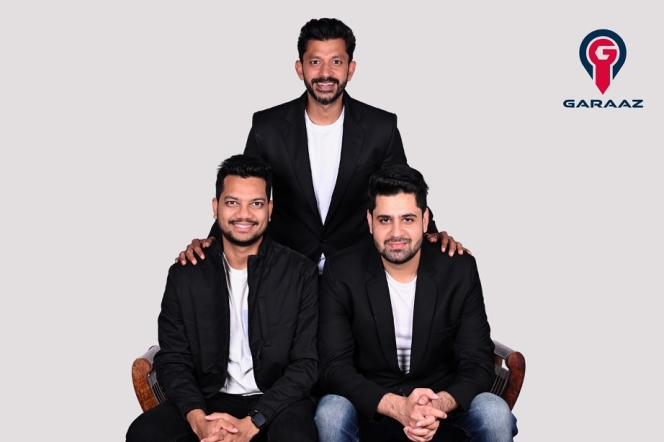
Jaipur-based automobile spare parts aggregator start-up Garaaz has raised INR 45.5 million in a seed round led by GVFL.
The start-up aims to deploy the funds to expand its operations in other states, strengthen local distribution, partnerships, on-ground teams, invest in technological innovation (R&D) and hire key talent across technology, sales, marketing and operations.
Incepted in 2019, the startup was founded by Shaleen Agarwal with an aim to bring together multi-brand garages that can seamlessly discover, compare and purchase spare parts from a catalogue of over 8 million units spanning 25 leading car brands. The start-up enables parts discovery, inventory lookup, orders & schemes, account management, orders & CBO, sales & schemes, branch management, workshop management to distributors, OEMs and resellers as well as manufacturers.
Mihir Joshi, Managing Director, GVFL, said, “India has come a long way in terms of online markets. Today, we can buy EV motorcycles on e-commerce platforms. However, the spare parts ecosystem for the auto industry is highly fragmented, with thousands of small distributors, middlemen and local suppliers leading to inefficiencies and a lack of standardisation, making it highly unreliable. Garaaz is addressing the issue by connecting key stakeholders – brands, distributors/retailers, and workshops – while fostering trust and transparency in a traditionally unorganized and complex market.”
Shaleen Agarwal, CEO & Founder, Garaaz, said, “At Garaaz, we’re not just delivering spare parts – we’re powering the heart of India’s workshop economy. Every order, every delivery, every connection is backed by a tech backbone that scales trust, transparency and efficiency across the aftermarket. Our mission is simple: make spare parts accessible, intelligent and instant – with technology so seamless, it feels invisible.”
- ZF Commercial Vehicle Control Systems India
- ZF
- Maruti Suzuki India
- Kalyani Brakes
- Bosch Chassis Systems
- Continental Brakes
- Knorr-Bremse
- Prof. Dr. Peter Laier
- Akash Passey
- P Kaniappan
- Paramjit Singh Chadha
ZF Commercial Vehicle Control Systems India Appoints Paramjit Chadha As New MD
- By MT Bureau
- July 01, 2025
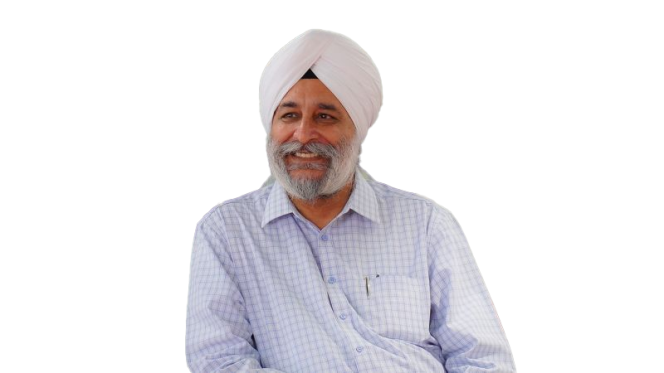
ZF Commercial Vehicle Control Systems India, a leading component supplier in the country, has appointed Paramjit Singh Chadha as its new Managing Director.
A seasoned automotive engineer, Chadha comes with over four decades of extensive experience working across roles and companies. He begun his journey with Maruti Suzuki India and went on to work with brands such as Kalyani Brakes, Bosch Chassis Systems, Continental Brakes and Knorr-Bremse.
In his last role, he led several projects on ESG, manufacturing excellence and digitalisation within the ADM Group as its President and MD. His expertise is particularly strong in safety-critical components, such as brake systems for various vehicle segments.
Prof. Dr. Peter Laier, Member of the Board, Board of Management ZF Group commented, said, “P Kaniappan’s leadership, strategic vision, and commitment have been instrumental in establishing ZF’s strong foundation and continued success in the Indian market. I am delighted to now welcome Paramjit to the ZF Group and I am confident that his rich experience, knowledge and proficiency will prove to be an invaluable asset to the company”.
Akash Passey, President, ZF Group India, noted “We are very happy to welcome Paramjit Chadha as the Managing Director of ZF CVCS India. His experience and expertise in the regional automotive ecosystem will lend positively to the growth of the CV business in the region and will bring in an exciting new chapter for the ZF Group. I also extend my heartfelt appreciation to P Kaniappan, whose remarkable legacy and unwavering dedication have laid a strong foundation for our presence in India. Thank you for your outstanding service."
Remsons Signs Strategic Technology Licensing Deal with Brazil’s AUSUS Automotive to Empower Local OEMs
- By MT Bureau
- June 27, 2025
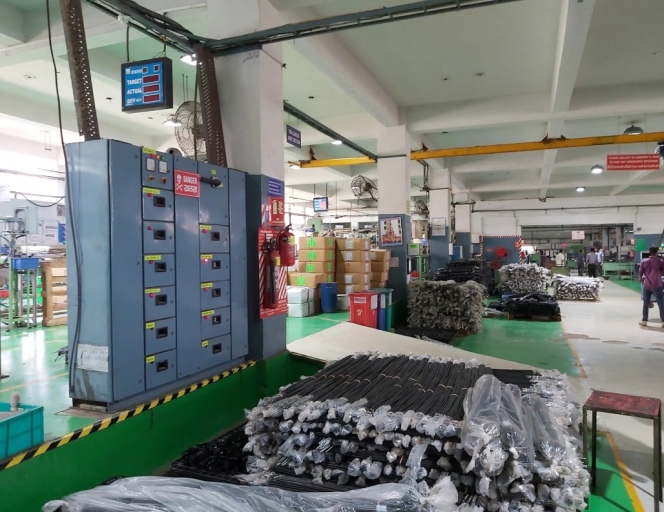
Mumbai-headquartered automotive engineering and components supplier Remsons Industries has signed a Strategic Technical License Agreement with Brazil-based AUSUS Automotive Systems do Brasil.
As per the understanding, Remsons will collaborate with ASUS Brazil to license proprietary technologies, enabling the development and manufacturing of high-quality products tailored to the local market.
The move aims to introduce advanced technologies for supporting the automotive and electronics industries in Brazil.
Rahul Kejriwal, Executive Director, Remsons, said, "We are excited to partner with ASUS Brazil to bring our technological expertise to the Brazilian market. This collaboration is a significant step towards supporting local OEMs and strengthening the industrial ecosystem in Brazil."
Comments (0)
ADD COMMENT