

GST 2.0 And Trade Agreements Set To Reshape India's Auto Component Ecosystem Says Report
- By MT Bureau
- November 19, 2025
India’s automotive industry, which contributes 7.1 percent to the country’s GDP, is set for a transformation driven by regulatory changes, including GST 2.0 reforms, customs duty adjustments and the Indo–Japan Free Trade Agreement (CEPA) said a whitepaper by Grant Thornton Bharat and the Indo–Japan Chamber of Commerce and Industry (IJCCI). It highlights how these factors are reshaping the competitiveness of the USD 74 billion auto component sector.
The rollout of GST 2.0 in September 2025 has streamlined tax structures, boosting consumer demand across vehicle segments.
- Tax Rate Changes: Small cars and motorcycles under 350cc now face an 18 percent GST (down from 28 percent plus cess), leading to price reductions. Premium vehicles, including SUVs and high-end motorcycles, now have a flat 40 percent GST.
- EV Support: Electric vehicles (EVs) continue to benefit from a 5 percent GST rate.
- Consumer Response: Following the rate adjustments, the small car segment recorded a surge in vehicle deliveries, with booking volumes rising by nearly 50 percent.
- Supply Chain Incentives: Union Budget 2025 announced customs duty exemptions on lithium-ion battery scrap and critical minerals like lead and copper to secure raw materials and support the EV sector.
Sohrab Bararia, Partner, India Investment Advisory, Grant Thornton Bharat, said, “The convergence of GST 2.0 and targeted customs incentives marks a defining moment for India’s automotive sector. Reduced tax rates, simplified compliance, and supply-chain-focused exemptions will not only elevate India’s cost competitiveness but also strengthen its positioning as a manufacturing and export hub for Japanese automakers.”
The partnership between India and Japan, supported by USD 43.3 billion in Japanese investments, is deepening through trade agreements and skill development initiatives.
- Trade Agreements: The India–Japan CEPA and the India–Japan Digital Partnership (IJDP) are fostering innovation in EVs, connected vehicles and AI-led manufacturing.
- Skill Development: Initiatives like the Japan-India Institute for Manufacturing (JIM) are training over 30,000 Indian engineers to Japanese manufacturing standards.
- Exports: Car exports from India to Japan reached USD 616.45 million in the first nine months of FY2025.
Suguna Ramamoorthy, Secretary General Indo-Japan Chamber of Commerce and Industry, said, “There is significant partnership between India and Japan in the automotive sector, particularly in the realms of hybrid and electric vehicles, and high-precision components. The Free Trade Agreement (FTA) serves as a crucial catalyst for collaboration, joint research and development, and knowledge transfer, further supported by the India-Japan Industrial Competitiveness Partnership (IJICP). Recent initiatives have greatly advanced our automotive collaboration, especially in clean mobility and advanced manufacturing. The implementation of the GST 2.0 reform stands as a boon to Prime Minister Narendra Modi’s Atmanirbhar Bharat programme, fostering an environment conducive to growth.”
The sustained policy alignment under GST 2.0, customs reforms and deeper utilisation of the Indo–Japan FTA are expected to drive competitiveness and technology transfer, accelerating India’s journey toward an innovation-led automotive future.
Image for representational purpose only: Credit Mike van Schoonderwalt/Pexels
Varroc Engineering, Forsee Power Form JV For Indian EV Battery Market
- By MT Bureau
- October 16, 2026
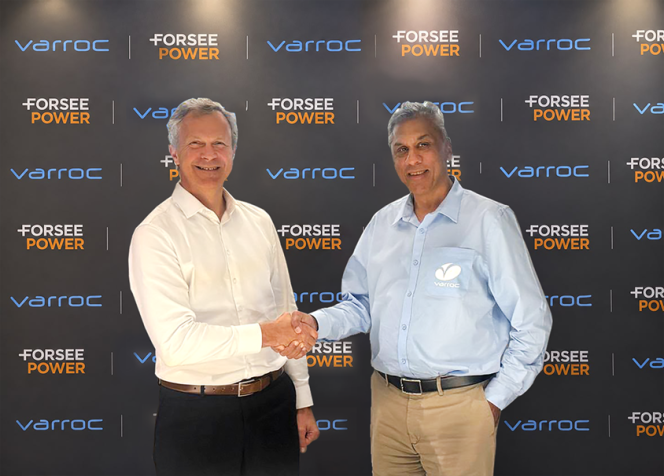
Pune-headquartered automotive component supplier Varroc Engineering and French battery system manufacturer Forsee Power have joined forces to produce electric vehicle battery packs in India.
Under the terms of the transaction, Varroc will acquire a 45 percent equity stake in Forsee Power's Indian subsidiary, Forsee Power India and will assume management and operational control of the entity.
Varroc will also subscribe to Optionally Convertible Redeemable Preference Shares to provide growth capital for the joint venture, subject to regulatory and corporate approvals. The joint venture will initially focus on battery pack development for three-wheeled electric vehicles, before expanding into two-wheelers, light commercial vehicles, buses, trucks and industrial equipment.
The agreement combines Forsee Power's battery system architecture and software with Varroc's component manufacturing, engineering infrastructure and vehicle manufacturer supply relationships across domestic assembly operations.
Arjun Jain, Whole Time Director and CEO – Business I, Varroc, said, "Electric mobility is both evolving and growing rapidly, thus creating new opportunities and new requirements for the automotive industry. Through this evolution we believe OEMs will need partners who can anticipate changes and translate them into reliable, cost-effective solutions at scale. Our partnership with Forsee Power brings together complementary strengths in battery-system technology, automotive engineering, manufacturing and customer relationships. It represents an important step in expanding Varroc’s portfolio to address the evolving needs of our market and the future of mobility. This will further enhance addressable content per electric vehicle in all the segment."
Christophe Gurtner, Chairman and CEO, Forsee Power, said, "With the rapid growth of electric mobility adoption in India, the opportunity is clear and we are ready to scale. Joining forces with Varroc combines our battery technology with local industrial strength and customer access. Three-wheelers are our starting point, with a clear ambition to expand across two-wheeler, commercial and industrial vehicles."
AUMOVIO To Debut MK 120 MAB Brake System At EICMA 2026
- By MT Bureau
- October 14, 2026

German technology company AUMOVIO will showcase a portfolio of braking, rider assistance and connectivity solutions for motorcycles and powersports vehicles at EICMA 2026 in Milan, scheduled from 3 to 8 November 2026.
The company's showcase centres on the launch of the MK 120 MAB brake system, which extends AUMOVIO's braking product line beyond two-wheeled applications. The system is engineered for three-wheeled scooters, side-by-side vehicles, utility terrain vehicles and all-terrain vehicles.
It integrates vehicle stability functions derived from passenger car and motorcycle architectures, including active yaw control and wheel lift mitigation, to assist vehicle control across varied terrain.
In addition to the MK 120 MAB, AUMOVIO will display its Motorcycle ABS 2.3 Base unit featuring an optional inertial measurement unit, alongside the MiniMAB EVO system designed for small-displacement scooters and commuters.
The company's display also features radar sensors for adaptive cruise control and blind-spot detection, digital instrument clusters ranging from 4 to 8.8 inches, a standalone Connected Infotainment Box and automated manual transmission control units.
The hardware, software and electronic systems on display utilise automotive development, cybersecurity and production standards adapted to motorcycle and powersports operational environments.
Eastman Auto & Power Appoints Rajesh Jindal As Chief Executive Officer
- By MT Bureau
- October 12, 2026
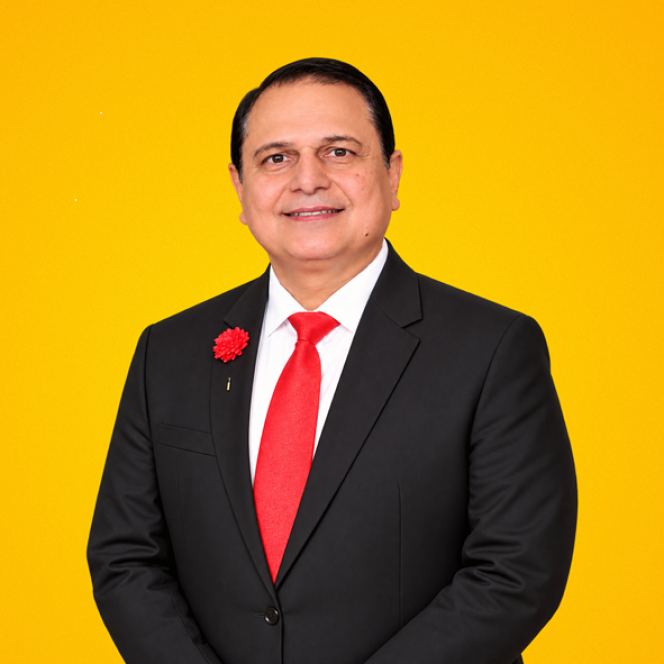
Auto component manufacturer Eastman Auto and Power has appointed Rajesh Jindal as Chief Executive Officer.
He comes with over 34 years of corporate experience spanning sales, marketing and product management, following a 24-year tenure at Amara Raja Energy and Mobility, where he most recently served as Chief Marketing Officer for automotive batteries in India.
Jindal holds a bachelor's degree in mechanical engineering alongside a Master of Business Administration qualification. During his career, he has managed distribution networks, channel partner relations and go-to-market strategies within the energy storage and automotive component sectors.
Shekhar Singal, MD, Eastman Auto and Power, said, "With over 34 years of experience, Jindal has garnered experience in sales, marketing and product development and is well-positioned to accelerate Eastman’s growth journey. As he begins this new chapter at Eastman, we look forward to his leadership in deepening our commitment for delivering sustainable value for our customers, partners, employees and stakeholders - advancing the company's long-term growth aspirations and inspiring the organisation to achieve new milestones together."
Established in 2000, Eastman Auto and Power operates across three business verticals: last-mile electric mobility solutions, residential solar storage systems and energy storage solutions.
The company employs over 3,600 personnel across seven manufacturing plants in India, supported by a distribution network of more than 1,200 direct partners and over 400 original equipment manufacturer clients worldwide.
Kuraray America Showcases GENESTAR PA9T At SAE Thermal Management Symposium
- By MT Bureau
- October 10, 2026
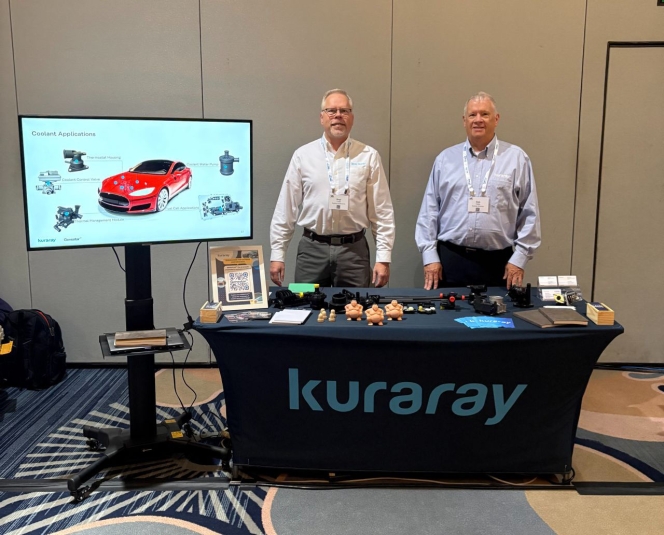
Kuraray America, Inc. (KAI) recently took part in the SAE International Thermal Management Systems Symposium, held on 6–7 October 2026 in Dearborn, Michigan. The event gathered mobility-industry professionals to discuss technologies and emerging challenges in vehicle thermal management. Throughout the two-day symposium, the Kuraray GENESTAR team connected with attendees at Booth #19, sharing insights into high-performance engineering materials.
The team demonstrated how GENESTAR PA9T can meet demanding automotive application requirements. This heat-resistant polyamide engineering plastic was developed by Kuraray using unique monomers, combining low water absorption, high heat resistance, chemical resistance, dimensional precision and excellent moldability. It also offers electrical properties suitable for demanding electrical and electronic applications, including low water absorption, chemical resistance, moldability, insulation performance, thermal resistance and dimensional stability.
These characteristics make GENESTAR relevant for a broad range of electrical, electronic and automotive components. Kuraray lists automotive applications including connectors, relays, insulators and wire harnesses, while GENESTAR materials also serve in sliding, fuel and air-intake systems. The company reports use in automotive gears, bearings, piping and intercooler tanks, and the material is being considered for electric-vehicle applications as well.
The SAE symposium provided a forum for exchanging insights into evolving thermal management technologies. The 2026 programme covered battery and electronics cooling, climate control, alternative refrigerants and vehicle thermal engineering approaches. For Kuraray, participation enabled direct engagement with engineers and industry professionals about how high-performance materials can address increasingly complex automotive design requirements, with GENESTAR PA9T offering a material option where multiple performance demands must be met simultaneously.
Comments (0)
ADD COMMENT