

Indian Auto Component Industry Turnover To Reach INR 10,681 Billion In FY2027, Clock 8-9% Growth Says CareEdge Ratings
- By MT Bureau
- August 13, 2026
The Indian automotive component sector is projected to expand by approximately 8-9 percent in FY2027, according to a report by CareEdge Ratings. The market size is forecasted to reach INR 10,681 billion in FY2027, rising from INR 9,835 billion in FY2026.
The anticipated expansion is supported by domestic vehicle manufacturing, higher component content per vehicle, aftermarket replacement demand and ongoing integration with international supply chains.
The report states that total vehicle production in India increased from 23 million units in FY2022 to 34.7 million units in FY2026. Original equipment manufacturers (OEMs) generated 67 percent of sector revenues in FY2026, while exports and the aftermarket accounted for 22 percent and 11 percent, respectively.
On the other hand, auto component exports grew from INR 987 billion in FY2021 to INR 2,122 billion in FY2026, with expectations to reach INR 2,300 billion in FY2027. Component imports increased from INR 1,024 billion in FY2021 to INR 2,243 billion in FY2026, and are projected to rise to INR 2,431 billion in FY2027 due to continued reliance on semiconductors, battery cells and electronic systems.
Engine parts represented the largest product category at 24 percent of the component mix in FY2026, followed by suspension and braking at 17 percent and drive transmission and steering at 14 percent. However, product value is gradually shifting toward electronics, software systems and electric vehicle architectures. Total electric vehicle registrations rose from 170,000 in FY2020 to 2.45 million in FY2026, increasing electric vehicle penetration from 0.71 percent to 8.28 percent.
Ranjan Sharma, Senior Director at CareEdge Ratings, said, "India's auto component industry has emerged as an increasingly important part of the global automotive supply chain, supported by its manufacturing competitiveness, engineering capabilities, and expanding domestic market. With the auto ancillary industry market size expected to surpass Rs 10.6 trillion in FY27, the sector is well positioned to capture a larger share of global sourcing opportunities. Continued progress in localisation of critical components and development of advanced manufacturing capabilities will be key to enhancing value addition and strengthening India's long-term position in the global automotive ecosystem."
The aggregate revenue of the top 50 listed auto ancillary companies in India is expected to increase from INR 4,325 billion in FY2026 to INR 4,714 billion in FY2027. Sector capital expenditure is projected to reach INR 282 billion in FY2027 to support automation, capacity expansion and technology upgrades. Operating margins are expected to remain stable, managed through contractual cost pass-through mechanisms with vehicle manufacturers.
Government policy initiatives continue to influence capacity creation. The PLI-Auto Scheme recorded cumulative investments of INR 443.26 billion against an incentive outlay of INR 259.38 billion by FY2026. The PLI-ACC scheme for battery cell manufacturing attracted INR 51.80 billion in investments as of 31 May 2026, against an outlay of INR 181 billion. Additional demand support stems from the PM E-DRIVE scheme and the PM e-Bus Sewa scheme.
Geopolitical issues, freight rate fluctuations, and trade policies remain factors for export performance. The US represents the largest export destination, taking approximately 26 percent of Indian auto component exports, valued at INR 552 billion in FY2026.
Arti Roy, Associate Director at CareEdge Ratings, added, "CareEdge Ratings expects the Indian auto ancillary industry to grow by around 8-9% in FY27, supported by healthy OEM demand across major segments, increasing component content per vehicle, resilient replacement demand, higher localisation, and expanding global sourcing opportunities. The industry's ongoing transition towards electronics-intensive and cleaner mobility platforms is creating new opportunities across EV-linked components, advanced electronics, powertrain technologies, and other high-value automotive systems. Profitability is expected to remain broadly stable, although returns from ongoing investments in new capacities and advanced technologies are likely to materialise gradually. Companies with diversified customer relationships and geographical reach, wider product portfolios, strong engineering capabilities, prudent capital allocation, and the ability to adapt to the evolving component value pool are expected to remain better positioned."
Höganäs Marks 40 Years In India, Plans To Expand Local Manufacturing Capabilities
- By MT News
- November 20, 2026
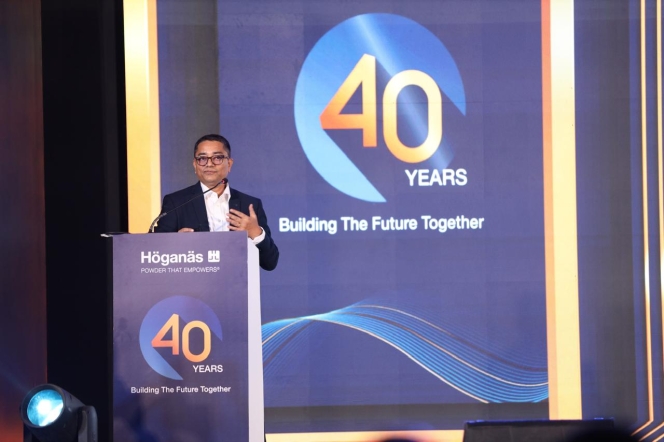
Swedish metal powder producer Höganäs AB is looking to strengthen its manufacturing and engineering capabilities in India as demand grows across e-mobility, advanced materials and industrial applications.
Höganäs AB, the world's largest producer of metal powders, plans to deepen its presence in India as the country moves towards more advanced and resource-efficient manufacturing.
Marking 40 years of operations in India, the Swedish company is looking to build on its existing manufacturing and technical capabilities in Ahmednagar and Pune, with a focus on application engineering, testing and customer collaboration. However, the company did not reveal the investment amount.
Over the past four decades, Höganäs has expanded its role from supplying metal powders to providing application engineering and technical support to original equipment manufacturers (OEMs) and component makers. Its Indian operations work with customers to address changing material and engineering requirements.
"Forty years in India reflects the strength of our customer partnerships and our long-term commitment to the market. As India advances towards more sophisticated manufacturing, we see growing demand for innovative material solutions and significant opportunities for Höganäs. We see India playing an increasingly important role in our future growth, and our focus is on strengthening our presence, deepening customer collaboration and building the capabilities needed for the next phase," says Munish Sharma, Market President for India at Höganäs.
The company sees opportunities across automotive, e-mobility, power electronics, additive manufacturing and other advanced industrial applications. Its metal powders are used in components ranging from electric motors and transmissions to gas turbines and aero engines.
To address changing customer requirements, Höganäs intends to strengthen its manufacturing, technical and application development capabilities in India, bringing its global material technology expertise closer to local customers.
Sustainability is another focus. Powder metallurgy enables near-net-shape manufacturing, which reduces material waste and machining requirements while supporting component durability.
Höganäs has set science-based targets, validated by the Science Based Targets initiative (SBTi), to achieve net-zero emissions across its value chain by 2040 and in its own operations by 2030. Its product carbon footprints, developed in accordance with ISO 14067, are intended to help customers address supply-chain emissions reporting requirements.
The company also highlighted its workplace initiatives, including employee engagement, talent development and future skills development. It is certified by Great Place To Work.
As it enters its fifth decade in India, Höganäs says it will focus on expanding its contribution to the country's manufacturing sector and supporting the transition towards higher-value, technology-led and resource-efficient production.
BorgWarner Secures Contract To Supply Aluminium-Wire eMotors To Chinese OEM
- By MT Bureau
- November 12, 2026
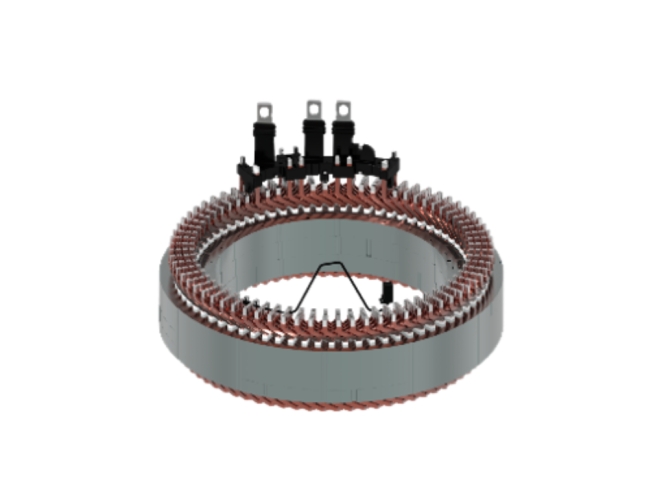
BorgWarner has secured a contract from a Chinese original equipment manufacturer (OEM) to supply its aluminium-wire electric motor technology, marking the technology's market debut. The start of production is scheduled for Q4 of 2026.
The product incorporates aluminium-wire hairpin winding technology for use in hybrid vehicles, specifically as generator motors and traction motors for auxiliary drive systems.
Compared with copper-wire motors of matching specifications, the aluminium-wire unit maintains peak torque and peak power levels while reducing wire weight by more than 60 percent and lowering costs by over 80 percent. The contract extends a 15-year supplier relationship between BorgWarner and the vehicle manufacturer.
Isabelle McKenzie, Vice-President of BorgWarner Inc. and President and General Manager of PowerDrive Systems, said, “We are proud to introduce BorgWarner’s aluminium-wire eMotor technology to the market through this program and to further strengthen our long-standing relationship with the customer. The technology combines aluminium conductors with BorgWarner’s hairpin winding expertise to deliver significant weight and cost benefits. Supported by our comprehensive local product engineering and manufacturing capabilities, we have optimised the motor design, manufacturing processes and connection technologies to meet the requirements of hybrid generator and auxiliary drive applications.”
BorgWarner Bags 3 Turbocharger Business Contracts For Light-Vehicle Platforms
- By MT Bureau
- November 09, 2026
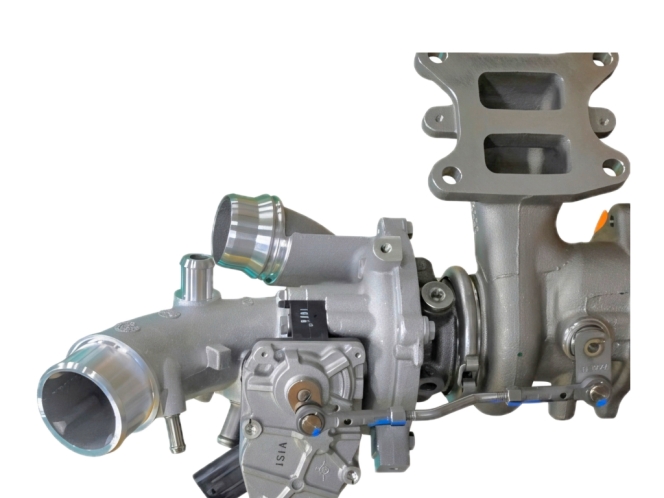
BorgWarner has secured three conquest business contracts with a powertrain technology manufacturer to supply turbocharging systems for light-vehicle petrol platforms across South America and Europe.
The agreements cover the supply of one variable turbine geometry (VTG) turbocharger unit and two wastegate turbocharger variants, with series production scheduled to commence in 2027.
The VTG turbocharger system is engineered for Miller-cycle gasoline engines operating at exhaust gas temperatures up to 1050deg Celsius, providing boost pressure control and efficiency across operational speed ranges.
BorgWarner's wastegate turbocharger technology features scalable compressor and turbine stages designed with single-scroll, twin-scroll, or dual-volute turbine configurations. The wastegate units incorporate pneumatic or electric actuation options alongside integrated compressor recirculation valves to support fuel economy requirements and emissions compliance.
Dr. Volker Weng, Vice-President of BorgWarner Inc. and President and General Manager of Turbos and Thermal Technologies, said, "We value our longstanding relationship with this global leader in powertrain technology and the opportunity to support its evolving business and broader commodity strategy. These contracts reflect the trust we have established with the customer and the strength of our offerings, including competitive solutions and deep technical expertise. We look forward to continuing to support the customer with innovations that deliver lasting value."
ZF Unveils High Revolution Drive Operating At 30,000 RPM For Electric Vehicles
- By MT Bureau
- November 05, 2026
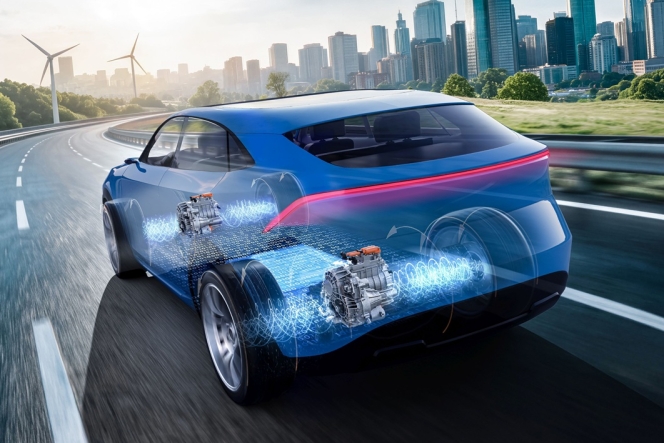
German tier-1 supplier ZF has developed the High Revolution Drive, a 3-in-1 electric drive system capable of reaching rotational speeds of up to 30,000 rpm. Designed as a variant of the company's modular SELECT platform, the unit integrates an electric motor, power electronics and a two-stage spur gear transmission with a reduction ratio of approximately 18:1. The system delivers a peak power output of 200 kW and peak wheel torque of 3,500 Nm.
Compared to a conventional SELECT drive operating at 18,000 rpm, the High Revolution Drive reduces overall installation space and weight by nearly 25 percent, while reducing required magnet mass by 50 percent. The architecture is scalable across power outputs ranging from 150 kW to 200 kW for 400-volt and 800-volt vehicle platforms, achieving a system efficiency of nearly 93 per cent. ZF is engaging with vehicle manufacturers regarding deployment, with volume production targeted for 2030.
Thomas Meiser, Head of the E-Mobility Business Unit, ZF, said, "The High Revolution Drive draws on ZF s full systems expertise. Rather than optimising individual components in isolation, we systematically coordinate the electric motor, power electronics and transmission. Robustness and low noise and vibration levels were stringent development targets from the outset. To achieve this, we considered the electric motor, gearing, bearings and tooth geometry as an integrated system. For the configuration presented, 30,000 rpm is the economic and technical sweet spot. With SELECT, we do not have to start from scratch for every new drive variant. We use our modular system to tailor new concepts to different customer requirements."

Comments (0)
ADD COMMENT