

- IAA Transportation 2026
- Renault Trucks
- Mercedes-Benz Vans
- BYD
- DAF Trucks
- Daimler Truck
- Dongfeng
- Ford Trucks
- KIA
- MAN Truck & Bus
- Scania
- VW Commercial Vehicles
- Volvo Trucks
- Zerova
- FLEXIS
- Robert Bosch
- BPW Bergische Achsen
- MAHLE
- ZF Group
- Fliegl Fahrzeugbau
- Krone Trailer
- Schmitz Cargobull
- Jurgen Mindel
IAA TRANSPORTATION 2026 Reports 11% Increase In Exhibitors
- By MT Bureau
- February 24, 2026
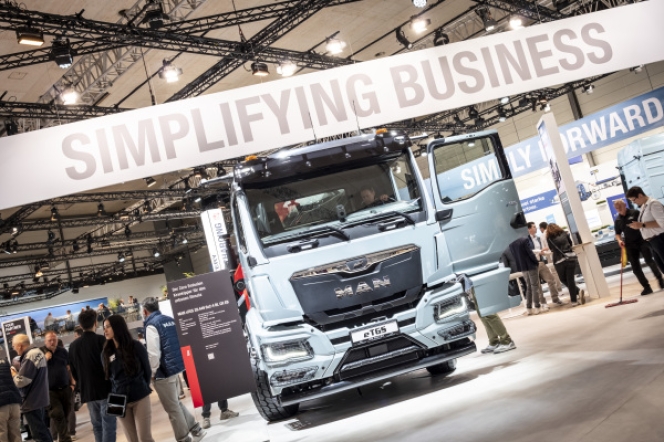
Companies from the commercial vehicle, transport and logistics sectors are set to present their latest transport and logistics solutions at IAA TRANSPORTATION in Hannover from 15 to 20 September 2026. The organisers state that early registration data indicate an 11 percent increase in exhibitors compared to the same period in 2024, with several exhibition halls already overbooked.
The event maintains an international exhibitor rate of 70 percent, with significant representation from China, Turkey and Italy. Notably, 23 percent of the participants are attending the trade fair for the first time.
Renault Trucks and Mercedes-Benz Vans have confirmed their return to the event. They join a roster of manufacturers including BYD, DAF Trucks, Daimler Truck, Dongfeng, Ford Trucks, KIA, MAN Truck & Bus, Scania, VW Commercial Vehicles and Volvo Trucks. New participants for 2026 include e-van manufacturer FLEXIS and charging infrastructure provider Zerova.
Suppliers currently form the largest exhibitor group. Participating firms include Robert Bosch, BPW Bergische Achsen, MAHLE and the ZF Group. Body manufacturers such as Fliegl Fahrzeugbau, Krone Trailer and Schmitz Cargobull will also be present to showcase global products.
The IAA Conference will address industry trends such as fleet electrification, charging infrastructure, automated transport, AI and hydrogen solutions. A dedicated area will also be provided for startups to present ideas for the transport sector.
The IAA Experience allows visitors to trial innovations through four formats:
- Test Drives: Supervised trials of zero-emission light and heavy commercial vehicles on public roads or the grounds.
- ADAS & Telematics: Practical demonstrations of driver assistance systems.
- Cargobike Parcours: A testing environment for cargo bike innovations.
- Shuttle Bus: A loop service using vehicle innovations to connect exhibition halls.
Jurgen Mindel, Managing Director, VDA, said, "The once again strong resonance from leading companies all over the world impressively shows how committed our industry is to shaping a sustainable future for the commercial vehicle and transport sectors. In 2024, exhibitors at IAA TRANSPORTATION already set new standards as drivers of innovation. In 2026, we are coming back and proving once again: we deliver. As organisers, we are pleased to offer this progressive industry a fitting stage for their innovations once more."
Force Motors Sells 4,027 Units In September 2026
- By MT Bureau
- October 01, 2026
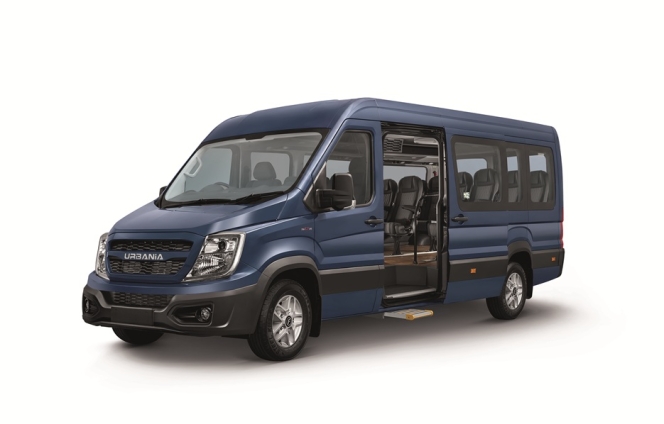
Pune-headquartered automotive company Force Motors has reported its wholesales for September 2026, selling 4,027 units last month, marking a 62 percent YoY, as compared to 2,486 units in September 2025.
The company said it witnessed volume growth across the month driven by customer demand across multiple vehicle lines. The sales were supported by market adoption of the Force Traveller N Range, increased adoption of the Urbania Deluxe within the shared mobility sector and volume contributions from the Trax model line.
Prasan Firodia, MD, Force Motors, said: "September has been a positive month for us, with healthy demand across our key products. The new Traveller N Range is witnessing encouraging market acceptance, while the new Urbania Deluxe continues to gain traction. These trends reinforce our confidence in the strength of our product portfolio and our understanding of customer needs. As we enter the festive season, we look forward to building on this momentum and continuing to serve our customers with products that meet their evolving needs."
- TVS Motor Company
- She for Society
- Taliru Foundation
- Aishwarya Mahadev
- KPCC
- Karnataka Road Development
- Rajat Gupta
TVS Motor Co, She for Society And Taliru Foundation Launch E-Auto Initiative For Women Drivers In Bengaluru
- By MT Bureau
- September 26, 2026
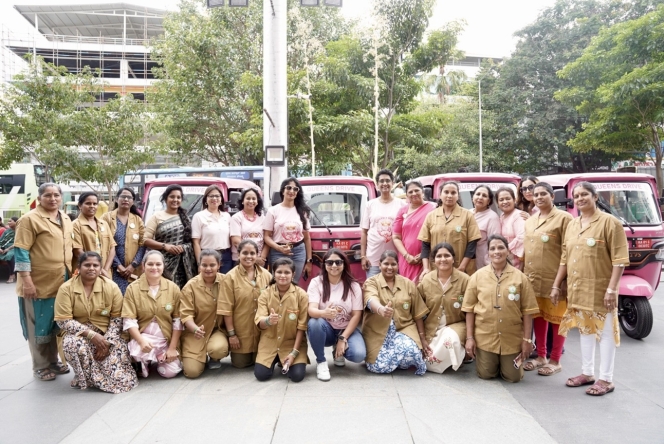
Chennai-headquartered two-wheeler and three-wheeler major TVS Motor Company has partnered with NGO She for Society and the Taliru Foundation to launch 16 pink electric three-wheelers in Bengaluru under the ‘Building Queens from the Grassroots’ initiative.
The delivery of the initial 16 units marks the first phase of a project that aims to deploy 100 electric three-wheelers to women beneficiaries identified by the Taliru Foundation. The program is supported by financial contributions from women's organisations across India to assist female drivers in entering the commercial mobility sector.
The launch event was attended by Aishwarya Mahadev, Vice Chairman of Karnataka Road Development, KPCC Social Media President and AICC Spokesperson.
Rajat Gupta, Business Head, Commercial Mobility, TVS Motor Company, said, “At TVS Motor Company, we believe mobility can play a meaningful role in creating opportunities and strengthening livelihoods. Our collaboration with She for Society and Taliru Foundation reflects our commitment to enabling inclusive and sustainable commercial mobility. The Pink Auto initiative is a significant step towards supporting women entrepreneurs and helping them build greater economic independence. We are proud to contribute to an initiative that brings together mobility, community support, and social impact.”
Harshini, representing She For Society, said, “Queens Drive is our endeavour to build queens from the grassroots by enabling women to become financially independent through mobility. With the support of women's organisations across India and our collaboration with Taliru Foundation and TVS Motor Company, we aim to create sustainable opportunities for women auto drivers. These 16 pink electric autos mark the beginning of a larger movement that we hope will empower 100 women and inspire communities across the country.”
Chitra from the Taliru Foundation, said, “Through this initiative, we are working towards creating meaningful livelihood opportunities for women who aspire to become independent earners. The delivery of these 16 pink autos is an important milestone for our beneficiaries, and we are grateful to She for Society, TVS Motor Company, and the supporting women's organisations for helping turn this vision into reality.”
The initiative forms part of TVS Motor Company's commercial mobility strategy to increase female participation in transport operations across urban markets.
JSW Group Enters Electric Commercial Vehicle Segment With AMPSTAR Brand
- By MT Bureau
- September 22, 2026
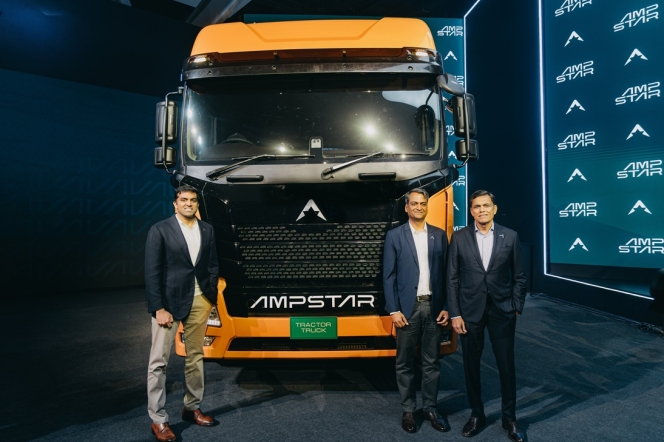
JSW Greentech, the commercial electric vehicle arm of JSW Group, has launched the ‘AMPSTAR’ brand, which will design, manufacture, and sell electric buses and trucks in India. The ‘AMPSTAR: powered by JSW’ marks the industrial conglomerate's entry into the commercial mobility market.
The company will offer commercial mobility services alongside its vehicles, including charging infrastructure, vehicle financing, leasing options, Battery as a Service (BaaS) models and aftersales support.
AMPSTAR EVs will be available in power configurations ranging from 150 kW to 500 kW, with the production taking place at a 90-acre manufacturing facility located at the Aurangabad Industrial City (AURIC) in Chhatrapati Sambhajinagar, Maharashtra.
The plant has a planned annual capacity of 15,000 electric buses and trucks and contains a pre-treatment and electro-deposition line for bus manufacturing, an automated truck-cabin assembly line and an integrated battery production system.
The EVs are engineered with software, algorithms and drivetrain logic developed in-house by JSW Greentech. Structural features include a monocoque chassis and a double cooling battery system designed for local road and temperature conditions.
The bus range will span lengths from 7 metres to 18 metres for staff, urban, intercity and school transport, while the truck range will launch with a 55-tonne tractor-trailer, followed by tippers and fixed-body dumpers.
Sajjan Jindal, Chairman, JSW Group, said, "When we decided to enter electric commercial mobility, I saw it as an act of nation-building - moving India's people and goods on power generated within India, rather than fuel sourced from outside. We cannot control global oil prices. But we can control how much we depend on them. If I had to put our ambition for AMPSTAR in one sentence, it's this: we want AMPSTAR to be a catalyst for changing the way India moves. That's no longer just a business question. It's a question of who we want to be as a country. But for every customer to make bold choice of electric bus & truck, the economics have to make the case - not sentiment. When they do, the impact goes far beyond the vehicle itself: energy security, lower logistics costs & greater global competitiveness for Indian industry, a stronger manufacturing ecosystem built here in India, and cleaner future for the next generation. That's the journey AMPSTAR begins today- mile by mile, disrupting the way India moves."
Parth Jindal, JSW Group, said, "AMPSTAR brings the full strength of JSW into commercial mobility, with one ambition: to change how India moves its people and its goods. We spent months listening to customers and stakeholders, and one thing was clear, real barriers to adoption go well beyond the vehicle itself. That is when we started designing around the complete customer journey and created full stack electric commercial mobility solution. AMPSTAR brings together two powerful ideas: 'Amp,' comes from Ampere – the unit of electric current, representing technology that amplifies performance. 'Star’ represents aspiration, leadership and progress. The brand identity reflects that same ambition - modern, forward-moving, built to stand out. This is our promise: to go the distance with every customer, making the transition to electric simpler, more reliable, and more rewarding."
Sumit Mittal, CEO, JSW Greentech, said, "AMPSTAR is our vision for electric commercial mobility, and today marks its beginning. We are designing, engineering and building these vehicles in India, from the ground up - our own drivetrain, our own software, using the best of technologies available, and built for Indian roads and operating conditions. Our range is built to cover the full spectrum. On the bus side, our portfolio will span 7 meter to 18 metre buses, serving diverse applications including staff transportation, city, intercity and school mobility. On the truck side, we are starting with the 55-tonne tractor-trailer — one of the most demanding vehicle architectures with plans to expand into tippers and fixed-body dumpers in the months ahead. India deserves world-class buses and trucks on its own roads, and AMPSTAR is how we deliver that."
Ashok Leyland Ties Up With Kerala Grameena Bank For End-To-End Vehicle Financing
- By MT Bureau
- September 18, 2026
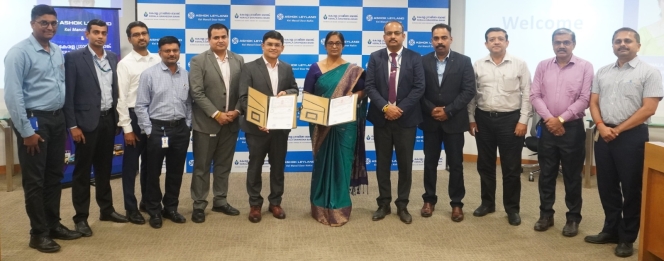
Ashok Leyland, the Hinduja Group’s Indian flagship and a leading commercial vehicle manufacturer, has entered a strategic vehicle financing partnership with Kerala Grameena Bank through a signed Memorandum of Understanding. The agreement is designed to provide customers purchasing Ashok Leyland vehicles with customised and convenient financing solutions.
The MoU was formalised by Viplav Shah, Head of LCV Business at Ashok Leyland, and Gundekar Harish Gangadhar Rao, General Manager of Kerala Grameena Bank. Vimala Vijayabhaskar, Chairperson of Kerala Grameena Bank, was present during the signing.
Under the partnership, Kerala Grameena Bank will deliver end-to-end financial solutions to Ashok Leyland customers. The collaboration seeks to improve customer convenience through vehicle loans featuring flexible and easy-to-manage repayment options tailored to individual needs and preferences.
Shah said, “Ashok Leyland is delighted to partner with Kerala Grameena Bank to provide our customers with attractive, accessible and customised financing solutions. This strategic partnership will further enhance the accessibility of our innovative range of commercial vehicles, enabling businesses and fleet operators to invest with greater confidence and financial flexibility. Powered by cutting-edge technology and engineered to deliver industry-leading total cost of ownership, our vehicles are designed to enhance customer productivity and profitability. Together with Kerala Grameena Bank, we look forward to creating greater value for our customers and supporting their growth journeys.”
Vijayabhaskar said, “Kerala Grameena Bank is pleased to partner with Ashok Leyland to offer seamless vehicle financing solutions. This association reflects our dedication to serving the diverse financial needs of commercial vehicle customers. We are confident that this collaboration will enable us to extend our reach and provide tailored financing options to support the growth of businesses in the commercial vehicle segment in the state of Kerala.”
Comments (0)
ADD COMMENT