

- BluJ Aerospace
- Gen 2
- eVTOL
- Vantis
- Amar Sri Vatsavaya
- Sateesh Andra
- Endiya Partners
- Naganand Dorawamy
- Ideaspring Capital
BluJ Aerospace Unveils Gen2 eVTOL Prototype Built On Vantis Platform Architecture
- By MT Bureau
- May 26, 2026
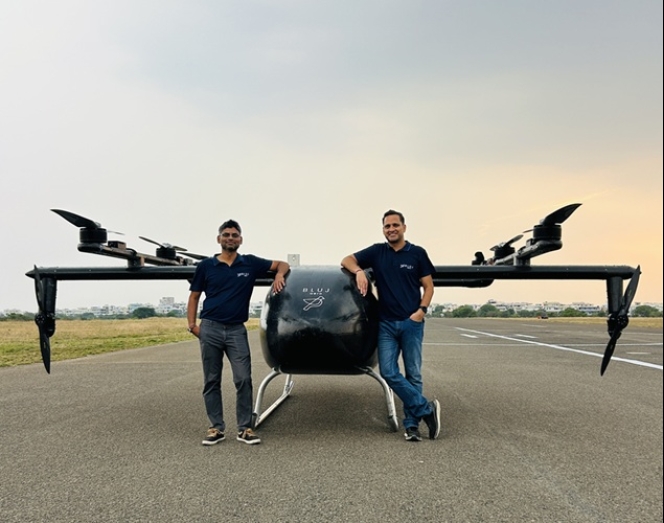
Hyderabad-headquartered BluJ Aerospace has introduced its Gen 2 prototype electric vertical take-off and landing (eVTOL) vehicle, marking the first commercial-grade assembly developed from its Vantis platform architecture.
The rollout follows four years of internal research and development at the company's 40,000 square foot manufacturing facility in Hyderabad.
The Gen 2 is a fully battery-powered vertical take-off and landing (VTOL) aircraft configured for freight and cargo logistics. It operates with a maximum take-off weight of 500 kilograms and carries an active payload capacity target exceeding 200 kilograms. Employing a lift-plus-cruise design, the model is currently undergoing flight tests to validate subsystem integration, payload distribution and mission metrics for commercial deployments.
The underlying Vantis architecture forms a unified engineering baseline for the airframe, electric propulsion systems, flight controls and autonomous navigation software. Subsystems validated on the initial platforms are transferred directly to future vehicle iterations to manage development costs and accelerate commercial timelines. The company holds a design patent on its eVTOL layout and has submitted utility patent filings for its carbon-fibre airframe and distributed powertrain configurations.
BluJ’s current commercial pipeline encompasses infrastructure transport, express cargo, energy networks, airport freight and defence logistics. The company has finalised a pilot project with a public sector undertaking (PSU) in the power sector and maintains technical partnerships with a defence PSU alongside domestic military supplier.
On the development of its hydrogen-electric powertrains, the firm has completed ground testing of its fuel-cell assembly, which incorporates an internally designed Type IV composite hydrogen storage tank. Long-range hydrogen-electric variants are scheduled for testing between 2027 and 2028. To support this propulsion rollout, BluJ is collaborating with Bharat Petroleum Corporation Limited and Cochin International Airport Limited to outline regional hydrogen refueling infrastructure.
Amar Sri Vatsavaya, Founder and CEO, BluJ Aerospace, said, “The next major shift in aviation is the move from single product programs to platform-based architectures. Just as the automotive industry builds multiple vehicles on a common platform, Advanced Air Mobility will need adaptable architectures that scale across missions, payloads, and customer use cases. That is the advantage VANTIS gives BluJ. Our platform-based approach lets us develop multiple AAM product classes efficiently and at scale."
Sateesh Andra, Managing Director, Endiya Partners, added, “India runs one of the largest logistics economies in the world, but it still moves on aircraft and infrastructure designed elsewhere. Aerial mobility is a rare category where Indian deep-tech can build globally relevant aerospace IP from the ground up, and that needs founders willing to bet years on getting the engineering right. BluJ Aerospace’s Gen 2 flight is proof that the hard work is paying off. From long-range cargo to the regional passenger mobility India needs next, they are building what comes after the runway.”
Naganand Doraswamy, Managing Partner, Ideaspring Capital, said, "Deep-tech categories that compound, from semiconductors to robotics and now aerospace, are won by teams that build platforms, not single products. India has had the engineering talent for decades, but very few teams have applied that platform discipline to aircraft. That is what BluJ has done with VANTIS, and Gen 2 is the first commercial output of an architecture we expect will shape how India shows up in global aerospace over the next decade.”
Axalta Names Redefined As 2027 Global Automotive Colour Of The Year
- By MT Bureau
- October 14, 2026
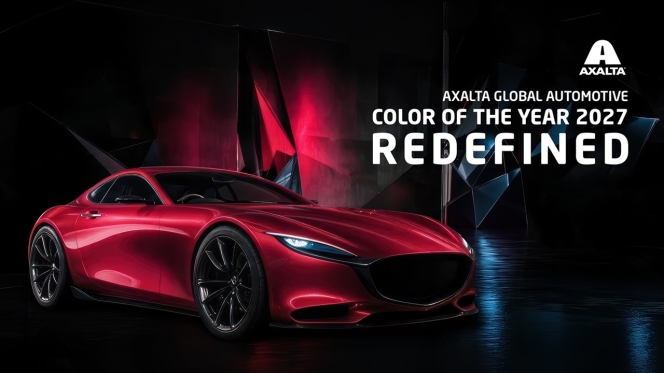
Coatings manufacturer Axalta Coating Systems has introduced Redefined, a ruby-red finish, as its 2027 Global Automotive Colour of the Year during the Automechanika exhibition in Frankfurt.
The finish incorporates pigment and effect technology designed to create depth and light reflection across vehicle body panels. Redefined marks an evolution of the red hue introduced with Radiant Red, Axalta's initial Colour of the Year selection 13 years ago. The development reflects market research into consumer preferences for vehicle personalisation and colour depth across global automotive markets.
Axalta's colour formulation teams utilise market trends and coating science to develop manufacturable formulations for global original equipment manufacturers and refinish networks. The 2027 selection is structured for application across multiple vehicle segments and production lines.
Matthew Boland, Vice-President of Global Refinish Technology, Axalta, said, "Redefined represents where we see automotive colour going, expressive and individual, but still refined and timeless. The deepness of the ruby tone combined with its luminosity and depth creates a colour that comes alive with the vehicle. It's a great example of how we can take a familiar colour and use the art and science of coatings to give it an entirely new perspective."
Hyundai Motor Group To Invest $15.5 Billion In India By 2032
- By MT Bureau
- October 13, 2026
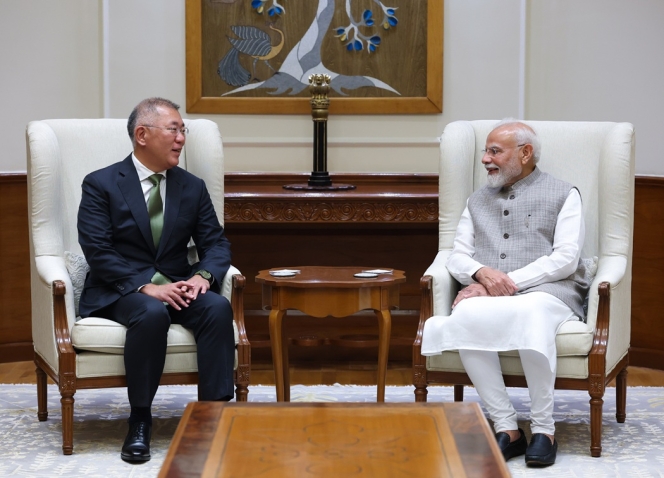
South Korean automotive major Hyundai Motor Group has announced a USD 15.5 billion investment plan for India from 2026 through 2032. The strategy was outlined during a meeting between Indian Prime Minister Narendra Modi and Hyundai Motor Group Executive Chair Euisun Chung at the Prime Minister’s Office in New Delhi.
To execute the 7-year plan, Hyundai Motor Group will establish a dedicated investment entity in India to manage capital allocation across manufacturing expansion, research and development, supply chain localisation and mobility services.
The investment includes an allocation of approximately USD 700 million to expand the Group's Indian R&D centre and build a vehicle testing track facility. Manufacturing expansion will focus on scaling production capacity across Hyundai Motor India and Kia India to support domestic sales and export operations.
At present, the Group maintains an annual production capacity exceeding 1.4 million vehicles in India across Hyundai facilities in Chennai (824,000 units) and Pune (170,000 units), alongside Kia India's Anantapur plant (431,000 units).
The investment strategy also targets local component sourcing, electric vehicle charging infrastructure, specialised vehicle financing, end-of-life vehicle recycling and startup investments across India's automotive sector.
"India remains one of Hyundai Motor Group’s most important and strategic markets globally. The past 30 years have been defined by our commitment to India. This investment reaffirms our commitment to India for the next 30 years and beyond. Through this investment, we will create more employment opportunities and work together with our partners and stakeholders to support India’s continued industrial development," said Chung.
- GreenCell Mobility
- Eversource Capital
- Impact Fund Denmark
- International Finance Corporation
- British International Investment
- Tata Capital
- Devndra Chawla
- Dhanpal Jhaveri
- Lars Bo Bertram
GreenCell Mobility Secures INR 3.3 Billion Investment From Impact Fund Denmark
- By MT Bureau
- October 13, 2026

Electric bus operator GreenCell Mobility, a portfolio company of Eversource Capital, has secured an equity investment of INR 3.3 billion from Impact Fund Denmark. The capital will support the deployment of approximately 4,500 electric buses, bringing GreenCell's total fleet to over 5,000 e-buses across 105 cities in India.
The funding supports GreenCell Mobility's expanding order book across intra-city municipal transport and intercity routes. The platform operates as an original equipment manufacturer-agnostic operator, managing bus procurement, depot charging infrastructure and fleet maintenance contracts under public-private partnerships and private operations.
The investment joins existing institutional backers of GreenCell, including the International Finance Corporation, British International Investment and Tata Capital, as the company expands its operational footprint across urban transport corridors in India.
Dhanpal Jhaveri, CEO, Eversource Capital, said, "Electric public mobility is moving from an emerging opportunity to an investable infrastructure asset class in India. GreenCell was created with that conviction – to build the operating capabilities and institutional scale needed to build an enduring business. The equity investment from IFD demonstrates the depth of long-term institutional capital now backing GreenCell Mobility. The next phase is about putting that capital to work with discipline – expanding the business, deepening its capabilities and creating long-term value as India transitions to electric mobility."
Devndra Chawla, MD and CEO, GreenCell Mobility, said, "We welcome IFD as a shareholder and value the continued confidence of Eversource, IFC, BII and Tata Capital as we take GreenCell forward. We have established a strong presence across both intra-city and intercity transportation, with the operating experience to manage increasingly large and complex deployment. Our focus is on executing our order book with rigour, strengthening service delivery and ensuring that the organisation keeps pace with the size and complexity of our operations. This equity investment gives us greater headroom to accelerate our plans while maintaining the standards of reliability, efficiency and customer experience that are fundamental to our business."
Lars Bo Bertram, CEO of Impact Fund Denmark, said, "India is a central market for Impact Fund Denmark. GreenCell is a strong investment opportunity in a rapidly growing market, while also addressing one of India’s major challenges air pollution. Scaling electric transportation can contribute to cleaner cities and accelerate India’s green transition."
Euro NCAP 2026 Tests Reward Reintroduction Of Physical Driving Controls
- By MT Bureau
- October 13, 2026
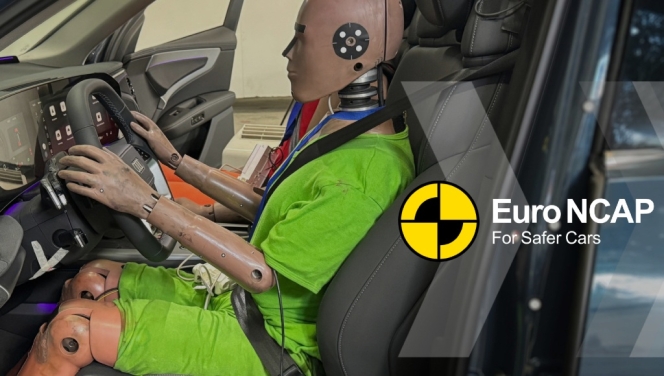
Global vehicle safety assessment organisation Euro NCAP has released its latest testing results under 2026 evaluation protocols, highlighting a growing industry trend toward reintroducing physical buttons and switches for core driving functions. The update comes as European safety testing increasingly penalises reliance on central touchscreen interfaces for primary controls.
Under Euro NCAP's 2026 Safe Driving protocols, primary vehicle controls – including direction indicators, windscreen wipers, hazard lights, horn and emergency call buttons – must be accessible via physical controls rather than buried within touchscreen menus.
In the latest assessments, the Audi Q7 achieved a 90 percent score for driving controls, including a 100 percent rating for primary driving tasks, while the Kia EV2 also received high marks for ergonomic physical switchgear. Both vehicles secured 5-star overall safety ratings.
Conversely, Chinese manufacturer XPENG scored 20 percent for primary driving controls on its X9 MPV due to touchscreen menu dependence, despite obtaining a 5-star overall rating supported by crash avoidance and post-crash safety performance. Comparative testing across 2026 models showed European manufacturers generally scoring higher for physical switchgear, with the BMW iX3 scoring 100 percent and the CUPRA Raval scoring 80 percent, compared to lower scores for the ZEEKR 7GT at 20 percent and the Leapmotor B05 at 0 percent.
Dr. Aled Williams, Programme Director at Euro NCAP, said, "Euro NCAP is continually monitoring market trends, and the move toward placing as many driving controls within a car’s touchscreen system is one that has concerned us just as much as it has annoyed consumers. It is clear in these results that the XPENG adheres to the mantra that everything must be included in the touchscreen, despite overwhelmingly negative feedback by European car buyers. We applaud Audi and Kia for taking a more common-sense approach. Our latest protocols reward the intelligent use of physical buttons and controls, as this can reduce driver distraction, and both Audi’s new Q7 and Kia’s EV2 do an excellent job of keeping safety simple. Other manufacturers, including XPENG, would do well to follow this strategy."
The latest round of evaluations also awarded 5-star safety ratings to the BYD SHARK pickup truck under 2025-adapted protocols and a 4-star rating to the Mazda 2 Hybrid, carried over from the platform's Toyota Yaris architecture.
Comments (0)
ADD COMMENT