

- Union Cabinet
- Narendra Modi
- National Capital Region Planning Board
- NCRPB
- Ministry of Housing and Urban Affairs
- MoHUA
- Ministry of Road Transport and Highways
- MoRTH
- Ministry of Petroleum and Natural Gas
- MoPNG
- BS3
- BS IV
- BS6
- NITI Aayog
- Shailesh Chandra
- Society of Indian Automobile Manufacturers
- SIAM
- Girish Wagh
- Tata Motors
- B. Srinivas
- VE Commercial Vehicles
- VECV
Cabinet Approves INR 95.85 Billion Scheme To Replace Old Trucks And Buses in Delhi-NCR
- By MT Bureau
- June 03, 2026
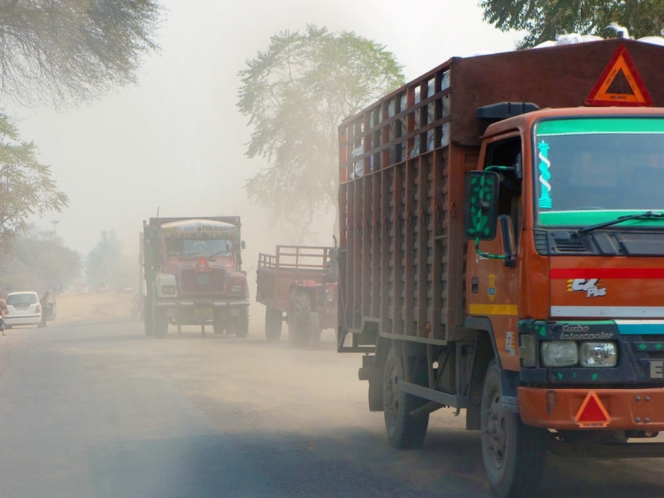
The Union Cabinet, chaired by Prime Minister Narendra Modi, has approved a landmark two-year scheme designed to curb air pollution and accelerate the transition to cleaner transit across the Delhi–National Capital Region (NCR).
Funded through the National Capital Region Planning Board (NCRPB) under the Ministry of Housing and Urban Affairs (MoHUA), the program will be jointly executed by the Ministry of Road Transport and Highways (MoRTH) and the Ministry of Petroleum and Natural Gas (MoPNG). The initiative will operate in direct collaboration with the participating governments of Delhi, Haryana, Rajasthan and Uttar Pradesh.
The scheme features a total financial outlay of INR 95.85 billion, which includes an INR 50.41 billion capital commitment from the Central Government and an estimated INR 16.01 billion allocated via tax concessions from the participating states.
The program targets the replacement of heavy commercial vehicles currently complying with BS-IV or earlier emission standards with newer BS-VI (or stricter) compliance models and electric vehicles (EVs). According to data cited from an August 2018 source apportionment study by the Automotive Research Association of India (ARAI) and The Energy and Resources Institute (TERI):
- Sector Emissions: The transport sector drives 14 percent of PM2.5, 40 percent of Carbon Monoxide (CO), and 63 percent of Nitrogen Oxide (NOx) emissions in Delhi-NCR.
- High-Impact Fleet: Within this sector, trucks and buses account for 36 percent of total PM2.5 emissions while making up just 3 percent of the active vehicle fleet.
- Technology Gap: A single Pre-BS heavy-duty vehicle emits as much particulate matter as 14 BS-VI vehicles, while an older BS-IV truck emits 2.7 times more than its BS-VI counterpart.
The fleet modernisation drive is expected to benefit approximately 207,000 vehicle owners across the NCR, encompassing 191,000 trucks and 16,329 buses. Government-owned fleets are explicitly excluded from the scheme.
The operational guidelines differ by vehicle generation and state jurisdictions:
- BS-III or Older Vehicles: Owners must format and scrap old assets at a Registered Vehicle Scrapping Facility (RVSF).
- BS-IV Vehicles: May either be scrapped or sold outside the NCR boundary into non-NCAP (National Clean Air Programme) cities and towns.
- Replacement Registration: New replacement vehicles must be registered inside the NCR.
- Delhi-Specific Mandates: Within the National Capital Territory of Delhi, all Light Goods Vehicles (LGVs) purchased under this framework must be purely electric, while new buses are restricted to either BS-VI CNG or electric drivetrains.
To offset transition costs for operators, the program bundles financial support from the central government, state bodies, and original equipment manufacturers (OEMs):
|
Stakeholder |
Offered Incentives & Subsidies |
|
Central Government |
5 percent interest subvention on commercial vehicle loans for 5-years. Monthly fuel vouchers worth up to INR 4,800 (determined by vehicle category). Lump-sum subsidies for EV adoption or Certificate of Deposit trading. |
|
State Governments |
Complete waiver of vehicle registration fees. Up to 100 percent motor vehicle tax concessions for new vehicles and 50 percent for used vehicles for 10-years. Full waiver of outstanding or pending liabilities on the retiring old vehicles. |
|
Auto OEMs |
8 percent flat discount on ex-showroom vehicle pricing. |
The rollout will operate entirely via an integrated digital portal designed to handle real-time eligibility screening, automated processing for interest subventions, monthly credit distribution for fuel vouchers, and structural tracking of net pollution reduction metrics. While the enrollment window spans two years, the central government's financial benefits will remain active for 5 years from a vehicle's individual registration date to provide sustained operational relief.
Administrative monitoring will be directed by a high-level Empowered Committee chaired by the Cabinet Secretary. The body will include the CEO of NITI Aayog, Secretaries from MoHUA, MoRTH, MoPNG, and the Department of Financial Services (DFS), alongside the Chief Secretaries of the participating NCR states, with the Member Secretary of the NCRPB serving as the member convenor. Local execution and district-level compliance will be managed by respective District Magistrates and District Collectors.
Shailesh Chandra, President, SIAM, said, “This is a positive step towards accelerating the adoption of cleaner vehicles in Delhi NCR. A combination of 5 percent interest subvention by the Centre, road tax concessions by States, monthly fuel vouchers of up to INR 4,800 by OMCs, and discounts by OEMs allows participation from all stakeholders to provide an opportunity to owners of old Commercial Vehicles to leverage the programme, thereby contributing to reducing pollution load in NCR.”
Girish Wagh, MD & CEO, Tata Motors, said, “The approval of this scheme is a positive step towards accelerating fleet modernisation and cleaner mobility in the Delhi-NCR region. Aligned with our commitment to make cargo and passenger transportation greener and more efficient, we are well positioned to support this transition through our expansive portfolio of BS-VI and zero-emission commercial vehicles, and our nationwide network of Re.Wi.Re registered vehicle scrapping facilities. We look forward to studying the finer details of the notification to further align our efforts towards building a more sustainable and modern commercial vehicle ecosystem.”
B. Srinivas, MD & CEO, VECV, said, “We applaud the Government for approving the vehicle replacement scheme for Delhi-NCR. This is a significant step towards accelerating fleet modernisation while addressing one of the region’s most pressing environmental challenges. As India progresses towards its Net Zero 2070 ambitions, such initiatives demonstrate how policy, industry and technology can come together to drive sustainable mobility. At VECV we believe this will not only support cleaner transportation in Delhi-NCR but also serve as a model for fleet renewal and modernisation across the country during its Amrit Kaal. We are committed to supporting our customers through this transition with a wide range of Eicher and Volvo trucks and buses offering fuel options covering electrics, CNG, LNG and clean BSVI diesel.”
BendPak To Roll Out Next-Gen Lifts Alongside Valor C10 Reveal At 2026 SEMA Show
- By MT Bureau
- October 22, 2026
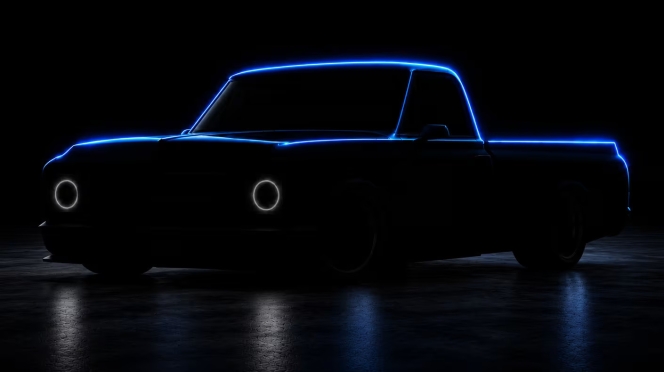
BendPak will stage an expansive dual-location exhibit at the 2026 SEMA Show, headlined by an opening-day outdoor tailgate in the Silver Lot at Booth #80043 on 3 November, beginning at 1 p.m. The centrepiece of that event is the global debut of the company’s Valor C10 custom truck, a build that merges classic C10 styling with contemporary engineering and supercharged performance. A live DJ, refreshments, giveaways and a roster of prominent automotive influencers will round out the tailgate atmosphere.
Beyond the truck reveal, BendPak is using both official SEMA locations to introduce a broad slate of lifting and garage equipment spanning its Ranger, QuickJack, Cool Boss, APEX, JackPak, MaxJax and Ergochair brands. Visitors to the Silver Lot display can examine the Valor C10 alongside the new products, while the Upper South Hall Booth #36129 inside the Las Vegas Convention Center offers hands-on demonstrations of next-generation shop solutions.
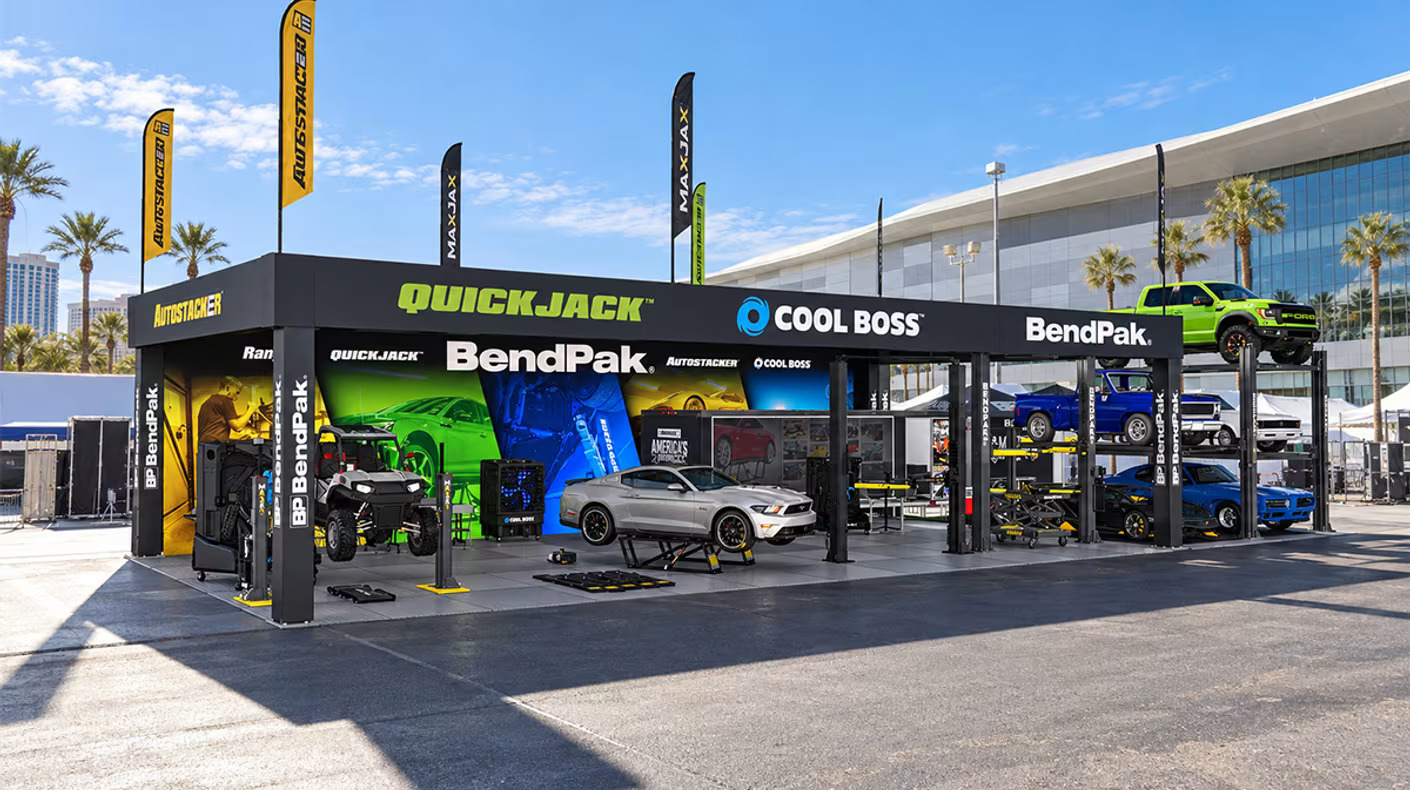
Among the outdoor highlights are the MaxJax MAX7 two-post lift, which now incorporates BendPak’s proprietary Automatic Swing Arm Restraint System and three additional inches of lifting height, along with MaxJax accessories such as a portable mounting base that eliminates the need for permanent anchors and a turf kit for lawn equipment. A preview of the forthcoming Mobi-EVS2600, the latest addition to BendPak’s EV battery pack and powertrain lift table line, will also be available.
The indoor showcase centres on the OctaFlex 12DPS, described as the only eight-arm two-post lift in the world, designed to streamline cab-off repairs, EV battery replacement and other demanding jobs and now shipping. BendPak is also presenting its APEX range of affordable, no-frills car lifts, ramps and wheel service equipment, together with Vortex bead seaters that simplify tyre bead seating even on changers lacking a built-in system.
Several products will appear at both locations. New BMW-specific AutoPucks join existing universal, Tesla and Corvette jack pad adapters engineered to engage OEM-recommended lifting points. QuickJack caster kits, the first OEM versions designed to ease movement and precise positioning of QuickJack lifts beneath vehicles, will also be displayed. SEMA-only pricing and ordering incentives on BendPak lifts and garage equipment are available throughout the week.
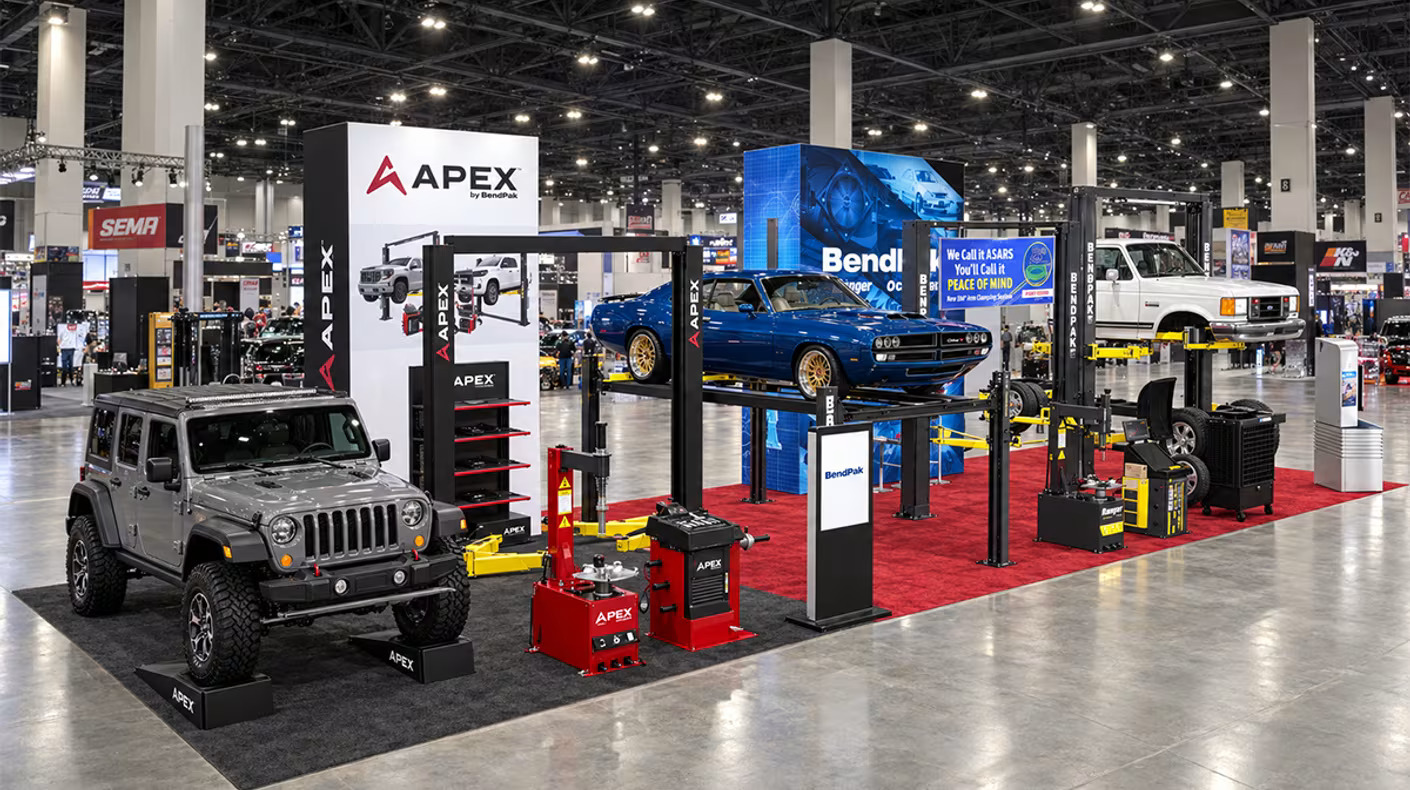
BendPak equipment will additionally support partner displays, custom builds and feature vehicles elsewhere on the show floor, including at Battle of the Builders and the SEMA FutureTech Studio. The SEMA Show runs 3–6 November at the Las Vegas Convention Center, with the traditionally trade-only event opening to the public on 6 November.
Jeff Kritzer, President and CEO, BendPak, said, “Everyone on our team is a car and truck enthusiast, so when it came time to debut the Valor C10, we knew we had to drop the tailgate, put on some music and hang out with the community that inspires us. SEMA is all about spotlighting the coolest builds, but it’s also about equipping the shops that bring them to life. Alongside the truck, we’re bringing a massive lineup of new gear across both booths. For us, this week is about celebrating where custom car and truck culture is right now and showing where we’re taking equipment engineering next.”
- Kia India
- Automotive Skills Development Council
- ASDC
- Don Bosco Industrial Training Institute
- CSR
- Federation of Automobile Dealers Associations
- FADA India
- Atul Sood
Kia India and ASDC Launch Automotive Skill Development Centre In Mumbai
- By MT Bureau
- October 21, 2026
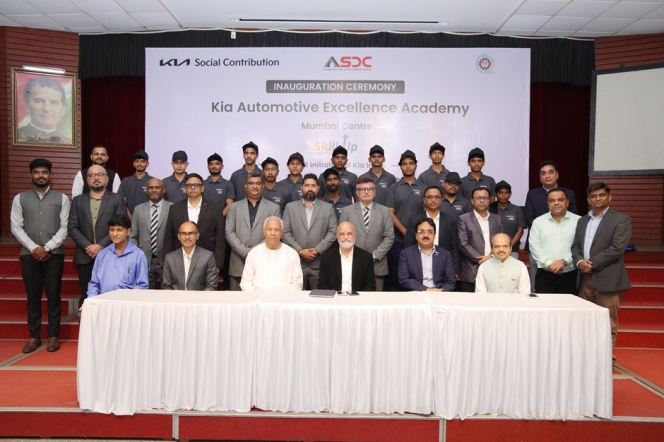
Kia India, one of the leading passenger vehicle manufacturers, has partnered with the Automotive Skills Development Council (ASDC) to open an automotive skill development centre at Don Bosco Industrial Training Institute in Kurla, Mumbai.
The initiative forms part of a four-centre regional programme spanning Mumbai, Faridabad, Bengaluru and Kolkata to train 360 candidates under corporate social responsibility (CSR) operations.
The Mumbai facility will provide training for 150 candidates across three job roles, covering four-wheeler service technology, service advisory and sales. The curriculum combines classroom instruction, practical training and workplace exposure delivered without financial cost to participants. Additional partners including the Federation of Automobile Dealers Associations (FADA) support the initiative to align workforce capabilities with dealership and retail requirements.
Atul Sood, Senior Vice-President of Sales and Marketing, Kia India, said, "At Kia India, we view skill development as an important enabler of inclusive growth and long-term industry advancement. Our partnership with ASDC is aimed at creating meaningful pathways for young people by providing access to structured, industry-relevant training without any financial burden. By integrating classroom instruction with practical learning and workplace exposure, the programme will help candidates develop capabilities aligned with the evolving needs of the automotive sector. The initiative reflects our commitment to creating sustainable value for communities while contributing to a stronger and future-ready mobility ecosystem."
- Porsche AG
- Sportwagenschmiede 35
- Rimac
- Bugatti Rimac
- MHP
- Michael Leiters
- Porsche Engineering
- Porsche Digital
- Porsche Technologies
Porsche Unveils Sportwagenschmiede 35 Strategy Targeting EUR 45 Billion In Revenue
- By MT Bureau
- October 19, 2026
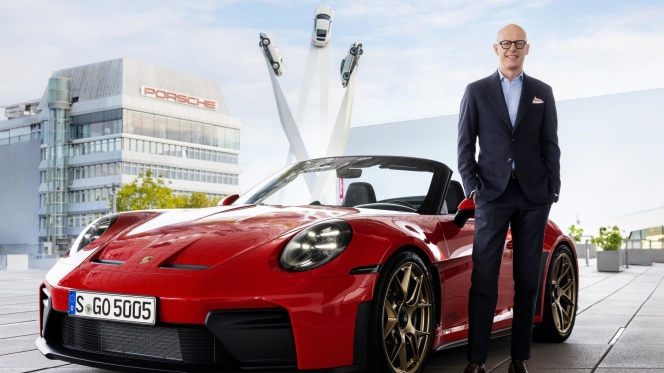
German premium luxury car brand Porsche AG has presented its medium-term corporate strategy, named Sportwagenschmiede 35, at its Capital Markets Day at the Weissach Development Centre. The strategy outlines operational restructuring, portfolio expansion and financial targets aimed at lowering the manufacturer's break-even point to below 200,000 vehicles annually.
The plan prioritises value creation over volume expansion by shifting the product lineup further toward high-margin vehicle segments. Porsche plans to reduce its overall model variant count by 20 percent while increasing the share of D and E segment vehicles in its portfolio by 45 percent.
The strategy includes plans for a mid-engined super sports car platform positioned above the 911 range, alongside potential additions to its SUV lineup. Product releases will include all-electric 718 Boxster and Cayman models scheduled for full-year market support in 2028, as well as a B-segment SUV featuring combustion and plug-in hybrid powertrains planned for production in 2028. Porsche is also expanding its individualisation operations under its Sonderwunsch programme, targeting a sixfold increase in customisation revenue.
Operationally, Porsche plans to lower development costs by up to 20 percent through modular development processes and shorter project timelines, while merging Porsche Engineering and Porsche Digital into a unified entity named Porsche Technologies. The company aims to reduce production personnel costs by up to 30 percent, cut sales and distribution expenses by 20 percent by restructuring its sales regions from five to four, and reduce material costs across new vehicle projects by 10 percent.
Management positions will be reduced by 40 percent, alongside an overall workforce reduction of 25 to 30 percent across direct and indirect functions. These measures follow existing agreements that include a reduction of 9,000 positions, alongside divested equity stakes in Rimac, Bugatti Rimac and MHP, as well as the planned closure of cell and e-bike development units.
Porsche has established its financial targets with the medium-term Group operating return on sales between 10 and 15 percent, with an Automotive net cash flow margin target of 9 to 12 percent. In the long term, Porsche targets a 15 percent operating return on sales and a 12 percent net cash flow margin, backed by projected Group revenue of EUR 41 billion to 45 billion.
Michael Leiters, Chairman of the Executive Board, Porsche AG, said, "We are pursuing a clear plan with our strategy Sportwagenschmiede '35. The ultimate goal is to further strengthen our unique sports car brand – across all model lines and with new, highly desirable models in particularly high-margin segments. Our strategy will lay the groundwork to make Porsche significantly more efficient, productive and profitable in three phases. At the moment, the main focus is on reducing costs and making the company more financially robust. We have already achieved some important milestones. Our strategy focuses very much on our medium-term ambition so that the measures and the associated results take effect as early as possible. The term 'Sportwagenschmiede' was deliberately chosen because it captures everything Porsche aims to stand for in the future: our aspiration to offer the sportiest vehicles in every segment, but also craftsmanship, down-to-earth thinking and entrepreneurial, business-focused action. Our goal is to be attractive to all stakeholders: our customers, our workforce, our partners and our investors."
- Honda India Foundation
- Honda Group
- Honda CB350
- Priyank Kharge
- Seemant Kumar Singh
- Karthik Reddy
- Prabhu Nagaraj
- Vishal Saxena
- Honda Motorcycle and Scooter India
Honda India Foundation Deploys 20 Emergency Response Vehicles For Bengaluru Traffic Police
- By MT Bureau
- October 18, 2026
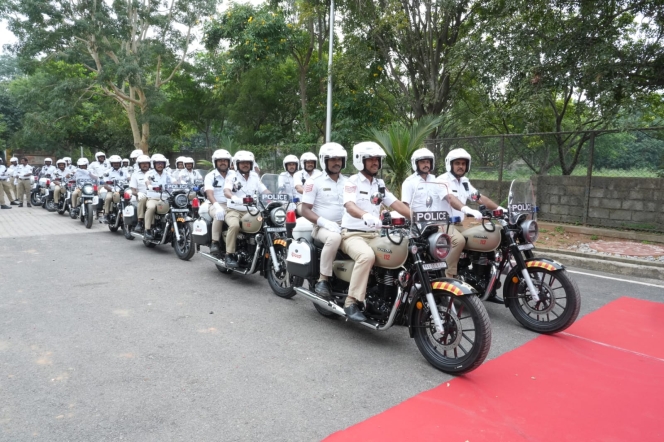
Honda India Foundation, the corporate social responsibility (CSR) arm of Honda group companies in India, has handed over 20 Emergency Response Vehicles to the Bengaluru Traffic Police to support traffic management, emergency response and field operations across the city.
The fleet consists of 20 modified Honda CB350 motorcycles equipped with dual-tone sirens, public address systems, LED emergency lights, display boards, windscreens and storage compartments for police operations. This deployment adds to the 50 Quick Response Team vehicles provided by the foundation to Bengaluru police in October 2025, bringing the total number of modified vehicles supplied to Karnataka police authorities to 70 units.
The handover forms part of the foundation's initiative under which 835 Emergency Response Vehicles have been deployed across multiple Indian states since August 2025.
Alongside the vehicle handover, Honda India Foundation signed a Memorandum of Agreement with the Bengaluru Traffic Police to establish a Traffic Training Park aimed at providing road safety education to road users. Groundbreaking for the facility was completed during the event, where the foundation also launched its road safety programme based on education, engineering, enforcement, and emergency care.
The ceremony was attended by Priyank Kharge, Minister for Home, Information Technology and Biotechnology, and E-Governance, Government of Karnataka, Seemant Kumar Singh, Commissioner of Police, Bengaluru City, Karthik Reddy, Joint Commissioner of Police (Traffic), Bengaluru City, Prabhu Nagaraj, Operating Officer for Corporate Affairs at Honda Motorcycle and Scooter India and Vishal Saxena, Operating Officer for the Narasapura Plant at Honda Motorcycle and Scooter India.
Comments (0)
ADD COMMENT