

CARS24 And IRSC Collaborate To Drive Road Safety In India
- By MT Bureau
- February 05, 2025
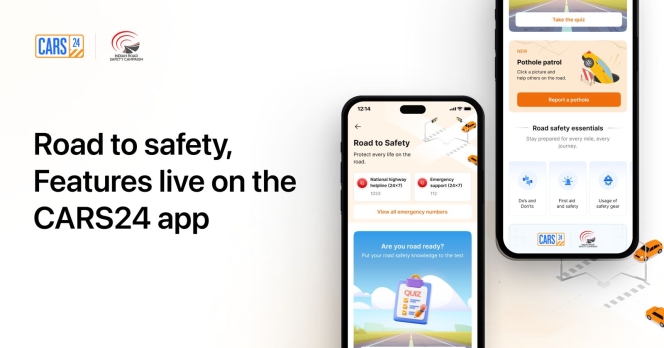
Leading autotech company CARS24 has teamed up with the Indian Road Safety Campaign (IRSC) to tackle road safety issues on a larger scale. This includes identifying and addressing accident-prone areas using data-driven insights, pushing for tougher enforcement of traffic laws to lower fatalities and interacting with legislators and urban planners to enhance road infrastructure for long-term effects. This is consistent with CARS24's mission statement, ‘Better Drives, Better Lives’, which emphasises that safety is a movement that calls for awareness, action and cooperation rather than merely a duty.
Pothole reporting using the CARS24 app is one of the most recent projects within this partnership. In order to contribute to the development of a centralised database of road hazards, users may now report potholes in real time. While the remaining information will be shared with local authorities to advocate for more extensive road repairs, IRSC will take steps to repair specific potholes after verification. Furthermore, every pothole that is reported will be geotagged, enabling other drivers to drive safely and steer clear of dangerous locations. By bridging the gap between public reporting and government action, this programme seeks to expedite the remediation of dangerous road conditions.
In addition to updating its app with new features and improving drivers' access to important information, CARS24 is getting ready to train all of its Autonauts (staff) as first responders. All 150 staff, including the co-founders, have already received training in emergency response, first aid and CPR as part of the project. In order to ensure that more individuals are ready to intervene when it counts most, this programme will be extended to provide them with life-saving skills.
Gajendra Jangid, Co-Founder, CARS24, said, "We’ve all seen it, a crash that changed a life forever. India has just one percent of the world’s vehicles but 11 percent of global road deaths. That’s not bad luck – it’s a failure of infrastructure, enforcement and awareness. Over 60 percent of these deaths are preventable, yet road accidents remain an everyday tragedy. It’s time to change that. CARS24 is stepping up not just to talk about road safety but to take action. Because no mother should have to fear every time her child steps out. No father should have to worry if their child will make it home. No family should receive a call that changes everything. Fixing potholes, improving accessibility and empowering people with knowledge and tool is our first step towards this mission. Having said that, road safety isn’t just one company’s effort; it’s something we all need to take responsibility for. Because a safe journey home shouldn’t be a privilege – it should be something we build together."
Vikram Chopra, CEO and Co-Founder, CARS24, said, "India loses three percent of its GDP annually due to road crashes. That’s more than what we spend on healthcare and education combined. Beyond the personal tragedy, road accidents impact the entire economy. If fixing roads, enforcing laws and driving responsibly can save lives and boost our nation’s progress, then we have no excuse not to act."
Amar Srivastava, Founder and President, Indian Road Safety Campaign, said, “We started IRSC more than a decade back due to loss of close seniors to a road-crash at IIT Delhi. However, India still loses more than 100,000-plus youth to road-crashes, and solving such a multi-sectoral problem would need the private, government and citizens to come together to solve this while using technology as the backbone for sustainable impact. With our collaboration with CARS24, we aim to save a million lives across the next decade by leveraging technological innovations to change behaviour and nudging citizens at scale to drive responsibly and help reduce crashes by active participation.”
Deepanshu Gupta, Co-Founder and Vice President, Indian Road Safety Campaign, said, “While a lot of people believe road-crashes are accidents, they are not. Each and every accident is preventable by systemic interventions, and with our collaboration with CARS24, we would work across the 4Es of road-safety [engineering, education, emergency care, enforcement] at 10x scale and speed. Road-crashes are today the leading cause of youth deaths. While this is a global menace, India leads the pack and am hopeful that if we all collaborate to act, we would also be the leaders in showing how to solve this sustainably. Time to act is now.”
- BYD
- United Nations Global Compact
- UN Sustainable Development Goals
- Sustainability
- Carbon Neutrality
- New Energy Vehicles
BYD Officially Joins UN Global Compact As It Advances Carbon Neutrality Goals
- By MT Bureau
- October 27, 2026
Chinese automotive major BYD has become a participant of the United Nations Global Compact (UNGC), formally joining the world’s largest corporate sustainability initiative on 14 September 2026. The Chinese new energy vehicle manufacturer has committed to upholding the compact’s Ten Principles while embedding the UN Sustainable Development Goals (SDGs) more deeply into its corporate strategy and daily operations, with the company framing the move as a contribution to global sustainable development through concrete action.
The UN Global Compact, founded in 2000, pioneered the concept of environmental, social and governance performance and now counts more than 25,000 participating enterprises across over 160 countries. It works to translate its Ten Principles into business operations and strategic development, helping companies meet their compact responsibilities while advancing the UN’s 2030 Agenda for Sustainable Development. The initiative also promotes collaboration and partnerships aimed at addressing the challenges of globalisation and accelerating sustainability worldwide.
BYD, the world’s largest new energy vehicle enterprise, sells its vehicles in more than 100 countries and regions. Guided by its vision to cool the Earth by 1°C, the automaker stopped producing purely fuel-powered vehicles in 2022, becoming the first carmaker to do so, and aims to reach carbon neutrality across its entire value chain by 2045. Its DREAMS sustainability strategy, unveiled in 2025, rests on six pillars: decarbonisation, revolution, equity, alliance, moral integrity and shared value. In 2025, BYD delivered 4.6 million new energy vehicles and reduced carbon emissions by 46.6 million tonnes, equivalent to planting 776 million trees. It has also established a RMB 3 billion charity fund supporting education, university scholarships and the popularization of new energy vehicle technology.
The company described joining the compact as a milestone in its sustainability journey. Going forward, BYD intends to adhere strictly to the initiative’s principles and requirements, fulfil its corporate social responsibility and promote responsible governance and business practices throughout its operations while working with value chain partners to advance broader sustainable development goals.
- Suresh KV
- India Pistons
- Amalgamations Group
- ZF India
- Hyundai Motor Company
- Maruti Suzuki India
- Ashok Leyland
- Tata Motors
- VE Commercial Vehicles
- Simpsons & Co
- TAFE
- Mahindra & Mahindra
- Greaves Cotton
- ACMA
- Automotive Component Manufacturers Association of India
- Hansen Transmissions
- High Technology Plastics India
- Motherson Sumi Systems
- Climate Systems India
- Visteon Automotive Systems
- Bajaj Auto
- Asian Paints
Automotive Industry Veteran Suresh KV Joins India Pistons As CEO
- By Nilesh Wadhwa
- October 26, 2026
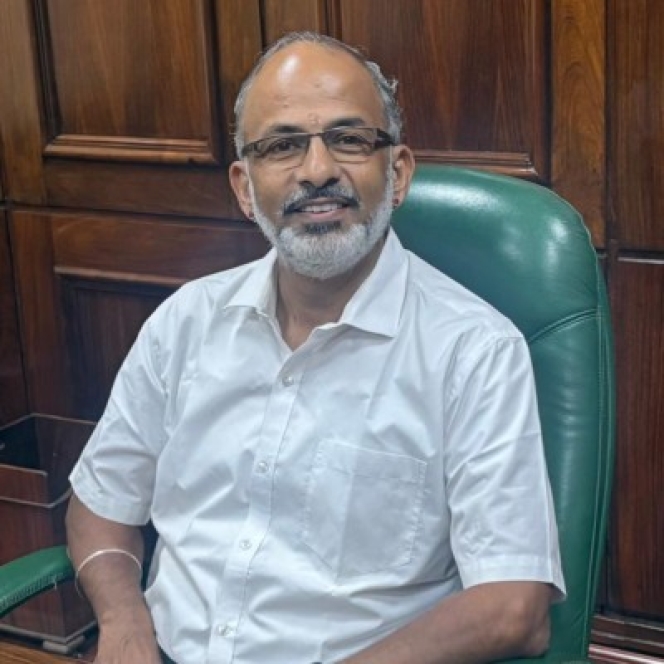
India Pistons, the flagship company of Chennai-headquartered Amalgamations Group, has announced the appointment of Suresh KV as Chief Executive Officer effective 14 October 2026.
The appointment marks his return to corporate leadership following a sabbatical of nearly three years spanning from January 2024 to October 2026. Prior to his sabbatical, Suresh served as President of ZF India from June 2015 to December 2023, where he led the vision, strategy, governance, and business performance across 18 manufacturing plants, eight engineering centres, three subsidiaries, and four joint ventures nationwide.
At present, IPL's major OEM customers include Hyundai Motor Company, Maruti Suzuki India, Ashok Leyland, Tata Motors, VE Commercial Vehicles, Simpsons & Co, TAFE, Mahindra & Mahindra and Greaves Cotton, among others.
He also represented the company on the Executive Committee of the Automotive Component Manufacturers Association of India (ACMA), serving as Co-Chair for its Western Chapter.
His earlier tenure at ZF included serving as Executive Director of ZF Wind Power Coimbatore from November 2010 to May 2015. He managed a 60-acre manufacturing facility producing wind turbine gearboxes, axles, and transmissions for agricultural and construction equipment, achieving an annual turnover exceeding INR 9.50 billion in 2015.
Suresh's career in the automotive and industrial manufacturing sectors spans more than three decades, including operational and managerial positions at Hansen Transmissions, High Technology Plastics India, Motherson Sumi Systems, Climate Systems India, Visteon Automotive Systems, Bajaj Auto and Asian Paints.
In his new role at India Pistons in Chennai, Suresh will oversee operations, performance execution, and growth strategy for the manufacturer.
"My nearly three-year break from the corporate world has been much the same – a welcome pause to reflect, rejuvenate and rediscover purpose. This new chapter is much more than professional achievement, alone. It is an opportunity to make a meaningful difference, create lasting value, and perhaps pursue the fifth level of Maslow’s hierarchy of needs – self-actualisation. As the saying goes, 'Old wine in a new bottle' – though I would like to believe that, with age, the wine only gets better! The break is over. The final stint begins, with renewed energy, a clearer sense of purpose, and the excitement of being back in the game," said Suresh KV.
Honda Inks MoU With Mitsubishi For Triton-Based Pickup Truck For ASEAN Market
- By MT Bureau
- October 25, 2026

Japanese automotive companies Honda Motor Co and Mitsubishi Motors Corporation have signed a Memorandum of Understanding (MoU) to develop a Honda pickup truck based on the Mitsubishi Triton.
The agreement marks the first product-supply initiative between the two manufacturers, with the new Honda model scheduled to enter the ASEAN market in 2028. The collaboration originates from a strategic partnership framework established in August 2024 among Honda, Mitsubishi Motors and Nissan Motor, which explores vehicle supply arrangements to expand product lineups across international markets.
As per the agreement, Honda will enter the pickup truck segment in the ASEAN region by utilising Mitsubishi's 1-tonne ladder-frame Triton platform. For Mitsubishi Motors, the OEM supply contract will increase production volumes and vehicle assembly capacity utilisation at its manufacturing facilities in Thailand. The three partner companies continue to examine additional vehicle supply and technology-sharing initiatives.
- Renewable Energy India Expo and The Battery Show India
- TBSI
- Philip Green
- Yogesh Mudras
- Anandi Iyer
- Fraunhofer Office
- Informa Markets
- Manu Srivastav
- Jai Asundi
Critical Minerals And Battery Manufacturing Focus Shifts To India At TBSI
- By MT Bureau
- October 24, 2026
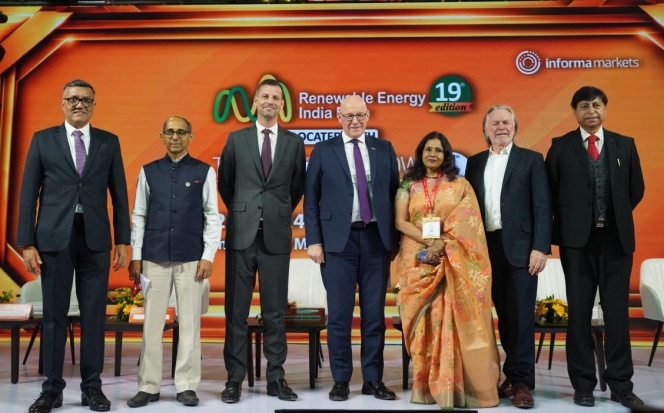
Industry leaders at the Renewable Energy India Expo and The Battery Show India (TBSI) highlighted critical mineral access, technology partnerships and domestic manufacturing capabilities to strengthen India's electric vehicle supply chain.
The event convened over 1,080 exhibitors, 1,400 brands and 54,000 professionals, focusing on international collaboration across critical minerals, battery technology and energy storage.
Interestingly, Australia, represented by 20 companies and 32 exhibitors, identified battery production and electric vehicle supply chains as areas for cooperation with Indian manufacturers, leveraging its lithium, cobalt and rare earth reserves. Projections shared at the exhibition indicate India's renewable energy market will reach 486 GW by 2030, while the battery storage sector is projected to surpass USD 8.5 billion by 2031, growing at a compound annual growth rate of 33 percent.
Philip Green, Australia’s High Commissioner to India, said, "The two countries could combine Australia’s engineering expertise and mineral resources with India’s manufacturing strength and integration into global supply chains. Australia produces more than 50 percent of the world’s lithium, according to Green, and holds the world’s second-largest cobalt reserves. It also ranks second or third globally in rare earth resources." he said.
Yogesh Mudras, Managing Director of Informa Markets in India, said, "Renewable energy generation and grid storage needed to expand together as the country advanced its energy transition. India’s renewable energy market is projected to reach 486 GW by 2030, growing at a compound annual growth rate (CAGR) of 15 percent. The country’s battery storage sector is projected to exceed USD 8.5 billion by 2031, with a CAGR of 33 percent."
Anandi Iyer, Director of the Fraunhofer Office in India, said, "India and Germany had opportunities to collaborate in battery research, power electronics, advanced engineering and industrial automation. Approximately 800 GW of renewable energy capacity additions globally in 2025, while global battery storage deployment reached 108 GW, an increase of 40 per cent from the previous year. Technological self-reliance did not mean working in isolation, highlighting the importance of trusted partnerships and supply chains that can translate research into commercially viable solutions."
Manu Srivastav, Additional Chief Secretary in Madhya Pradesh’s Power & Renewable Energy Department, said, "Renewable energy was becoming increasingly competitive with conventional power as costs declined.”
Jai Asundi, Executive Director of the Centre for Study of Science, Technology & Policy, said, "India would need continued investment in manufacturing, energy storage, grid infrastructure, research and skilled talent to build a resilient clean energy ecosystem."
Comments (0)
ADD COMMENT