

High-Octane Drama And Teenage Brilliance Light Up Kari Motor Speedway
- By MT Bureau
- September 15, 2026
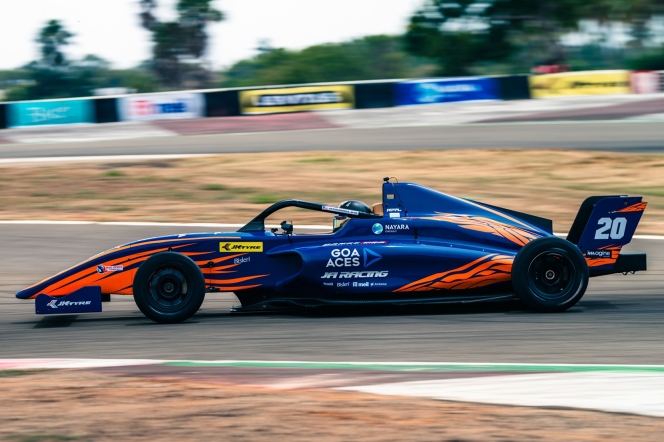
Powered by JK Tyre, the Indian Racing Festival 2026 got off to a thrilling start at the Kari Motor Speedway (KMS) in Coimbatore, recently, with the opening round of the F4 Indian Championship delivering three action-packed races and a closely contested battle for the top honours.
Aris Kyriakou emerged as the standout performer of the weekend, combining two runner-up finishes with a Race 3 victory to finish Round 1 with a dominant display.
With the opening round producing seven different drivers on the podium across the three races, the championship has already underlined the depth of competition on the grid. The F4 Indian Championship will now remain at Kari Motor Speedway for Round 2, giving the drivers another opportunity to challenge for crucial championship points at the same venue before the six-round season moves on to its other racing destinations.
South African Luviwe Sambudla stole the spotlight as the opener didn't unfold the way the grid sheet suggested it might. Sambudla, lining up eighth for Goa Aces JA Racing, tore through traffic almost immediately and had himself in podium contention within the first four opening laps in the first battle.
A mid-race safety car briefly closed up the field and threatened to undo his hard work, but it barely slowed him down as he crossed the line first in 31 minutes and 05.808 seconds, edging Kyriakou by 2.245 seconds, with pole-sitter Aaron Mehta rounding out the podium in third.
Before any of that unfolded, though, it was Mehta who'd already made headlines. The fifteen-year-old Singaporean, racing for Kolkata Royal Tigers, put in a lap of 1:05.652 to become the youngest driver ever to take pole in this championship's history. He couldn't quite hold that pace deep into the race, dropping to third as his tyres wore thin, but for a debutant barely out of his mid-teens, a podium finish is nothing to sniff at.
Aryan Narola's pole-to-flag drive made him the second-youngest race winner in series history
Starting from pole in Race 2, Goa Aces JA Racing’s Aryan Narola fended off constant pressure from Kyriakou across the full 26-lap distance on the second day of the championship, eventually taking the flag just 0.624 seconds clear. Aris Kyriakou and Swarnav Das completed the podium behind them. The result makes Narola the second-youngest winner in the championship's history, a milestone which will be talked about in the lead-up to Round Two.
Race 3 belonged to Aris Kyriakou
Starting from pole for the third race running, Kyriakou didn't have things all his own way. He crossed the line first, but not before fending off relentless pressure from Mahlori Mabunda, who spent much of the race glued to his gearbox. Third went to Mehta, while Sambudla, the weekend's Race 1 winner, could only manage fourth this time round.
Mabunda displayed the pace to challenge for the win, but spent lap after lap fighting the effects of dirty air, the turbulent, disrupted airflow that trails a car ahead and robs the chasing driver of downforce through the corners.
Further back, the race delivered its share of chaos too. With the laps winding down, the leaders began lapping the rest of the field, sweeping up everyone from fourth to fourteenth during the final 90 seconds. Amid that scramble, Ntiyiso Mabunda came to a halt on track on the last lap, forcing race control to throw a yellow flag. The timing worked out well for Mehta, who'd been running fourth behind Kyriakou and the two South Africans, but Mabunda's misfortune opened the door, and he grabbed third as a result.
Round 1 threw up seven different names on the rostrum across its three races, but it's Kyriakou's name that stands tallest heading into the next stop. With the series set to return to the very same venue for its second round, all eyes will be on whether he can carry this form forward, or whether the chasing pack finally finds a way past.
Indian Auto Sales See Record Growth Across Segments In Q2 FY2027
- By MT Bureau
- October 15, 2026

The Society of Indian Automobile Manufacturers, the apex body representing automakers across segments in the country, has released the wholesales data for Q2 FY2027, which saw record performance across passenger vehicles, commercial vehicles, three-wheelers and two-wheelers.
In Q2 FY2027, the passenger vehicle segment domestic sales reached 1.36 million units, up 30.7 percent YoY. Sports Utility Vehicles (SUVs) accounted for 68 percent of total passenger vehicle sales, recording a growth of 34.2 percent, while passenger car sales increased by 24.9 percent. Passenger vehicle exports declined by 5.2 percent to 229,087 units, impacted by logistics constraints in West Asia and higher baseline comparison figures.
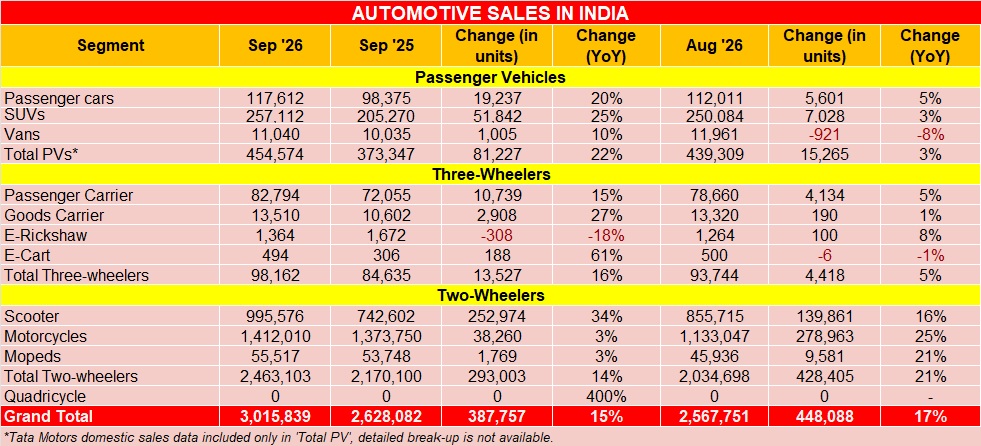
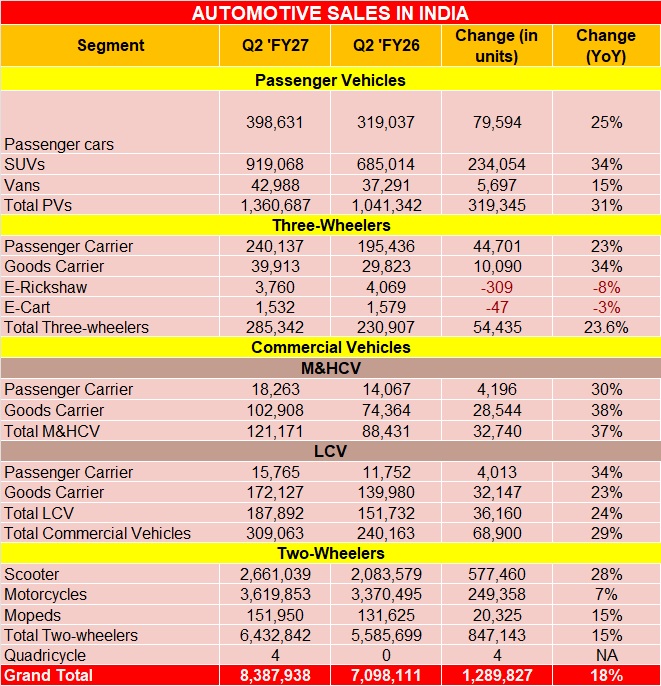
The two-wheeler segment posted domestic sales of 6.43 million units, registering a growth of 15.2 percent YoY. Scooter sales increased by 27.7 percent, while motorcycle sales rose by 7.4 percent. Two-wheeler exports reached a record Q2 total of 1.65 million units, marking an increase of 27.7 percent over the same period last year.
In the three-wheeler category, domestic sales grew by 23.6 percent to 285,342 units, driven by demand for cargo configurations and electric L5 vehicles. Three-wheeler exports reached a record Q2 total of 161,060 units, representing a 30.4 percent increase. The commercial vehicle segment recorded domestic sales of 309,063 units, marking a growth of 28.7 percent, while commercial vehicle exports rose by 72.5 percent to exceed 41,416 units, supported by infrastructure spending and fleet replacement demand.
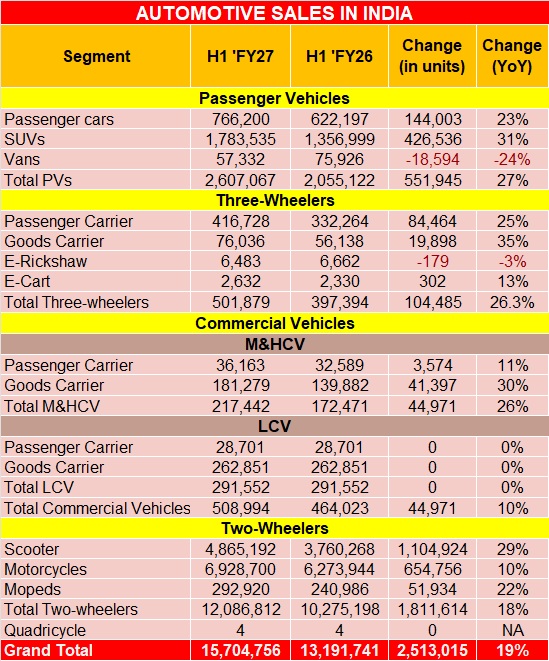
Shenu Agarwal, President, SIAM, said, "The Indian automotive industry delivered a strong performance in the first half of FY2026-27, following a robust second quarter and a strong September 2026. This stellar performance across all segments of the automobile industry has been supported by improved affordability following GST 2.0, resilient rural and urban demand, healthy freight movement, infrastructure-led economic activity, and a gradual replacement cycle across vehicle segments. The electric vehicle ecosystem also continues to mature with multiple offerings, improving charging infrastructure and supportive policy measures. At the same time, alternative fuel technologies are witnessing increasing acceptance and are expected to play an important role in India's sustainable mobility transition. Industry looks forward to the festive season for the continued momentum while remaining cautiously optimistic due to prevailing geo-economic uncertainties. Continued investments in infrastructure, sustained economic growth, and rising adoption of cleaner and more efficient mobility solutions are expected to support industry growth through the second half of 2026-27."
- FADA Academy
- Automotive Skills Development Council
- ASDC
- Ashok Auto Sales
- Manoram Bajaj Group
- Autograd Regional Skill Development Centre
- C S Vigneshwar
FADA Academy, ASDC Open First Joint Training Centre In Agra
- By MT Bureau
- October 15, 2026
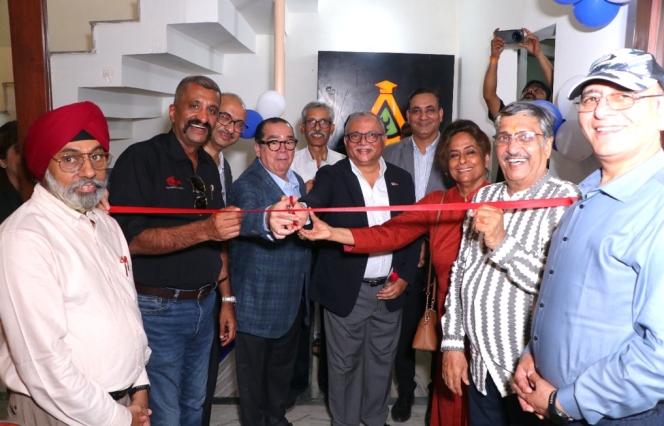
FADA Academy, in collaboration with the Automotive Skills Development Council (ASDC), has inaugurated its first joint skill development centre in Agra.
Located within the dealership facilities of Ashok Auto Sales and Manoram Bajaj Group, the Autograd Regional Skill Development Centre establishes a training framework situated directly inside automotive retail operations.
The facility aims to address workforce gaps in automotive retail by providing candidates with training matched to dealership job roles. The initial cohort at the centre consists of candidates undergoing instruction for the Service Advisor role, supported by participating dealerships representing brands including Bajaj Auto, TVS Motor Co, India Yamaha Motor and Tata Motors.
C S Vigneshwar, Chairman of FADA Academy & Research, said, "FADA Academy is committed to strengthening the capabilities of India's automotive retail workforce through industry-relevant education and training. The establishment of our first joint training centre with ASDC at Agra is an important milestone in this journey. By bringing training into the dealership environment, we can create a stronger connection between learning and actual workplace requirements. Our vision is to create local employment opportunities, support the talent requirements of dealerships and provide aspiring professionals with a foundation for long-term career progression within the automotive sector. We also want to ensure that candidates are not merely trained to secure a job, but are equipped to perform with confidence, deliver value to their employers and build long-term careers in the automotive industry. We hope this initiative will serve as a replicable model for dealership-led skill development across the country. The automotive sector is evolving rapidly, driven by new technologies, changing customer expectations and increasingly sophisticated dealership operations. This makes industry-aligned skill development more important than ever. The FADA Academy–ASDC joint training centre at Agra is a progressive initiative that brings structured training closer to the workplace and enables candidates to develop competencies relevant to their designated job roles."
The inauguration event was attended by Union Minister of State Prof. S. P. Singh Baghel, ASDC Chief Executive Officer Prasanna Pahade, FADA Uttar Pradesh Chairperson Sandeep Narain and leadership representatives from local dealer groups. The initiative forms part of a broader framework intended to be replicated across other regions to train dealership personnel.
- Larsen & Toubro
- L&T
- TuTr Hyperloop
- IIT Madras
- S V Desai
- Prof. Satya Chakravarthy
- Dr Aravind S Bharadwaj
L&T Inks Agreement With TuTr Hyperloop To Develop Next-Generation Mobility Systems
- By MT Bureau
- October 14, 2026
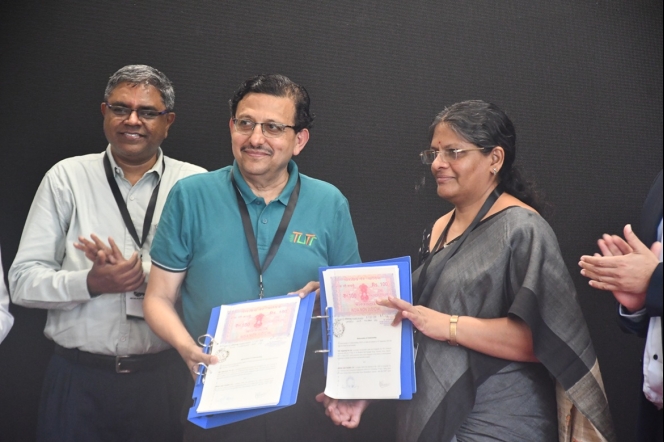
Larsen & Toubro (L&T) has signed a Memorandum of Understanding with TuTr Hyperloop, an IIT Madras-incubated deep-tech startup, to develop and deploy next-generation mobility infrastructure in India.
The agreement creates a framework for L&T and TuTr Hyperloop to collaborate on Linear Induction Motor-based propulsion systems, vacuum tube structures, pressure management systems, civil engineering works, electrical infrastructure, signalling and telecommunications integration.
Project-specific agreements will follow to define execution terms across freight logistics, port connectivity and industrial transit applications. The technical roadmap aims to progress from linear induction systems toward magnetic levitation and vacuum-based transportation networks.
The partnership combines L&T's engineering, procurement and construction capabilities with TuTr Hyperloop's electromagnetic propulsion research to assess commercial viability, conduct technical feasibility studies and engage prospective customers for hyperloop transit projects in India.
S V Desai, Whole-Time Director and Senior Executive VP of Infrastructure, L&T, said, "Hyperloop represents an exciting frontier in next-generation mobility, with the potential to redefine the movement of people and goods. Its innovative propulsion technology and low-friction environment enable faster transit, improved logistics efficiency, reduced energy consumption and lower emissions. Translating such technological innovation into practical deployment requires robust engineering, scalable infrastructure and close collaboration across the ecosystem. Our partnership with TuTr Hyperloop is a step in that direction."
Prof. Satya Chakravarthy, Professor, IIT Madras, said, "The transition of advanced mobility technologies from research and development to real-world deployment requires strong collaboration between academia, technology developers and industry. This partnership between TuTr Hyperloop and L&T brings together complementary strengths that can help address the engineering and infrastructure challenges involved in scaling next-generation transportation systems. It is an encouraging step towards translating indigenous innovation into practical, deployable solutions for India."
Dr Aravind S Bharadwaj, Co-Founder and CEO, TuTr Hyperloop, said, "At TuTr Hyperloop, our focus is on developing indigenous mobility technologies that can address real-world transportation and logistics challenges. Our collaboration with L&T brings together our capabilities in electromagnetic propulsion, advanced mobility systems and technology development with L&T’s extensive engineering and infrastructure execution expertise. Together, we aim to work on commercialisation these technologies."
Axalta Names Redefined As 2027 Global Automotive Colour Of The Year
- By MT Bureau
- October 14, 2026
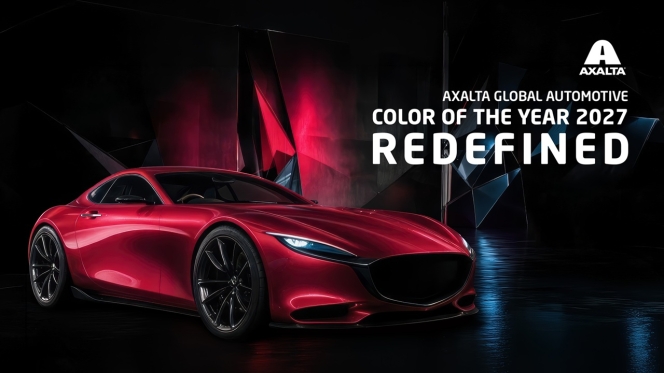
Coatings manufacturer Axalta Coating Systems has introduced Redefined, a ruby-red finish, as its 2027 Global Automotive Colour of the Year during the Automechanika exhibition in Frankfurt.
The finish incorporates pigment and effect technology designed to create depth and light reflection across vehicle body panels. Redefined marks an evolution of the red hue introduced with Radiant Red, Axalta's initial Colour of the Year selection 13 years ago. The development reflects market research into consumer preferences for vehicle personalisation and colour depth across global automotive markets.
Axalta's colour formulation teams utilise market trends and coating science to develop manufacturable formulations for global original equipment manufacturers and refinish networks. The 2027 selection is structured for application across multiple vehicle segments and production lines.
Matthew Boland, Vice-President of Global Refinish Technology, Axalta, said, "Redefined represents where we see automotive colour going, expressive and individual, but still refined and timeless. The deepness of the ruby tone combined with its luminosity and depth creates a colour that comes alive with the vehicle. It's a great example of how we can take a familiar colour and use the art and science of coatings to give it an entirely new perspective."
Comments (0)
ADD COMMENT