

- Mahindra & Mahindra
- Mahindra Scorpio
- Mahindra Scorpio Classic
- Mahindra Lifestyler
- Mahindra Scorpio Lifestyler
- R Veluswamy
- Nalinikanth Gollagunta
Mahindra Draws On Scorpio Brand Strength For Global Lifestyler Pickup Push
- By Nilesh Wadhwa
- August 17, 2026
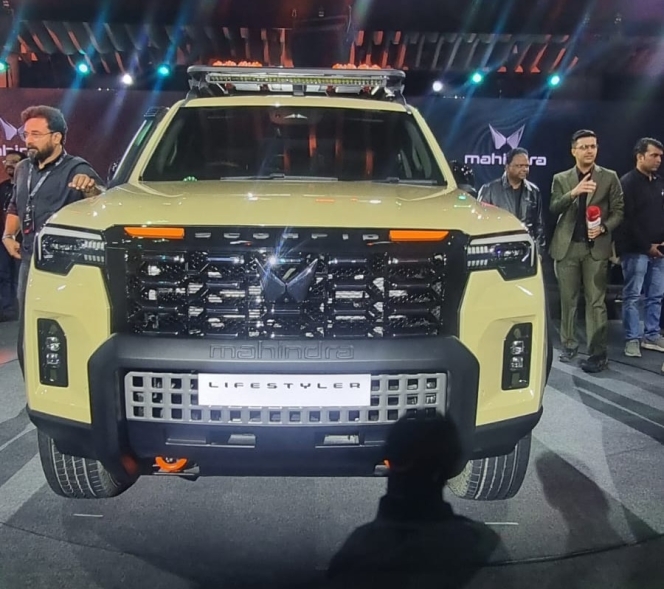
Mumbai-based automotive major Mahindra Group is preparing to test the waters of India’s nascent lifestyle pickup segment, while accelerating a deliberate international expansion and doubling down on its electric vehicle ambitions.
It was on 14th August that Mahindra took the wraps off its much-anticipated global pickup truck christened – ‘Mahindra Lifestyler’ and ‘Scorpio Lifestyler’ (for India market), based on the popular Scorpio SUV. While the technical details and pricing have still been kept under wraps, what's known is that it will be available in three variants - Trail, Valley and Reef editions. It will be launched by April 2027 with prices starting under INR 1.95 million (ex-showroom).
R Veluswamy, President - Automotive Technology & Product Development, Mahindra Group and Nalinikanth Gollagunta, CEO, Automotive Division, Mahindra & Mahindra, outlined a strategy rooted in what they describe as latent customer demand rather than existing market size.
“The latent demand, latent need is the most important thing,” Gollagunta said. “So far what we have seen is, it’s a compromise choice they make. Because they don’t have the right product at the right price point. So, they’re making either a compromise on the capability or making a compromise on the budget.”
He added, “We believe that the latent demand for an uncompromised choice means there’s an open space for us to play.”
Veluswamy reinforced the point by recalling the original Scorpio’s arrival. “When we first saw the car, we all were blown away, but no customer had expressed that they wanted such a car. So, to say that the pickup segment is not exist may be a statement that’s not representative of the customer. They may not know how to express it. The latent desires are always understood.”
He continued: “We have seen customers who want the pickup character and who want the SUV character and who want the 4x4 character at an affordable price point. If you put all of them together, Mahindra has the deep pickup expertise. Mahindra has the deep SUV expertise; we put all of them together, and we think it will click with the customer.”
The forthcoming Scorpio-badged Lifestyler pickup was originally conceived as a global product.
“You have to remember three years ago, this was a global pickup as we call it. This was for the global market. But in three years, we have had enough indications to tell us that there’s some latent demand in this market,” Gollagunta noted.
Responding to a query on the volume expectations, Gollagunta said, “I won’t get into the volumes to be honest. The way we are looking at it is we are the third largest automotive market in the world. We believe the market is evolving and maturing and becoming a lot more sophisticated. The problem we see is there are not enough of these choices in these markets.”
Veluswamy pointed to past surprises as evidence that the right product can rewrite expectations. “How many of us thought the 9E would have such volume? And the 9S when we launched, how many of us thought that would have that volume? It clearly tells if you have the right product for the right customer needs. They don’t look at the price. They look at the value proposition.”
He added of the XUV700: “Who in the earth would have imagined that this car will be selling at 9,000 units per month. Who would have thought?”
The Scorpio brand itself is viewed as elastic enough to support the new model. “Our sense is the Scorpio brand means a lot to different people,” Gollagunta observed.
“There are a lot of customers who have a Scorpio Classic, who tell us that I will not buy a Scorpio N. A lot of Scorpio N customers say that I don’t see myself in a Scorpio Classic. Yet the market has stretched and you have two distinct segments with very loyal customers on both sides. So, it’s hard to predict right now. Our view is there’s enough elasticity in the brand today to take a price that is very distinct in itself,” he said.
Pricing has been carefully signalled rather than fixed. “I’ve given one so that now I can have conversations,” Gollagunta explained. “The starting price is less than this, we said. It’s a conversation starter for me to have conversations with customers.”
Veluswamy clarified, “The starting price is less than that. We haven’t announced the price. We have just put a number.”
When queried about the production capacity for the upcoming Lifestyler, “Every new product comes, it comes with a capacity,” Veluswamy said. “So there is a capacity for the product, and there is an operationalisation based on the demand; you operationalise the capacity.”
The vehicle will benefit from body-on-frame technology, 4x4 expertise and technologies already proven elsewhere in the range. “We are riding on that high price point SUVs, which means high technologies that we already use in our ICE and EVs. That is what we are bringing to pickup,” he noted.
Beyond India, the company is pursuing a measured three-phase global approach.
“There is a three-phase strategy. The core markets where we have a strong legacy will continue to double down. Those markets: South Africa, Australia for sure. The second wave is the other LHD markets where we think there is significant potential for us. And we have talked about UK. If we go there, we want to go there to win. And if you are not convinced we cannot win, we will be careful about doing it. I am not in a hurry because I have a core market which is doing well. But we will go out there; the difference is we now have products which are built for the globe,” Gollagunta averred.
Veluswamy provided market context: “We sold about 235,000 units last year (2025) in Australia. And about 135,000 units in South Africa. But the majority of them are these mid-size pickups. The South African market is looking for versatility. Whereas the Australian market is looking for adventure, freedom, go anywhere, towing 3.5-tonne trailers, premium upmarket. So, it is really two different markets.”
The Indian market in the recent past has seen a slew of automakers in the passenger vehicle space introduce hybrid products. For Mahindra, the message has been clear: electrification was unambiguous.
“Our focus is electric, electric, electric. That’s it,” Veluswamy declared.
Furthermore, the company had no intention to dilute its SUV focus simply to chase EV volume elsewhere. “We play in the SUV market. So wherever there is an SUV market, we bring electric. You have to see multiple parameters. It’s not one-dimensional.”
Gollagunta added that electric powertrains are already on the roadmap for future platforms: “We did have the NU_IQ we launched last year, and we said that there is going to be electric powertrains on NU_IQ. But if we do it, it has to be in a way that we believe taps into a platform architecture.”
Veluswamy highlighted the recently introduced BE6 for its intelligence layer.
“The intelligence of the car is different from intelligent driving. Naturally, it can speak to you. You can ask many questions. It is like a teacher, a tuition teacher. That is phenomenal. It understands the context, the context reasoning. It understands natural language reasoning. You do not have to be as accurate as Alexa. That is why we say it is unmatched.”
He detailed the system’s architecture: “It goes to the cloud, and it has 17 agents, and 17 agents are working in tandem. If they have to get it from the LMM, the Gemini model, then it directly gets it.”
Simple commands remain local and immediate, while contextual or knowledge-based queries draw on the cloud. “Our electric vehicle is one of the best cyber security certified. Without cybersecurity, you cannot even bring this in,” he added.
Going forward, it will be interesting to see whether the Scorpio Lifestyler remains a niche experiment or becomes another volume surprise will depend on the next six months of customer conversations.
What is already clear is that Mahindra intends to treat both the Indian opportunity and its wider global and electric ambitions with the same methodical, brand-first discipline that has underpinned its recent growth.
- Automotive Skills Development Council
- ASDC
- WorldSkills Competition
- Vinkesh Gulati
- Prasanna Pahade
- Maruti Suzuki India
- Toyota Kirloskar Motor
- Mahindra & Mahindra
- FANUC India
- Axalta Coating Systems India
- Festo India
- SHINING 3D
- Autodesk
- NAMTECH
- International Automobile Centre of Excellence
- NTTF
- Synoptic Skills Studio
Indian Automotive Technicians Secure 5 Medals For Excellence At WorldSkills Shanghai 2026
- By MT Bureau
- October 01, 2026
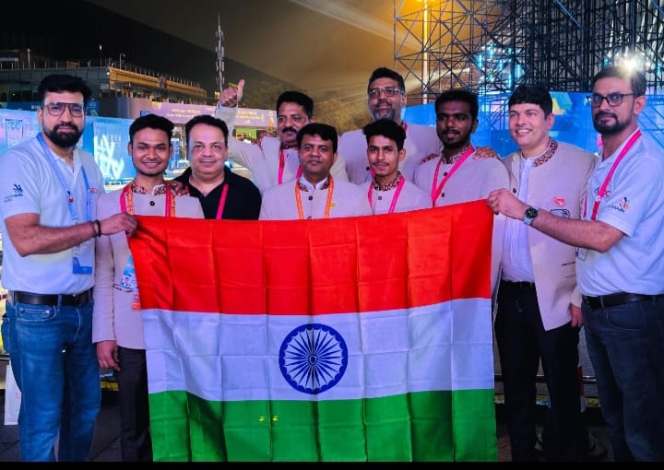
In what comes as good news for the Indian automotive industry, competitors trained by the Automotive Skills Development Council (ASDC) secured five Medals for Excellence at the 48th WorldSkills Competition held in Shanghai, China, from 22 to 27 September 2026.
The event featured more than 1,400 participants from 70 countries, with India fielding a contingent of 70 competitors across 63 skill categories. Team India recorded a Top 10 global finish with six Silver Medals and 20 Medals for Excellence overall. The ASDC prepared candidates through training programmes, hands-on practice, exposure visits and competitions organised in collaboration with industry and academic partners.
The ASDC-supported participants awarded Medals for Excellence were Pavan Bhadravati Suresha in Additive Manufacturing, Kaif Khan in Car Painting, Md Seraj in Automobile Technology, Mallinath and Suhan Mascarenhas in Industry 4.0 and Abhishek Somanna Shignalli alongside Vinay Muttayya Hiremath in Robot Systems Integration.
Vinkesh Gulati, Chairperson, ASDC, said, "This stellar performance at WorldSkills Shanghai 2026 is a proud moment for ASDC and a testament to the immense talent of India’s youth. Winning Medals for Excellence across advanced automotive domains reflects our relentless commitment to aligning skill training with global standards. Our young champions have proved that Indian automotive talent is second to none."
Prasanna Pahade, CEO, ASDC, said, "Securing five Medallions across critical futuristic skills like Industry 4.0, Robotics, and Additive Manufacturing reaffirms the impact of ASDC's industry-aligned curriculum and intensive mentorship. The benchmark perfection demanded at WorldSkills validates our mission to build a future-ready workforce for the global mobility sector."
Training support for the participants was provided by industry organisations and institutes including Maruti Suzuki India, Toyota Kirloskar Motor, Mahindra & Mahindra, FANUC India, Axalta Coating Systems India, Festo India, SHINING 3D, Autodesk, NAMTECH, International Automobile Centre of Excellence, NTTF and Synoptic Skills Studio.
- Simple Energy
- Dr. Arokiaswamy Velumani
- Suhas Rajkumar
- Ankit Gupta
- Amit Mishra
- Haran
- AVMLabs
- AVMSmiles
- Thyrocare
- Simple One
- Simple Wave
- Simple Ultra
Simple Energy Raises INR 17.5 Billion In Series C Funding Round
- By MT Bureau
- September 30, 2026
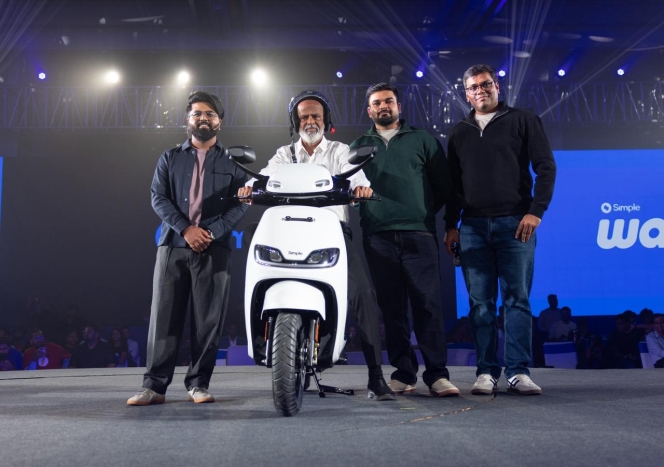
Bengaluru-based electric two-wheeler manufacturer Simple Energy has closed a INR 17.5 billion (approximately USD 180 million) equity-based Series C funding round led by the Dr. Arokiaswamy Velumani Family Office, alongside Simple Energy Founder and CEO Suhas Rajkumar, Co-founder and CFO Ankit Gupta, Bengaluru-based investor Amit Mishra, and the Haran Family Office.
The transaction is said to represent the company's largest fundraising to date and the third-largest round recorded in India's electric two-wheeler sector.
The transaction brings total capital raised by the company to over INR 25.30 billion, following a INR 2.5 billion round of mixed debt and equity completed in June 2026. The new funds will be allocated toward constructing a new manufacturing facility, increasing production output, expanding retail and service networks, making workforce additions and funding research and development for future product iterations.
Suhas Rajkumar, Founder and CEO, Simple Energy, said, "This is a defining moment for Simple Energy. Over the past few years, we have built our core technology, products, manufacturing capabilities, and retail network in-house. This round gives us the capital to scale that foundation. Our priorities are a new manufacturing facility, higher production, an expanded distribution and service network, and the next generation of products. The continued support of our early investors reinforces our progress as we work to make Simple Energy one of India’s leading full-stack electric two-wheeler companies."
Dr A. Velumani, Creator - Thyrocare, AVMLabs & AVMSmiles, said, "I have been with Simple Energy since the early days, and I now repent I didn’t know it earlier. Growth of 4x in a year says both the company and industry are growing rapidly. SEPL owns end-to-end technology for chassis, battery, motor, and software. That is very rare in the Indian EV vertical. The next phase will focus on scaling in manufacturing, marketing, and retail networks. With tailwinds of global challenges in fossil energy, Simple is well positioned to be in the top 3 players of the EV2W vertical in India in just 3 years."
At present, Simple Energy operates a manufacturing capacity of 10,000 units per month and maintains a retail network of over 80 outlets across more than 60 cities, including Bengaluru, Delhi, Patna, Hyderabad and Chennai. Its product portfolio includes the Simple One, Simple Wave and Simple Ultra models, which target performance and family scooter market segments.
- Corporate Average Fuel Economy
- CAFE Phase III norms
- Shenu Agarwal
- SIAM
- R Veluswamy
- Mahindra
- Rajat Mahajan
- Deloitte
- Vikram Gulati
- Toyota Kirloskar Motor
- Ranjan Nayak
- JSW Motors
India Announces New CAFÉ 3 Norms From 1st April 2027
- By MT Bureau
- September 30, 2026
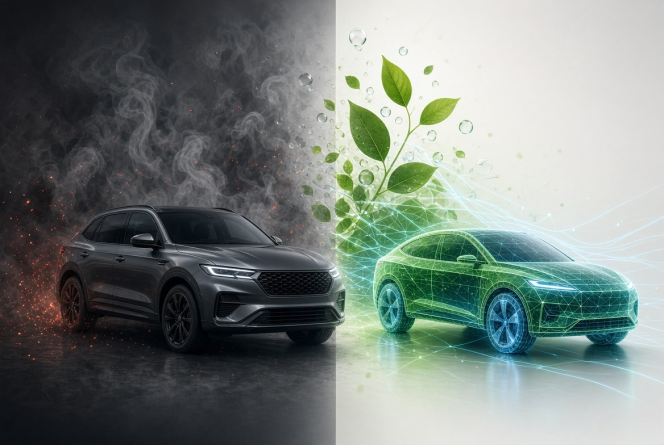
The Indian government has published updated fuel economy rules for passenger cars, establishing higher efficiency targets that vehicle manufacturers must meet from 1st April 2027 to 31st March 2032.
The regulations for the Corporate Average Fuel Economy (CAFE) Phase III will require automakers to reduce overall fleet fuel consumption by 16.7 percent over five years. It will apply to all new passenger vehicles manufactured in or imported into India.
The framework mandates a reduction in overall fleet fuel consumption, lowering the target from 3.996 litres per 100 kilometres in 2027–28 to 3.3273 litres per 100 kilometres by 2031–32, representing a 16.7 percent efficiency improvement over five years. The reference vehicle weight under the calculation matrix has been adjusted from 1,082 kg to 1,229 kg to reflect changes in fleet composition.
The average baseline target will decrease step-by-step from 3.99 litres per 100 kilometres in FY 2027–28 down to 3.32 litres per 100 kilometres by FY 2031–32. The calculation formula has also been adjusted to account for heavier average vehicle weights across modern product lines.
To give manufacturers flexibility in meeting these targets, the policy provides incentives for adopting cleaner vehicle technologies and alternative fuels.
- Alternative Fuel Discounts: Vehicles running on ethanol blends, flex-fuel, compressed natural gas (CNG), or compressed bio-gas (CBG) receive emissions discounts when calculating company averages.
- Energy-Saving Tech Credits: Manufacturers can claim official efficiency credits for installing 12 approved energy-saving features, including automatic start-stop systems, tyre pressure monitors, advanced heat-reflecting glass, LED exterior lighting, high-efficiency air conditioning and solar-reflective paint.
- Super Credits for Electrified Cars: Fully electric vehicles, plug-in hybrids, strong hybrids and flex-fuel hybrids receive extra weighting in fleet calculations to encourage higher production of low-emission models.
Compliance will be tracked across two multi-year testing blocks. Companies that exceed their efficiency targets will earn carbon credits, which they can carry forward, trade with other carmakers, or sell.
Manufacturers that fall short can buy credits from better-performing competitors or purchase them directly from the government’s Bureau of Energy Efficiency (BEE) during a yearly trading window.
At present, exemption will be given to low-volume car manufacturers producing fewer than 1,000 units annually from these specific target requirements.
Shenu Agarwal, President, Society of Indian Automobile Manufacturers (SIAM), “Automobile industry appreciates and welcomes the release of CAFÉ III Notification for Passenger Vehicles by Government of India from 1st April 2027 onwards. CAFÉ III regulation lays down a structured roadmap with aggressive annual targets for next 5-years for the Auto industry along with a market-based compliance mechanism. This will not only ensure reduction of overall fuel consumption from new Passenger Vehicle fleet but also provide an opportunity to the industry to work on various technology pathways providing multiple choices to the consumers. The CAFÉ III regulation framework provides clear predictability which will enable the Auto industry to plan investments and accelerate innovation, thereby, playing an important role in the country’s journey towards Viksit Bharat in 2047. We are thankful to Government of India for detailed and transparent consultative approach in framing this critical and forward-looking regulation after undertaking an objective and balanced assessment of various clean technology options.”
Dr. Velusamy R, President, Automotive Business, Mahindra & Mahindra, “We welcome the Government’s notification of the new CAFE-III norms. Following extensive dialogue between the Government and industry, the framework strikes a pragmatic balance between what is necessary for the environment and what is achievable for the industry, while strengthening India’s energy security. The targets are appropriately ambitious and provide a clear trajectory through 2031-32. We also welcome the inclusion of a compliance block, technology credits, cleaner-fuel benefits and super credits for EVs and other advanced technologies. At Mahindra, we are confident in our ability to meet these norms, backed by our sustained investments in technology, electrification and cleaner mobility. This is a pragmatic, forward-looking framework and a double win for the environment and India’s energy security. We thank the Government for its constructive and consultative approach.”
Rajat Mahajan, Partner and Auto Sector Leader, Deloitte India, “The CAFE 3 norms prioritize the role of transportation in tacking air pollution, and give the industry a clear direction for the next five years. The targets get tighter every year, more so for the heavy vehicles under the final draft version, but manufacturers can reap benefits by transitioning to electric, hybrid, alternative-fuel and fuel-saving technologies. Adhering the norms will require careful product planning and substantial investment in new age technologies. These norms are going to accelerate India’s NEV transition. OEMs who may not be able to switch their larger portfolio fast enough, may end up trading credits within the 2 compliance blocks to avoid penalties.”
Vikram Gulati, Country Head & Executive VP, Toyota Kirloskar Motor, "We congratulate the Government of India for bringing out a progressive and forward-looking CAFE 3 regulation that reflects the nation's aspiration to advance sustainable mobility. The CAFE 3 regulation takes due cognisance of the importance of various clean technologies using an objective and science-based assessment methodology to arrive at a regulation that is best suited for our national interests. Therefore, aligning to a multi-pathway approach, battery electric vehicles (BEVs), Range Extenders (REEV), Plug-in Hybrid Vehicles (PHEVs), Strong Hybrid Electric Vehicles (SHEVs) and Flex Fuel Vehicles (FFVs), including Flex Fuel Strong Hybrid Vehicles (FFV-SHEV) have all been fairly recognised. This will enable the country to rapidly reduce its dependence on imported fossil fuels by leveraging the benefits of high levels of energy efficiency provided by Hybrid vehicles and substituting fossil fuels with electricity using BEVs/PHEVs/REEVs as well as with indigenous and green biofuels like ethanol, that also provide higher income opportunities to our farmers, by using FFV & FFV-SHEV. We would also like to thank the Government for following a deep & transparent consultation process with all stakeholders in formulating this regulation that allowed all points of view to be objectively evaluated and incorporated in the final regulation. This regulation is a big step forward and will play an important role in India’s march towards realising its goal of energy independence by 2047 as well as carbon net-neutral by 2070.”
Shailesh Chandra, MD & CEO, Tata Motors Passenger Vehicles, “The CAFE III framework is an important step in advancing India’s journey towards cleaner and more sustainable mobility. We welcome the Government’s consultative approach in developing a framework that combines ambitious fuel efficiency targets with market-based compliance mechanisms. Importantly, the continued recognition of zero-emission technologies reinforces the critical role of electrification in achieving India’s long-term decarbonisation objectives. The clarity and predictability provided by the framework will enable the industry to plan investments, accelerate innovation and offer customers an increasingly compelling range of cleaner mobility solutions. At Tata Motors, we remain committed to leading this transition through sustained investments in electric mobility and other technologies that can meaningfully reduce emissions.”
Tarun Garg, MD & CEO, Hyundai Motor India, “The final notification of CAFE-III norms is a positive step by the Government towards advancing sustainable mobility in India and presents a clear long-term roadmap for the auto industry. Hyundai Motor India Limited (HMIL) remains committed to complying with all applicable regulatory norms and meeting current and future CAFE requirements. The norms provide a clear and predictable regulatory roadmap through a 3+2 year compliance block structure, enabling manufacturers to undertake long-term product and technology planning with greater certainty. The framework adopts a technology-neutral approach recognizing multiple pathways to improve fleet efficiency including electrification, alternative fuels and advanced fuel-saving technologies. The provisions for credit trading, pooling and flexible compliance mechanisms offer manufacturers greater flexibility while promoting innovation, investment and competitiveness in India's transition towards sustainable mobility. HMIL has already committed to a green portfolio share of 50 percent plus over the next 4 to 5 years comprising of cleaner technologies like EVs, Hybrids, CNGs etc.”
Ranjan Nayak, CEO, JSW Motors, “The much-awaited Corporate Average Fuel Efficiency (CAFÉ) norms introduce a progressive and forward-looking framework that recognises India’s mobility transition towards greener and cleaner technologies, something required to reduce the dependence on imported fossil fuels that place a significant burden on the country’s foreign exchange resources. The CAFÉ 3 norms, which have been notified by the government, recognise that the road to electrification will be a multi-powertrain journey, with batteries acting as the bedrock of this green transition. The government’s decision to support a range of clean and increasingly efficient technologies - including battery electric vehicles (BEVs), range-extended electric vehicles (REEVs) and plug-in hybrid electric vehicles (PHEVs) - will help accelerate fuel efficiency, drive technology adoption and increasingly de-carbonise passenger vehicles in the country. JSW Motors particularly welcomes the higher volume derogation factor of 3.0 for BEVs and REEVs, followed by 2.5 for PHEVs/eligible strong hybrids. This appropriately recognises the greater contribution of battery-led technologies while allowing other electrified powertrains to play a role in the transition. Equally encouraging is the provision for pooling and trading of compliance credits. Creating a mechanism through which manufacturers can exchange credits provides flexibility in meeting the CAFE targets, while creating an economic incentive for companies that invest in cleaner and more efficient green technologies.
JCB Appoints George Bamford As Joint Chairman, Plots $133 Million CAPEX
- By MT Bureau
- September 30, 2026
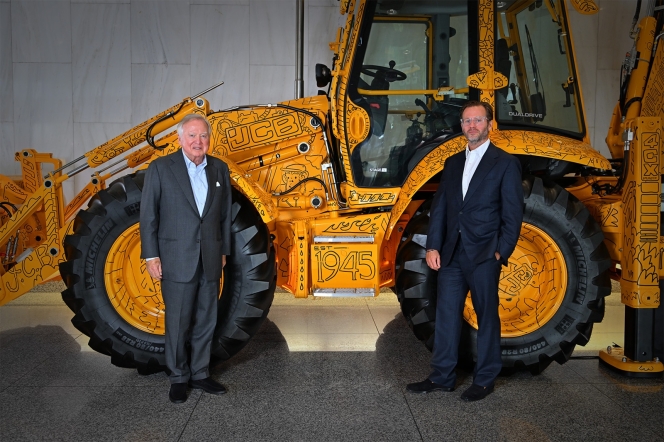
British construction equipment manufacturer JCB has announced capital investments across its manufacturing footprint and a leadership transition following the establishment of a land speed record using its hydrogen combustion technology.
George Bamford will become Joint Chairman alongside his father, Lord Bamford, marking the first leadership change at the top of the company in over 50 years.
The company reported its financial results for 2025, with sales turnover reaching GBP 5.7 billion (USD 7.62 billion), compared to GBP 5.8 billion (USD 7.67 billion) in 2024. Profit before tax stood at GBP 642 million (USD 858 million), down from GBP 687.3 million (USD 900 million) the previous year, while total machine sales reached 113,498 units against 119,848 units in 2024. The business maintains zero net borrowings.
Furthermore, JCB has announced a capital expenditure of GBP 100 million (USD 133 million) to modernise its headquarters in Rocester, Staffordshire, including a GBP 60 million (USD 80 million) automated powder paint plant and shop floor upgrades.
In North America, JCB will open a one-million-square-foot manufacturing plant in San Antonio, Texas, next month, which will produce Loadall telescopic handlers and access equipment while adding 1,500 jobs over five years.
In technology development, JCB is producing hydrogen combustion engines following a GBP 100 million (USD 133 million) research program. The technology was demonstrated at the Bonneville Salt Flats in Utah, where the JCB Hydromax vehicle, powered by two Derbyshire-manufactured hydrogen engines and driven by Wing Commander Andy Green, achieved a speed of 406.320 mph (653.909 kmph).
Lord Bamford, Chairman of JCB, said, “Last year JCB celebrated its 80th birthday and, as we look ahead, we are investing heavily in the future of the business – from the transformation of our Staffordshire headquarters and pioneering hydrogen technology, to our new factory in Texas. As part of that next chapter, I’m delighted that my son George will become Joint Chairman of JCB. We have never been a company that stands still, and these investments will ensure JCB is well placed to seize the opportunities ahead.”
George Bamford, Joint Chairman of JCB, said, "From the day my grandfather founded JCB in 1945, innovation and investment in Great Britain has been at the heart of everything we do. JCB Hydromax showed the world what British engineering can achieve. That same spirit is in every machine we build. While JCB has expanded globally over the years, our home has always been here, and the record investment we are making in our facilities and in new products is good news for Britain and good news for JCB."
Graeme Macdonald, CEO, JCB, said, “While 2025 was a more challenging year with mixed market conditions around the world, JCB delivered a robust performance overall. Machine sales were down by around 5 percent, but turnover remained broadly stable due to a more favourable market and product mix. Despite nil market growth in North America and a 12 percent market contraction in India – both important markets for JCB – we increased our global market share during 2025, which is an encouraging result. The overall outlook for 2026 is for moderate growth, despite ongoing geopolitical uncertainty, and with new capacity coming on stream in Texas and Staffordshire we are well placed to take advantage of it."
The company also expanded its educational intake, receiving 708 applications for 314 places at the JCB Academy for the September intake, while adding 116 apprentices and graduates to its workforce from over 6,300 applicants.
Comments (0)
ADD COMMENT