

- Nissan
- Renault
- Alliance
- Collapse
- Stake Sale
- Mistubishi
- Honda
- EV
- China
- Strategy
- electric vehicle
- magnite
- India
- players
Nissan Fears Collapse As Renault Announces A Stake Sale?
- By Bhushan Mhapralkar
- November 28, 2024
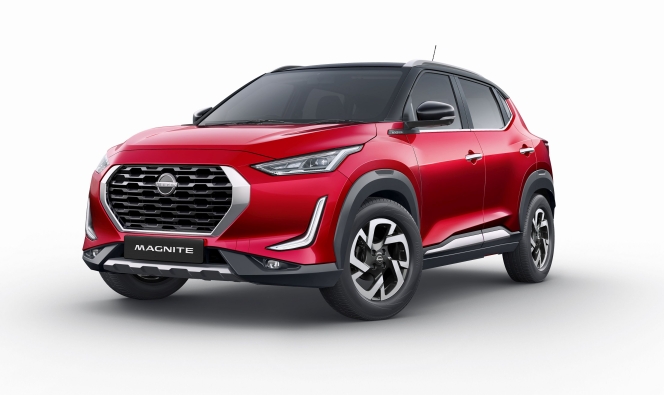
After its longtime partner Renault revealed plans to sell off its interests in Nissan, which recently made news as one of the partners in a three-company alliance involving Honda and Mitsubishi as the other two to capitalise each’s strengths, Nissan is trying to save itself from collapse as per a recent report in news.com.au.
Offering just one compact SUV model in India, the Magnite, Nissan, as per the report, has between 12 to 14 months to survive as it works to fill up the gaping hole Renault’s departure will leave in its finances.
Searching for a new investor to ensure its survival beyond 2025, Nissan –finalising the terms of its new electric vehicle partnership with Honda that has been its arch rival – is evaluating ‘all options’ including getting Honda to purchase a stake in it, claim industry sources.
The development coincides with a major restructuring that the Japanese automaker has undertaken amid declining sales in China and USA. With the 25-year partnership – which began in 1999 with Renault saving Nissan from going belly up – nearing an end, the company is at a juncture where it would have to team up with other organisations, including automakers, to counter situations that could be an outcome of intense geopolitical shifts and the rising clout of Chinese players across continents in areas such as EVs.
Image for representative purpose only
- Suresh KV
- India Pistons
- Amalgamations Group
- ZF India
- Hyundai Motor Company
- Maruti Suzuki India
- Ashok Leyland
- Tata Motors
- VE Commercial Vehicles
- Simpsons & Co
- TAFE
- Mahindra & Mahindra
- Greaves Cotton
- ACMA
- Automotive Component Manufacturers Association of India
- Hansen Transmissions
- High Technology Plastics India
- Motherson Sumi Systems
- Climate Systems India
- Visteon Automotive Systems
- Bajaj Auto
- Asian Paints
Automotive Industry Veteran Suresh KV Joins India Pistons As CEO
- By Nilesh Wadhwa
- October 26, 2026
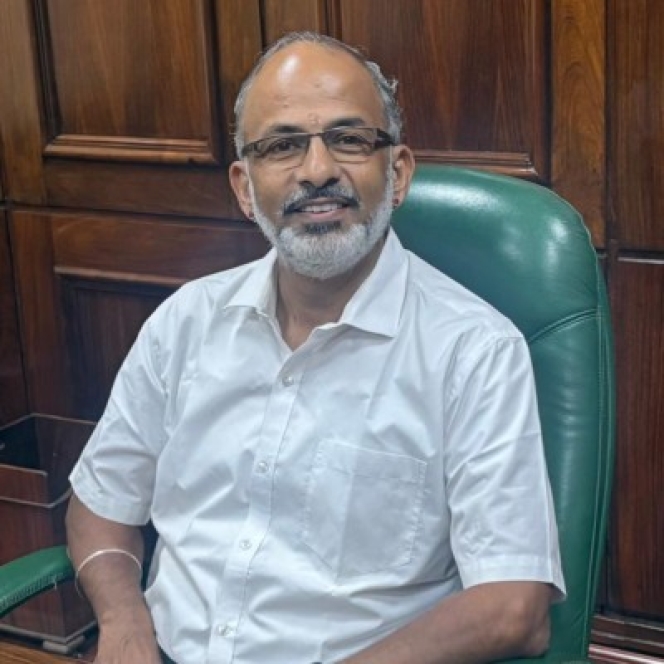
India Pistons, the flagship company of Chennai-headquartered Amalgamations Group, has announced the appointment of Suresh KV as Chief Executive Officer effective 14 October 2026.
The appointment marks his return to corporate leadership following a sabbatical of nearly three years spanning from January 2024 to October 2026. Prior to his sabbatical, Suresh served as President of ZF India from June 2015 to December 2023, where he led the vision, strategy, governance, and business performance across 18 manufacturing plants, eight engineering centres, three subsidiaries, and four joint ventures nationwide.
At present, IPL's major OEM customers include Hyundai Motor Company, Maruti Suzuki India, Ashok Leyland, Tata Motors, VE Commercial Vehicles, Simpsons & Co, TAFE, Mahindra & Mahindra and Greaves Cotton, among others.
He also represented the company on the Executive Committee of the Automotive Component Manufacturers Association of India (ACMA), serving as Co-Chair for its Western Chapter.
His earlier tenure at ZF included serving as Executive Director of ZF Wind Power Coimbatore from November 2010 to May 2015. He managed a 60-acre manufacturing facility producing wind turbine gearboxes, axles, and transmissions for agricultural and construction equipment, achieving an annual turnover exceeding INR 9.50 billion in 2015.
Suresh's career in the automotive and industrial manufacturing sectors spans more than three decades, including operational and managerial positions at Hansen Transmissions, High Technology Plastics India, Motherson Sumi Systems, Climate Systems India, Visteon Automotive Systems, Bajaj Auto and Asian Paints.
In his new role at India Pistons in Chennai, Suresh will oversee operations, performance execution, and growth strategy for the manufacturer.
"My nearly three-year break from the corporate world has been much the same – a welcome pause to reflect, rejuvenate and rediscover purpose. This new chapter is much more than professional achievement, alone. It is an opportunity to make a meaningful difference, create lasting value, and perhaps pursue the fifth level of Maslow’s hierarchy of needs – self-actualisation. As the saying goes, 'Old wine in a new bottle' – though I would like to believe that, with age, the wine only gets better! The break is over. The final stint begins, with renewed energy, a clearer sense of purpose, and the excitement of being back in the game," said Suresh KV.
Honda Inks MoU With Mitsubishi For Triton-Based Pickup Truck For ASEAN Market
- By MT Bureau
- October 25, 2026
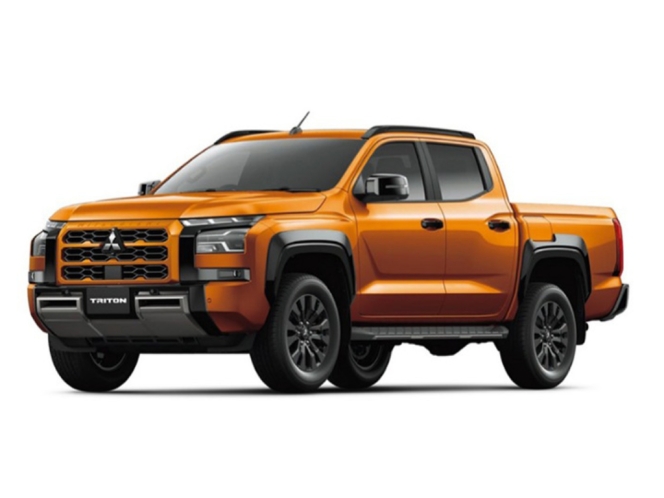
Japanese automotive companies Honda Motor Co and Mitsubishi Motors Corporation have signed a Memorandum of Understanding (MoU) to develop a Honda pickup truck based on the Mitsubishi Triton.
The agreement marks the first product-supply initiative between the two manufacturers, with the new Honda model scheduled to enter the ASEAN market in 2028. The collaboration originates from a strategic partnership framework established in August 2024 among Honda, Mitsubishi Motors and Nissan Motor, which explores vehicle supply arrangements to expand product lineups across international markets.
As per the agreement, Honda will enter the pickup truck segment in the ASEAN region by utilising Mitsubishi's 1-tonne ladder-frame Triton platform. For Mitsubishi Motors, the OEM supply contract will increase production volumes and vehicle assembly capacity utilisation at its manufacturing facilities in Thailand. The three partner companies continue to examine additional vehicle supply and technology-sharing initiatives.
- Renewable Energy India Expo and The Battery Show India
- TBSI
- Philip Green
- Yogesh Mudras
- Anandi Iyer
- Fraunhofer Office
- Informa Markets
- Manu Srivastav
- Jai Asundi
Critical Minerals And Battery Manufacturing Focus Shifts To India At TBSI
- By MT Bureau
- October 24, 2026
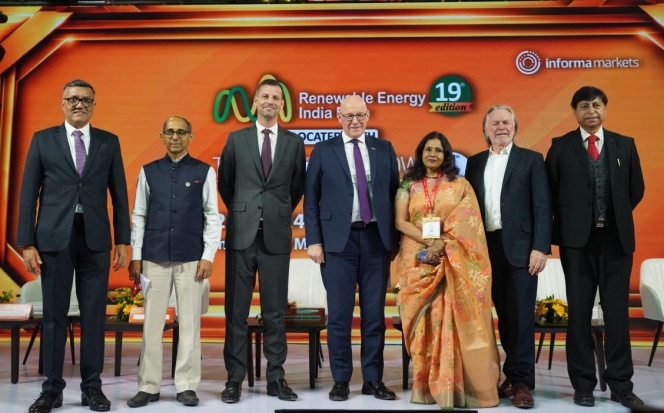
Industry leaders at the Renewable Energy India Expo and The Battery Show India (TBSI) highlighted critical mineral access, technology partnerships and domestic manufacturing capabilities to strengthen India's electric vehicle supply chain.
The event convened over 1,080 exhibitors, 1,400 brands and 54,000 professionals, focusing on international collaboration across critical minerals, battery technology and energy storage.
Interestingly, Australia, represented by 20 companies and 32 exhibitors, identified battery production and electric vehicle supply chains as areas for cooperation with Indian manufacturers, leveraging its lithium, cobalt and rare earth reserves. Projections shared at the exhibition indicate India's renewable energy market will reach 486 GW by 2030, while the battery storage sector is projected to surpass USD 8.5 billion by 2031, growing at a compound annual growth rate of 33 percent.
Philip Green, Australia’s High Commissioner to India, said, "The two countries could combine Australia’s engineering expertise and mineral resources with India’s manufacturing strength and integration into global supply chains. Australia produces more than 50 percent of the world’s lithium, according to Green, and holds the world’s second-largest cobalt reserves. It also ranks second or third globally in rare earth resources." he said.
Yogesh Mudras, Managing Director of Informa Markets in India, said, "Renewable energy generation and grid storage needed to expand together as the country advanced its energy transition. India’s renewable energy market is projected to reach 486 GW by 2030, growing at a compound annual growth rate (CAGR) of 15 percent. The country’s battery storage sector is projected to exceed USD 8.5 billion by 2031, with a CAGR of 33 percent."
Anandi Iyer, Director of the Fraunhofer Office in India, said, "India and Germany had opportunities to collaborate in battery research, power electronics, advanced engineering and industrial automation. Approximately 800 GW of renewable energy capacity additions globally in 2025, while global battery storage deployment reached 108 GW, an increase of 40 per cent from the previous year. Technological self-reliance did not mean working in isolation, highlighting the importance of trusted partnerships and supply chains that can translate research into commercially viable solutions."
Manu Srivastav, Additional Chief Secretary in Madhya Pradesh’s Power & Renewable Energy Department, said, "Renewable energy was becoming increasingly competitive with conventional power as costs declined.”
Jai Asundi, Executive Director of the Centre for Study of Science, Technology & Policy, said, "India would need continued investment in manufacturing, energy storage, grid infrastructure, research and skilled talent to build a resilient clean energy ecosystem."
Caterham Confirmed For Built in Britain Zone At London International Motor Show 2027
- By MT Bureau
- October 23, 2026

Caterham has confirmed its participation in the London International Motor Show 2027, with the British manufacturer set to appear in the event's Built in Britain zone at Excel London from 26 to 28 February 2027. The maker of the legendary Seven, produced in Britain since 1973, will display a selection of its cars on stand 1920.
Visitors will have the opportunity to examine one of the purest driving machines available anywhere, with the Seven widely regarded as a definitive British sports car thanks to its light, simple, hand-built construction in Kent and driver-focused engineering. The Built in Britain zone celebrates the designers, engineers and craftspeople sustaining the country's automotive industry, with specialist sports car makers playing a central role.
Though small in scale, these manufacturers wield enormous influence through cars whose character and focus are admired by major global firms and sought after by enthusiasts. The zone offers them a capital stage before a national audience. The show runs alongside Motorsport Expo and Car Culture UK, with one combined ticket covering all three and around 90,000 visitors expected across the weekend. Friday 26 February serves as the press and trade day, running alongside the public opening.
Stephen Maitland-Oxley, Event Director, London International Motor Show, said, “Caterham is exactly the kind of company Built in Britain was created to celebrate. The Seven is a British icon, and the team behind it has spent more than 50 years proving that lightness, ingenuity and sheer driving fun never go out of fashion. Britain's niche sports car makers are a national asset and we are delighted to give them the spotlight they deserve. Having Caterham with us is a wonderful way to set the tone for the zone.”
Trevor Steel, Senior Vice President – Operations, Caterham Cars, said, “ "At its core, the Caterham Seven is engineered to deliver a driving experience that is as pure, enjoyable and rewarding to the driver, as any car on sale today. Since its inception by Colin Chapman nearly 70 years ago, and since becoming a Caterham in 1973, the Seven has always been proudly built here in Britain, and this is heritage we’re always wishing to celebrate. Built in Britain is a natural home for us, and we are looking forward to meeting enthusiasts, owners and a new generation of drivers in London next February.”

Comments (0)
ADD COMMENT