

- Society of Indian Automobile Manufacturers
- SIAM
- SIAM Human Capital Group
- Saurav Kumar
- Euler Motors
- Devashish Handa
- Suzuki Motorcycle India
- Yeshwinder Patial
- JSW MG Motor India
- Rupam Singh
- JSW Motors
- Anuradha Dhamodaran
- TVS Motor Company
- Dr. Sudhanshu Pathak
- JK Tyre & Industries
- Nitin Khindria
- Omega Seiki Mobility. Dr. Natwar Kadel
- Hyundai Motor India
- TVS Motor Company
- VE Commercial Vehicles
- Bajaj Auto
- Ashok Leyland
- Madhuri Mehta
- Hero MotoCorp
- Prabhu Nagaraj
- ASDC
- Automotive Skills Development Council
- Honda Motorcycle & Scooter India
- Mir Ranjan Negi
SIAM Hosts First Automotive HR Youth Workshop To Shape Next-Gen Workforce
- By MT Bureau
- May 27, 2026

The Society of Indian Automobile Manufacturers (SIAM) organised the first edition of the Automotive HR Youth Workshop 2026 under the aegis of the SIAM Human Capital Group. The event was themed ‘Driving the Future: Youth, Skills & the Next Era of Indian Automotive Workforce’.
The day-long workshop brought together senior automotive executives, Chief Human Resources Officers (CHROs), young professionals and academic representatives to discuss the training and talent requirements of India’s changing mobility ecosystem.
The schedule featured specialised modules covering contemporary industry changes, including a knowledge session titled ‘Future Skills & Best Practices’, a growth session on ‘How to Build Careers in Automotive’ and a leadership panel focused on ‘Redesigning Automotive Careers for the Next Generation’. The presentations highlighted the importance of industry-academia partnerships, digital workplace adaptation, and the implementation of inclusive, high-performance corporate structures.
The event drew senior human resource panel representatives and founders from across the Indian manufacturing and mobility landscape, including Saurav Kumar, Founder & CEO, Euler Motors; Devashish Handa, Executive Officer, Suzuki Motorcycle India; Yeshwinder Patial, CHRO, JSW MG Motor India; Rupam Singh, CHRO, JSW Motors; Anuradha Dhamodaran, Associate Vice-President – HR, TVS Motor Company; Dr. Sudhansu Pathak, Vice President – HR, JK Tyre & Industries and Nitin Khindria, CHRO, Omega Seiki Mobility.
The workshop also included interactive case presentations from emerging human resource managers representing major original equipment manufacturers (OEMs), such as TVS Motor Company, VE Commercial Vehicles, Bajaj Auto and Ashok Leyland.
Dr. Natwar Kadel, Chairman of the SIAM Human Capital Group and Vertical Head of People Strategy, Hyundai Motor India, said, “The young workforce is already shaping the industry as it navigates rapid change. Their ability to take decisions and keep moving forward defines this transition, where learning, unlearning, and relearning matter more than ever. The automotive sector needs this mindset now, as we work to build the next generation of leaders."
Madhuri Mehta, Co-Chairman of the SIAM Human Capital Group and CHRO at Hero MotoCorp, remarked, “This is both the most exciting and the most challenging phase for the automotive industry, as the entire ecosystem undergoes a massive transformation. Auto plants today have evolved dramatically, and the focus must now shift towards preparing people for this new era of growth. Continuous reskilling and capability building will be critical to ensure the workforce evolves alongside the industry”.
Prabhu Nagaraj, Vice Chairperson of the Automotive Skills Development Council (ASDC) and Operating Officer at Honda Motorcycle & Scooter India, noted, “A skilled and future-ready workforce is essential in today’s fast-changing landscape. The opportunity is clear, but it will only be realised if industry, academia, and policymakers come together to equip young talent with the right skills. That is how we make them truly employable for what lies ahead."
Mir Ranjan Negi, Former Indian hockey player, delivered a special address on ‘A Journey of Resilience and Leadership’, drawing structural parallels between sports training and corporate workforce management, “There is a strong similarity between a sportsperson and a corporate leader as both are driven by discipline, resilience, and the desire to bring pride to what they represent. When you stay fully committed to your goal, nothing can hold you back. There is no room for fear because those who lead from the front and stand strong in tough moments are the ones who truly rise.”
- BYD
- United Nations Global Compact
- UN Sustainable Development Goals
- Sustainability
- Carbon Neutrality
- New Energy Vehicles
BYD Officially Joins UN Global Compact As It Advances Carbon Neutrality Goals
- By MT Bureau
- October 27, 2026
Chinese automotive major BYD has become a participant of the United Nations Global Compact (UNGC), formally joining the world’s largest corporate sustainability initiative on 14 September 2026. The Chinese new energy vehicle manufacturer has committed to upholding the compact’s Ten Principles while embedding the UN Sustainable Development Goals (SDGs) more deeply into its corporate strategy and daily operations, with the company framing the move as a contribution to global sustainable development through concrete action.
The UN Global Compact, founded in 2000, pioneered the concept of environmental, social and governance performance and now counts more than 25,000 participating enterprises across over 160 countries. It works to translate its Ten Principles into business operations and strategic development, helping companies meet their compact responsibilities while advancing the UN’s 2030 Agenda for Sustainable Development. The initiative also promotes collaboration and partnerships aimed at addressing the challenges of globalisation and accelerating sustainability worldwide.
BYD, the world’s largest new energy vehicle enterprise, sells its vehicles in more than 100 countries and regions. Guided by its vision to cool the Earth by 1°C, the automaker stopped producing purely fuel-powered vehicles in 2022, becoming the first carmaker to do so, and aims to reach carbon neutrality across its entire value chain by 2045. Its DREAMS sustainability strategy, unveiled in 2025, rests on six pillars: decarbonisation, revolution, equity, alliance, moral integrity and shared value. In 2025, BYD delivered 4.6 million new energy vehicles and reduced carbon emissions by 46.6 million tonnes, equivalent to planting 776 million trees. It has also established a RMB 3 billion charity fund supporting education, university scholarships and the popularization of new energy vehicle technology.
The company described joining the compact as a milestone in its sustainability journey. Going forward, BYD intends to adhere strictly to the initiative’s principles and requirements, fulfil its corporate social responsibility and promote responsible governance and business practices throughout its operations while working with value chain partners to advance broader sustainable development goals.
- Suresh KV
- India Pistons
- Amalgamations Group
- ZF India
- Hyundai Motor Company
- Maruti Suzuki India
- Ashok Leyland
- Tata Motors
- VE Commercial Vehicles
- Simpsons & Co
- TAFE
- Mahindra & Mahindra
- Greaves Cotton
- ACMA
- Automotive Component Manufacturers Association of India
- Hansen Transmissions
- High Technology Plastics India
- Motherson Sumi Systems
- Climate Systems India
- Visteon Automotive Systems
- Bajaj Auto
- Asian Paints
Automotive Industry Veteran Suresh KV Joins India Pistons As CEO
- By Nilesh Wadhwa
- October 26, 2026
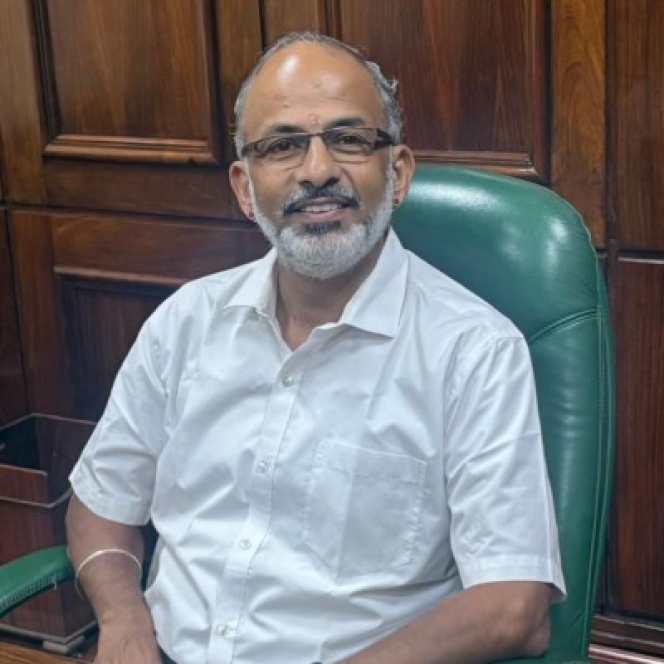
India Pistons, the flagship company of Chennai-headquartered Amalgamations Group, has announced the appointment of Suresh KV as Chief Executive Officer effective 14 October 2026.
The appointment marks his return to corporate leadership following a sabbatical of nearly three years spanning from January 2024 to October 2026. Prior to his sabbatical, Suresh served as President of ZF India from June 2015 to December 2023, where he led the vision, strategy, governance, and business performance across 18 manufacturing plants, eight engineering centres, three subsidiaries, and four joint ventures nationwide.
At present, IPL's major OEM customers include Hyundai Motor Company, Maruti Suzuki India, Ashok Leyland, Tata Motors, VE Commercial Vehicles, Simpsons & Co, TAFE, Mahindra & Mahindra and Greaves Cotton, among others.
He also represented the company on the Executive Committee of the Automotive Component Manufacturers Association of India (ACMA), serving as Co-Chair for its Western Chapter.
His earlier tenure at ZF included serving as Executive Director of ZF Wind Power Coimbatore from November 2010 to May 2015. He managed a 60-acre manufacturing facility producing wind turbine gearboxes, axles, and transmissions for agricultural and construction equipment, achieving an annual turnover exceeding INR 9.50 billion in 2015.
Suresh's career in the automotive and industrial manufacturing sectors spans more than three decades, including operational and managerial positions at Hansen Transmissions, High Technology Plastics India, Motherson Sumi Systems, Climate Systems India, Visteon Automotive Systems, Bajaj Auto and Asian Paints.
In his new role at India Pistons in Chennai, Suresh will oversee operations, performance execution, and growth strategy for the manufacturer.
"My nearly three-year break from the corporate world has been much the same – a welcome pause to reflect, rejuvenate and rediscover purpose. This new chapter is much more than professional achievement, alone. It is an opportunity to make a meaningful difference, create lasting value, and perhaps pursue the fifth level of Maslow’s hierarchy of needs – self-actualisation. As the saying goes, 'Old wine in a new bottle' – though I would like to believe that, with age, the wine only gets better! The break is over. The final stint begins, with renewed energy, a clearer sense of purpose, and the excitement of being back in the game," said Suresh KV.
Honda Inks MoU With Mitsubishi For Triton-Based Pickup Truck For ASEAN Market
- By MT Bureau
- October 25, 2026
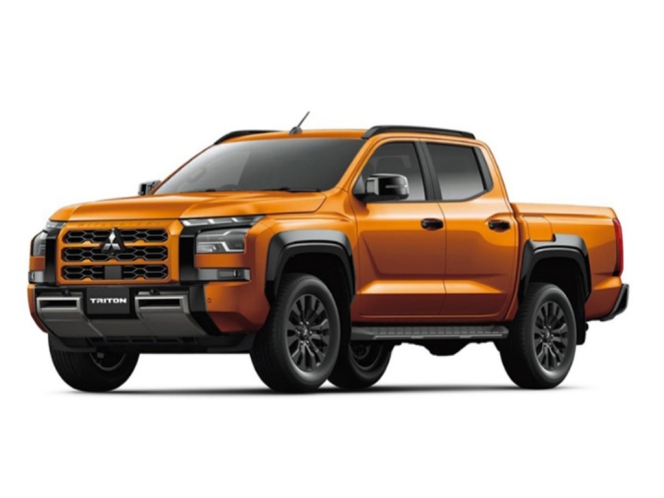
Japanese automotive companies Honda Motor Co and Mitsubishi Motors Corporation have signed a Memorandum of Understanding (MoU) to develop a Honda pickup truck based on the Mitsubishi Triton.
The agreement marks the first product-supply initiative between the two manufacturers, with the new Honda model scheduled to enter the ASEAN market in 2028. The collaboration originates from a strategic partnership framework established in August 2024 among Honda, Mitsubishi Motors and Nissan Motor, which explores vehicle supply arrangements to expand product lineups across international markets.
As per the agreement, Honda will enter the pickup truck segment in the ASEAN region by utilising Mitsubishi's 1-tonne ladder-frame Triton platform. For Mitsubishi Motors, the OEM supply contract will increase production volumes and vehicle assembly capacity utilisation at its manufacturing facilities in Thailand. The three partner companies continue to examine additional vehicle supply and technology-sharing initiatives.
- Renewable Energy India Expo and The Battery Show India
- TBSI
- Philip Green
- Yogesh Mudras
- Anandi Iyer
- Fraunhofer Office
- Informa Markets
- Manu Srivastav
- Jai Asundi
Critical Minerals And Battery Manufacturing Focus Shifts To India At TBSI
- By MT Bureau
- October 24, 2026
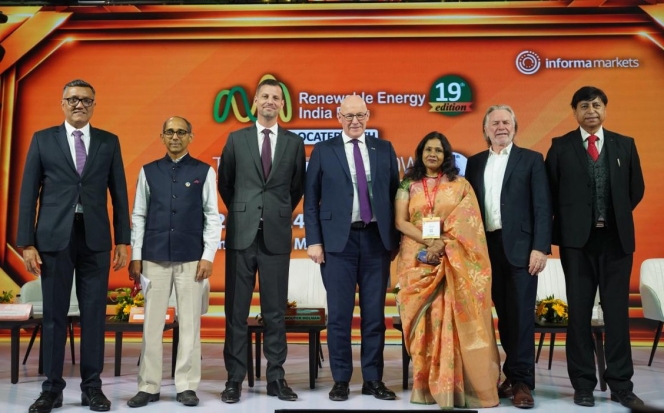
Industry leaders at the Renewable Energy India Expo and The Battery Show India (TBSI) highlighted critical mineral access, technology partnerships and domestic manufacturing capabilities to strengthen India's electric vehicle supply chain.
The event convened over 1,080 exhibitors, 1,400 brands and 54,000 professionals, focusing on international collaboration across critical minerals, battery technology and energy storage.
Interestingly, Australia, represented by 20 companies and 32 exhibitors, identified battery production and electric vehicle supply chains as areas for cooperation with Indian manufacturers, leveraging its lithium, cobalt and rare earth reserves. Projections shared at the exhibition indicate India's renewable energy market will reach 486 GW by 2030, while the battery storage sector is projected to surpass USD 8.5 billion by 2031, growing at a compound annual growth rate of 33 percent.
Philip Green, Australia’s High Commissioner to India, said, "The two countries could combine Australia’s engineering expertise and mineral resources with India’s manufacturing strength and integration into global supply chains. Australia produces more than 50 percent of the world’s lithium, according to Green, and holds the world’s second-largest cobalt reserves. It also ranks second or third globally in rare earth resources." he said.
Yogesh Mudras, Managing Director of Informa Markets in India, said, "Renewable energy generation and grid storage needed to expand together as the country advanced its energy transition. India’s renewable energy market is projected to reach 486 GW by 2030, growing at a compound annual growth rate (CAGR) of 15 percent. The country’s battery storage sector is projected to exceed USD 8.5 billion by 2031, with a CAGR of 33 percent."
Anandi Iyer, Director of the Fraunhofer Office in India, said, "India and Germany had opportunities to collaborate in battery research, power electronics, advanced engineering and industrial automation. Approximately 800 GW of renewable energy capacity additions globally in 2025, while global battery storage deployment reached 108 GW, an increase of 40 per cent from the previous year. Technological self-reliance did not mean working in isolation, highlighting the importance of trusted partnerships and supply chains that can translate research into commercially viable solutions."
Manu Srivastav, Additional Chief Secretary in Madhya Pradesh’s Power & Renewable Energy Department, said, "Renewable energy was becoming increasingly competitive with conventional power as costs declined.”
Jai Asundi, Executive Director of the Centre for Study of Science, Technology & Policy, said, "India would need continued investment in manufacturing, energy storage, grid infrastructure, research and skilled talent to build a resilient clean energy ecosystem."
Comments (0)
ADD COMMENT