

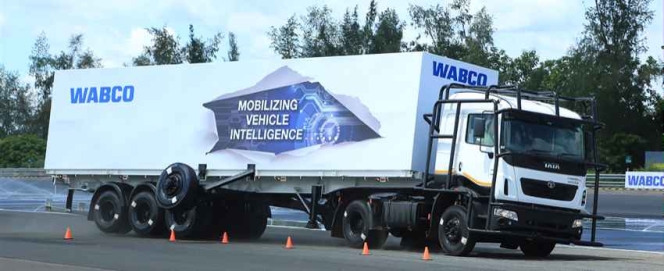
Safety and emission reduction, though not paramount, are gaining traction in the Indian commercial vehicles space. Wabco India, which has been acquired by ZF, is bullish on the market which is being driven by regulations and trends. According to P Kaniappan, Managing Director, WABCO India Ltd, the new independent Commercial Vehicle Control Systems division with ZF will offer better value and service to the Indian customers in the local context. The company keeps focusing on bringing its global capabilities to cater to new regulations and demand for advanced driver assistance, braking, stability control, suspension, transmission automation and aerodynamics to improve safety, efficiency and connectivity of commercial vehicles.
 ZF Friedrichshafen completed its USD 7 billion acquisition of commercial vehicle technology supplier Wabco Holdings amid the pandemic last year. The integration is still underway and is expected to finish in early 2022. As part of the process, the company’s initial focus was to ensure seamless business continuity with customers and to assure employees that the acquisition is another part of the business. “From day one, we had communication with all our employees, giving them the rationale and logic of this merger with the customer centricity approach for which we are known in India and globally,” said P Kaniappan, Managing Director, WABCO India Ltd.
The acquisition is expected to create a powerhouse in the commercial vehicle space, offering better value and service, catering to demand for safety, dynamics controls, air suspension systems, fuel efficiency, emission reduction, fleet management and connectivity.
Wabco, which will be the 10th division of the Germany-based technology company, will operate as the independent Commercial Vehicle Control Systems division within ZF.
“We are updating our customers on the integration process, which is taking place at a global level. The integration process is very structured and professionally aligned internally,” added Kaniappan.
Wabco is the leading global supplier of braking control systems and other advanced technologies that improve commercial vehicles’ safety, efficiency and connectivity. Wabco is present in India for more than 60 years. Powered by its vision for accident-free driving and greener transportation solutions, Wabco India provides industry-leading solutions in the autonomous, connected and electric (ACE) domains to the commercial vehicle industry in India.
Currently, Wabco India Limited is a world-class manufacturer and local market leader in advanced braking systems, conventional braking products and related air assisted technologies and systems in India. Headquartered in Chennai, Wabco India has five manufacturing facilities, an advanced technology development centre, a vehicle testing facility and a nationwide aftermarket distribution and services network. Wabco India is committed to the long-term success of its customers by leveraging Wabco’s robust global technology portfolio.
Though Kaniappan agrees that the integration would have been a smoother ride if the pandemics had not caused subsequent lockdowns, he said the employees’ safety and health have always been paramount for the company. “Yes, the focus could have been much more intense (on the integration), and the timeline could have been shorter. But by the time we started the integration, the pandemic was already affecting the world. So that’s the reason we had to stretch the integration deadline.”
Wabco is betting high on all its product range considering the new regulations related to safety, emission, fuel economy and total cost of ownership. According to Kaniappan, Wabco braking system will remain the main growth driver for the company. India has been traditionally the drum brake system market. However, with the growing emphasis on safety and new mobility, the Indian auto industry is slowly moving on to the air disc brake (ADB), which offers better safety, service, comfort and overall cost. The ADB offers a shorter stopping distance, consistent brake performance and very high mechanical efficiency. The prime advantage of ADB is in weight reduction; the single-piston allows to deliver the same performance with a significantly lower number of components, which in turn minimises parts failure. The company launched disc brake systems for the bus segment, mainly for the front axle. “Within our brake system, the company also aims to improve the efficiency of the braking system that consumes energy,” added Kaniappan.
 He also added that the increased axle load norm demands improvement in the braking system. As a result, the company has upgraded all its braking system products to support the customers, which involves upsizing the compressors or optimising the size of the compressors, upgrading the air management system products, and in some cases, changing the actuators and other elements of the braking system to handle the higher axle load requirement.
Commercial vehicles, trucks, buses and multi-axle vehicles account for a third of road accidents in India. About 84 percent of accidents occur owing to loss of control.
India is also in the process of making electronic stability control (ESC) mandatory soon. The draft notification has been issued for the ESC for buses, which is expected to come into force by April 2023. It aims to achieve higher standards of safety for all categories of vehicles. Wabco India has already been supplying Electronic Stability Control (ESCsmart) for trucks and buses. The ESCsmart improves vehicle stability during highly dynamic driving manoeuvres. ESCsmart provides yaw control on low friction road conditions and roll stability control on high-friction road conditions. It operates independently of driving and load conditions and delivers outstanding control quality due to self-adapting capabilities on the road.
In addition, Indian customers are now testing and evaluating some advanced emergency braking systems for collision avoidance, which immediately assists and alerts the driver. The Wabco executive expects autonomous emergency braking (AEB), which has collision warning systems and collision mitigation systems, will soon be introduced in India. “The technologies available with both companies are to be localised at an appropriate time,” he added.
Wabco India also offers solutions to make air suspension intelligent. The company’s air suspension with electronic control air suspension technology (ECAS) is an alternative to the steel-spring suspension. It improves fuel economy, increases ride comfort, enhances passenger safety and improves vehicular stability. With this technology, the vehicle can sense the road and distribute the load, and the whole system can be raised or lowered to give reduced drag and roll-over protection. Usually, on bumpy roads, air depletes in the suspension; however, ECAS can ignore small humps on the road and air depletion will occur only during the heavy bumps. “With the ECAS, we can reduce air consumption, resulting in saving fuel. As every vehicle goes through a bumpy road, the air depletes. Our electronic control can programme the system so that it does not deplete, and it improves the fine balance of the compressor running. Plus, it can also raise and lower the height of the vehicle’s suspension. This fuel-saving technology will find its place due to CAFÉ norms. This technology is also progressively coming into the Indian market, and we are working with some customers,” added Kaniappan.
 Tyres are the only component that touch the road, which influences the safety and fuel efficiency of the vehicle as well. Inappropriately aired tyres impact the fuel economy and tyres’ life and could also cause accidents. As per a report, over 30 percent of truck breakdowns were caused by tyre failure. Wabco India’s OptiTire, tyre pressure monitoring system (TPMS), helps maintain tyre pressure at the recommended level and detects slow punctures early. This also helps in improving fuel efficiency, rolling resistance and reduction in CO2 emission. The company is also working on getting TMPS sensors localised to make the technology competitive in the country.
The AIS 140, standards published by the Automotive Research Association of India (ARAI), mandates a vehicle-tracking device and an emergency button in all existing and new public-service and commercial vehicles. Wabco India also finds business opportunities in the vehicle tracking space.
Fleet management is also another area where Wabco sees more considerable opportunities as the fleets are now realising the importance of the total cost of ownership through such programmes. In addition, Wabco offers its connected vehicle programme for OEMs.
Wabco India also launched fleet management solutions or connected vehicle programme. The company has already strengthened its connected vehicle solutions after the acquisition of Transics. The company has developed a solution in India for the Indian market in the local context. It has partnered with a few customers and is powering its connected vehicle solutions by providing end-to-end solutions from hardware, firmware and software. This includes advanced fuel management, uptime monitoring, trip monitoring and route management, vehicle diagnostics, track and trace of fleets, helping improve fleet logistical efficiency and the safety and comfort of passengers and drivers.
 For the aftermarket, WABCO acquired AssetTrackr. Asset Trackr offers global capabilities with a value proposition for the Indian market. The company is now leveraging its aftermarket and using the aftermarket network, service centres to promote Asset Trackr as another significant new revenue stream.
Demand for OE commercial vehicles has been slackening for two years. In FY20, commercial vehicle sales plunged 29 percent , followed by over 20 percent in FY21. As a result, the company is banking on its reach and product offering in the aftermarket business. Wabco India’s aftermarket business grew over 50 percent in the first three months of this calendar year.
Taking a lesson from the pandemic that has severely impacted commodity prices, Wabco explores the chances to procure steel, aluminium from the prime producers in the local market to have stability in supply. “We have learned a lot during recent times. We can anticipate the things in a much better way and can have better preparedness, flexibility and agility which will help us to face any potential headwinds that are going to come,” added Kaniappan. (MT)
Honda Inks MoU With Mitsubishi For Triton-Based Pickup Truck For ASEAN Market
- By MT Bureau
- October 25, 2026
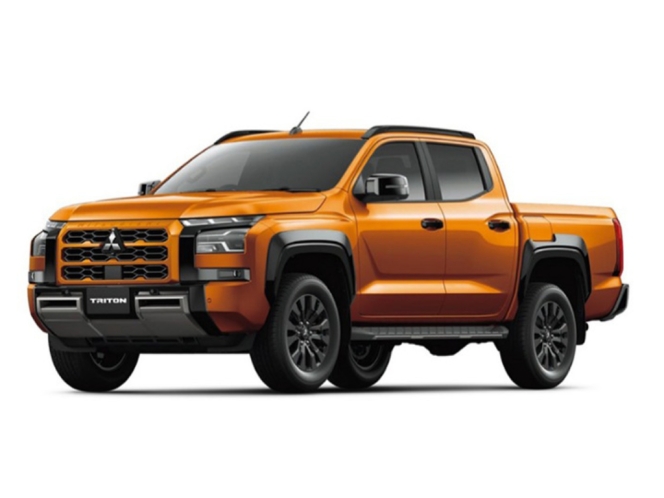
Japanese automotive companies Honda Motor Co and Mitsubishi Motors Corporation have signed a Memorandum of Understanding (MoU) to develop a Honda pickup truck based on the Mitsubishi Triton.
The agreement marks the first product-supply initiative between the two manufacturers, with the new Honda model scheduled to enter the ASEAN market in 2028. The collaboration originates from a strategic partnership framework established in August 2024 among Honda, Mitsubishi Motors and Nissan Motor, which explores vehicle supply arrangements to expand product lineups across international markets.
As per the agreement, Honda will enter the pickup truck segment in the ASEAN region by utilising Mitsubishi's 1-tonne ladder-frame Triton platform. For Mitsubishi Motors, the OEM supply contract will increase production volumes and vehicle assembly capacity utilisation at its manufacturing facilities in Thailand. The three partner companies continue to examine additional vehicle supply and technology-sharing initiatives.
- Renewable Energy India Expo and The Battery Show India
- TBSI
- Philip Green
- Yogesh Mudras
- Anandi Iyer
- Fraunhofer Office
- Informa Markets
- Manu Srivastav
- Jai Asundi
Critical Minerals And Battery Manufacturing Focus Shifts To India At TBSI
- By MT Bureau
- October 24, 2026
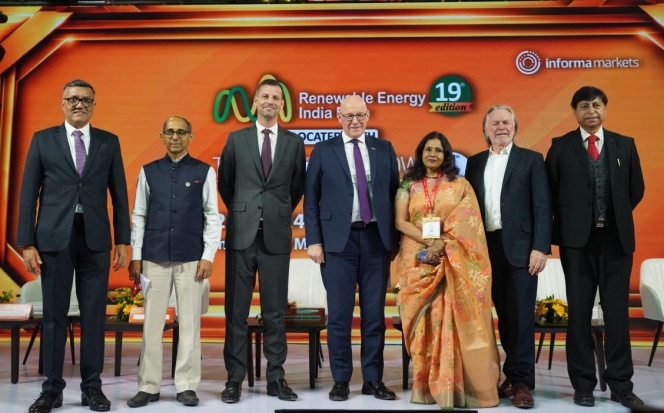
Industry leaders at the Renewable Energy India Expo and The Battery Show India (TBSI) highlighted critical mineral access, technology partnerships and domestic manufacturing capabilities to strengthen India's electric vehicle supply chain.
The event convened over 1,080 exhibitors, 1,400 brands and 54,000 professionals, focusing on international collaboration across critical minerals, battery technology and energy storage.
Interestingly, Australia, represented by 20 companies and 32 exhibitors, identified battery production and electric vehicle supply chains as areas for cooperation with Indian manufacturers, leveraging its lithium, cobalt and rare earth reserves. Projections shared at the exhibition indicate India's renewable energy market will reach 486 GW by 2030, while the battery storage sector is projected to surpass USD 8.5 billion by 2031, growing at a compound annual growth rate of 33 percent.
Philip Green, Australia’s High Commissioner to India, said, "The two countries could combine Australia’s engineering expertise and mineral resources with India’s manufacturing strength and integration into global supply chains. Australia produces more than 50 percent of the world’s lithium, according to Green, and holds the world’s second-largest cobalt reserves. It also ranks second or third globally in rare earth resources." he said.
Yogesh Mudras, Managing Director of Informa Markets in India, said, "Renewable energy generation and grid storage needed to expand together as the country advanced its energy transition. India’s renewable energy market is projected to reach 486 GW by 2030, growing at a compound annual growth rate (CAGR) of 15 percent. The country’s battery storage sector is projected to exceed USD 8.5 billion by 2031, with a CAGR of 33 percent."
Anandi Iyer, Director of the Fraunhofer Office in India, said, "India and Germany had opportunities to collaborate in battery research, power electronics, advanced engineering and industrial automation. Approximately 800 GW of renewable energy capacity additions globally in 2025, while global battery storage deployment reached 108 GW, an increase of 40 per cent from the previous year. Technological self-reliance did not mean working in isolation, highlighting the importance of trusted partnerships and supply chains that can translate research into commercially viable solutions."
Manu Srivastav, Additional Chief Secretary in Madhya Pradesh’s Power & Renewable Energy Department, said, "Renewable energy was becoming increasingly competitive with conventional power as costs declined.”
Jai Asundi, Executive Director of the Centre for Study of Science, Technology & Policy, said, "India would need continued investment in manufacturing, energy storage, grid infrastructure, research and skilled talent to build a resilient clean energy ecosystem."
Caterham Confirmed For Built in Britain Zone At London International Motor Show 2027
- By MT Bureau
- October 23, 2026

Caterham has confirmed its participation in the London International Motor Show 2027, with the British manufacturer set to appear in the event's Built in Britain zone at Excel London from 26 to 28 February 2027. The maker of the legendary Seven, produced in Britain since 1973, will display a selection of its cars on stand 1920.
Visitors will have the opportunity to examine one of the purest driving machines available anywhere, with the Seven widely regarded as a definitive British sports car thanks to its light, simple, hand-built construction in Kent and driver-focused engineering. The Built in Britain zone celebrates the designers, engineers and craftspeople sustaining the country's automotive industry, with specialist sports car makers playing a central role.
Though small in scale, these manufacturers wield enormous influence through cars whose character and focus are admired by major global firms and sought after by enthusiasts. The zone offers them a capital stage before a national audience. The show runs alongside Motorsport Expo and Car Culture UK, with one combined ticket covering all three and around 90,000 visitors expected across the weekend. Friday 26 February serves as the press and trade day, running alongside the public opening.
Stephen Maitland-Oxley, Event Director, London International Motor Show, said, “Caterham is exactly the kind of company Built in Britain was created to celebrate. The Seven is a British icon, and the team behind it has spent more than 50 years proving that lightness, ingenuity and sheer driving fun never go out of fashion. Britain's niche sports car makers are a national asset and we are delighted to give them the spotlight they deserve. Having Caterham with us is a wonderful way to set the tone for the zone.”
Trevor Steel, Senior Vice President – Operations, Caterham Cars, said, “ "At its core, the Caterham Seven is engineered to deliver a driving experience that is as pure, enjoyable and rewarding to the driver, as any car on sale today. Since its inception by Colin Chapman nearly 70 years ago, and since becoming a Caterham in 1973, the Seven has always been proudly built here in Britain, and this is heritage we’re always wishing to celebrate. Built in Britain is a natural home for us, and we are looking forward to meeting enthusiasts, owners and a new generation of drivers in London next February.”
GP Petroleums Appoints Shirish Suvagia As Chief Financial Officer
- By MT Bureau
- October 23, 2026

GP Petroleums has appointed Shirish Suvagia as its new Chief Financial Officer and Key Managerial Personnel, effective 15 October 2026.
Suvagia is a Chartered Accountant with over 23 years of experience in corporate finance, treasury, strategic planning, mergers & acquisitions, and debt and equity fundraising.
He holds Bachelor's and Master's degrees in Commerce from the University of Mumbai, an Executive MBA from IIM Indore, a CISA certification from ISACA, and an IFRS certification from the ICAI.
In his role as CFO, Suvagia will manage the company's financial strategy, treasury, business planning, capital allocation, risk management and reporting functions as GP Petroleums expands its IPOL lubricants brand across domestic and international markets.
Ayush Goel, Chairman & Managing Director of GP Petroleums, said, "We are delighted to welcome Suvagia to GP Petroleums. His experience across corporate finance, treasury, fundraising and mergers & acquisitions will be a valuable asset to the Company, particularly as we focus on capital allocation, business expansion and long-term value creation. We look forward to his contribution as we take the company forward. We are confident that his leadership and financial expertise will support the Company in creating sustainable value for all stakeholders."
"I am excited to join GP Petroleums at an important stage of its growth journey. IPOL is a well-established and respected brand with strong market fundamentals and significant opportunities ahead. I look forward to partnering with the Board and leadership team to further strengthen the Company's financial capabilities, support strategic growth initiatives, and drive long-term value creation for stakeholders," said Suvagia.
Comments (0)
ADD COMMENT