

- Aston Martin
- Aston Martin Vanquish
- Aston Martin V12
- F1
- Project Cars
- Lawrence Stroll
- Mark Reichman
- Simon Newton
Aston Martin Vanquish Launched At INR 88.5 Million In India
- By MT Bureau
- March 23, 2025
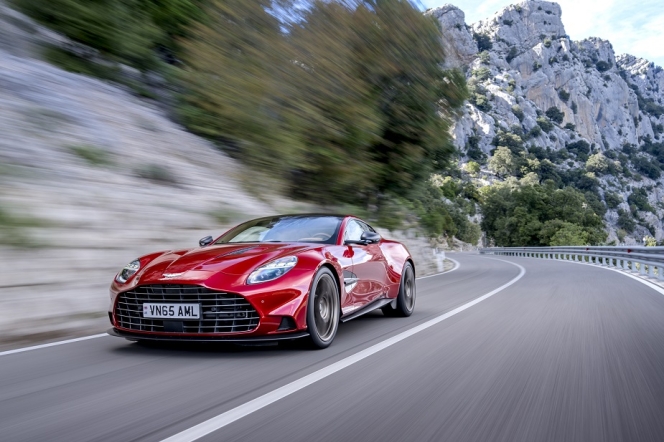
British luxury car brand Aston Martin has revived its legendary Vanquish nameplate, and introduced the model in India with an ex-showroom price of INR 88.5 million (excluding options). The flagship model crowned Aston Martin’s next-generation sports car lineup is limited to just under 1,000 units annually.
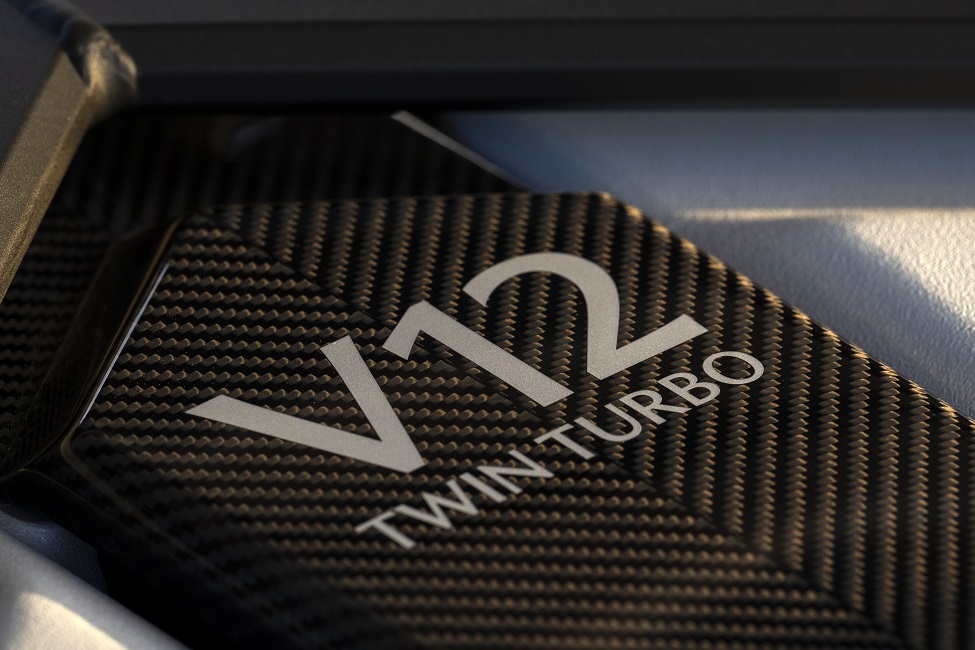
At the heart of the Vanquish lies a new 5.2-litre Twin-Turbo V12 engine, delivering 835PS and 1,000Nm of torque – making it the most powerful V12 in Aston Martin’s core sports car range to date. With a specific power output of 160PS per litre, this engine propels the Vanquish to a top speed of 214mph (344kmph), the highest ever for an Aston Martin series production car. It is enhanced with a strengthened cylinder block, redesigned cylinder heads and high-speed turbochargers, the powertrain achieves unprecedented performance while meeting global emissions standards. A novel Boost Reserve function further sharpens throttle response, storing turbo boost for instant power delivery during overtaking or dynamic driving.
 The Vanquish’s chassis is equally impressive, built on a bonded aluminium structure with a 75 percent increase in lateral stiffness over its predecessor, the DBS 770 Ultimate. Featuring Bilstein DTX adaptive dampers and an electronic rear limited-slip differential (e-diff), it offers a seamless blend of grand tourer comfort and supercar agility. The e-diff, integrated with an advanced Electronic Stability Control system, transitions from open to fully locked in just 135 milliseconds, enhancing traction and cornering precision. Paired with a recalibrated ZF 8-speed automatic gearbox and a Carbon Ceramic Brake system, the Vanquish delivers exceptional control, stopping power, and a dynamic bandwidth that adapts to any driving mood.
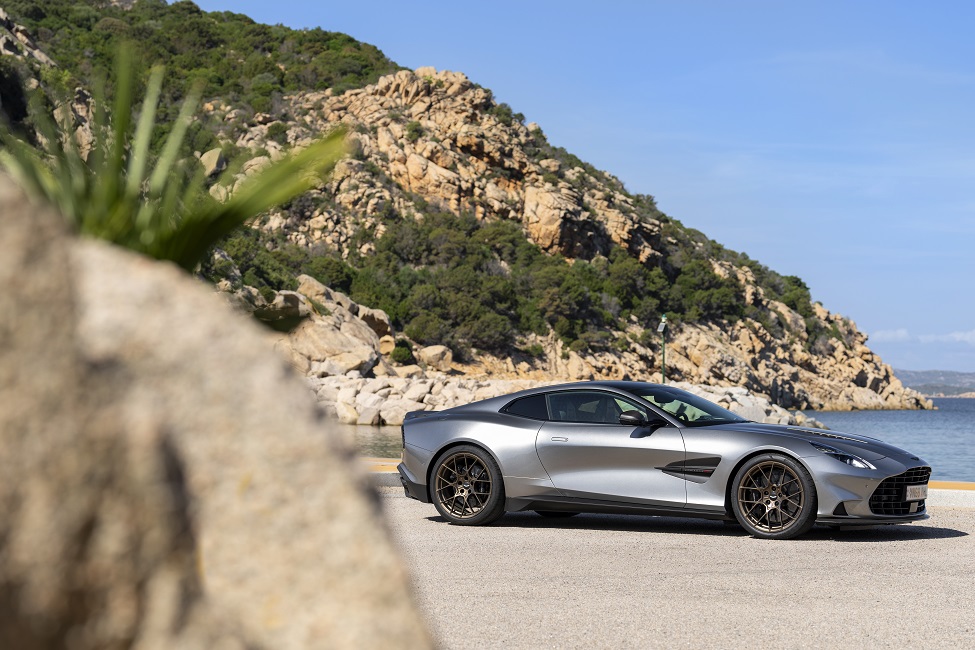
Visually, the Vanquish exudes contemporary elegance with its extended wheelbase, sculpted carbon fibre bodywork and a rakish teardrop profile. Drawing inspiration from Aston Martin’s motorsport heritage, including Formula 1 and the iconic ‘Project Cars’ of the 1960s, it features F1-inspired bonnet louvres and a Kamm Tail for aerodynamic efficiency. A panoramic glass roof, a first for an Aston Martin V12, floods the cabin with light, while Matrix LED headlights and a bold grille amplify its road presence. The interior, designed for two, combines luxury with driver focus, boasting a 10.25-inch digital dashboard, a pure black touchscreen infotainment system and tactile metal controls. A Bowers & Wilkins 15-speaker audio system comes standard, ensuring an immersive experience.
 Lawrence Stroll, Executive Chairman, Aston Martin, said, “With the introduction of Vanquish we have crowned Aston Martin’s next- generation sports car portfolio. A true halo model in every respect, Vanquish makes an emphatic statement. One that further delivers on our mission to create the most potent, most beautiful and most exciting cars in the ultra-luxury sports car market. As such Vanquish is the truest of Aston Martins. Immaculately designed and impeccably engineered it sets extraordinary new standards of performance, style and luxury for a new generation of connoisseurs”.
Marek Reichman, Executive Vice President and Chief Creative Officer, Aston Martin, said, “Vanquish is an iconic halo model for our sports car portfolio and we’re always designing for beyond the expected, rational and thoughtful. We captured the immensity of its performance and the imperiousness of its intended purpose while tempering the drama of Vanquish with a rare and unmistakable sense of elegance. Our team demonstrated bravery and curiosity in their quest to deliver unexpected design ideas throughout. The teardrop exterior features an all-new surface language and amplified front-engine proportions, and the interior environment combines the focus of a true driver’s car with elevated luxury and state-of-the-art technology. There is great passion in creating pure excitement and this new Vanquish is a culmination of fearless creativity and human ingenuity. We have combined next level, ultra-luxury performance with British-cool sports car styling to deliver a crowning Aston Martin V12 flagship for the ages.”
Simon Newton, Director of Vehicle Performance, Aston Martin, said, “Vanquish brings another dimension to the revitalised Aston Martin range. The new V12 engine is a larger-than-life character, with immense torque from just above idle combined with a truly ferocious top-end. It really is an extraordinary engine. This sense of boundless propulsion had to be matched by an equal level of control and finesse; something we have achieved by further exploring the tremendous scope of the new Bilstein DTX adaptive dampers, e-diff and latest generation electronics. We’ve also worked closely with Pirelli, developing a bespoke tyre tailored specifically to Vanquish. The resulting blend of dynamic precision, epic performance and luxurious refinement is uniquely special, with a bandwidth that sets a new standard for the marques halo model and is worthy of the Vanquish name”.
- Renault India
- Renault Duster
- Renault Duster E-Tech 160
- Stéphane Deblaise
- Francisco Hidalgo
- Renault Group India
Renault Launches Duster E-Tech 160 At INR 1.69 Million, Debuts Its Strong Hybrid Tech In India
- By MT Bureau
- October 17, 2026
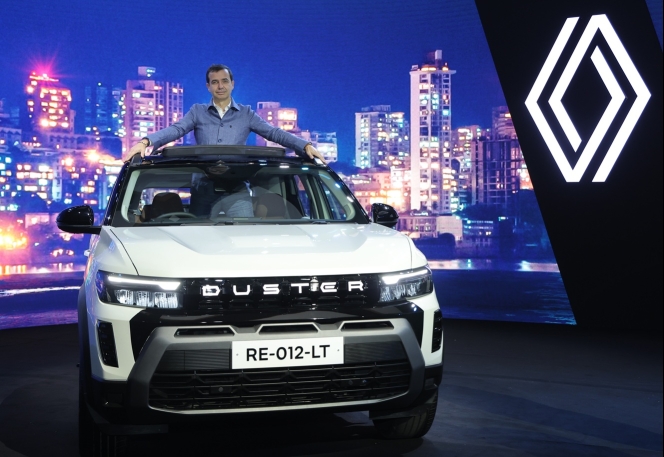
European auto major Renault India has introduced its E-Tech 160 strong-hybrid powertrain in the Indian market with the launch of the new Renault Duster Strong Hybrid E-Tech 160. The hybrid SUV can be had at prices starting from INR 1.69 million ex-showroom across three trim levels: Evolution, Techno and Emotion.
The Duster E-Tech 160 comes with a 1.8-litre petrol engine, two electric motors, a 1.4 kWh battery pack and a multi-mode automatic transmission, producing a combined power output of 160 PS and peak motor torque of 208 Nm.
The transmission utilises two electric and four combustion gears to deliver 15 drive combinations. Certified by the Automotive Research Association of India (ARAI) at 29 kilometres per litre, the SUV enables up to 80 percent of urban driving in electric mode and incorporates regenerative braking with a B-mode selector.
The Duster E-Tech 160 features an illuminated logo grille, frequency-dependent damping, battery thermal cooling and revised cabin upholstery across variants. The Techno variant includes beige semi-leatherette trim, while the Emotion variant adds brown leatherette seats with front ventilation and six-way power adjustment. The Evolution trim is priced at INR 1.69 million, the Techno at INR 1.89 million and the Emotion at INR 1.94 million. Pre-orders are open across Renault dealerships and online channels, supported by an optional Protect 360 ownership package.
Stéphane Deblaise, CEO, Renault Group India, said, "With more than one million E-Tech strong hybrid vehicles sold worldwide since 2020, the E-Tech strong hybrid is a proven Renault powertrain technology. Now, we are bringing it to India as part of our futuREady India roadmap. Our approach is to bring to the Indian customers the best of Renault’s global technologies, while developing cars, powertrains and features specifically for Indian needs through our engineering and design centres in Chennai, our biggest outside Europe. The Duster Strong Hybrid E-Tech 160 is a clear example of this approach."
Francisco Hidalgo, Vice-President of Sales and Marketing, Renault Group India, said, "In the Duster segment, nearly half of all diesel vehicles are sold in the INR 1.7–2 million price band, and that rises to more than 90 percent for diesel automatics. That is exactly where the Duster Strong Hybrid E-Tech 160 comes in. Starting at INR 1.69 million, right at the heart of this market, we believe it is the smarter choice for customers considering diesel, combining significantly lower fuel consumption with a quieter, smoother and more sophisticated driving experience, without requiring customers to change how or where they drive."
- Audi India
- Audi Q3
- Viktoria Kaufmann-Reiger
- AUDI AG
- Martin Sander
- Piyush Arora
- Balbir Singh Dhillon
- Skoda Auto Volkswagen India
- SAVWIPL
Audi India Launches All-New Q3 At INR 5.19 Million
- By MT Bureau
- October 17, 2026
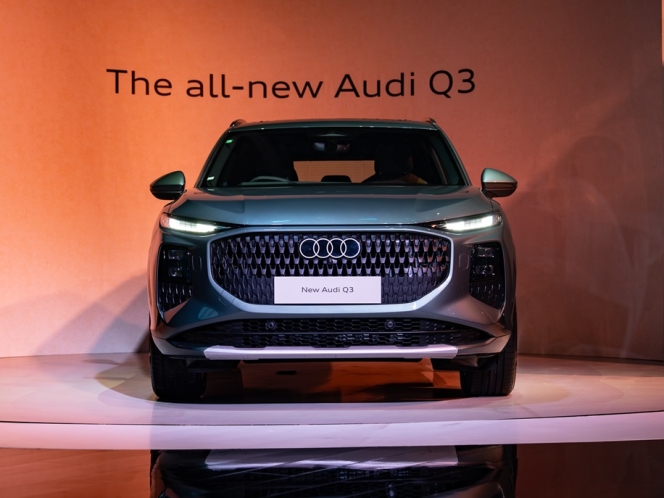
German luxury car brand Audi India has launched the all-new Audi Q3 compact luxury SUV at an introductory price of INR 5.19 million ex-showroom. The vehicle is locally assembled at the Skoda Auto Volkswagen India (SAVWIPL) plant in Chhatrapati Sambhajinagar.
The Audi Q3 is powered by a 2.0-litre TFSI petrol engine delivering 150 kW of power and 320 Nm of torque, paired with quattro all-wheel drive. The setup accelerates from zero to 100 km/h in 7.1 seconds. Exterior design features Digital Matrix LED headlights containing 25,600 micro-LEDs with four selectable daytime-running-light signatures, 18-inch aero alloy wheels, a panoramic sunroof and illuminated rear Audi rings.
On the inside, the cabin incorporates a digital stage panoramic display featuring a 30.22 cm Audi virtual cockpit, a 32.51 cm MMI touch screen, a head-up display, and a 12-speaker SONOS sound system with a 420-watt output. Safety features include nine airbags, adaptive cruise control, front emergency brake assist and park assist plus.
Viktoria Kaufmann-Reiger, Senior Director of Sales Overseas at Audi AG, said, "Today, is such an important day for Audi India and I am happy to be a part of this occasion. The launch of the all-new Audi Q3 is an important milestone and it became even more special due to our new AUDI AG Board Member for Sales and Marketing Mr. Martin Sander joining us here in India. His presence underscores not just the importance of this brand-new model but also India’s growing importance as an emerging market for AUDI AG. India's luxury landscape is evolving, and we will continue to offer products, technologies and experiences that reflect the aspirations of our customers and the distinctive character of our brand. Customer ambitions are growing, and so are their expectations, and at Audi we want to be well positioned to grow alongside them."
Piyush Arora, MD and CEO, SAVWIPL, said, "The launch of the all-new Audi Q3 marks an important milestone for Audi India and reflects our commitment to meeting the evolving expectations of the next generation of luxury customers. Like its predecessor, the new Q3 is being produced here in India, at our state-of-the-art Chhatrapati Sambhajinagar facility. This is a strong demonstration of the capabilities we have built within SAVWIPL, reinforcing that India plays a dual role for us, not only as a major growth market, but as a key manufacturing and engineering hub."
Balbir Singh Dhillon, Brand Director, Audi India, said, "The Audi Q3 has long been an important gateway to the Audi brand in India, and we are delighted to introduce its most progressive iteration yet. The all-new Audi Q3 combines the confidence of quattro, strong performance and everyday versatility with a significantly more intuitive technological experience and a host of thoughtful comfort and safety features. Its local assembly is another important step in our commitment to the Indian market. We are confident that its distinctive character, advanced technology and effortless usability will resonate strongly with customers seeking a modern compact luxury SUV."
The compact SUV is offered in five exterior paint options and two interior themes. Audi India supports the launch with ownership options, including roadside assistance up to 15 years alongside service and extended warranty programs up to 10 years.
Maruti Suzuki True Value Reaches 25-Year Milestone With 6.5 Million Pre-Owned Vehicle Sales
- By MT Bureau
- October 16, 2026
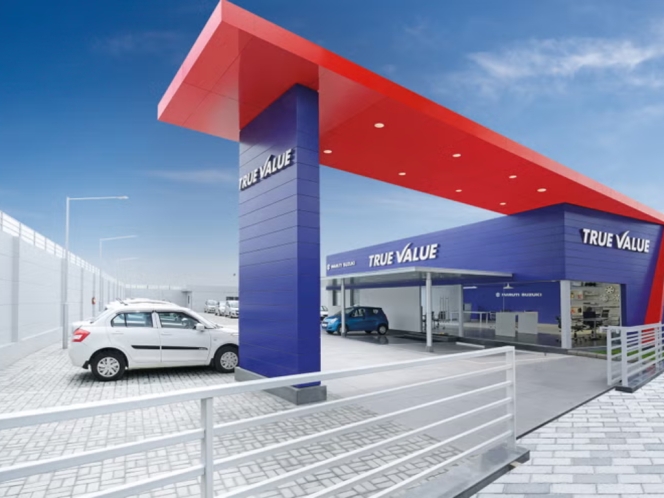
Maruti Suzuki India, the country’s largest passenger vehicle manufacturer, has completed 25 years of operations for its pre-owned vehicle retail network – Maruti Suzuki True Value, recording cumulative sales of 6.5 million pre-owned cars since its establishment in 2001.
The pre-owned vehicle network currently operates 662 retail outlets spanning 338 cities across India. True Value's operational model includes digital integration, vehicle evaluation frameworks, certification processes and warranty coverage policies for used cars.
The platform also provides financing options through the Maruti Suzuki Smart Finance digital portal, connecting buyers with public and private sector banks and non-banking financial companies.
Interestingly, the company observed an increase in first-time vehicle buyers and younger demographic groups within its pre-owned sales network as organised used-car retail and structured financing options continue to expand across urban and regional markets in India.
Partho Banerjee, Senior Executive Officer of Marketing and Sales, Maruti Suzuki India, said, "For 25 years, Maruti Suzuki True Value has worked towards making pre-owned car ownership more trusted, transparent and accessible for customers. Over its quarter-of-a-century journey, True Value has constantly reimagined itself to not just evolve with the times, but also to give customers exactly what they want. True Value has been designed as a comprehensive pre-owned car ecosystem serving buyers and sellers through 662 outlets across 338 cities. With pre-owned car ownership striking a new chord with aspirational customers, the share of young first-time buyers are constantly increasing amongst True Value customers. As we celebrate this momentous milestone, we remain committed to making personal mobility accessible and aspirational through assured quality, transparent processes and technology-enabled customer experiences."
- Lexus India
- Lexus Bharat
- Kirloskar Systems
- Toyota Tsusho India
- Toyota Tsusho Corporation
- Sreenivas Chivikula
- Ryosuke Tawara
- Hikaru Ikeuchi
Lexus India Opens Second Guest Experience Centre In Gujarat At Surat
- By MT Bureau
- October 15, 2026
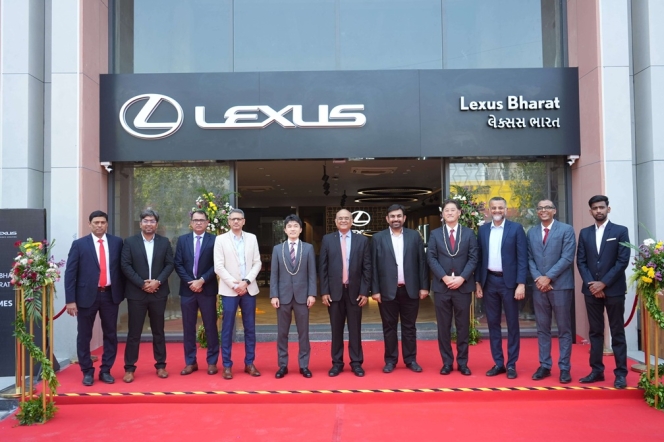
Japanese luxury car brand Lexus India has inaugurated its new Guest Experience Centre in Surat, expanding its retail presence in Gujarat following a recent opening in Ahmedabad.
The facility is operated by Lexus Bharat, a joint venture between Kirloskar Systems, Toyota Tsusho India and Japan's Toyota Tsusho Corporation. The location features a vehicle showroom and an operational Lexus Service Point for aftersales maintenance. The inauguration ceremony was led by Lexus Bharat Managing Director Sreenivas Chivikula and Lexus India Executive Vice President Ryosuke Tawara.
Hikaru Ikeuchi, President, Lexus India, said, "India's luxury automotive market is evolving rapidly, with guests increasingly seeking distinctive products, meaningful experiences and brands that align with their values. At Lexus, our vision is to bring the Lexus experience closer to guests across the country. The inauguration of Surat Guest Experience Centre marks an important milestone for Lexus India. As the second GEC in Gujarat, following the recent inauguration of Ahmedabad GEC, the Surat outlet further strengthens our presence in this vibrant and growing luxury market. Known for its entrepreneurial spirit and legacy of craftsmanship, Surat's pursuit of quality and excellence resonates strongly with Lexus. We are delighted to welcome guests into a space that reflects our dedication to innovation, exceptional hospitality and Omotenashi. Through this new Guest Experience Centre, we look forward to building deeper connections with our guests while delivering the unique luxury experience that defines Lexus."
Sreenivas Chivikula added: "The inauguration of our Guest Experience Centre at Surat marks an exciting new chapter for Lexus in India. Lexus Bharat is committed to supporting Lexus India's efforts to deliver exceptional guest experiences. As we enter new markets, our focus remains on delivering world-class luxury retail standards and personalised guest experiences that embody Lexus' unique experience."
The Surat facility increases Lexus India's retail network to nine Guest Experience Centres across major metropolitan markets, including Mumbai, New Delhi, Bengaluru, Chennai, Hyderabad, Chandigarh, Kochi and Ahmedabad, supported nationwide by 19 Lexus Service Point locations. Ownership programs include an eight-year or 200,000-kilometre warranty covering the vehicle and hybrid battery system, alongside five-year roadside assistance packages.
Comments (0)
ADD COMMENT