

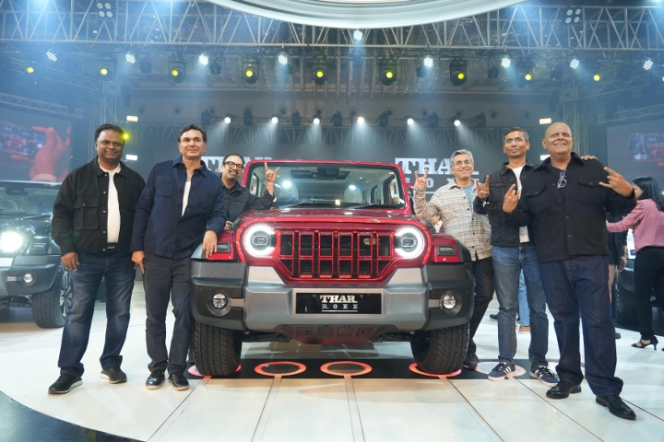
Mahindra & Mahindra (M&M) has introduced the five-door version of its Thar SUV called as Thar Roxx in Chennai on the eve of India’s 78th Independence Day.
Touted as a category disruptor by company sources, the vehicle is priced upwards of INR 1,299,000 ex-shoroom and embodies a bold and unconventional spirit. Designed and engineered to turn heads and deliver a refined drive and powerful yet safe performance, the Thar ROXX conquers all terrains while offering an array of luxurious features.
It is built on Mahindra’s All-New M_GLYDE platform and could deliver an exceptionally smooth ride with crisp handling and class leading dynamics. It effortlessly blends Thar’s outdoor DNA with modern sophistication, offering a premium SUV experience that caters to those who demand the finest in every aspect of their lives.
As a body-on-frame vehicle, the Thar Roxx has been rigorously tested in extreme conditions across diverse terrains and altitudes, including the scorching sand dunes of the Thar desert at over 50 degrees Celsius; the high altitudes of Umling La, tricky muddy surfaces in Coorg and the freezing cold of minus 20 degree Celsius in Kaza.
Powered by either a 175 bhp 2-litre GDI engine (with 6-speed manual or 6-speed Aisin sourced automatic transmission) or a 173 hp 2.2-litre engine (with 6-speed manual or 6-speed Aisin sourced automatic transmission), the Thar Roxx draws much road presence with design features such as a bold front grille paired with Bi-LED projector headlamps and C-shaped DRLs.
Its classic silhouette is characterised by a long hood, upright cabin and short overhangs for exceptional approach and departure angles.
Drawing from the three-door Thar design, the vehicle sports angular wheel arches as compared to the round ones of the former, marrying timeless aesthetics with modern execution. There’s rugged cladding and R19 alloy wheels with 255/60 All Terrain tyres.
The side-hinged split rear tailgate has an externally-mounted spare wheel whereas the interior boasts an ivory ambiance with leatherette trims and soft-touch materials; the leather-wrapped dashboard that is complemented by piano black and metallic finishes, and ambient footwell lighting.
With durable design elements, including low-gloss treatments on AC vents, sturdy dashboard sections, and a leather-wrapped steering wheel and gear lever, the Thar Roxx is available in seven striking colours.
Featuring WATT’s Link suspension, advanced shock absorbers with MTV-CL and Frequency Dependent Damping (FDD) technology, the vehicle also has a ‘first-in-category’ Hydraulic Rebound Stopper (HRS) to enhance ride quality.
While the flat floor design in the second row ensures increased comfort for all passengers, particular attention has been paid to achieve superior NVH (Noise, Vibration, and Harshness) levels for a quiet and refined driving experience.
Engineered to achieve the highest B-NCAP safety rating, the Thar Roxx comes with six airbags, three-point seat belts and seat-belt reminder for all seats along with passenger airbag on/off for child safety, ISO-FIX child seats with top-tether, L2 ADAS (1R1V) suite with 10 features including Automatic Emergency Braking (AEB), 360-degree surround view system with blind view monitor, adaptive cruise control which adds to the safety, comfort and convenience.
Also equipped with a Tyre Pressure Monitoring System (TPMS) and Tyre Direction Monitoring System (TDMS), the vehicle comes with an Electronic Stability Program (ESP) 9.3 system with BLD (Brake locking differential). There’s Vehicle Dynamics Control (VDC), Traction Control System (TCS) and Roll Over Mitigation (ROM) too.
The 4Xplor System (with four modes) provides superior traction through Electronic Locking Differentials. Touted as India’s first by company sources, the Crawl Smart Assist function offers precise low-speed control combined with IntelliTurn that enables effortless tight turns, enhancing maneuverability in challenging environments.
With best-in-class approach, departure and ramp-over angles, the Thar Roxx has a 650 mm water-wading depth, the Thar ROXX is prepared for any adventure.
Apart from the 644 litre boot space, the Thar Roxx could be had with a Panoramic Skyroof as well. There are Twin 26.03 cm HD screens and a Harman Kardon nine-speaker system with QuantumLogic surround, Bass enhancer, and a six-mode audio settings amplifier delivers an exceptional in-cabin audio experience.
The Adrenox connectivity with over 80 features includes Alexa integration and wireless Android Auto and Apple CarPlay.
| Variant | G20 | G20 | D22 | D22 | D22 | D22 |
| MT | AT | MT | AT | MT | AT | |
| RWD | RWD | RWD | RWD | 4WD | 4WD | |
| MX1 | ₹ 12.99 | 0 | ₹ 13.99 | 0 | 0 | 0 |
| MX3 | 0 | ₹ 14.99 | ₹ 15.99 | ₹ 17.49 | 0 | 0 |
| AX3L | 0 | 0 | ₹ 16.99 | 0 | 0 | 0 |
| MX5 | ₹ 16.49 | ₹ 17.99 | ₹ 16.99 | ₹ 18.49 | # | 0 |
| AX5L | 0 | 0 | 0 | ₹ 18.99 | 0 | # |
| AX7L | 0 | ₹ 19.99 | ₹ 18.99 | ₹ 20.49 | # | # |
- BMW India
- BMW Motorrad India
- Nurburgring
- BMW M2 Coupé
- BMW M3 Sedan
- BMW M4 Coupé
- BMW M5 Sedan
- BMW M5 Touring
- BMW M 1000 R
BMW And BMW Motorrad Introduce 100 Jahre Nurburgring Limited Edition Vehicles In India
- By MT Bureau
- October 02, 2026
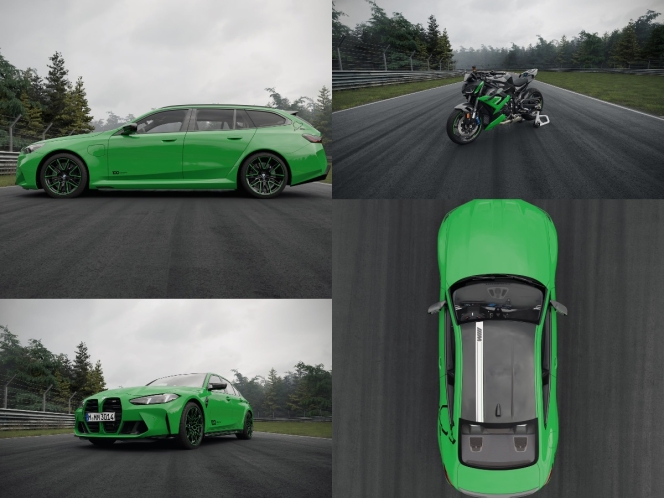
German automotive luxury brand BMW India and BMW Motorrad India have opened pre-orders for the ‘100 Jahre Nurburgring’ edition vehicles to mark the upcoming 100th anniversary of the Nurburgring racetrack in 2027.
The limited collection includes five BMW M car models – the BMW M2 Coupé, BMW M3 Sedan, BMW M4 Coupé, BMW M5 Sedan and the BMW M5 Touring – alongside the BMW M 1000 R motorcycle. The release marks the entry of the BMW M5 Touring into the Indian market.
The edition models feature specific paint finishes in Nurburgring Green and Sapphire Black metallic with green accents, incorporating the ‘100 Years’ logo, Nurburgring since 1927 lettering and the Nurburgring circuit outline.
Exterior details include carbon fibre roofs, model-specific graphics and green wheel accents across select models, while the M5 Touring features a steel roof with custom stripes. Interior specifications across the car lineup include black leather with green and white stitching, door sills, carbon fibre trims, M Carbon bucket seats with individual upholstery, and an M Alcantara steering wheel with a 12 o'clock marker.
The BMW M 1000 R motorcycle features a painted fuel tank with the Nurburgring outline, an airbox cover with ‘one of 100’ numbering, carbon wheels with green accent stripes, an Alcantara seat with embroidered ‘100’ logos and black components for the rear swingarm and frame.
Honda Cars India Sales Decline 19% In September 2026
- By MT Bureau
- October 02, 2026
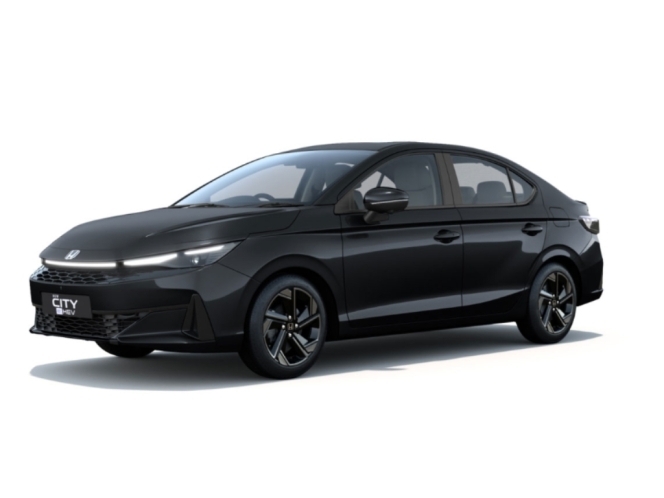
Honda Cars India (HCIL), one of the leading manufacturers of passenger vehicles in the country, has announced its wholesales for September 2026.
The company reported total sales of 6,955 units, down 16 percent YoY, as compared to 8,296 units sold for the same period last year.
In the domestic market, the company sold 4,465 units, down 19 percent YoY, as compared to 5,503 units sold a year ago. On the exports front, the company shipped 2,490 units, down 11 percent YoY, as compared to 2,793 units last year.
Kunal Behl, Vice-President, Marketing & Sales, Honda Cars India, said, We are pleased to see positive sales momentum for the Honda City and Honda Amaze during the month. We are also gearing up for the launch of new Elevate, which will further strengthen our SUV offering with a refreshed and enhanced package. With the festive season underway and an exciting product introduction ahead, we look forward to building stronger momentum in the coming months.”
Kia India Clocks Highest-Ever Monthly Sales Of 32,017 Units In September 2026
- By MT Bureau
- October 01, 2026
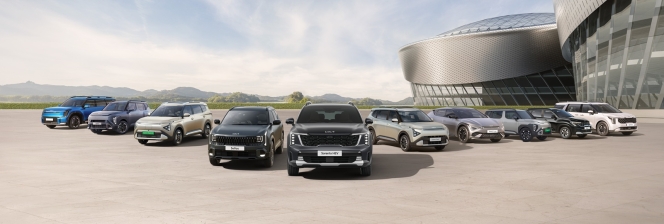
Kia India, one of the leading passenger vehicle manufacturers, has reported its best-ever monthly wholesale performance of 32,017 units in September 2026, representing a 41 percent increase compared to 22,700 units sold last year.
For Q3 of CY2026, the company recorded sales of 89,259 units, reflecting a 38.5 percent growth over 64,443 units for the same period last year.
In terms of YTD (January – September 2026) cumulative sales reached 253,008 units, marking a 22.5 percent increase from 206,582 units reported during the corresponding period in 2025.
Kia India attributed the robust performance to healthy demand across its portfolio incuding Seltos and Sonet models, alongside contributions from the Carens, Carens Clavis, Clavis EV, Syros EV and Sorento, which is offered in diesel and hybrid powertrain options. The company's powertrain options now span petrol, diesel, CNG, hybrid, and electric configurations across its product range.
Atul Sood, Senior Vice-President of Sales and Marketing, Kia India, said, "Our strong performance in September and across the third quarter reflects the continued trust of our customers and the strength of Kia’s evolving portfolio. The Seltos and Sonet continue to be key contributors to our growth, while the strong response to the Sorento and Syros EV reinforces our strategy of expanding into new segments and powertrain categories in line with evolving customer aspirations. As mobility needs become increasingly diverse, we are focused on providing meaningful choice across conventional, CNG, hybrid and electric powertrains, supported by ownership solutions that address real customer needs. We remain committed to building on this momentum through distinctive products, advanced technologies and differentiated experiences designed around the needs of Indian customers."
At present, Kia India operates a retail and service network comprising 915 touchpoints across 425 cities, alongside 137 certified pre-owned outlets across the country.
Toyota Kirloskar Motor Sells 25,027 PVs In September 2026
- By MT Bureau
- October 01, 2026
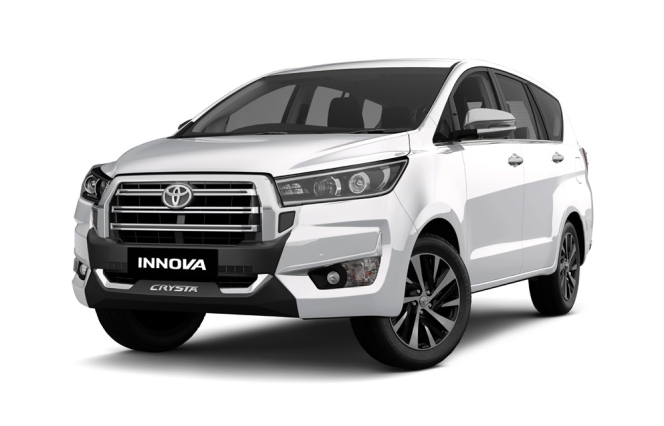
Toyota Kirloskar Motor (TKM), one of the leading passenger vehicle manufacturers, has reported its total wholesales of 28,218 units in September 2026, comprising 25,027 units sold in the domestic market and 3,191 units exported.
For the YTD period (January – September 2026), the automaker reported cumulative total sales of 294,914 units, representing an 8 percent increase compared to 272,824 units sold last year.
Domestic sales for the 9-month period rose 9 percent to 269,619 units, up from 247,081 units in the previous year, while exports reached 25,295 units, compared to 25,743 units a year ago.
Sabari Manohar, Executive Vice-President of Sales-Service-Used Car Business, Toyota Kirloskar Motor, said, "September witnessed continued customer interest across segments, supported by our focus on quality, durability and reliability. As we enter the festive season, we remain committed to strengthening customer engagement and working closely with our dealer partners to deliver enhanced mobility experiences and address evolving customer needs."
Comments (0)
ADD COMMENT