

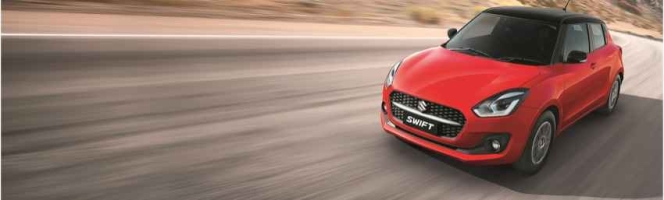
Ever since Maruti Suzuki launched the Swift in 2005, it broke the hatchback segment’s utilitarian image and added a sporty flair that this class seriously lacked. Since then, Swift has managed to rule the roost being a driver-oriented car that boasts a youthful design. Not sitting on its past laurels, India’s most successful automobile manufacturer has given the third-generation Swift a minor facelift. Is the 2021 Swift all about a nip-and-tuck job or is there a lot more to it than that? Let’s find out.
 Engine:
We will get into the design and cabin tweaks a bit later as the biggest update Swift has received is a new, more powerful petrol engine. In terms of capacity, the new powertrain remains 1.2-litre, but the new Dualjet motor gets two injectors in each cylinder instead of one. Due to this, the new 1.2-litre engine churns out 89 bhp roughly 6 bhp more than the older one. This is the same engine that also powers the Dzire. On paper, the torque output remains the same at 113 Nm but it’s much better distributed, resulting in an improved and balanced response.
Step on the pedal, and it accelerates smoothly. Two things that you’ll notice is the lack of mechanical vibrations from the engine and, more importantly, Maruti has negated the turbo lag, ensuring that the power delivery is effortless. This makes the driving experience enjoyable. The Swift doesn’t fire up the afterburners from the word go, but the low-end torque offers a linear hassle-free pickup. Things start getting more interesting in the mid-range power band, where the power surge can be felt from around 4,000 rpm and easily goes beyond the 6,000 rpm mark. In terms of refinement, even when the powertrain is pushed, it remains and feels stress-free.
Another new addition to the Swift is the start/stop system, which shuts off the engine if it’s idling for a long span. This helps in improving the fuel economy and Maruti Suzuki claims that the Swift manual returns a mileage of 23.30 kmpl while 23.76 kmpl in the AMT (automatic) trim, increasing the figures by 2 kmpl.
Driving experience:
The Swift continues to be mated with a 5-speed manual transmission and 5-speed AMT. We drove the former trim and the gear stick slots in easily. The steering wheel, on the other hand, feels a bit too light and lacks the feedback one would have liked. Practically speaking, the featherweight steering does make it easy to drive in the city or park the car in tight spots, but it doesn’t compliment Swift’s handling prowess. The hatchback tames sharp corners like a hot knife through butter while remaining planted to the tarmac. The Heartect platform makes the hatch light and agile and continues to offer a go-kart-like experience.
The ride quality is slightly on the firm side though it manages to insulate the bumps and undulations on the road. But it’s best to slow down once it encounters potholes.

Exterior and cabin tweaks:
From the outside, the Swift remains more or less the same apart from the new honeycomb or mesh front grille with a smart looking chrome strip running across it and sporting the Suzuki logo. Apart from that, the 2021 Swift now gets three dual-tone colour options — white with black roof, red with black roof and blue with white roof.
The cabin, on the other hand, does come with some new upgrades and the first thing that will catch your attention is the new 7-inch touchscreen, or as Maruti calls it,
SmartPlay Studio. With colours like orange, blue, green and yellow on the display, it’s brighter than the previous version and easier to read. The touchscreen is responsive and it supports Apple CarPlay and Google’s Android Auto. Moving on to the instrument cluster, Swift gets a new colour multi-information display (MID) placed between the speedometer and the rev meter. The MID was initially launched in Maruti’s Nexa range. Then there’s great news for those who drive long distance, especially on highways regularly. Keeping convenience in mind, the Swift now comes with Cruise Control and also gets automatic folding outside rearview mirrors.
The Swift isn’t the biggest hatchback in its segment; therefore, this translates into limited space for the rear passengers. Compared to its competition, Swift’s cabin plastic quality is fairly average and it lacks some features like a wireless phone charger, rear AC vents or connected technology. Even though it may be showing its age, the car is fully loaded with safety features like twin airbags, reverse parking sensors, Anti-Lock Braking System and Electronic Brakeforce Distribution with brake assist and Electronic Stability Program with Hill Hold Assist, which is standard in AGS or AMT variants.
Verdict:
The 2021 Swift, no doubt, remains very popular among young buyers and continues to offer a fun driving experience. It comes with basic features, but the ace in the pack for the Swift is its new 1.2-litre engine, which offers more power and better fuel economy. But priced from INR 573,000 to INR 841,000, ex-showroom Delhi, the Swift is expensive when compared to its competition, especially when others are offering top-end diesel trims at the same price. Of course, one can’t deny that it’s still backed by the country’s most comprehensive service network. The Swift remains a force to reckon with. (MT)
- BMW India
- BMW Motorrad India
- Nurburgring
- BMW M2 Coupé
- BMW M3 Sedan
- BMW M4 Coupé
- BMW M5 Sedan
- BMW M5 Touring
- BMW M 1000 R
BMW And BMW Motorrad Introduce 100 Jahre Nurburgring Limited Edition Vehicles In India
- By MT Bureau
- October 02, 2026
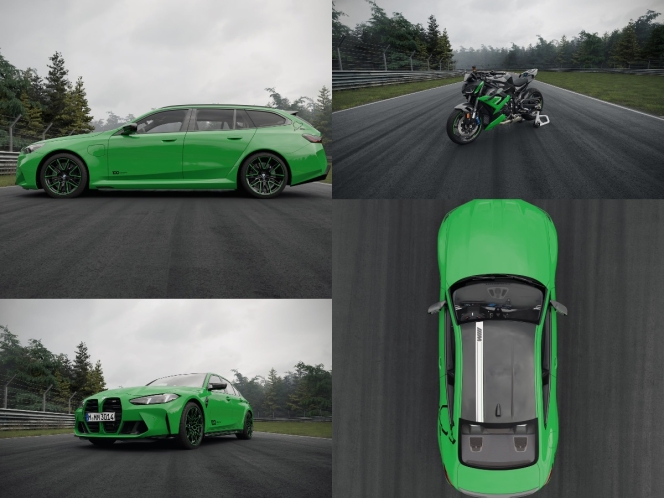
German automotive luxury brand BMW India and BMW Motorrad India have opened pre-orders for the ‘100 Jahre Nurburgring’ edition vehicles to mark the upcoming 100th anniversary of the Nurburgring racetrack in 2027.
The limited collection includes five BMW M car models – the BMW M2 Coupé, BMW M3 Sedan, BMW M4 Coupé, BMW M5 Sedan and the BMW M5 Touring – alongside the BMW M 1000 R motorcycle. The release marks the entry of the BMW M5 Touring into the Indian market.
The edition models feature specific paint finishes in Nurburgring Green and Sapphire Black metallic with green accents, incorporating the ‘100 Years’ logo, Nurburgring since 1927 lettering and the Nurburgring circuit outline.
Exterior details include carbon fibre roofs, model-specific graphics and green wheel accents across select models, while the M5 Touring features a steel roof with custom stripes. Interior specifications across the car lineup include black leather with green and white stitching, door sills, carbon fibre trims, M Carbon bucket seats with individual upholstery, and an M Alcantara steering wheel with a 12 o'clock marker.
The BMW M 1000 R motorcycle features a painted fuel tank with the Nurburgring outline, an airbox cover with ‘one of 100’ numbering, carbon wheels with green accent stripes, an Alcantara seat with embroidered ‘100’ logos and black components for the rear swingarm and frame.
Honda Cars India Sales Decline 19% In September 2026
- By MT Bureau
- October 02, 2026
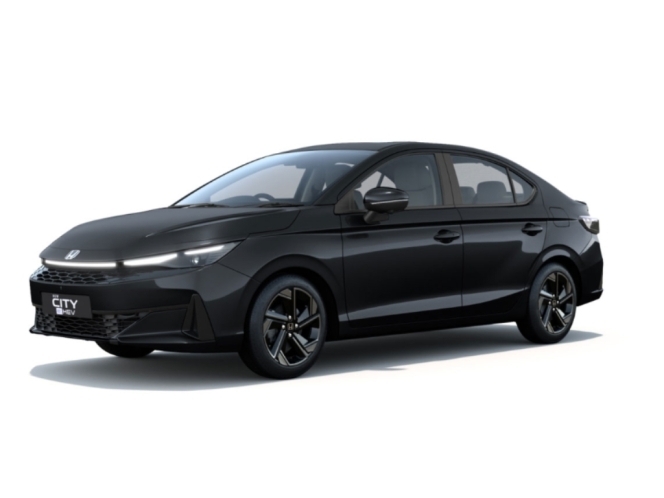
Honda Cars India (HCIL), one of the leading manufacturers of passenger vehicles in the country, has announced its wholesales for September 2026.
The company reported total sales of 6,955 units, down 16 percent YoY, as compared to 8,296 units sold for the same period last year.
In the domestic market, the company sold 4,465 units, down 19 percent YoY, as compared to 5,503 units sold a year ago. On the exports front, the company shipped 2,490 units, down 11 percent YoY, as compared to 2,793 units last year.
Kunal Behl, Vice-President, Marketing & Sales, Honda Cars India, said, We are pleased to see positive sales momentum for the Honda City and Honda Amaze during the month. We are also gearing up for the launch of new Elevate, which will further strengthen our SUV offering with a refreshed and enhanced package. With the festive season underway and an exciting product introduction ahead, we look forward to building stronger momentum in the coming months.”
Kia India Clocks Highest-Ever Monthly Sales Of 32,017 Units In September 2026
- By MT Bureau
- October 01, 2026
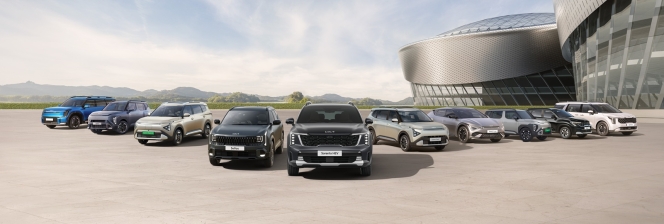
Kia India, one of the leading passenger vehicle manufacturers, has reported its best-ever monthly wholesale performance of 32,017 units in September 2026, representing a 41 percent increase compared to 22,700 units sold last year.
For Q3 of CY2026, the company recorded sales of 89,259 units, reflecting a 38.5 percent growth over 64,443 units for the same period last year.
In terms of YTD (January – September 2026) cumulative sales reached 253,008 units, marking a 22.5 percent increase from 206,582 units reported during the corresponding period in 2025.
Kia India attributed the robust performance to healthy demand across its portfolio incuding Seltos and Sonet models, alongside contributions from the Carens, Carens Clavis, Clavis EV, Syros EV and Sorento, which is offered in diesel and hybrid powertrain options. The company's powertrain options now span petrol, diesel, CNG, hybrid, and electric configurations across its product range.
Atul Sood, Senior Vice-President of Sales and Marketing, Kia India, said, "Our strong performance in September and across the third quarter reflects the continued trust of our customers and the strength of Kia’s evolving portfolio. The Seltos and Sonet continue to be key contributors to our growth, while the strong response to the Sorento and Syros EV reinforces our strategy of expanding into new segments and powertrain categories in line with evolving customer aspirations. As mobility needs become increasingly diverse, we are focused on providing meaningful choice across conventional, CNG, hybrid and electric powertrains, supported by ownership solutions that address real customer needs. We remain committed to building on this momentum through distinctive products, advanced technologies and differentiated experiences designed around the needs of Indian customers."
At present, Kia India operates a retail and service network comprising 915 touchpoints across 425 cities, alongside 137 certified pre-owned outlets across the country.
Toyota Kirloskar Motor Sells 25,027 PVs In September 2026
- By MT Bureau
- October 01, 2026
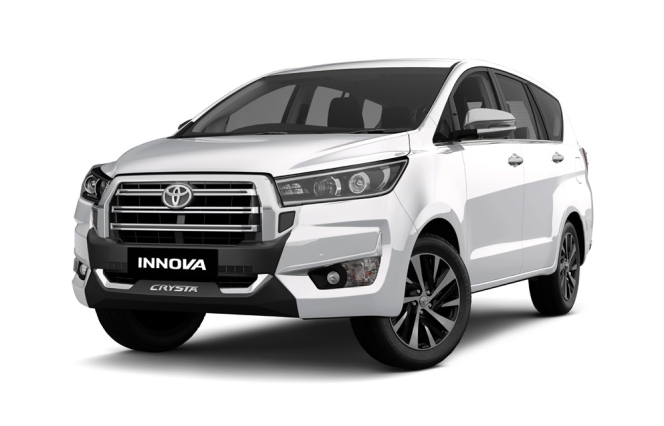
Toyota Kirloskar Motor (TKM), one of the leading passenger vehicle manufacturers, has reported its total wholesales of 28,218 units in September 2026, comprising 25,027 units sold in the domestic market and 3,191 units exported.
For the YTD period (January – September 2026), the automaker reported cumulative total sales of 294,914 units, representing an 8 percent increase compared to 272,824 units sold last year.
Domestic sales for the 9-month period rose 9 percent to 269,619 units, up from 247,081 units in the previous year, while exports reached 25,295 units, compared to 25,743 units a year ago.
Sabari Manohar, Executive Vice-President of Sales-Service-Used Car Business, Toyota Kirloskar Motor, said, "September witnessed continued customer interest across segments, supported by our focus on quality, durability and reliability. As we enter the festive season, we remain committed to strengthening customer engagement and working closely with our dealer partners to deliver enhanced mobility experiences and address evolving customer needs."
Comments (0)
ADD COMMENT