

Luminar Lidar Technology To Power Next Generation Volvo Cars For Safe Self-Driving
- By 0
- June 17, 2020

This association will deliver its first fully self-driving technology for highways and paves the way for future active safety developments.
Volvo Cars’ next generation SPA 2 modular vehicle architecture will be available as hardware-ready for autonomous drive from production start in 2022, with the Luminar LiDAR seamlessly integrated into the roof. Cars based on SPA 2 will be updated with software over-the-air and if customers decide to opt for it, the Highway Pilot feature that enables fully autonomous highway driving will be activated once it is verified to be safe for individual geographic locations and conditions.
 and Austin Russell (CEO of Luminar) - Copy.jpg)
“Autonomous drive has the potential to be one of the most lifesaving technologies in history, if introduced responsibly and safely. Providing our future cars with the vision they require to make safe decisions is an important step in that direction,” said H

enrik Green, Chief Technology Officer, Volvo Cars.
In addition to the Highway Pilot feature, Volvo Cars and Luminar are also exploring LiDAR’s role in improving future advanced driver assistance systems (ADAS), with the potential for equipping all future SPA2-based cars with a LiDAR sensor as standard.
Luminar’s technology is based on its high performance LiDAR sensors, which emit millions of pulses of laser light to accurately detect where objects are by scanning the environment in 3D, creating a temporary, real-time map without requiring internet connectivity.
LiDAR is key in creating cars that can navigate safely in autonomous mode, providing them with the reliable vision and perception that cameras and radar alone cannot provide. LiDAR is the ideal basis for safe decision-making in complex environments at high speeds.

To enable the Highway Pilot feature, Luminar’s perception technology will be combined with autonomous drive software and the cameras, radars and back-up systems for functions such as steering, braking and battery power installed on forthcoming Volvo cars equipped for self-driving. Put together, this gives Volvo users who want it access to a safe, fully self-driving feature for use on highways.
“Soon, your Volvo will be able to drive autonomously on highways when the car determines it is safe to do so. At that point, your Volvo takes responsibility for the driving and you can relax, take your eyes off the road and your hands off the wheel. Over time, updates over the air will expand the areas in which the car can drive itself. For us, a safe introduction of autonomy is a gradual introduction. Green added.
As part of the announcement, Volvo Cars and Luminar are deepening their collaboration to jointly ensure robust industrialisation and validation of Luminar’s LiDAR technology for series production. Volvo Cars has also signed an agreement to possibly increase its minority stake in Luminar.
For Silicon Valley-based Luminar, partnering with Volvo Cars represents the company’s first delivery of its technology into series production. This is a key step to achieving the economies of scale that are required to bring the technology to the wider automotive industry.
“Volvo is recognised as the pioneer of automotive safety, having driven standardisation across the industry for the most advanced life-saving technologies. The next era of safety lies within autonomous driving and once again, Volvo has taken the lead with a major industry milestone. We’ve solved the key cost, performance, and auto-grade challenges to make series production possible, and alongside Volvo are making the technology available to the world,” said Austin Russell, founder and CEO of Luminar. (MT)
Hyundai Bayon To Feature 69% High-Strength Steel Grade For Enhanced Safety
- By MT Bureau
- October 21, 2026
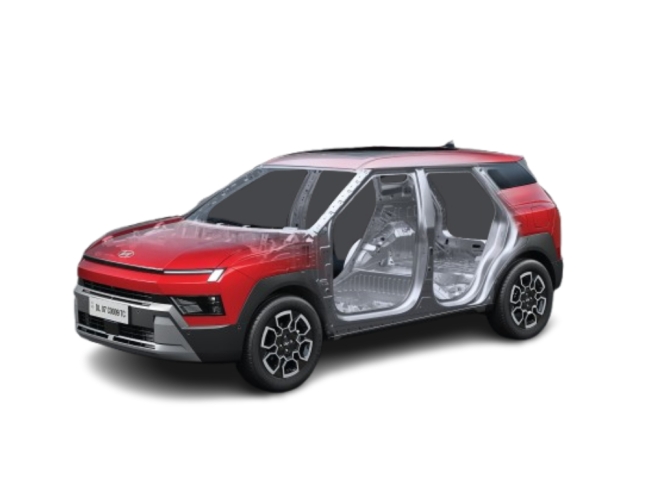
Hyundai Motor India, one of the leading passenger vehicle manufacturers, has detailed the safety specifications and platform architecture for its upcoming Bayon SUV model ahead of its official launch in India on 26 October 2026.
Built on the Global K Enhanced Platform, the Bayon utilises a body structure comprising of 69 percent high-strength steel grades, integrating hot-stamped components across the front apron, dashboard, rear floor and side reinforcements.
The vehicle incorporates Hyundai SmartSense Level 2 Pro ADAS, providing 23 driver assistance features supported by three radar units and 12 parking sensors. Over 35 safety features are fitted as standard across all variants, including six airbags, electronic stability control, hill-start assist control, a tyre pressure monitoring system (TPMS) and ISOFIX child seat anchors.
The Bayon will be powered by a 1.5-litre MPi four-cylinder petrol engine producing 84.4 kW (115 PS) and 143.8 Nm of torque, paired with a six-speed manual or an Intelligent Variable Transmission. Exterior options will span 10 colour configurations across monotone, dual-tone, and matte finishes.
Tarun Garg, Managing Director and Chief Executive Officer of Hyundai Motor India, said, "At Hyundai, we believe that true innovation is meaningful only when it enhances the everyday experiences of our customers. With the Hyundai BAYON, we have combined a robust body structure, advanced safety technologies, and intelligent driver assistance systems to deliver a comprehensive safety experience. From its reinforced chassis and high-strength steel construction to Hyundai SmartSense Level 2 Pro ADAS, the BAYON is engineered to inspire confidence not only in challenging situations, but throughout every journey. This reflects our commitment to delivering intelligent mobility solutions that are safe, connected, and progressive for modern India."
Mitsubishi Motors Launches All-New Pajero In Thailand Ahead Of Global Rollout
- By MT Bureau
- October 21, 2026
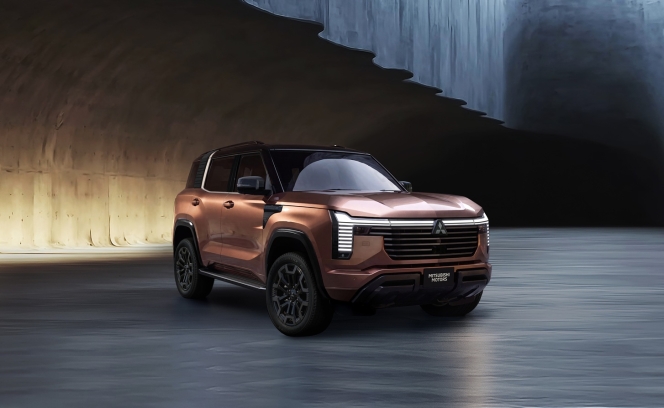
Japanese automotive major Mitsubishi Motors has commenced sales of the Pajero cross-country SUV in Thailand, serving as the initial market for the model’s international release.
The Pajero’s production takes place at the Laem Chabang facility operated by Mitsubishi Motors in Chonburi Province, which functions as a manufacturing hub for export operations.
Shipments to Australia and Japan are scheduled ahead of market releases in mid-December, followed by sequential introductions across approximately 100 countries and regions in the Middle East and Latin America starting in fiscal 2027.
The Pajero integrates four-wheel-drive capability with passenger car handling characteristics and positioning as a flagship offering.
Keisuke Kishiura, President and Chief Operating Officer, Mitsubishi Motors, said, "We are delighted to begin sales of the all-new Pajero in Thailand as the first market for its global rollout. Thailand is not only an important market for Mitsubishi Motors, but also a key hub for our production and exports. The all-new Pajero is a flagship model that embodies Mitsubishi Motors and is positioned among the top-tier cross-country SUVs in the Thai market. We will continue to deliver appealing products from Thailand to customers around the world and provide value that exceeds expectations."
Param Automotive Inaugurates Upgraded Mahindra Showroom In Ahmedabad
- By MT Bureau
- October 20, 2026
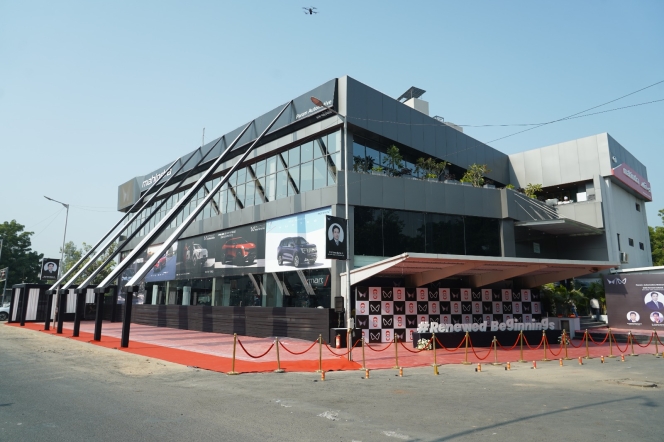
Param Automotive Group has inaugurated an upgraded dealership facility in Ahmedabad to mark its silver jubilee year.
Located at the site established in 2002, the facility spans 40,000 square feet and features display space for 18 vehicles.
The showroom includes customer lounges, delivery zones, accessory bays, test-drive areas and hospitality spaces to support vehicle sales and customer service operations.
BMW Group Expands Lucknow Facility To House MINI Brand Operations
- By MT Bureau
- October 19, 2026
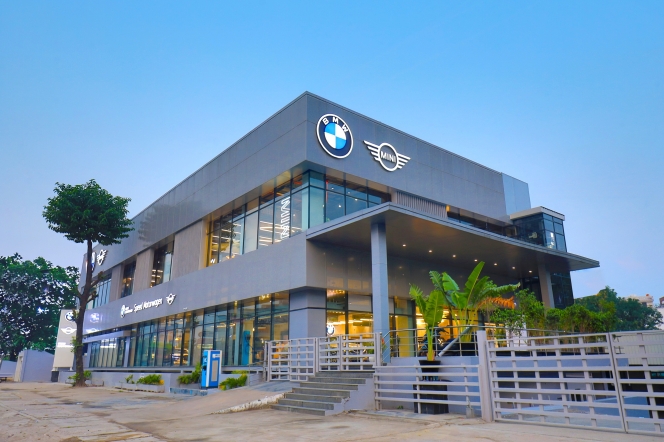
BMW Group India has integrated the MINI brand into its Speed Motorwagen dealership in Lucknow, creating a multi-brand retail facility representing BMW, MINI and BMW Motorrad under one roof.
The Retail.NEXT facility is spread across a 12,142-square-foot showroom for BMW and MINI alongside a 2,088-square-foot pre-owned vehicle display area. The showroom accommodates eight BMW vehicles, three certified pre-owned units and two MINI vehicles.
The site also includes a 2,100-square-foot BMW Motorrad display area featuring 11 motorcycles, supported by dedicated service workshops comprising mechanical, electrical and programming bays. MINI's introduction in Uttar Pradesh aligns with the brand's national retail footprint, which spans 18 sales touchpoints across 17 cities.
Hardeep Singh Brar, President and CEO, BMW Group India, said, "Lucknow is an important luxury market, with customers increasingly seeking brands that reflect their individuality and aspirations. Since 2012, BMW has shaped this market through a compelling portfolio, exceptional experiences and a strong local presence. We lead the luxury electric vehicle segment in Uttar Pradesh, reflecting the growing preference for progressive, sustainable mobility and the strength of our electric portfolio. MINI with its unmistakable style, spirited performance and distinctive character, is a natural fit for Lucknow’s refined taste and appreciation for self-expression. Together with Speed Motorwagen, we are strengthening the power of choice by bringing BMW, MINI and BMW Motorrad under one roof, supported by personalised attention and seamless ownership support."
Divij Narain, Dealer Principal of Speed Motorwagen, said, "The arrival of MINI marks a significant milestone for Speed Motorwagen and discerning automotive enthusiasts in Lucknow. Alongside BMW’s progressive luxury and BMW Motorrad’s spirit of freedom and adventure, MINI adds a distinctive new dimension to our portfolio. Our team is committed to bringing each brand to life through thoughtfully curated product discovery, expert consultation and comprehensive aftersales care. We look forward to nurturing passionate communities across all three brands and ensuring every customer interaction is as memorable and individual as the mobility experience they choose."

Comments (0)
ADD COMMENT