

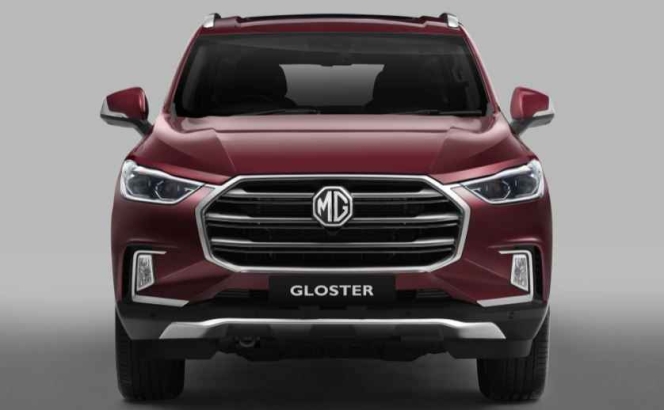
MG Motor India has announced that its new Premium SUV Gloster will be available in four variants such as Super, Smart, Sharp and Savvy. The Sharp and new top trim Savvy will be available with Twin Turbocharged Diesel engine with four-wheel-drive (4WD). The Savvy trim represents the flagship technology leadership proposition with Autonomous Level 1 Features.
The base trim Super will be available only in 7-seater combination, the Smart and Savvy trims would be available only with captain seats, The Sharp trim would be available in both 6 and 7-seater combinations.
Standard Equipment – Super
In terms of Safety, the all-new SUV comes standard with Dual Front, Side, & Full-Length Curtain Airbags along with Electronic Stability Program, Traction Control System, Roll Movement Intervention, Hill Hold Control, Hill Descent Control, and Anti-Lock.
Braking System (ABS), Electronic Brakeforce Distribution (EBD), Brake Assist, and Rear Disc Brakes. The Super trim further adds advanced capabilities to its drivers including Driver Fatigue Reminder System, Reverse Parking Camera, and Electric Parking Brake with Autohold. It also features Front Parking Sensors in addition to the Rear ones, Front and Rear Fog Lamps, and ISOFIX Child seat anchors, along with Heated Outside Mirrors and rear windshield defogger
Standard design elements include Chrome-studded Front Grill, Exterior Chrome Door Handles, and Decorative Fendor and Mirror Garnish. All four variants also feature a Dual Barrel Twin Chrome Exhaust and Front & Rear Mud Flaps. LED Headlamps with Auto Leveling, LED Daytime Running Lights, and LED Tail lamps are a common sight in all MG GLOSTERs as well. Some of it’s the other design highlights of the Super trim are its Diamond-cut Multispoke Alloy Wheels and Turn Indicator on ORVMs.
Gloster also features Intelligent Start/Stop with 8-Speed Automatic transmission as standard Electronic Gear Shift. The Premium SUV also gives you impeccable privacy with sound absorbing windscreen.
All of the GLOSTER variants come with a 12.3” HD Touchscreen Infotainment System, USB, FM, and Bluetooth Music and Calling features are also available in all four variants.
The interiors of Super also extend an opulent touch and feel experience with All Black Interior Theme with Fabric & Leatherette upholstery. All four variants have Dashboard and Door Panel with Premium Leather layering and soft material touch.
Smart
This variant additionally comes with Electric Sunroof, Paddle Shifters & Steering Assist Cornering Lamps and flaunt Chrome-styled Front Guard Plate, DLO Garnish, Side Stepper Finish, and Roof Rails. The Super Variant features the Luxurious Brown Leather Interior theme with Diamond Stitch Pattern It perfectly accompanies its Chrome-plated Interior Décor having High-Tech Honeycomb Pattern Garnishes. Its interior upholstery also has a Leather finish with a Chrome-plated Trunk Sill Trim and LED-based Interior Reading Light (for all rows) & Red Ambient Lighting.
It has a Tyre Pressure Monitoring System, PM 2.5 filter, Fully Automatic Powered Tailgate with Hands-Free Tailgate opening with Kick Gesture, Paddle Shifters, 12-Way Power Adjustment seat (including 4 Lumbar Adjustment), and 3 Zone Auto AC. Smart offers its customers a powerful 8-speaker system as well as Android Auto and Apple Carplay capability alongside the i-Smart 2.0 integration with over 70 connected car.
Sharp 2.0 Twin Turbo
In addition to the functionalities of GLOSTER Smart, it’s a ride like no other with MG GLOSTER Sharp having an on-demand Intelligent Four - Wheel Drive (4WD). Its All-terrain System has 7 different modes, namely Eco, Sport, Auto, Snow, Mud, and Sand. The Premium SUV is a class that extends luxury in style. It features Dual Pane Panoramic Sunroof, Driver Seat & Outside Mirror Memory Function (2 sets), Wireless Charging, and also Driver Seat Massage & Ventilation. The Co-driver seat in Sharp also features 8 Way Power Adjustment Seat (Including 4 Lumbar Adjustment) What more can one expect? Sharp might probably be having it! For instance, there’s Blind Spot Detection and 360o Around View Camera that gives you a full-view around your gigantic SUV. It also has an Electro-mechanical Differential Lock.
There’s a 12 Speaker system with subwoofer and amplifier in GLOSTER Sharp as well. The vehicle also has 64 Color Ambient Lighting, Illuminated Front and Rear Metallic Scuff Plates and Outside Mirror with MG Logo Projection.
Savvy 2.0 Twin Turbo
When it comes to redefining the set standards, GLOSTER Savvy is truly a fresh chapter in the Indian automotive industry. In addition to the features of Sharp 2.0, the Premium SUV’s Savvy also comes equipped with Advanced Driver Assistance System (ADAS)* or Level 1 Autonomous, wherein a power-packed package of Forward Collision Warning, Automatic Emergency Braking, Lane Departure Warning, Automatic Parking Assist and Adaptive Cruise Control can be seen in the SUV. The British Legacy carmaker has truly upped the ante with its Savvy variant and auto-tracked India towards autonomous mobility.
i-SMART 2.0
Gloster’s i-SMART 2.0 comes with over 70 connected car features for Smart, Savvy, and Sharp such as Critical Tyre Pressure Voice Alert, Shortpedia App that gives short news summaries, and Anti-Theft Immobilization via Smartphone that remotely halts the engine ignition. It also offers 3D maps by MapMyIndia which gives information around COVID testing centres as well and various other alerts like potholes and speed checks. MG customers will also enjoy the Apple Watch Connectivity and will be able to operate their Gaana app with voice control, alongside personalized welcome and greeting messages. (MT)
Maruti Suzuki India Launches Victoris Aurum Edition To Mark Sales Milestone
- By MT Bureau
- October 24, 2026
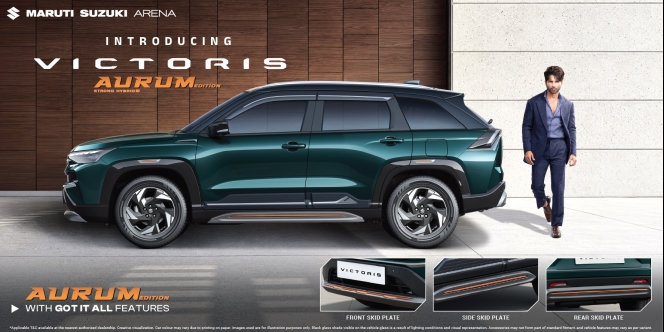
Maruti Suzuki India, the country’s largest carmaker, has introduced the Victoris Aurum Edition Strong Hybrid to mark the first anniversary of the Victoris SUV, featuring an accessory kit priced at INR 22,990.
The launch follows the model reaching sales of 100,000 and 150,000 units within its initial year of production. The Aurum Edition incorporates copper-coloured inserts on the front, side and rear skid plates, along with revised wheel arch trim.
On the outside, it gets chrome garnishes across the front grille, fenders, bumpers, body side mouldings and door visors. Interior additions comprise all-weather 3D cabin mats, a 3D boot mat and a trunk sill guard.
Furthermore, the company has partnered with actor Shahid Kapoor to lead the promotional campaign for the variant.
Partho Banerjee, Senior Executive Officer – Marketing and Sales, Maruti Suzuki India, said, "Conceptualised as a ‘Got it All’ SUV for today’s dynamic young go-getters who ‘want it all’, the Victoris has truly won the hearts of buyers. As we celebrate its first anniversary, it’s worth noting that the Victoris has become the fastest-selling PV to clock both the 150,000- and 100,000-unit sales milestones, going on to achieve the highest sales for any car in India during its 1st year of launch. Recognising these extraordinary achievements, we are introducing the Victoris Aurum Edition Strong Hybrid, with tasteful enhancements that are sure to grab eyeballs and make this festive season feel all the more special for our valuable customers. Our association with Shahid Kapoor, for the new Aurum Edition is also sure to complement the Victoris’ contemporary appeal."
Hyundai Bayon To Feature 69% High-Strength Steel Grade For Enhanced Safety
- By MT Bureau
- October 21, 2026
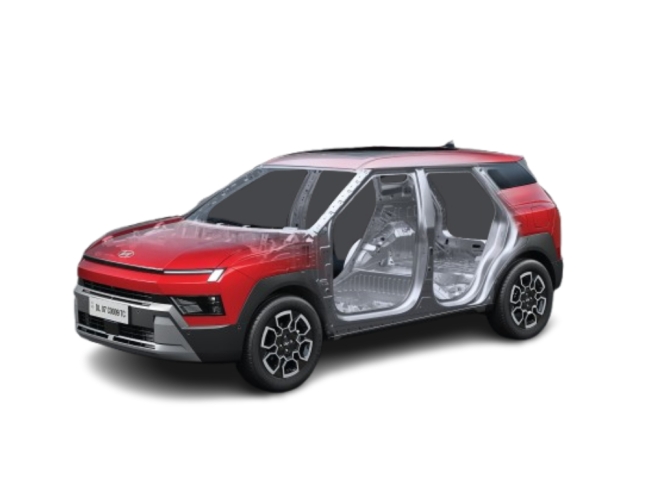
Hyundai Motor India, one of the leading passenger vehicle manufacturers, has detailed the safety specifications and platform architecture for its upcoming Bayon SUV model ahead of its official launch in India on 26 October 2026.
Built on the Global K Enhanced Platform, the Bayon utilises a body structure comprising of 69 percent high-strength steel grades, integrating hot-stamped components across the front apron, dashboard, rear floor and side reinforcements.
The vehicle incorporates Hyundai SmartSense Level 2 Pro ADAS, providing 23 driver assistance features supported by three radar units and 12 parking sensors. Over 35 safety features are fitted as standard across all variants, including six airbags, electronic stability control, hill-start assist control, a tyre pressure monitoring system (TPMS) and ISOFIX child seat anchors.
The Bayon will be powered by a 1.5-litre MPi four-cylinder petrol engine producing 84.4 kW (115 PS) and 143.8 Nm of torque, paired with a six-speed manual or an Intelligent Variable Transmission. Exterior options will span 10 colour configurations across monotone, dual-tone, and matte finishes.
Tarun Garg, Managing Director and Chief Executive Officer of Hyundai Motor India, said, "At Hyundai, we believe that true innovation is meaningful only when it enhances the everyday experiences of our customers. With the Hyundai BAYON, we have combined a robust body structure, advanced safety technologies, and intelligent driver assistance systems to deliver a comprehensive safety experience. From its reinforced chassis and high-strength steel construction to Hyundai SmartSense Level 2 Pro ADAS, the BAYON is engineered to inspire confidence not only in challenging situations, but throughout every journey. This reflects our commitment to delivering intelligent mobility solutions that are safe, connected, and progressive for modern India."
Mitsubishi Motors Launches All-New Pajero In Thailand Ahead Of Global Rollout
- By MT Bureau
- October 21, 2026
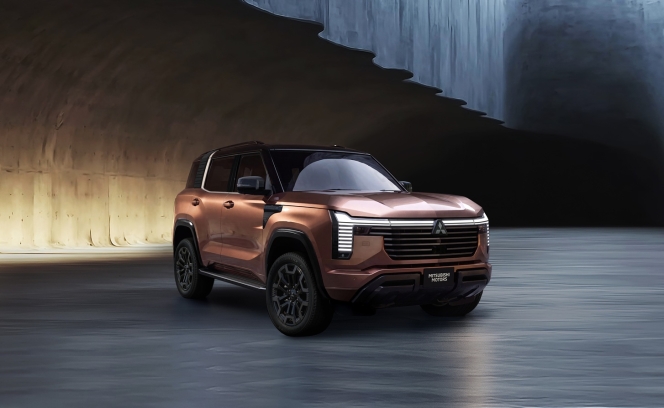
Japanese automotive major Mitsubishi Motors has commenced sales of the Pajero cross-country SUV in Thailand, serving as the initial market for the model’s international release.
The Pajero’s production takes place at the Laem Chabang facility operated by Mitsubishi Motors in Chonburi Province, which functions as a manufacturing hub for export operations.
Shipments to Australia and Japan are scheduled ahead of market releases in mid-December, followed by sequential introductions across approximately 100 countries and regions in the Middle East and Latin America starting in fiscal 2027.
The Pajero integrates four-wheel-drive capability with passenger car handling characteristics and positioning as a flagship offering.
Keisuke Kishiura, President and Chief Operating Officer, Mitsubishi Motors, said, "We are delighted to begin sales of the all-new Pajero in Thailand as the first market for its global rollout. Thailand is not only an important market for Mitsubishi Motors, but also a key hub for our production and exports. The all-new Pajero is a flagship model that embodies Mitsubishi Motors and is positioned among the top-tier cross-country SUVs in the Thai market. We will continue to deliver appealing products from Thailand to customers around the world and provide value that exceeds expectations."
Param Automotive Inaugurates Upgraded Mahindra Showroom In Ahmedabad
- By MT Bureau
- October 20, 2026
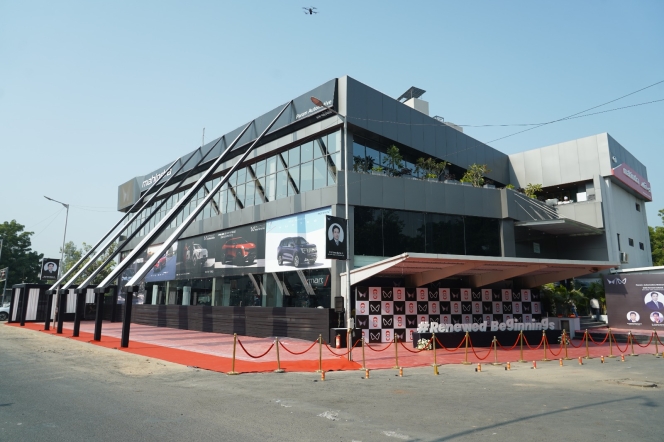
Param Automotive Group has inaugurated an upgraded dealership facility in Ahmedabad to mark its silver jubilee year.
Located at the site established in 2002, the facility spans 40,000 square feet and features display space for 18 vehicles.
The showroom includes customer lounges, delivery zones, accessory bays, test-drive areas and hospitality spaces to support vehicle sales and customer service operations.


Comments (0)
ADD COMMENT