

Nissan Motor India Launches Updated Magnite At INR 599,000
- By MT Bureau
- October 04, 2024

Nissan Motor India has launched the new Magnite compact SUV at an introductory price of INR 599,000. The Magnite is one of the most successful products for the Japanese automaker in India, which recently surpassed cumulative sales of more than 150,000 units.
The model had first marked its debut in December 2020.
The Magnite builds on its earlier success and now gets redesigned LED Headlamps with lightsaber-style turn indicator, LED taillamps with 3D Gradient ‘honeycomb’ pattern. It continues to retain Magnite’s signature L-shape Daytime Running Lights (DRL).
The new model boasts a new floating uplifted skid plate at front, bigger grille, all new-dual-tone R16 Diamond Cut Alloy wheel, functional roof rails (50kg capacity).
On the inside the Magnite comes loaded with more than 20 first features including premium quilted leatherette seat with Heat Guard Tech, continuous multi colour ambient light with memory function, plasma cluster air ionizer, new global smart key with remote engine start (60m range), Walk Away Lock (WAL) & Approach Unlock (AUL) function, biggest electronic bezel-less auto dimming IRVM, Full LED Exterior pack including LED Headlamp, LED Taillamp, LED Day time Running Light, LED Indicator, and LED Front Fog Lamp.

The new model also features Around View Monitor, 17.78-cm full-digital advanced multi-functional cluster with dark theme, floating 20.32 cm (8) touchscreen infotainment system with Wireless Android Auto & Apple CarPlay, 3D sound by Arkamys, and cruise control.
Along with these, the New Nissan Magnite also provides consumers with a option of a unique tech pack which has a dashcam, wireless charger, premium speakers (JBL powered by Harman), puddle lamps and LED scuff plates.
In terms of safety, the Japanese automaker states it has incorporated over 40 standard active and safety feature and more than 55 total safety features. These include: 6 Airbags (2 Front Airbags/2 Side Airbags/2 Curtain Airbags), Vehicle Dynamic Control (VDC), Traction Control System (TCS), Hill Start Assist (HAS), Hydraulic Brake Assist (HBA), Anti-Lock Braking System (ABS), Electronic Brake-force Distribution (EBD), Tyre Pressure Monitoring System (TPMS).

It also gets 3 point seat-belt for all seats, seat-belt reminder for all seats, child lock, ISOFIX child seat anchorages, and rear parking sensor now coming as standard fitment across all variants - ensuring that every journey is not just comfortable, but more secure than ever. The Nissan Magnite is complemented with improved body structure with 67 percent advanced and High Tensile Strength Steel.
In terms of engine options, the Magnite facelift continues to be powered by the over the 72hp, 96Nm, 1.0-litre NA petrol and 100hp, 160Nm engine options. A 5-speed manual gearbox is standard across both. Customers can also opt for 5-speed AMT and a CVT option for the turbo-petrol engine. The Magnite compact SUV comes with a claimed fuel efficiency of 20kpl for the manual and 17.4kpl for CVT turbo variants.
The new Nissan Magnite can be had in 11 body colours, 6 monotone and 5 dual-tone available – all expertly created and crafted to suit customer tastes and ensure their car is as unique as they are.
Furthermore, the company is also expanding its export footprint to 47 new markets taking the total export footprint to over 65 international markets now including Left-Hand Drive markets.
Frank Torres, Divisional Vice-President – AMIEO Region Business Transformation & President, Nissan India Operations said, "India has a critical role in our global strategy and we are glad to roll out the Magnite from our Chennai facility to more markets across the globe. It not only strengthens our export goal but also cements our customer-first philosophy. The Nissan Magnite's success since its 2020 launch, both in India and international markets, embodies the enduring value of our 'One Car, One World' philosophy."
Saurabh Vatsa, MD, Nissan Motor India said, "The Magnite has redefined market expectations, earning unwavering customer loyalty and setting new standards in the segment. The new Magnite delivers value on all fronts- safety, premium features, with a powerful yet efficient CVT Turbo powertrain. This launch showcases our unwavering commitment to excellence and plays a pivotal role in our product offensive approach for the country. We are grateful for the love and trust shown by customers in India and thank them for making the Magnite a resounding success in the country. We are confident that the New Nissan Magnite will also resonate with international customers in the same way."
Ashok Leyland Reports INR 8.69 Net Profit In Q2 FY2027
- By MT Bureau
- November 15, 2026
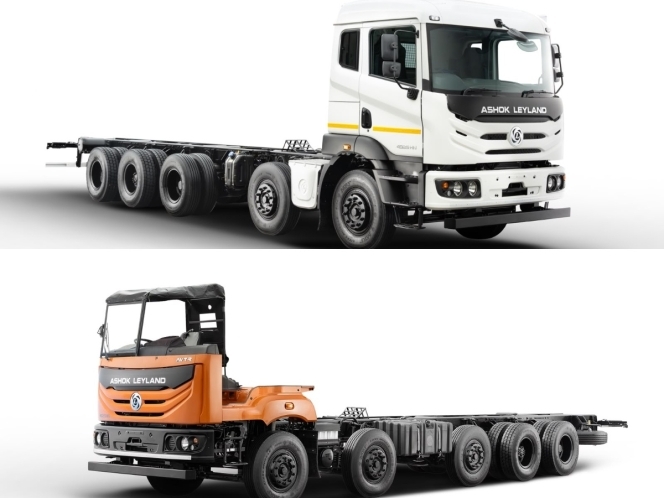
Chennai-headquartered commercial vehicle major Ashok Leyland, the flagship company of the Hinduja Group, has reported its financial results for Q2 FY2027. The company recorded wholesales of 64,677 units, a 32 percent increase from 49,116 units a year ago.
The company’s revenue grew 39 percent to INR 133.64 billion compared with INR 95.88 billion a year ago, EBITDA reached INR 13.50 billion at a margin of 10.1 percent, while profit before tax rose 14 percent to INR 11.87 billion and profit after tax increased 13 percent to INR 8.69 billion. The company ended the quarter with net cash of INR 35.46 billion, up from INR 9.90 billion a year ago.
In the medium and heavy commercial vehicle (MHCV) segment, volumes grew 44 percent YoY to 37,958 units, outpacing industry growth of 39 percent, while truck volumes rose 48 percent to secure a 31.5 percent market share excluding defence.
Light commercial vehicle (LCV) volumes increased 21 percent to 21,371 units, lifting VAHAN market share in addressable segments to 13.6 percent, while export volumes grew 7 percent to 5,102 units. Alongside growth in its defence, power solutions and aftermarket divisions, the company introduced products across the tipper, bus, haulage, and LCV categories and expanded its distribution network.
Dheeraj Hinduja, Chairman, Ashok Leyland, said, “Our record Q2 performance reflects the strength of Ashok Leyland’s business fundamentals, competitive product portfolio and strong customer focus. Our robust balance sheet provides a solid foundation to pursue our long-term growth ambitions. We are encouraged by the promising performance of our international business and continue to strengthen our presence in key export markets. Switch Mobility is also progressing well, with a strong outlook for the electric mobility business. With positive momentum across our businesses, we remain confident of sustaining profitable growth and creating long-term value for our stakeholders.”
Shenu Agarwal, MD and CEO, Ashok Leyland, said, “Our record Q2 performance, coupled with market share gains and fifteen consecutive quarters of double-digit EBITDA margins, reflects our consistent focus on profitable growth. Our strong cash position gives us the financial flexibility to invest in future technologies, innovation and new products, further strengthening our competitiveness. We are further investing in innovative product platforms and world class service processes, which would help us in sustaining our growth momentum.”
- Tata Motors Passenger Vehicles
- Shailesh Chandra
- Dhiman Gupta
- Jaguar Land Rover
- Richard Molyneux
- CNG
- EV
- China
- TATA.CARS
Tata Motors Targets 12-13% PV Growth In FY2027, Plans Major EV Production Ramp-Up
- By Nilesh Wadhwa
- November 13, 2026
Tata Motors Passenger Vehicles expects to sustain double-digit growth of around 12-13 percent in FY2027, supported by strong demand across its portfolio, increasing penetration of electric vehicles (EVs) and CNG models, and an expanding product line-up. However, the company expects growth to moderate in the second half of the financial year as the industry navigates a high year-on-year base.
Speaking during the company's Q2 FY2027 earnings conference call, Shailesh Chandra, Managing Director, Tata Motors Passenger Vehicles, said the Indian passenger vehicle industry had registered 29 percent YoY growth, with absolute volumes expected to remain strong despite some moderation in growth rates.
Tata Motors recorded its highest-ever quarterly passenger vehicle volumes of approximately 200,000 units during Q2 FY2027, registering 40 percent YoY growth and securing a domestic market share of 14.3 percent. The company also reported market share of 14.8 percent in October 2026, with sales exceeding 75,000 units.
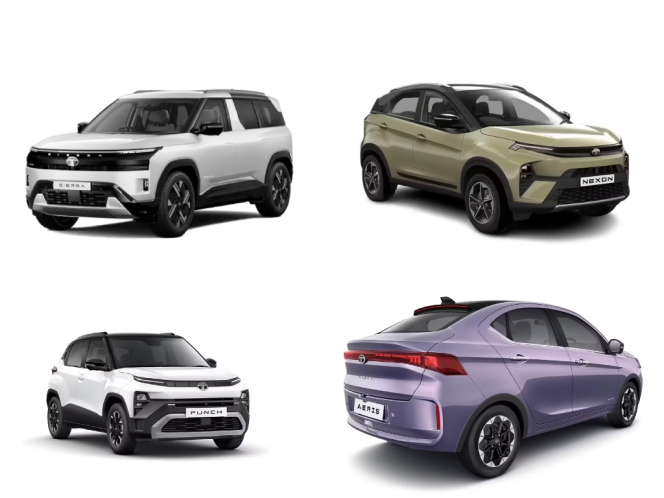
The Tata Punch emerged as the highest-selling passenger vehicle model in the industry during the quarter, while the Punch and Nexon both featured among the top five models. The recently launched Tata Aeris has also received an encouraging market response, adding to the company's growth momentum.
Chandra emphasised that the company's growth was being driven by demand across its portfolio rather than aggressive market-share acquisition. "We are not trying to buy market share; we are just trying to fulfil the demand, which exceeds supply," he said.
Green powertrains are becoming increasingly important to Tata Motors' passenger vehicle business, with EVs and CNG vehicles together accounting for approximately 50 percent of its sales.
The company's EV market share stood at 43 percent despite intensifying competition and the entry of almost all major automotive manufacturers into the segment. Chandra attributed the broader expansion of the EV market to improving product offerings, longer driving ranges, stronger warranty coverage and supportive regulations.
Tata Motors expects EV penetration to increase further as production capacity improves. The company currently has only around 10 days of EV inventory, reflecting demand that continues to outpace supply. Its EV production is expected to increase to nearly 20,000 units over the next two to three months, compared with approximately 9,000 units in the corresponding period of the previous year.
Chandra indicated that capacity constraints had prevented the company from fully capitalising on EV demand, with all manufacturing facilities operating at full capacity. The company estimates that it is currently addressing only around 60-65 percent of the demand-supply gap.
CNG is another significant growth driver. Industry CNG penetration has reached approximately 25 percent, with CNG passenger vehicle volumes growing around 70 percent. Increasing OEM participation, a wider choice of products and the expansion of the CNG refuelling network, which has reached approximately 9,000 stations, are supporting adoption.
Tata Motors has also witnessed its highest-ever quarterly CNG volumes. The company believes the segment has further headroom for growth, although supply constraints remain a limiting factor.
Supply chain remain priorities
With demand continuing to exceed supply in several segments, Tata Motors is focusing on improving production capabilities and addressing supply chain constraints.
The company acknowledged some pressure on semiconductor availability but said it had managed to secure supplies at higher costs without losing production. Supply-side challenges are also being addressed through capacity ramp-ups, particularly for electric vehicles.
Rural markets have emerged as another area of strength. Rural retail sales currently account for approximately 44-45 percent of Tata Motors' passenger vehicle sales, with recent growth in rural markets marginally outpacing urban demand. Chandra attributed this partly to the company's expansion of its reach in these markets.
The company expects the Indian passenger vehicle market to maintain healthy absolute volumes, although the 29 percent industry growth recorded in the second quarter is unlikely to be sustained at the same rate because of the elevated base.
Commodity inflation puts margins under pressure
Despite strong volume growth, profitability remains under pressure from rising commodity prices, foreign exchange movements and supply chain costs.
Tata Motors Passenger Vehicles reported its highest-ever quarterly revenue of approximately INR 204 billion, up 50 percent YoY, while profit before tax was around breakeven. The company also highlighted the impact of commodity inflation, particularly in steel, rubber, copper and precious metals.
Chandra said the company had exercised financial discipline through the first two quarters, absorbing significant cost increases while avoiding large price hikes. It is assessing which commodity cost increases are structural and which could moderate over time.
Dhiman Gupta, CFO, Tata Motors Passenger Vehicles, said approximately 40 percent of the cost impact had been offset through price increases and cost-reduction initiatives, with the balance absorbed through the profit and loss account. The company continues to monitor the situation and has not ruled out further price increases if required.
Chandra indicated that Tata Motors could consider another price hike in Q4 FY2027, depending on the trajectory of input costs. However, the company intends to take a measured approach rather than passing on temporary cost increases through immediate price adjustments.
He also noted that the company did not foresee an immediate discounting environment, given that dealer inventory remained below 30 days.
JLR maintains investment roadmap amid global challenges
Jaguar Land Rover continues to pursue its 5-year investment plan despite a challenging operating environment. Richard Molyneux, Chief Financial Officer, JLR, said the company had revised its FY2027 EBIT margin guidance to 2-3 percent and expected to be marginally cash-positive in the second half of the financial year.
The company is progressing with the production and ramp-up of the Range Rover Electric and Range Rover Sport Electric. The Range Rover GT is expected in early calendar year 2027, followed by the Jaguar Type 01 in FY2028 (calendar year 2027).
Molyneux said the revised guidance factored in the challenges anticipated by the company while maintaining its planned product introduction schedule.
China remains a concern for JLR, reflecting broader challenges faced by Western automotive manufacturers in the market. The company is actively reviewing its China strategy, with a focus on managing dealer inventories and avoiding excessive discounting to protect market positioning.
Demand visibility remains strong
For Tata Motors Passenger Vehicles, the immediate priority is to convert strong demand into sales through improved production capacity, particularly in EVs and CNG vehicles, while managing rising input costs.
Chandra reiterated the company's expectation of 12-13 percent growth in FY2027, with a stronger first half followed by a more moderate second half because of the high comparative base. With EV and CNG adoption gaining momentum, the company expects green powertrains to play an increasingly significant role in its growth strategy.
The ability to ramp up production, manage commodity inflation and maintain pricing discipline will be critical to translating the current demand momentum into sustainable growth and improved profitability.
Tata Motors Passenger Vehicles Reports Q2 FY27 Consolidated Revenue Of INR 969.2 Billion
- By MT Bureau
- November 13, 2026
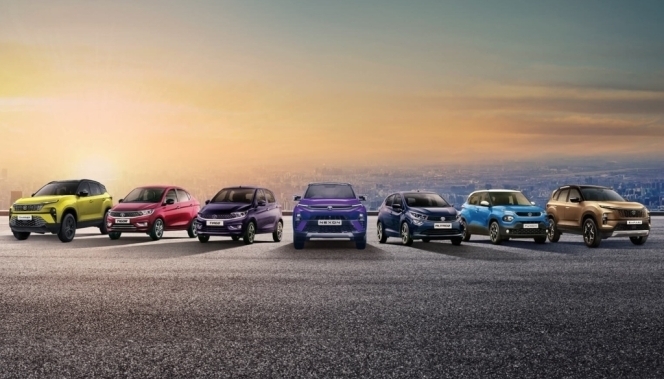
Tata Motors Passenger Vehicles has announced its financial results for Q2 FY2027, reporting consolidated revenue of INR 969.2 billion, representing a 34 percent YoY growth. Consolidated EBITDA reached 6.2 percent with an EBIT margin of 1.1 percent, while profit before tax, before exceptional items, stood at INR 4.03 billion.
During the quarter, the company incurred an exceptional expenditure of INR 67 billion for employee separation costs and asset impairments.
In Q2 FY2027, Tata Motors’ domestic passenger vehicles business recorded its highest quarterly revenue at INR 204.23 billion, up 51 percent YoY, driven by a 40 percent volume growth. Electric vehicle volumes grew 90 percent YoY, pushing alternative powertrains past 50 percent penetration, with electric vehicles accounting for 23 percent and compressed natural gas (CNG) models at 28 percent. The domestic unit registered an EBITDA margin of 4 percent and an EBIT margin of -0.3 percent, affected by commodity costs and foreign exchange pressures, while generating a positive free cash flow of INR 8.25 billion.
Tata Motors-owned British marquee luxury brand Jaguar Land Rover reported revenue of GBP 5.9 billion, a 20.3 percent increase YoY, supported by wholesale volume recovery following cyber incidents in the previous year.
Jaguar Land Rover posted an EBITDA margin of 6.6 percent and an adjusted EBIT margin of 1.1 percent, with a profit before tax and exceptional items of GBP 6 million. During the quarter, Jaguar Land Rover unveiled three luxury electric vehicles – the Range Rover Electric, Range Rover Sport Electric, and the Jaguar Type 01 – built in the United Kingdom, alongside restructuring provisions of GBP 530 million and a free cash outflow of GBP 540 million.
Dhiman Gupta, CFO, Tata Motors Passenger Vehicles, said, “In Q2 FY27 TMPV continued to build on its strong momentum in the domestic business, while JLR delivered resilient volumes despite global market specific challenges and wind-down of previous Jaguar models. However, adverse mix and persistent commodity pressures weighed on margins. Both businesses remain fundamentally strong, and we stay focused on executing our medium-term priorities: driving growth through new launches, accelerating cost reductions and improving cash generation.”
PB Balaji, CEO, Jaguar Land Rover, said, “JLR delivered positive operating profits in the second quarter and first half of the financial year, despite ongoing global challenges. We launched three new products: Range Rover Electric, Range Rover Sport Electric and the show stopping Jaguar Type 01 at a world premiere in New York. With the proposed arrival of Range Rover GT and a new electric Defender product in the new year, we are entering a phase of exciting product launches. This, together with our growth plans for the US and disciplined execution of the Enterprise Missions to reduce our breakeven volumes to 300k units, positions us well to deliver consistent, cash-accretive growth in the coming years. I would like to thank all our people, supply chain and retail partners for their continued support.”
Shailesh Chandra, MD and CEO, Tata Motors Passenger Vehicles, said, “Q2 FY27 was another quarter of strong execution for Tata Motors PV, with record quarterly sales of 200k+ units and industry-beating growth of 40% YoY reflecting robust customer demand across our portfolio. We maintained our leadership in electric mobility, recording industry-beating growth of 90 percent YoY in EV sales. Building on the momentum of our Q1 launches, we further strengthened our portfolio with new launchings including the all-new Tata Aeris. We also unveiled our new customer-facing identity, TATA.CARS, reflecting the evolution of our brand in step with the aspirations of today's Indian car buyer. We registered a Y-o-Y revenue growth of 51 percent and our highest ever quarterly revenues of INR 204 billion in Q2FY27. While steep commodity cost pressures remained a headwind, we responded through calibrated pricing and focused cost actions. Looking ahead, we remain focused on sustaining industry-beating growth, capitalizing on growing EV-penetration, ramping up production capacity and strengthening profitability.”
- Stellantis
- Global Supplier Conference and Awards
- FaSTLAne 2030
- Chrysler
- Dodge
- Jeep
- Ram
- Antonio Filosa
- Monica Genovese
Stellantis Recognises 61 Suppliers At 2026 Global Supplier Conference And Awards
- By MT Bureau
- November 13, 2026
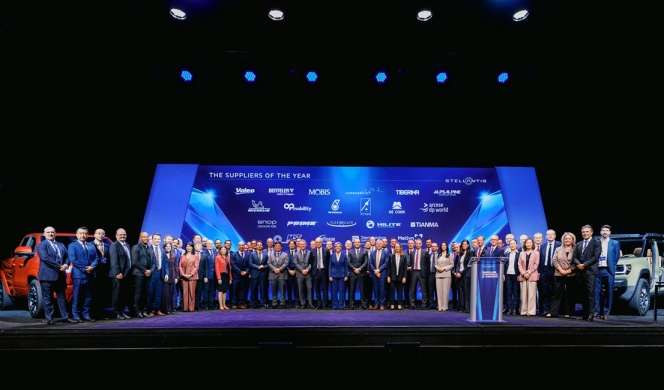
European auto major Stellantis recognised 61 suppliers from around the world on 10 November at its sixth annual Global Supplier Conference and Awards held at the Masonic Temple in Detroit.
During the event, 21 companies were named 2026 Suppliers of the Year, while 40 companies received recognition across categories covering materials, quality, innovation, programme management, corporate social responsibility, carbon reduction and value creation.
The conference brought together more than 1,000 supplier representatives and members of the Stellantis leadership team. Executives outlined priorities around programme launch execution, technologies, supplier engagement in design and quality standards to support the FaSTLAne 2030 strategy, alongside a presentation on Jeep brand strategy and the company's ties to the Chrysler, Dodge, Jeep and Ram brands in Detroit.
A cross-functional Stellantis team selected the recipients based on quality, delivery, innovation, operational and financial metrics, corporate social responsibility and competitiveness.
Antonio Filosa, CEO, Stellantis, said, “Delivering on our strategy requires us to move faster, innovate smarter and execute with excellence. Our suppliers are essential partners in this journey, helping us bring great products to market, strengthen our competitiveness and create greater value for our customers. Congratulations to all this year’s award winners, and thank you to our global supplier community for your partnership and continued commitment.”
Monica Genovese, Chief Purchasing Officer, Stellantis, said, “Strong supplier partnerships are built on trust, performance and continuous improvement. This year’s honourees distinguished themselves through their ability to deliver quality, innovation and value in a dynamic environment. Their performance strengthens our competitiveness and helps us create better outcomes for our customers.”
| 2026 Stellantis Supplier of the Year Award Winners | |||
| AE Corp | Financière SNOP Dunois | Michelin | Petronas |
| Alpine | Flex-N-Gate | Metivo | Prime Wheel |
| Alten | Hilite | MOBIS | Tapfin |
| Arcese DP World | Infineon | MST Steel | Tianma |
| Benteler | Luxshare | OP Mobility | Tiberina |
| Valeo | |||
| Additional Suppliers Recognised in the Supplier of the Year Categories | |||
| Acciona | Brose | Graphicient | Rediion |
| Adient | CATL | Kalyani | Sanai |
| Aisin | CBWEE | Kerry Logistics | Sansera Engineering |
| APL | Constellation | Magna | Sigit |
| APG | Desay | Mann+Hummel | Simoldes |
| Aumovio | DN Automotive | Metaplast | Solstice |
| Autoneum Holding AG | ENGIE | Oakley | Sona Comstar |
| BASF | Gestamp | Orafol | Sylvan |
| Brembo | GFX | Pirelli | TomTom |


Comments (0)
ADD COMMENT