

Tata Motors Reports INR 33.43 Billion Net Profit For Q2 FY2025
- By MT Bureau
- November 08, 2024
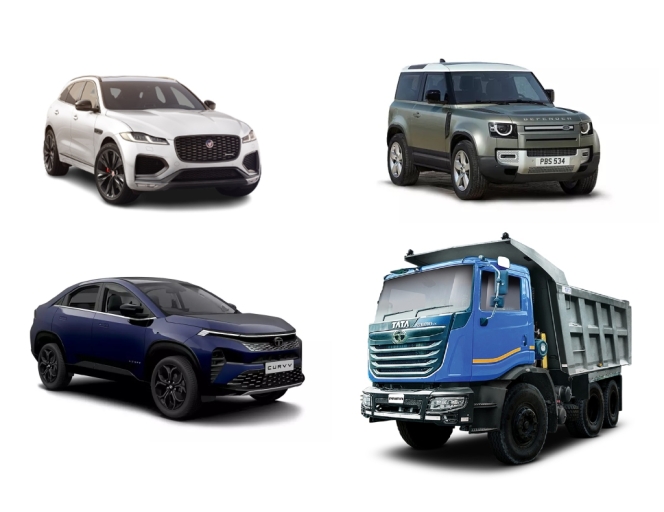
Tata Motors, one of the leading passenger and commercial vehicles manufacturer, has announced its financial results for Q2 FY2025.
The company reported consolidated revenue of INR 1,015 billion, down 3.5 percent YoY; EBITDA at 1,160 billion, down 230 bps and net profit at INR 33.43 billion, down 11 percent YoY.
During the quarter, the passenger vehicle volumes were down 6.1 percent YoY at 130,500 units on the back of slow consumer demand and seasonal factors. The commercial vehicle sales came at 79,800 units, lower 19.6 percent YoY impacted by slowdown in infrastructure project execution, reduction in mining activity and an overall drop in fleet utilisation due to heavy rains.
On the other hand, Jaguar Land Rover delivered an eighth successive profitable quarter, despite temporary aluminium supply constraints.
Going forward, the company has maintained a cautious outlook for the near-term in domestic demand. However, the festive season and substantial investments in infrastructure should help bolster it. JLR wholesales are expected to improve sharply, as supply challenges ease. Overall, we expect an all-round improvement in performance in H2 FY25 and the business to become net debt free by this year.
PB Balaji, Group CFO, Tata Motors, said: “Growth in the quarter was impacted due to significant external challenges as highlighted earlier. Overall, the business fundamentals remain strong, and we remain focused on our agenda of driving growth, competitiveness and free cash flows. As the supply challenges ease and demand picks up, we are confident of steady improvement in our performance and delivering a strong H2.”
Shailesh Chandra, MD, Tata Motors Passenger Vehicles and Tata Passenger Electric Mobility, said: “The passenger vehicle industry in Q2 FY25 witnessed around 5 percent decline in registrations, resulting in continued build-up of channel inventory. Sales of EVs were additionally impacted by lapse of certain subsidies. We moderated our offtakes in Q2 to proactively keep our channel inventory under control. Q3 has started off with a resurgence in industry demand on the back of a robust festive season. Tata Motors recorded its highest ever monthly registrations of around 68.5k during October, which helped in bringing down the inventory to normal levels. Our multi-powertrain suite of Curvv, Nexon iCNG and Nexon.ev 45 has garnered strong consumer interest as we continue to ramp up deliveries in Q3.”
Girish Wagh, Executive Director, Tata Motors, said, “Q2 FY25 moderated the positive momentum seen by the commercial vehicles industry at the start of the fiscal, due to slowdown in infrastructure project execution, reduction in mining activity and an overall drop in fleet utilization due to heavy rains. Tata Motors Commercial Vehicles domestic sales at 79.8K units were 19.6 percent lower than Q2 FY24 sales. Our demand-pull strategy and vigilance on costs had the business deliver EBITDA margins of 11.2 percent in H1 FY25. Going forward, with the rains easing, increased infrastructure spending, and the arrival of the festive season boosting consumption, we anticipate demand to pick up.”
Adrian Mardell, Chief Executive Officer, JLR, said: “JLR has delivered a resilient performance in Q2, resulting in a 25 percent increase in first half profits year-on-year. Our teams responded brilliantly to the aluminium supply shortages we experienced in the quarter, so we could deliver as many orders as possible to clients. We continue to make good progress delivering our Reimagine strategy. We have invested GBP 250 million so far to prepare our Halewood UK plant for electric vehicle production and with strong global demand for our products, we are well positioned to deliver on our commitments again this financial year.”
Kia India Clocks Highest-Ever Monthly Sales Of 32,017 Units In September 2026
- By MT Bureau
- October 01, 2026

Kia India, one of the leading passenger vehicle manufacturers, has reported its best-ever monthly wholesale performance of 32,017 units in September 2026, representing a 41 percent increase compared to 22,700 units sold last year.
For Q3 of CY2026, the company recorded sales of 89,259 units, reflecting a 38.5 percent growth over 64,443 units for the same period last year.
In terms of YTD (January – September 2026) cumulative sales reached 253,008 units, marking a 22.5 percent increase from 206,582 units reported during the corresponding period in 2025.
Kia India attributed the robust performance to healthy demand across its portfolio incuding Seltos and Sonet models, alongside contributions from the Carens, Carens Clavis, Clavis EV, Syros EV and Sorento, which is offered in diesel and hybrid powertrain options. The company's powertrain options now span petrol, diesel, CNG, hybrid, and electric configurations across its product range.
Atul Sood, Senior Vice-President of Sales and Marketing, Kia India, said, "Our strong performance in September and across the third quarter reflects the continued trust of our customers and the strength of Kia’s evolving portfolio. The Seltos and Sonet continue to be key contributors to our growth, while the strong response to the Sorento and Syros EV reinforces our strategy of expanding into new segments and powertrain categories in line with evolving customer aspirations. As mobility needs become increasingly diverse, we are focused on providing meaningful choice across conventional, CNG, hybrid and electric powertrains, supported by ownership solutions that address real customer needs. We remain committed to building on this momentum through distinctive products, advanced technologies and differentiated experiences designed around the needs of Indian customers."
At present, Kia India operates a retail and service network comprising 915 touchpoints across 425 cities, alongside 137 certified pre-owned outlets across the country.
Toyota Kirloskar Motor Sells 25,027 PVs In September 2026
- By MT Bureau
- October 01, 2026
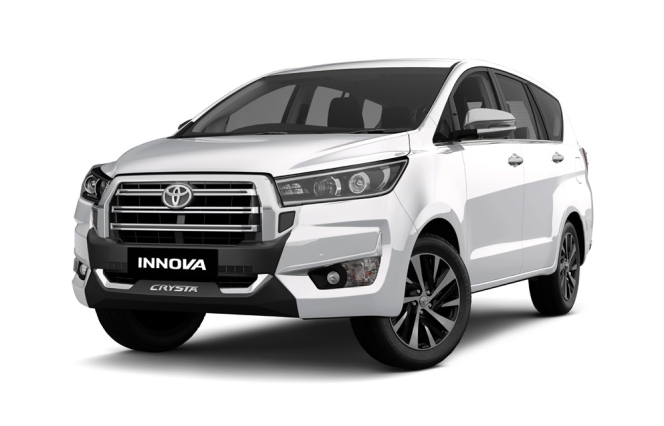
Toyota Kirloskar Motor (TKM), one of the leading passenger vehicle manufacturers, has reported its total wholesales of 28,218 units in September 2026, comprising 25,027 units sold in the domestic market and 3,191 units exported.
For the YTD period (January – September 2026), the automaker reported cumulative total sales of 294,914 units, representing an 8 percent increase compared to 272,824 units sold last year.
Domestic sales for the 9-month period rose 9 percent to 269,619 units, up from 247,081 units in the previous year, while exports reached 25,295 units, compared to 25,743 units a year ago.
Sabari Manohar, Executive Vice-President of Sales-Service-Used Car Business, Toyota Kirloskar Motor, said, "September witnessed continued customer interest across segments, supported by our focus on quality, durability and reliability. As we enter the festive season, we remain committed to strengthening customer engagement and working closely with our dealer partners to deliver enhanced mobility experiences and address evolving customer needs."
Nissan Motor India Reports Sales Of 3,300 Units In September 2026
- By MT Bureau
- October 01, 2026
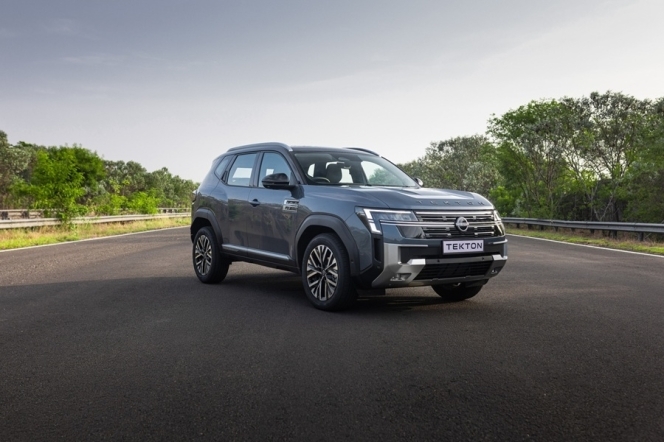
Nissan Motor India, one of the leading passenger vehicle manufacturers, has announced its wholesales for September 2026.
The company sold 10,025 units last month, comprising 3,300 units in the domestic market, up 100 percent YoY, as against 1,652 units last year. Exports, on the other hand, came to 6,725 units.
Deliveries during the month were supported by sales across the company's SUV portfolio, including the Nissan Tekton, Magnite, and Gravite, alongside expansion of its retail network.
Saurabh Vatsa, Managing Director, Nissan Motor India, said, "Our domestic volumes nearly doubled year-on-year in September, validating Nissan’s product-led strategy, the strength and capability of our network, the contribution of our finance and business partners, and the increasing confidence of Indian customers in the Nissan brand. The growing volumes in the domestic market give us a strong foundation to build scale in India. We would also like to acknowledge the continued support of our international dealers, distributors and customers across overseas markets, who are enabling us to deliver a robust export performance. We are confident about the opportunity ahead and remain committed to accelerating our momentum through distinctive products and a stronger network for customers who value the Nissan brand and its products."
Tata Motors Passenger Vehicles Records Sales Of 68,810 Units In September 2026
- By MT Bureau
- October 01, 2026

Mumbai-headquartered automotive major Tata Motors Passenger Vehicles has announced its wholesales for September 2026 and Q2 FY2027.
The company reported sold 70,210 passenger vehicles last month, up 15 percent YoY, as against 60,907 units last year. In the domestic market sales grew 15 percent YoY to 68,810 units from 59,667 units a year ago, while exports grew by 13 percent to 1,400 units. Monthly electric vehicle dispatches reached 15,384 units, representing a 67 percent increase over 9,191 units in September 2025.
In Q2 FY2027, the wholesales touched 201,723 units, up 40 percent YoY, as against 144,397 units for the same period last year. The domestic market saw a healthy uptick of 40 percent YoY at 140,189 units, while exports clocked 20 percent YoY growth to 5,049 units. Electric vehicle sales, comprising domestic and export volumes, came at 47,150 units for the quarter, reflecting a 90 percent YoY increase over 24,855 units.
Interestingly, for Q2 FY2027, electric vehicles accounted for 23 percent of the company’s total sales volume, while CNG models contributed 28 percent, bringing the combined volume of alternative powertrains to 51 percent of overall deliveries.
Shailesh Chandra, MD and CEO, Tata Motors Passenger Vehicles, said, “In Q2 FY27, passenger vehicle demand sustained the strong momentum seen following GST 2.0, despite the quarter being seasonally softer. Industry Vahan volumes grew around 24 percent YoY, led by increasing adoption of greener powertrains, providing a promising backdrop for the forthcoming festive season. For Tata Motors Passenger Vehicles, Q2 FY27 was our highest-ever quarter, with sales of 201,723 units and industry-beating growth of 40 percent YoY. We ended the quarter on a strong note, crossing the 70,000-unit sales milestone in September and look forward to carrying this momentum as we enter the festive period. Our greener powertrain portfolio continued to be a significant growth driver. EVs recorded their highest-ever quarterly sales of over 47,000 units, growing 90 percent YoY, with EV penetration in our portfolio rising sharply to 23 percent, compared with around 8 percent for the industry. CNG also delivered its highest-ever quarterly sales and accounted for 28 percent of our volumes. Together, EV and CNG now contribute 51 percent of our sales, reflecting the rapid shift in customer preference towards greener mobility.”
“Customer response remained strong across our portfolio, with Punch emerging as India’s highest-selling SUV during the quarter. Building on the momentum of our Q1 launches, we further strengthened our portfolio with Curvv SeriesX, Sierra Legend Series and the all-new Tata Aeris. We also unveiled our new customer-facing identity, TATA.CARS, reflecting the evolution of our brand in step with the aspirations of today’s Indian car buyer. Looking ahead, we remain optimistic about the festive season, supported by a strong order book and healthy customer traction across the portfolio. As we progressively scale up production, our focus will be on fully leveraging this demand, sustaining our growth momentum and further strengthening our competitive position in the market,” added Chandra.




Comments (0)
ADD COMMENT