

Toyota Kirloskar Motor Reports 26,847 Wholesales for September 2024
- By MT Bureau
- October 01, 2024
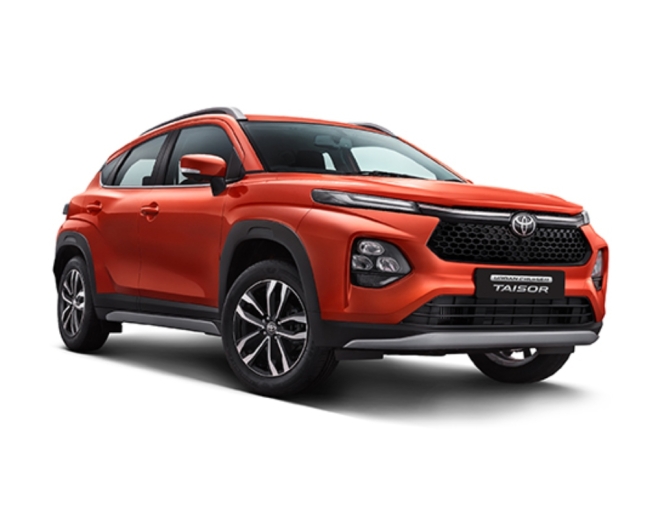
Toyota Kirloskar Motor (TKM), one of the leading passenger vehicles manufacturer in the country, has announced a 14 percent growth in its wholesales for September 2024.
The company reported sales of 26,847 units, as compared to 23,590 units, which includes sales of 23,802 units in domestic market and exports totalling 3,045 units.
In H1 FY2024-2025, Toyota Kirloskar Motor achieved a notable increase in vehicle deliveries, reaching a total of 1,62,623 units. This marks the company’s strongest performance ever in India. For reference, the company had sold 1,23,939 units in the corresponding period of the previous financial year.
Sabari Manohar, Vice-President, Sales-Service-Used Car Business, Toyota Kirloskar Motor said, “As the festive fervour picks-up footfalls and enquiries are charged up which makes us positive of a very good festive season. Notably, our SUV, MPV, and small car segments have experienced significant growth nationwide, contributing over 90 percent to our sales in in the month of September.”
“Key to meeting this rising demand has been our strategic operational improvements, such as the introduction of a third shift. This has significantly optimised our supply chain, particularly for high-demand models where waiting periods have been reduced.
We have also consistently implemented customer-centric programs and value-added services aimed at further building on market synergies. In keeping with the festive spirit, we’ve introduced the 555 Plus program that offers exciting new schemes and customer benefits such as extended warranties, free service, Roadside Assistance and attractive exchange offers across key models, giving our customers every reason to celebrate with Toyota this season. We recently, we introduced initiatives like TCare, which consolidates multiple value chain offerings under a single brand, providing top-tier convenience and a hassle-free experience. Furthermore, with our 1,045 touchpoints and diverse product portfolio, we effectively meet our customers' needs, whether they're seeking lifestyle-driven options or solutions for family mobility,” he concluded.
- PRE-OWNED LUXURY CARS
- LUXURY SUV DEMAND
- FESTIVE SEASON SALES
- USED CAR MARKET
- MERCEDES-BENZ
- BMW
- AUDI
- AUTOMOTIVE INDUSTRY
- LUXURY CAR BUYERS
- AUTO BEST EMPERIO
SUVs Draw Up To 70 Percent Of Festive Pre-Owned Luxury Car Enquiries
- By Gaurav Nandi
- October 27, 2026
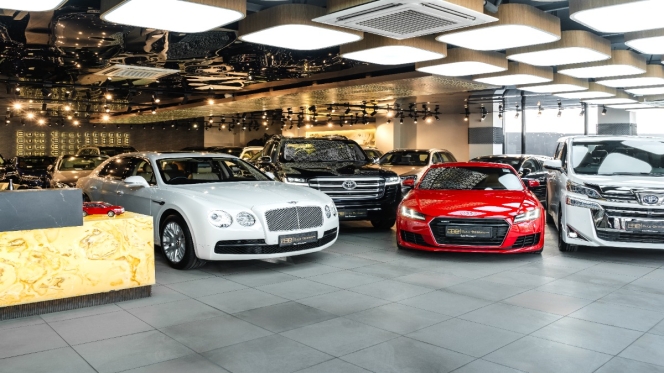
Sport utility vehicles accounted for an estimated 65–70 percent of pre-owned luxury car enquiries this festive season, according to a survey by AutoBest Emperio, a pre-owned luxury car dealership. Most of the interest is concentrated in the INR 3–6 million price range for two- to four-year-old Mercedes-Benz, BMW and Audi models.
The New Delhi-based dealership said enquiries typically rise by 20–30 percent during the festive period compared with an average non-festive month. The average festive-season transaction is around INR 4.5–5 million.
Founder Avneet Singh Kohli, however, cautioned against reading too much into the jump in footfall. “Enquiries and actual sales are two very different things. A lot of people start exploring their options during this period, while some are still comparing prices or waiting for the right car to come along,” he said in an exclusive interaction with Motoring Trends.
Survey At A Glance
|
Finding |
Figure |
|
Rise in festive-season enquiries vs a non-festive month |
20–30 percent |
|
Share of enquiries for SUVs |
65–70 percent |
|
Key price bracket |
INR 3–6 million |
|
Average festive-season transaction |
INR 4.5–5 million |
|
Buyers purchasing their first luxury car |
25–30 percent |
|
Buyers upgrading from Toyota, Hyundai, Kia, Volkswagen or Skoda |
30–35 percent |
|
Preferred vehicle age |
2–4 years |
For a buyer with a budget of INR 4–5 million, the choice is increasingly between a brand-new premium car and a two- to four-year-old Mercedes-Benz, BMW or Audi. The pre-owned option can offer more performance, more features and a stronger badge at a comparable price.
The first owner has already absorbed the steepest depreciation. According to AutoBest Emperio, buyers now compare the two options on overall value rather than on sticker price alone.
“The biggest change we are seeing is that buying a pre-owned luxury car is no longer viewed simply as a cheaper way of owning a luxury brand. Customers are looking at it as a smarter way of buying,” Kohli said.
He added, “If you can get a three-year-old Mercedes, BMW or Audi with a clean history, low kilometres and the right warranty support for the price of a new premium car, the value proposition becomes very difficult to ignore.”
Enquiries v sales
The festive season rarely changes what a buyer wants, Kohli said, but it often decides when they buy. Customers who have weighed an upgrade for months tend to close the deal once the right car, financing and exchange offer come together. “The festive season adds another trigger because people are already in a buying mindset,” he added.
Still, a 20–30 percent rise in enquiries does not translate into an equal rise in sales. Luxury buyers are particular about model, colour, kilometres and condition, so conversion depends on the quality of enquiries and whether the right car is in stock.
Nor does the season guarantee bigger tickets. “I would not say that every festive season automatically brings higher-value transactions,” Kohli noted. Transaction values depend on the mix of cars sold, he added, and the dealership's focus is on converting genuine buyers and protecting margins rather than chasing volumes at any cost.
SUVs lead
SUVs' share of enquiries reflects their road presence, practicality and the sense of a clear step up from a buyer's current car. The Mercedes-Benz GLC and GLE, BMW X3 and X5 and Audi Q5 and Q7 are drawing the most interest. Sedans retain a steady following led by the Mercedes-Benz E-Class and BMW 5 Series.
Kohli said Mercedes-Benz and BMW continue to attract buyers but resale value hinges on the specific variant, service history, kilometres and condition. Depreciation can be sharp when a new generation arrives or the new-car price shifts significantly.
That creates bargains for buyers but risk for dealers. “The biggest risk in our business is buying a car at a price that leaves very little room for market movement,” Kohli said. A car that sits in inventory too long, he explained, loses margin to holding costs and further depreciation.
First-time buyers’ sentiment
An estimated 25–30 percent of festive-season customers are buying their first luxury car and another 30–35 percent are trading up from brands such as Toyota, Hyundai, Kia, Volkswagen and Skoda. Many see the pre-owned market as the way to make that move within their existing budget.
For these buyers, Kohli said, the purchase price is often not the main hurdle. “They may be comfortable paying for the car but they want to know what servicing, insurance, tyres and unexpected repairs could cost them,” he said. Financing costs and warranty coverage add to the hesitation, especially when the alternative is a new mainstream car.
His answer is transparency on the car's history, condition and likely running costs. “It is better for someone to make an informed purchase than to buy in excitement and regret it later,” he said.
Demand spread
Delhi-NCR remains AutoBest Emperio's core market but enquiries are also coming from Chandigarh, Punjab, Haryana, Mumbai, Bengaluru and Hyderabad. Buyers are more willing to consider a car located in another city provided they can see inspection reports, service records and documentation upfront.
That reflects a wider shift as the pre-owned luxury market becomes more organised. Festive offers and financing help close deals, the dealership said, but buyers spending INR 3–6 million also want clarity on condition, kilometres, ownership records and warranty support.
Pre-owned luxury electric vehicles are a segment Kohli called ‘worth watching’ but buyers approach them differently. Battery health, potential repair costs, range, charging convenience and battery warranty weigh heavily and fast-moving technology can leave a once-flagship model outclassed within a few years.
Until valuations become more consistent, Kohli said, he would stock EVs more selectively than petrol and diesel luxury cars. “Buyers need proper information about battery condition and warranty coverage before making a decision,” he said.
As the festive season peaks, pre-owned luxury cars are emerging as a considered upgrade rather than a compromise. Demand is concentrated in SUVs but sales will hinge on transparency, inventory quality and buyer confidence. For dealers, disciplined pricing may matter as much as festive momentum.
Maruti Suzuki India Launches Victoris Aurum Edition To Mark Sales Milestone
- By MT Bureau
- October 24, 2026
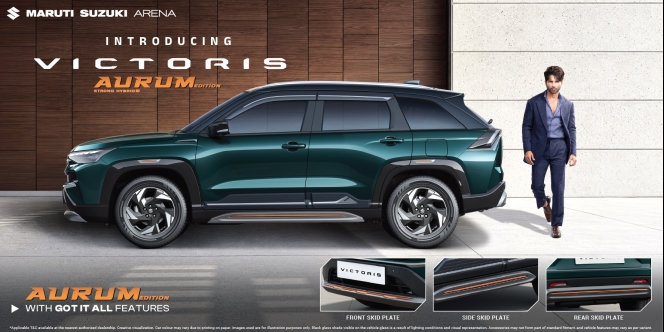
Maruti Suzuki India, the country’s largest carmaker, has introduced the Victoris Aurum Edition Strong Hybrid to mark the first anniversary of the Victoris SUV, featuring an accessory kit priced at INR 22,990.
The launch follows the model reaching sales of 100,000 and 150,000 units within its initial year of production. The Aurum Edition incorporates copper-coloured inserts on the front, side and rear skid plates, along with revised wheel arch trim.
On the outside, it gets chrome garnishes across the front grille, fenders, bumpers, body side mouldings and door visors. Interior additions comprise all-weather 3D cabin mats, a 3D boot mat and a trunk sill guard.
Furthermore, the company has partnered with actor Shahid Kapoor to lead the promotional campaign for the variant.
Partho Banerjee, Senior Executive Officer – Marketing and Sales, Maruti Suzuki India, said, "Conceptualised as a ‘Got it All’ SUV for today’s dynamic young go-getters who ‘want it all’, the Victoris has truly won the hearts of buyers. As we celebrate its first anniversary, it’s worth noting that the Victoris has become the fastest-selling PV to clock both the 150,000- and 100,000-unit sales milestones, going on to achieve the highest sales for any car in India during its 1st year of launch. Recognising these extraordinary achievements, we are introducing the Victoris Aurum Edition Strong Hybrid, with tasteful enhancements that are sure to grab eyeballs and make this festive season feel all the more special for our valuable customers. Our association with Shahid Kapoor, for the new Aurum Edition is also sure to complement the Victoris’ contemporary appeal."
Hyundai Bayon To Feature 69% High-Strength Steel Grade For Enhanced Safety
- By MT Bureau
- October 21, 2026
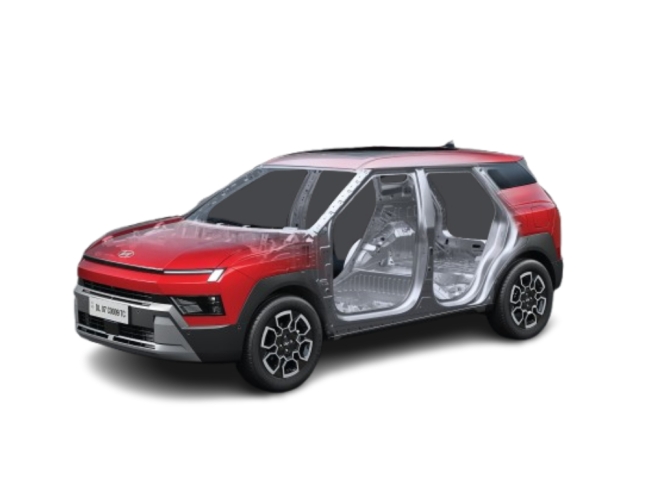
Hyundai Motor India, one of the leading passenger vehicle manufacturers, has detailed the safety specifications and platform architecture for its upcoming Bayon SUV model ahead of its official launch in India on 26 October 2026.
Built on the Global K Enhanced Platform, the Bayon utilises a body structure comprising of 69 percent high-strength steel grades, integrating hot-stamped components across the front apron, dashboard, rear floor and side reinforcements.
The vehicle incorporates Hyundai SmartSense Level 2 Pro ADAS, providing 23 driver assistance features supported by three radar units and 12 parking sensors. Over 35 safety features are fitted as standard across all variants, including six airbags, electronic stability control, hill-start assist control, a tyre pressure monitoring system (TPMS) and ISOFIX child seat anchors.
The Bayon will be powered by a 1.5-litre MPi four-cylinder petrol engine producing 84.4 kW (115 PS) and 143.8 Nm of torque, paired with a six-speed manual or an Intelligent Variable Transmission. Exterior options will span 10 colour configurations across monotone, dual-tone, and matte finishes.
Tarun Garg, Managing Director and Chief Executive Officer of Hyundai Motor India, said, "At Hyundai, we believe that true innovation is meaningful only when it enhances the everyday experiences of our customers. With the Hyundai BAYON, we have combined a robust body structure, advanced safety technologies, and intelligent driver assistance systems to deliver a comprehensive safety experience. From its reinforced chassis and high-strength steel construction to Hyundai SmartSense Level 2 Pro ADAS, the BAYON is engineered to inspire confidence not only in challenging situations, but throughout every journey. This reflects our commitment to delivering intelligent mobility solutions that are safe, connected, and progressive for modern India."
Mitsubishi Motors Launches All-New Pajero In Thailand Ahead Of Global Rollout
- By MT Bureau
- October 21, 2026
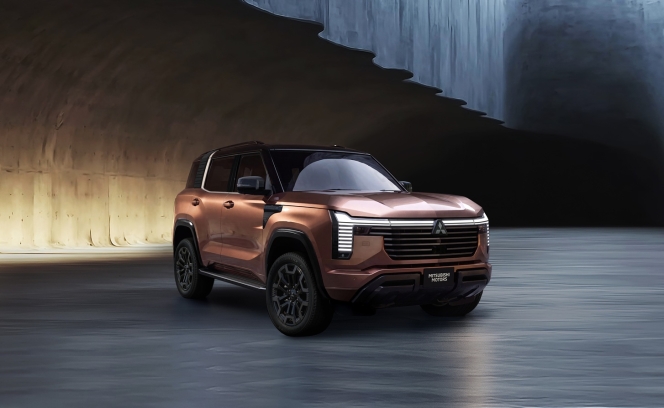
Japanese automotive major Mitsubishi Motors has commenced sales of the Pajero cross-country SUV in Thailand, serving as the initial market for the model’s international release.
The Pajero’s production takes place at the Laem Chabang facility operated by Mitsubishi Motors in Chonburi Province, which functions as a manufacturing hub for export operations.
Shipments to Australia and Japan are scheduled ahead of market releases in mid-December, followed by sequential introductions across approximately 100 countries and regions in the Middle East and Latin America starting in fiscal 2027.
The Pajero integrates four-wheel-drive capability with passenger car handling characteristics and positioning as a flagship offering.
Keisuke Kishiura, President and Chief Operating Officer, Mitsubishi Motors, said, "We are delighted to begin sales of the all-new Pajero in Thailand as the first market for its global rollout. Thailand is not only an important market for Mitsubishi Motors, but also a key hub for our production and exports. The all-new Pajero is a flagship model that embodies Mitsubishi Motors and is positioned among the top-tier cross-country SUVs in the Thai market. We will continue to deliver appealing products from Thailand to customers around the world and provide value that exceeds expectations."


Comments (0)
ADD COMMENT