

Toyota Kirloskar Motor To Support 400 Additional Schools Under ABCD Program
- By MT Bureau
- October 29, 2024
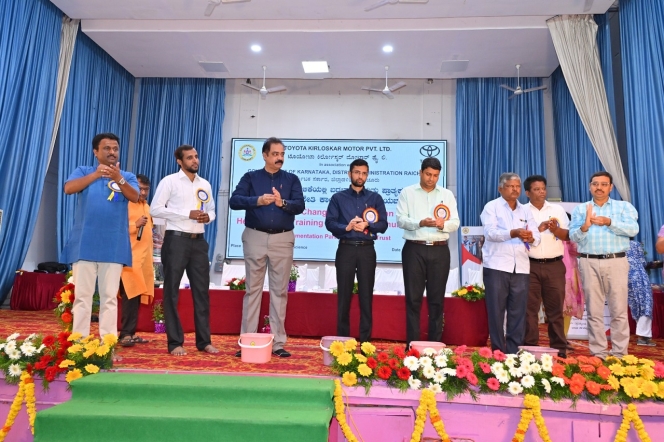
Toyota Kirloskar Motor, one of the leading passenger vehicle manufacturers, has announced that building on the success of its A Behavioural Change Demonstration (ABCD) initiative, it is now expanding the program to an additional 400 government schools in Raichur district for FY2024-25 and FY2025-26.
This program has already been successfully implemented in 100 schools over the past two years, positively impacting more than 26,000 students. The initiative will now benefit over 68,000 students in this next phase.
The program’s expansion officially commenced today with a one-day orientation session for the headmasters of the participating schools, held at the Krishi Vigyana Kendra (KVK) in Raichur. The orientation was inaugurated by Nitish K, IAS, Deputy Commissioner of Raichur, who was the Chief Guest at the occasion. This session was aimed at equipping the headmasters with tools and strategies to effectively deliver the program’s hygiene and sanitation curriculum.
As part of the program, TKM will actively promote essential hygiene practices among students through a series of training sessions that focus on handwashing, sanitation practices, water conservation, waste management, and personal hygiene.
Additionally, the program will provide sanitary pads to 24,000 adolescent girls till March 2026. This initiative aims to ensure effective menstrual hygiene management and support young women in their health and well-being, empowering them to take charge of their menstrual health and advocate for their needs. Through this project, essential sanitation supplies, including buckets, mugs, cleaning agents, handwashing soap, and mopping items will be provided to support hygiene maintenance.
Beyond hygiene education, the program aims to strengthen school cabinets and School Development and Monitoring Committees (SDMCs), empower students to advocate for better sanitation, and encourage families to build household toilets where needed. Community engagement will also play a pivotal role, with awareness campaigns, video demonstrations, and annual quiz and drawing competitions to reinforce the lessons learned in schools.
Nitish K said, “Education today is not just about academic excellence but about nurturing responsible, aware citizens who understand the importance of health and hygiene. The ABCD program by Toyota Kirloskar Motor is a shining example of how private enterprises can meaningfully contribute to community well-being. By teaching essential sanitation and hygiene practices to young minds, the program creates a foundation for healthier, more resilient communities. It’s heartening to see Toyota's commitment to expanding this initiative further into Raichur, reaching thousands of students and families. We look forward to the transformative outcomes this program will bring.”
Vikram Gulati, Country Head and Executive Vice-President, Corporate Affairs & Governance, Toyota Kirloskar Motor, said, “At Toyota Kirloskar Motor, we believe that true progress is driven by collective responsibility, and our ABCD program stands as a testament to this. The success of our first phase has encouraged us to scale up our efforts and reach an additional 400 schools in Raichur. We remain deeply committed to supporting the Swachh Bharat mission by promoting hygiene education and sustainable practices. Through this expanded initiative, we aim to not only improve sanitation in schools but also foster a culture of awareness and positive change across the community.”
Launched in 2015, the ABCD program begin its focus in Karnataka, especially in the Ramanagara district. By 2019, the initiative had reached 1,004 schools, benefiting 58,000 students and positively impacting 430,000 community members. Following its revitalisation in August 2023, the program continues to align with the national ‘Swachh Bharat Abhiyan’ mission, contributing to India’s ongoing efforts to improve sanitation and hygiene.
Maruti Suzuki India Launches Victoris Aurum Edition To Mark Sales Milestone
- By MT Bureau
- October 24, 2026
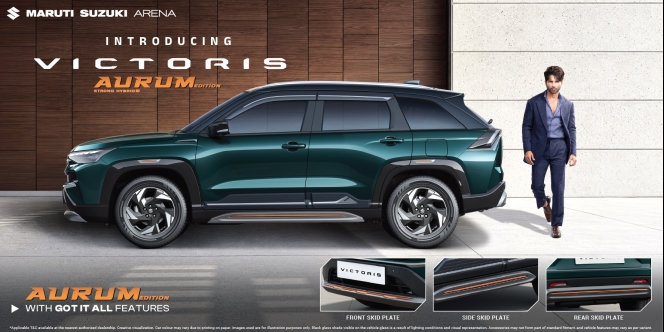
Maruti Suzuki India, the country’s largest carmaker, has introduced the Victoris Aurum Edition Strong Hybrid to mark the first anniversary of the Victoris SUV, featuring an accessory kit priced at INR 22,990.
The launch follows the model reaching sales of 100,000 and 150,000 units within its initial year of production. The Aurum Edition incorporates copper-coloured inserts on the front, side and rear skid plates, along with revised wheel arch trim.
On the outside, it gets chrome garnishes across the front grille, fenders, bumpers, body side mouldings and door visors. Interior additions comprise all-weather 3D cabin mats, a 3D boot mat and a trunk sill guard.
Furthermore, the company has partnered with actor Shahid Kapoor to lead the promotional campaign for the variant.
Partho Banerjee, Senior Executive Officer – Marketing and Sales, Maruti Suzuki India, said, "Conceptualised as a ‘Got it All’ SUV for today’s dynamic young go-getters who ‘want it all’, the Victoris has truly won the hearts of buyers. As we celebrate its first anniversary, it’s worth noting that the Victoris has become the fastest-selling PV to clock both the 150,000- and 100,000-unit sales milestones, going on to achieve the highest sales for any car in India during its 1st year of launch. Recognising these extraordinary achievements, we are introducing the Victoris Aurum Edition Strong Hybrid, with tasteful enhancements that are sure to grab eyeballs and make this festive season feel all the more special for our valuable customers. Our association with Shahid Kapoor, for the new Aurum Edition is also sure to complement the Victoris’ contemporary appeal."
Hyundai Bayon To Feature 69% High-Strength Steel Grade For Enhanced Safety
- By MT Bureau
- October 21, 2026
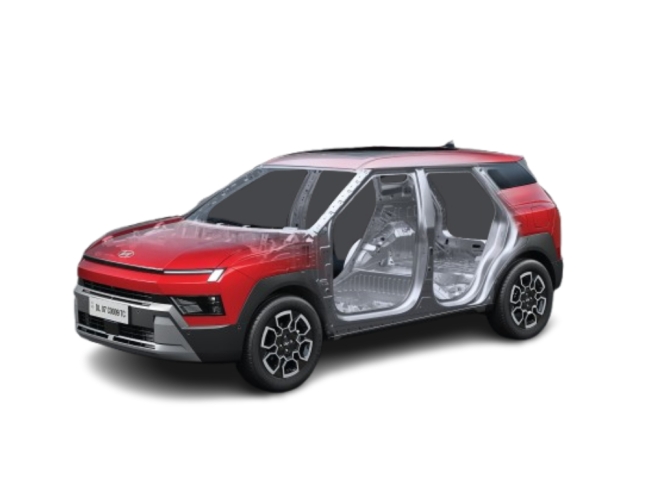
Hyundai Motor India, one of the leading passenger vehicle manufacturers, has detailed the safety specifications and platform architecture for its upcoming Bayon SUV model ahead of its official launch in India on 26 October 2026.
Built on the Global K Enhanced Platform, the Bayon utilises a body structure comprising of 69 percent high-strength steel grades, integrating hot-stamped components across the front apron, dashboard, rear floor and side reinforcements.
The vehicle incorporates Hyundai SmartSense Level 2 Pro ADAS, providing 23 driver assistance features supported by three radar units and 12 parking sensors. Over 35 safety features are fitted as standard across all variants, including six airbags, electronic stability control, hill-start assist control, a tyre pressure monitoring system (TPMS) and ISOFIX child seat anchors.
The Bayon will be powered by a 1.5-litre MPi four-cylinder petrol engine producing 84.4 kW (115 PS) and 143.8 Nm of torque, paired with a six-speed manual or an Intelligent Variable Transmission. Exterior options will span 10 colour configurations across monotone, dual-tone, and matte finishes.
Tarun Garg, Managing Director and Chief Executive Officer of Hyundai Motor India, said, "At Hyundai, we believe that true innovation is meaningful only when it enhances the everyday experiences of our customers. With the Hyundai BAYON, we have combined a robust body structure, advanced safety technologies, and intelligent driver assistance systems to deliver a comprehensive safety experience. From its reinforced chassis and high-strength steel construction to Hyundai SmartSense Level 2 Pro ADAS, the BAYON is engineered to inspire confidence not only in challenging situations, but throughout every journey. This reflects our commitment to delivering intelligent mobility solutions that are safe, connected, and progressive for modern India."
Mitsubishi Motors Launches All-New Pajero In Thailand Ahead Of Global Rollout
- By MT Bureau
- October 21, 2026
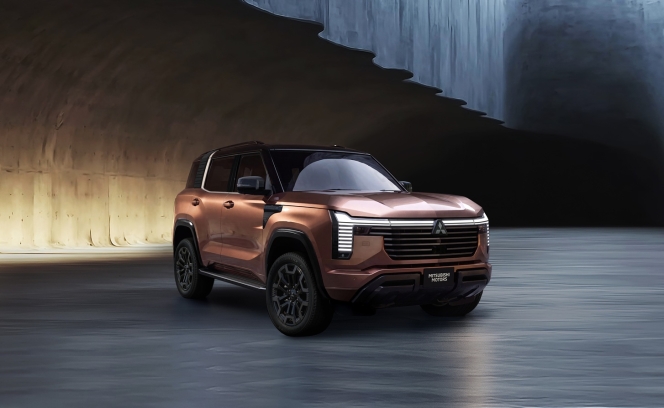
Japanese automotive major Mitsubishi Motors has commenced sales of the Pajero cross-country SUV in Thailand, serving as the initial market for the model’s international release.
The Pajero’s production takes place at the Laem Chabang facility operated by Mitsubishi Motors in Chonburi Province, which functions as a manufacturing hub for export operations.
Shipments to Australia and Japan are scheduled ahead of market releases in mid-December, followed by sequential introductions across approximately 100 countries and regions in the Middle East and Latin America starting in fiscal 2027.
The Pajero integrates four-wheel-drive capability with passenger car handling characteristics and positioning as a flagship offering.
Keisuke Kishiura, President and Chief Operating Officer, Mitsubishi Motors, said, "We are delighted to begin sales of the all-new Pajero in Thailand as the first market for its global rollout. Thailand is not only an important market for Mitsubishi Motors, but also a key hub for our production and exports. The all-new Pajero is a flagship model that embodies Mitsubishi Motors and is positioned among the top-tier cross-country SUVs in the Thai market. We will continue to deliver appealing products from Thailand to customers around the world and provide value that exceeds expectations."
Param Automotive Inaugurates Upgraded Mahindra Showroom In Ahmedabad
- By MT Bureau
- October 20, 2026
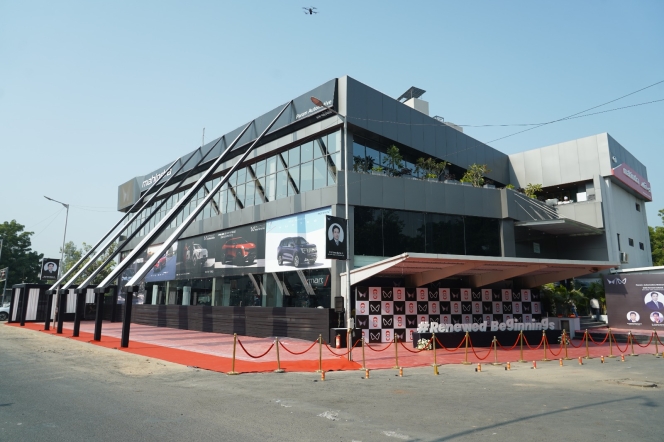
Param Automotive Group has inaugurated an upgraded dealership facility in Ahmedabad to mark its silver jubilee year.
Located at the site established in 2002, the facility spans 40,000 square feet and features display space for 18 vehicles.
The showroom includes customer lounges, delivery zones, accessory bays, test-drive areas and hospitality spaces to support vehicle sales and customer service operations.



Comments (0)
ADD COMMENT