

- Anaphite
- dry coating
- wet coating
- electrode production
- carbon emissions
- electric vehicle battery
- Joe Stevenson
- Lydia Bridges
- Minviro
- Automotive Transformation Fund
- ATF
Anaphite’s Dry Coating Process Claims To Cut Battery Carbon Emissions
- By MT Bureau
- November 06, 2025
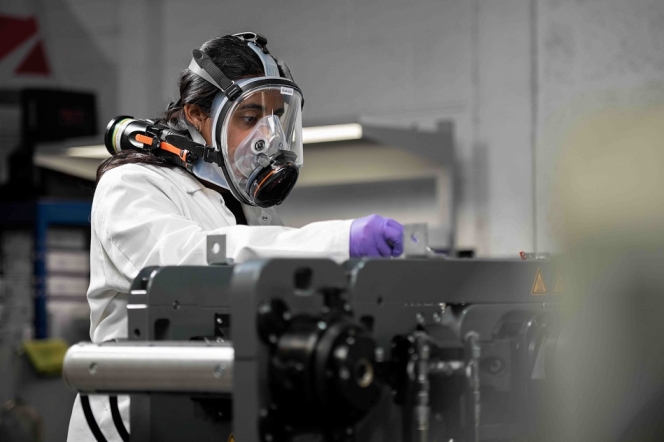
Anaphite, a UK battery technology startup, has released the results of an independent sustainability assessment of its dry coating technology platform for battery electrode manufacturing. The analysis, conducted by life cycle assessment experts Minviro, found that Anaphite's patented technology reduces carbon emissions by 3.57 kg CO2 eq. per kWh of cell capacity compared to the wet coating process.
At present, it is estimated that wet coating is used for over 99 percent of electrode production globally. It is energy-intensive due to the ovens needed to dry electrodes. Dry coating processes eliminate this drying oven.
Anaphite’s patented platform combines all ingredients of a battery electrode into a single engineered material, which is optimised for high-speed dry coating lines. The company states this approach solves the challenges of achieving dry coating at scale, unlocking carbon emissions savings for battery and EV makers.
- If Anaphite’s technology were to completely replace wet coating for every cell made in 2025, it would save 7 million tonnes of CO2.
- For a 75 kWh battery pack, the technology can deliver a 268 kg CO2 eq. saving.
With global annual demand expected to double by 2030, the adoption of dry coating is imperative to maximise environmental benefits.
Joe Stevenson, CEO, Anaphite, said, “Wet coating of electrodes is well proven, but manufacturers want it replaced by dry coating because of the carbon footprint improvements and cost reductions it delivers. Our unique dry coating process technology is the solution manufacturers need to make EVs more sustainable. We’re delighted to see its environmental benefits confirmed by Minviro’s independent assessment. We’re scaling-up the Anaphite technology platform at our facility in the UK and deepening our in-house dry coating capabilities and expertise. We are working in close collaboration with the global automotive industry to bring dry coating to market.”
Lydia Bridges, Senior Consultant, Minviro, said, “Collaborating with Anaphite on this study has been a great example of how rigorous, transparent assessment can translate innovative process design into quantifiable results. Our independent analysis identified a clear reduction in carbon footprint for Anaphite’s dry coating process compared with conventional wet coating, using ISO-aligned methods and critical review. Studies like this that follow the Environmental Footprint (EF) method provide essential environmental data for cell manufacturers, as this method forms the basis of the EU Battery Regulation carbon footprint quantification.”
The assessment is compliant with the ISO-14067 standard and the climate change model aligns with that proposed for the incoming EU Battery Passport regulations. These regulations will be mandatory from 2027 for EV and industrial batteries over 2 kWh, requiring the reporting of each battery's total carbon footprint. The work was part of a Feasibility Study project funded by a grant from the UK Government under the Automotive Transformation Fund (ATF).
Bolt Selects NVIDIA To Power European Autonomous Ride-Hailing Fleet
- By MT Bureau
- October 22, 2026
European ride-hailing platform Bolt has selected the NVIDIA Alpamayo Stack autonomous driving software to operate its vehicle fleet in Europe, starting with Lucid automobiles.
The deployment commences in Madrid in 2027, with subsequent deployment planned in Germany and France. The initiative supports the integration of at least 25,000 Level 4-ready Lucid vehicles equipped with NVIDIA Hyperion compute and sensor architecture. The program contributes to Bolt's objective of deploying 100,000 autonomous vehicles across Europe and the UNECE region by 2035. The system integrates reasoning artificial intelligence with perception and planning modules alongside NVIDIA Halos safety controls.
Jevgeni Kabanov, President and Head of Autonomous Driving, Bolt, said, “Autonomous driving will change how people move around cities, and Europe should play a major role in how that future is built. Our ambition isn't to bring autonomous driving to just a handful of cities. We want to make autonomous ride-hailing available at scale across Europe, with 100,000 vehicles on our platform by 2035. We're bringing together some of the best technologies in the world to make that possible. Following our first autonomous mobility launch in Luxembourg, our next step with NVIDIA and Lucid is to begin a programme in Madrid in 2027. The Region of Madrid is pioneering a structured framework for commercial autonomous mobility in coordination with national authorities. Germany will also be a priority for what comes next, with cities already setting out clear ambitions for autonomous mobility.”
Rishi Dhall, Vice-President of Automotive, NVIDIA, said, “Robotaxis will scale when every vehicle is built on a common, safety-engineered foundation. NVIDIA Hyperion standardises the compute and sensor architecture across vehicle platforms, while NVIDIA Alpamayo Stack and Halos provide the driving intelligence and safety foundation. Bolt’s European platform, operational experience and work with cities and regulators make it a strong partner to bring autonomous ride-hailing to market at scale in Europe.”
- Valeo
- NVIDIA
- NVIDIA Halos
- NVIDIA DRIVE AGX
- Level 4
- Marc Vrecko
- Rishi Dhall
- Robotaxi
- autonomous mobility
Valeo Collaborates With NVIDIA To Develop Autonomous Driving Compute Platforms
- By MT Bureau
- October 22, 2026
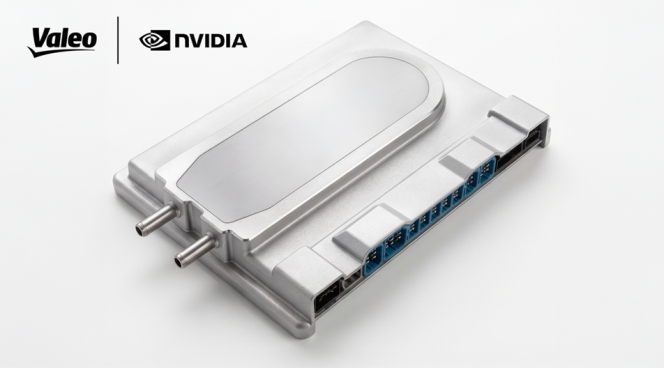
French tier 1 supplier Valeo has announced plans to develop and industrialise high-performance compute platforms utilising the NVIDIA Hyperion reference architecture and NVIDIA Halos safety system.
The initiative combines Valeo's vehicle integration capabilities with centralised computing architectures to support software-defined mobility systems. The platform utilises the NVIDIA DRIVE AGX Thor architecture to deliver processing performance and redundancy for Level 4 autonomous driving, commercial trucking and robotaxi applications. The development framework enables automakers to integrate features and deploy autonomous technologies across vehicle models.
Marc Vrecko, Chief Executive Officer, Valeo Brain Division, said, "Our work with NVIDIA marks a significant milestone in our mission to make autonomous driving a safe, scalable reality. By seamlessly integrating NVIDIA’s advanced compute power into our next-generation platforms, we are delivering the flexible, centralised intelligence vehicle manufacturers require to redefine the driving experience and meet the evolving demands of tomorrow’s intelligent vehicles."
Rishi Dhall, Vice-President of Automotive, NVIDIA, said, "Valeo’s expertise in high-performance computing, vehicle integration and automotive-scale industrialisation will help automakers adopt NVIDIA Hyperion and NVIDIA Halos at production scale. Together, NVIDIA and Valeo are providing the AI performance, functional safety and scalability needed to accelerate the development of Level 4 autonomous vehicles and robotaxis."
HCLTech Launches NVIDIA-Powered Verification And Validation Platform For Software Defined Vehicles
- By MT Bureau
- October 22, 2026

HCLTech has introduced an artificial intelligence (AI) verification and validation platform utilising NVIDIA simulation tools, agentic systems and open models.
The offering targets vehicle manufacturers and tier-1 suppliers to automate software validation workflows and accelerate release cycles. Built on a simulation-first operating model, the platform connects requirements, test creation, execution, analysis and compliance reporting.
The system integrates HCLTech's engineering expertise and validation model with NVIDIA Omniverse, Cosmos, Alpamayo, NuRec and Isaac Sim technologies to generate scenarios in virtual environments, reducing reliance on physical testing.
Additionally, the platform utilises the NVIDIA Agent Toolkit to orchestrate AI agents powered by Nemotron open models across the validation lifecycle.
Pankaj Tagra, Chief Growth Officer and Global Head of Mobility, HCLTech, said, “Automotive software is evolving faster than traditional validation processes were designed to handle. Frequent software updates, increasingly complex vehicle systems and the need to demonstrate compliance across changing configurations can make validation slow, fragmented and difficult to scale. Powered by NVIDIA, HCLTech’s V&V for Auto is designed to help organisations shift from periodic, labor-intensive testing to continuous, intelligent validation, using simulation and AI to make software release decisions with greater speed and confidence.”
Dr. Sebastian Scheurle, EMEA Industry Lead of Automotive Enterprise, NVIDIA, said, “Validation now sets the pace for software-defined vehicles. With NVIDIA Omniverse, Cosmos and Nemotron at its core, this solution leverages world-class simulation and AI capabilities to support automakers in their journey towards moving more testing into simulation, covering rare and safety-critical scenarios earlier and releasing software with greater confidence.”
HARMAN Wins Driver Safety Solution Award For Ready Aware Platform
- By MT Bureau
- October 21, 2026
HARMAN has received recognition from the AutoTech Breakthrough Awards, marking the fourth consecutive year the company has been honoured by the market intelligence organisation. The Ready Aware platform received the Driver Safety Solution designation for 2026.
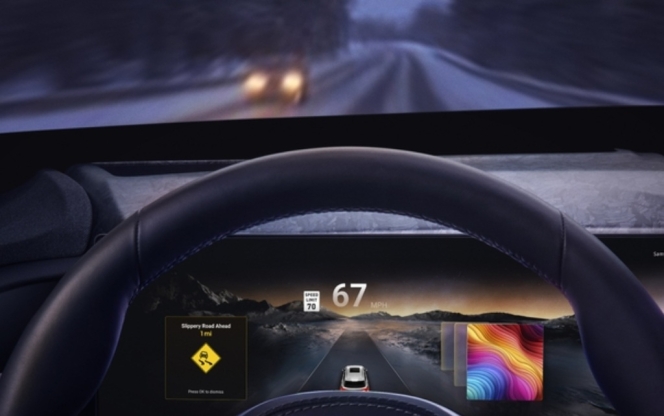
Ready Aware operates as a software-defined vehicle-to-network solution that integrates infrastructure feeds, vehicle telemetry, cloud analytics and digital twin data to provide contextual in-vehicle warnings.
The system processes information regarding road conditions, weather, traffic hazards and signal timing to deliver alerts beyond the driver's line of sight. The architecture works with existing 4G and 5G cellular hardware and vehicle cloud environments, enabling automakers to deploy software updates without hardware modifications. The platform supports Euro NCAP compliance requirements and offers over 15 safety use cases, including intersection warnings, red-light notifications and hazard alerts.
Bryan Vaughn, Managing Director, AutoTech Breakthrough, said, “HARMAN Ready Aware is redefining vehicle safety from reactive intervention to proactive awareness. Almost a quarter of U.S. traffic deaths and roughly half of injuries are related to intersections. Cameras and sensors can be limited by physical occlusions and, on their own, may not have access to information about upcoming signal changes or other traffic conditions. Ready Aware’s software-defined model connects the intelligence already present in cities and connected vehicles, then delivers it to the driver as a timely, contextual alert. Ready Aware turns infrastructure data, vehicle telemetry and cloud analytics into actionable driver awareness—available today, scalable tomorrow, and quickly deployable.”
The system uses a cloud analytics and scoring layer named the Confidence Engine to filter data feeds, reduce false alerts and prioritise notifications to minimise distraction. Automakers can integrate the software via client-to-cloud or cloud-to-cloud configurations to support subscription services and feature monetisation.
Suman Sehra, Global Head of Connectivity Product and Portfolio Management, HARMAN, said, “Ready Aware gives automakers a flexible way to move connected vehicle safety from reactive intervention to proactive awareness. By transforming real-time road intelligence into timely, contextual alerts, Ready Aware helps drivers anticipate hazards before they come into view while giving automakers a scalable foundation to continuously enhance safety through software. This recognition reflects HARMAN’s vision for safer, more informed mobility.”
Comments (0)
ADD COMMENT