

BMW Group bringing Physical AI And Humanoid Robots To Europe
- By MT Bureau
- February 28, 2026
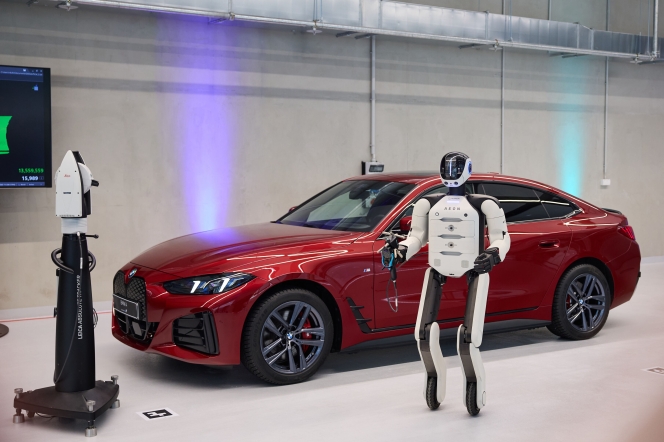
The BMW Group is accelerating the digital transformation of its manufacturing operations by embedding artificial intelligence deeply into physical processes. A central focus of this strategy is Physical AI, a concept that unites digital intelligence with machinery and robotics. This integration allows systems like humanoid robots to function effectively within live production environments. For the first time, this approach is being introduced in Europe through a pilot project at the company’s Leipzig plant, where humanoid robots will be tested in the assembly of high-voltage batteries and component manufacturing. This initiative builds on a previous deployment at the Spartanburg plant in United States, where valuable experience was gained and is now being used to refine and scale the technology.
Artificial intelligence is already embedded throughout the BMW production system, underpinning functions such as digital twins, AI-supported quality assurance and autonomous transport in intralogistics. A unified data architecture serves as the foundation for this intelligence, enabling real-time access to consistent and standardised information across all manufacturing locations. This infrastructure supports the deployment of digital AI agents capable of autonomous decision-making in complex environments. When these agents are paired with robotic systems, they give rise to Physical AI, which represents a significant evolution in production technology.
The company views humanoid robotics as a strategic addition to its automation portfolio. These robots are particularly suited to tasks that are repetitive, physically strenuous or present safety risks. By deploying them in such roles, the company aims to reduce physical strain on employees and enhance workplace conditions. To drive this forward, a Center of Competence for Physical AI in Production has been established to consolidate expertise and facilitate knowledge sharing across the organisation.
A structured process governs the evaluation of potential technology partners. Candidates are assessed against criteria related to maturity and industrial applicability, followed by laboratory testing using real production scenarios. Successful tests lead to limited deployments under actual factory conditions before advancing to full pilot phases. This methodology ensures that only thoroughly vetted solutions are integrated into series production.
The Leipzig pilot is being conducted in collaboration with Hexagon, a longstanding partner specialising in sensor technology and software. Following theoretical and laboratory evaluations, an initial deployment of Hexagon’s humanoid robot, AEON, took place at the plant in December 2025. A second test phase is scheduled for April 2026, with the full pilot set to begin in the summer of that year. The robot’s human-like design allows for the attachment of various tools and grippers, making it adaptable for multiple tasks in battery assembly and parts manufacturing.
Earlier work at the Spartanburg plant provided critical insights into the practical application of humanoid robotics. In partnership with Figure AI, the robot Figure 02 was deployed in body shop operations, where it handled the precise placement of sheet metal parts for welding. Over 10 months, the robot supported the production of more than 30,000 vehicles, operating in 10-hour shifts and handling over 90,000 components. The pilot demonstrated that humanoid robots could perform high-precision tasks reliably and safely in a live production setting. It also highlighted the importance of early collaboration with teams responsible for IT infrastructure, safety and logistics. Seamless integration into the existing automation ecosystem was achieved through standardised interfaces, and employee reception was notably positive, aided by transparent communication from the outset.
The success of these initial deployments has paved the way for further collaboration. BMW and Figure are currently exploring additional applications for the next-generation Figure 03 robot, continuing to build on the foundation established in both United States and Europe.
Milan Nedeljković, Member of the Board of Management of BMW AG, Production, said, “Digitalisation improves the competitiveness of our production – here in Europe and worldwide. The symbiosis of engineering expertise and artificial intelligence opens up entirely new possibilities in production,”.
Michael Nikolaides, Senior Vice President Production Network, Supply Chain Management at BMW Group, said, “Our aim is to be a technology leader and to integrate new technologies into production at an early stage. Pilot projects help us to test and further develop the use of Physical AI – that is, AI‑enabled robots capable of learning – under real-world industrial conditions. The successful first deployment of humanoid robots at our BMW Group plant in Spartanburg in the USA proves that a humanoid robot can function not only under controlled laboratory conditions but also in an existing automotive manufacturing environment.”
Michael Ströbel, Head of Process Management and Digitalisation, Order to Delivery at BMW Group, said, “We are delighted to deploy a humanoid robot for the first time in a pilot project at a plant in Germany. Following evaluation by our Center of Competence for Physical AI in Production, tests were carried out in the laboratory and at Plant Leipzig at the end of last year. This year, our focus is on step‑by‑step integration into our production system to explore a wide range of applications. The emphasis is on researching multifunctional use of the robot in various production areas such as battery manufacturing for energy modules and component production for exterior parts. With Hexagon, we have found a proven long‑standing partner with a highly innovative approach to humanoid robotics for this project.”
Felix Haeckel, Team Lead CoC Physical AI for Production, said, “At our new Center of Competence for Physical AI in Production, we are pooling our expertise to make knowledge on AI and robotics widely usable within the company. In recent years, we have built up an international team of experts that, in addition to in‑house research and programming, is dedicated to the gradual integration of AI into the existing production system. At the same time, our team in Munich is driving its own robotics research to set up, support and further develop pilot projects in the field of Physical AI at our plants.”
Arnaud Robert, President of Hexagon Robotics, said, “We are very pleased to be working with the BMW Group to advance the use of humanoid robots in real‑world environments.”
Bosch SDS, Dassault Systèmes Join Forces To Accelerate Digital Transformation For Indian Manufacturers
- By MT Bureau
- September 10, 2026

Bosch Software and Digital Solutions (Bosch SDS) has entered into a collaboration with Dassault Systèmes in India, aimed at helping manufacturing enterprises accelerate digital transformation across product engineering, manufacturing operations and industrial value chains.
The partnership combines Dassault Systèmes’ capabilities in Virtual Twin Experiences, Product Lifecycle Management, Digital Manufacturing and Manufacturing Operations Management with Bosch SDS’ expertise in contextualised data products, manufacturing transformation, energy optimisation, IT/OT integration and machine-level intelligence. It also draws on both companies’ global industrial AI expertise. Early momentum has been demonstrated through an engagement with a leading Indian electric vehicle manufacturer, where Dassault Systèmes’ DELMIA Apriso MES platform and Bosch SDS’ manufacturing transformation capabilities are being deployed to enable intelligent, real-time connected operations, yielding improvements in production efficiency, quality and digital traceability.
Under the collaboration, the two organisations will jointly work across several identified areas. These include AI-enabled manufacturing transformation and Agentic AI orchestration through the Bosch Cognitive Factory platform; Digital Thread and traceability across engineering, manufacturing and lifecycle operations; contextualised data products and enterprise intelligence; energy management, sustainability transformation and an Energy Management Platform; smart factory, connected operations and IT/OT convergence with machine-level intelligence and Digital Product Passport and regulatory compliance readiness. Joint market engagement will extend into heavy engineering and process sectors, leveraging the complementary domain strength and technology depth of both organisations.
Bosch SDS will serve as a Consulting and System Integration partner to Dassault Systèmes across the identified transformation areas, spanning engineering, manufacturing and enterprise operations. Both organisations will jointly innovate and develop solutions to support customers in deploying end-to-end AI, Digital Thread and AI-enabled Digital Product Passports across product and manufacturing value chains.
Dattatreya Gaur, MD & CEO, Bosch Software and Digital Solutions, said, “Manufacturing enterprises today are looking beyond isolated digitisation initiatives towards connected, intelligent and autonomous operations. Our collaboration with Dassault Systèmes brings together two highly complementary strengths in Industrial AI: Bosch SDS’s deep expertise as a technology partner and practitioner across manufacturing, operational technology integration along with the Bosch Cognitive Factory platform, and Dassault Systèmes’ leadership in Virtual Twin Experience and Digital Thread capabilities. Together, we are uniquely positioned to help manufacturers accelerate AI-led transformation across the entire product and manufacturing value chain with greater speed, intelligence and scale.”
Ramesh Ramaswamy, Global Sales Head, Bosch Software and Digital Solutions, said, “The future of manufacturing will be defined by how seamlessly enterprises connect engineering, operations, data and AI across the value chain. Through this collaboration, Bosch SDS and Dassault Systèmes are bringing together complementary strengths to help manufacturers move from fragmented transformation efforts to truly connected, software-defined and intelligent operations. This creates a far stronger foundation for manufacturers to scale innovation, resilience and operational agility in the AI era.”
Deepak NG, Managing Director, India, Dassault Systèmes, said, "Our collaboration with Bosch SDS marks a major milestone for the manufacturing industry. By connecting our virtual twin technology with their industrial expertise, we are helping factories adopt AI much faster. This will create highly connected and sustainable operations. Together, we look forward to helping companies innovate and grow in the digital era.”
Tata Motors Partners PETRONAS Lubricants India For Used-Oil Recycling Pilot
- By MT Bureau
- September 09, 2026
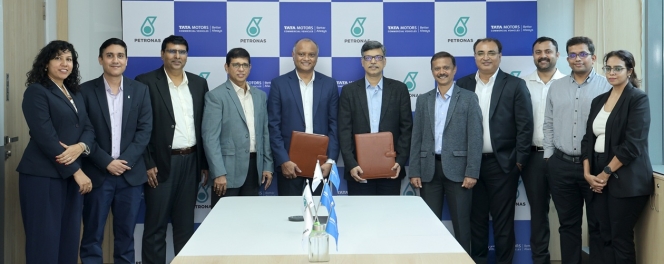
Tata Motors and PETRONAS Lubricants India have inked a Memorandum of Understanding (MoU) to establish a collection and recycling program for used automotive lubricants.
The two companies will launch the pilot project simultaneously across Maharashtra and Tamil Nadu to evaluate a scalable model for lubricant waste management.
The initiative creates a traceable system for collecting, storing and processing used lubricants through registered recycling channels, with the goal of converting collected waste into re-refined base oil.
Tata Motors will utilise its authorised service centre network to facilitate collection, while PETRONAS Lubricants India will oversee the logistics and transfer of used oil to certified re-refiners. The collaboration aligns with India's Extended Producer Responsibility regulations governing hazardous waste disposal.
Binu Chandy, India Managing Director at PETRONAS Lubricants India, said, "Achieving true circularity in used oil begins when re-refined base oil is reintegrated into finished lubricants. Our collaboration with Tata Motors marks an important step toward building a scalable model for used oil circularity and reflects the strength of our channel network as we work to significantly reduce our carbon footprint across operations."
Vikram Agrawal, Head of Spares and Non-Vehicle Business, Tata Motors, said, "At Tata Motors, practices and partnerships promoting sustainability are integral to advancing circular economy principles and creating meaningful environmental impact across the automotive value chain. Through our collaboration with PETRONAS Lubricants India, we are taking a significant step towards establishing a structured framework for the collection, recovery, and recycling of used automotive lubricants. This pilot initiative aligns closely with our commitment to responsible resource stewardship and supports India's broader sustainability ambitions. By bringing together the complementary strengths and expertise of our two organisations, we aim to assess the viability of a scalable used-oil recycling model that can drive long-term value and contribute to industry-wide progress."
Sensata Unveils OmniNode High-Voltage Power Distribution System For Electric CVs
- By MT Bureau
- September 09, 2026
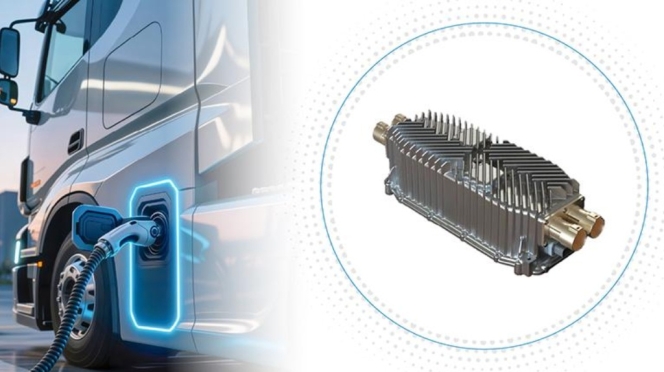
Sensata Technologies has introduced OmniNode, a power distribution system designed to consolidate high-voltage components for commercial electric vehicles. The platform integrates switching, circuit protection, current sensing, diagnostics, communications and DC charging capabilities into a single unit.
The modular platform targets Class 5 and above battery electric trucks and buses, as well as off-road commercial machinery. By combining contactors, fuses and sensors into a single system, OmniNode claims it replaces setups reliant on multiple discrete components.
The standardised architecture is engineered to reduce integration complexity, shorten OEM development cycles and streamline validation across multiple vehicle platforms.
Brian Wilkie, Executive Vice-President and President of Aerospace, Defense and Commercial Equipment, Sensata Technologies, said, "Commercial vehicle manufacturers are under pressure to scale electrification programs while managing increasing system complexity. With the OmniNode, we are delivering an integrated, off-the-shelf approach that helps engineers simplify power distribution architecture, accelerate development timelines and bring greater consistency and efficiency to vehicle platform design."
The system allows automakers to standardise power distribution hardware across diverse commercial vehicle fleets while maintaining application-specific configurations. The approach aims to reduce engineering overhead and simplify component sourcing for high-voltage commercial vehicle architectures.
Nissan and Honda Conclude Agreement To Standardise Next-Generation SDV ECUs And Software
- By MT Bureau
- September 01, 2026

Japanese automakers Nissan Motor Co and Honda Motor Co have entered into a joint development agreement to standardise electronic control units (ECUs) alongside the in-vehicle operating system, middleware and vehicle control software for next-generation software-defined vehicles (SDVs).
The electrical and electronic architecture incorporating the standardised components is scheduled for deployment in next-generation SDVs produced by both companies from fiscal year 2029 onward. The initiative forms part of a strategic partnership between the two automakers targeting carbon neutrality and traffic safety goals.
As per the agreement, Nissan and Honda will establish common technical specifications for multiple core ECUs within the vehicle architecture. The joint development program encompasses the in-vehicle operating system layer along with key elements of the middleware and vehicle control software.
The collaboration is designed to combine engineering resources to increase development speed and achieve investment efficiencies. The partners to reduce individual research and development costs while generating economies of scale across their vehicle lineups by standardising foundational software and hardware layers.
Comments (0)
ADD COMMENT