

Igus India Expands Presence With New Manufacturing Plant
- By Gaurav Nandi
- August 22, 2024
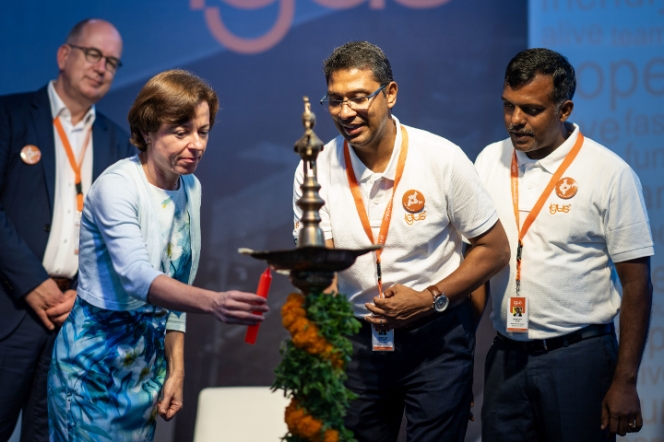
Motion plastics manufacturer, Igus India expanded its footprint in the country by inaugurating a new manufacturing plant spanning 92,000 square feet in Bengaluru Thursday.
The state-of-the-art plant in Mandur near Budigere in Bengaluru comes at a point when the company prepares to focus on new divisions dedicated to the semi-conductor and renewable energy sectors, areas poised for substantial growth. The expansion is part of Igus’s long-term strategy to enhance its operational capabilities and support its extensive customer base in India.
The newly inaugurated facility is a testament to the company’s long-term commitment to India, involving an investment of over INR 1 billion. This financial outlay reflects the company’s dedication to maintaining its competitive edge through innovation and cutting-edge technology.
Of the total investment, INR 200 million have been allocated for setting up the factory, INR 400 million for advanced injection moulding machines and INR 200 million for enhancing the manufacturing process. The plant’s infrastructure is designed to meet the high standards of motion plastics production, ensuring that Igus India continues to deliver world-class products tailored to the unique demands of the Indian market.
Since its establishment as a wholly-owned subsidiary in 2000, Igus India has become a prominent player in the motion plastics industry, catering to over 19,000 customers across the country. The company’s extensive product catalogue boasts 125,000 parts, which are used in a variety of customer-driven assemblies, many of which are customized and assembled locally. This vast array of products underscores Igus’s commitment to innovation and customer satisfaction, with over 200 new products introduced annually. The company’s ability to adapt to the evolving needs of its customers has been a key driver of its success in the competitive Indian market.
Looking ahead, Igus India has ambitious plans to further strengthen its operational capabilities and market presence. The company is eyeing significant revenue growth, with expectations of reaching INR 3.4 billion in revenue this year. To support this growth and enhance its logistical efficiency, Igus India plans to establish new logistics and assembly centres in Pune, Gurugram and Noida. These new facilities will enable Igus to better serve its customers across India, reducing lead times and improving overall service delivery.
The focus on emerging industries like semi-conductors and renewable energy is a strategic move by Igus India to align itself with sectors that are poised for substantial growth in the coming years. As India continues to invest in its semi-conductor manufacturing capabilities and renewable energy infrastructure, the demand for high-quality motion plastics is expected to rise. Igus India’s expansion positions the company to capitalise on these opportunities, offering innovative solutions that meet the specific needs of these rapidly growing industries.
The opening of the new manufacturing facility in Bengaluru marks a significant milestone for Igus India, reinforcing its position as a leader in the motion plastics industry. With a strong commitment to innovation, customer satisfaction and market expansion, Igus India is well-positioned to achieve its growth objectives and continue delivering value to its customers across the country.
Emphasising the strategic importance of this expansion, Igus India Managing Director Deepak Paul stated, “The Indian market presents tremendous potential for Igus as demonstrated by our continued growth and investment here. Our objective is to deliver cutting-edge products and solutions not only to our customers in India but also on a global scale. Igus’s global focus on cost-sensitive and sustainable solutions, encapsulated in our motto ‘Tech up, cost down,’ is perfectly aligned with the Indian approach to technology and innovation. This alignment has been a key driver of our significant growth in the country. As we look forward, our plans include expanding beyond Bengaluru, with logistics and assembly centres set to be established in Pune, Gurugram, and Noida.”
Igus India is currently the 6th largest subsidiary among Igus’s 38 global subsidiaries, a position that reflects its strong performance and growth potential. Over the past two years, Igus India has doubled its market growth, with revenue figures climbing from INR 1.99 billion to INR 3.13 billion. The company expects this upward trajectory to continue. Additionally, Igus India has invested in a clean room testing facility in Germany and plans to establish a similar setup in India, further enhancing its product development and quality assurance capabilities.
Commenting on the occasion, Country Manager and Director Santhosh Jacob said, “Technology and innovation are at the core of everything we do at Igus. With a catalogue of 125,000 parts and 247 new products introduced this year, we are constantly inspired by our customers’ needs to push the boundaries of what is possible. Our ongoing expansion of the motion plastics product world, coupled with the integration of digitalization and AI, is a testament to our long-term corporate strategy. We are making significant progress in embedding digitalization as a key technology at Igus, which will play a crucial role in our future growth and success.”
ParkMate Rebranded As Blyp
- By MT Bureau
- July 03, 2025

Delhi-NCR-based smart parking and mobility solutions provider ParkMate has rebranded itself as Blyp, which it stated is part of its vision to become a tech-driven urban mobility ecosystem that goes far beyond parking.
Dhananjaya Bharadwaj, Co-Founder & CEO, Blyp, said, “The name Blyp represents speed, precision and simplicity – exactly what we want to deliver to every urban commuter. This rebrand is more than just a new look. It’s a reflection of our expanded mission – to reimagine urban movement through data, design and deep tech. We’re excited to introduce Blyp as the mobility companion of tomorrow’s India.”
With a new identity, Blyp aims to become an enabler of intelligent urban navigation, offering users real-time parking discovery, smart routing, EV compatibility and partner integration across both public and private sectors.
Abhimanyu Singh, Co-Founder & COO, Blyp, said, “ParkMate was our beginning – a product born out of a real problem. Blyp is our evolution. Over the years, we’ve grown from a parking solution into a full-fledged mobility tech platform. This rebrand allows us to think bigger, move faster and build deeper value for individuals, businesses and governments alike.”
Going forward, the company will roll out new features, expand into new cities and aims to build new infrastructure collaborations.
- RV College of Engineering
- RVCE
- Dover India
- Dover Corporation
- hydrogen
- Vivek Srivastava
- Tushar Banerjee
- Prashanth Santhanam
- Dr M P Shyam
- Dr K N Subramanya
- Rashtreeya Sikshana Samithi Trust
- Dr Geetha K S
- Dr Ujwal Shreenag Meda
Dover India and RV College of Engineering Establish Advanced Hydrogen R&D Facility
- By MT Bureau
- July 03, 2025
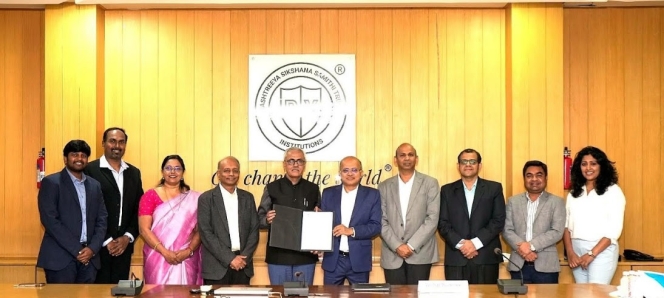
Dover India, part of USD 7 billion Dover Corporation, has joined with RV College of Engineering (RVCE), Bengaluru, to set up a laboratory in Materials and Component Reliability Testing under the Centre for Hydrogen and Green Technology, a Centre of Excellence at RVCE.
The facility will focus on research in the area of hydrogen technologies and advanced material reliability under extreme environments. The idea is to explore emerging areas in hydrogen technology such as sustainable materials, Internet of Things (IoT) and Industry 4.0 solutions. The lab will be housed within the RVCE campus.
The partners state such facilities, designed according to global standards, are first-of-their-kind in India and are available only in a handful of countries globally. It will bring over 20 technologists from Dover and RVCE to work on next-generation research focusing on generation, storage, transportation, handling, safety and end-applications for hydrogen.
Established in 2021, Dover India’s R&D arm in Bengaluru, is claimed to have emerged as a leading Innovation Centre focusing on prognostics, tribology, corrosion and coatings, polymer synthesis and material characterisation.
Vivek Srivastava, R&D Head, Dover India, said, “Collaborating with RVCE enables us to foster a strong academia-industry partnership that will fuel the next wave of clean energy innovation and cover the entire spectrum of basic and applied research in this area.”
The Memorandum of Understanding (MoU) formally signed between the two organisations saw participation from Dover India’s Tushar Banerjee, Vice President & Managing Director and Prashanth Santhanam, Senior Director – Finance. Dr M P Shyam, President – Rashtreeya Sikshana Samithi Trust (RSST), Dr K N Subramanya, Principal – RV College of Engineering and Dr Geetha K S, Vice Principal – Strategic Higher Education Leader, Expert in STEM Curriculum Development, Research & Innovation and Dr Ujwal Shreenag Meda, Coordinator, Centre for Hydrogen and Green Technology represented RVCE.
MoRTH Announces New Motor Vehicle Aggregator Policy To Bring In More Accountability & Transparency
- By MT Bureau
- July 02, 2025

The Ministry of Road Transport & Highways (MoRTH) has introduced the Motor Vehicles Aggregator Guidelines, 2025, a revamped policy aimed at modernising the ride-hailing sector with a focus on safety, driver welfare and transparent operations. Under the new guidelines, a structured fare system and clear cancellation penalties are now in place.
The policy states that the State Government's notified fare will serve as the base fare, wherein aggregators can charge a minimum of 50 percent below during non-peak hours and a maximum of two times the base fare during peak demand (as compared to 1.5x). A base fare for a minimum of 3km is chargeable to compensate for dead mileage.
Drivers are guaranteed at least 80 percent of the fare, with daily, weekly or fortnightly settlements. For aggregator-owned vehicles, drivers receive at least 60 percent of the fare.
A penalty of 10 percent of the fare (up to INR 100) may be imposed for unvalidated cancellations by either the driver or the passenger. No charge for dead mileage will apply unless the ride distance is less than 3km, the fare will only be charged from origin to destination.
The new policy introduces important provisions for aggregators:
Passenger Insurance: A minimum insurance cover of INR 500,000 for passengers is now mandatory.
Aggregators cannot prevent drivers from working with multiple platforms. A mandatory in-app rating system for both drivers and passengers is required to ensure quality service.
Furthermore, a comprehensive mandatory 40-hour Induction Training Programme is now compulsory for drivers, covering app usage, legal provisions, first responder training, safe driving and sensitivity towards gender and Divyangjans.
Drivers must undergo mandatory medical examinations, psychological analyses and police verification. Aggregators will also need to provide a Health insurance (minimum INR 500,000) and term insurance (minimum INR 1 million) for each driver, with annual increases.
Annual refresher training is now mandated, with quarterly training for drivers with low ratings. Aggregators are not allowed to onboard vehicles older than 8 years from their initial registration. The app and website (aggregator) must disclose the proportion of fare and incentives provided to drivers.
To ensure accessibility, the aggregator apps must now include special features for Divyangjans, which also provides for divyangjan-friendly vehicles mandated by State governments.
Aggregators must maintain a 24x7 control room and call centre with the vehicles requiring functional tracking devices linked to government control centres, with in-app mechanisms to detect route deviations and alert authorities.
The aggregators are responsible for the safety of all passengers, particularly children, women and Divyangjans.
- Traton Group
- L&T Technology Services
- LTTS
- ADAS
- autonomous
- Alind Saxena
- Navistar
- MAN
- Scania
- Volkswagen Truck & Bus
- International
Traton Group Onboards L&T Technology Services As Strategic Partner To Support Global R&D Transformation
- By MT Bureau
- July 02, 2025
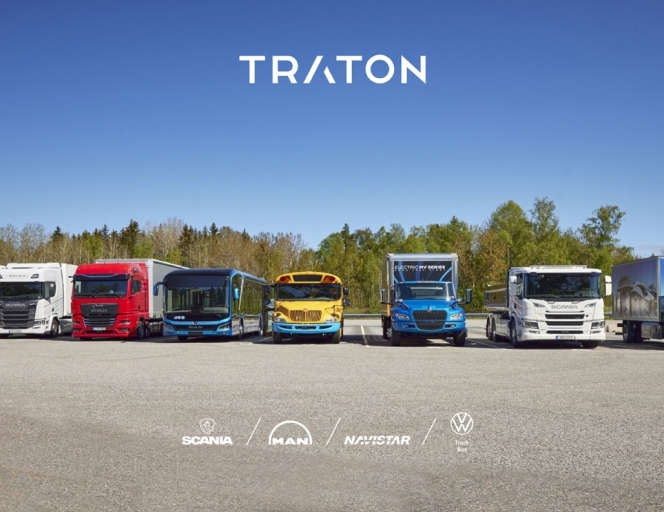
Bengaluru-headquartered engineering R&D services company L&T Technology Services (LTTS) has been selected by the Traton Group, one of the world’s leading manufacturers of commercial vehicles housing iconic brands such as Scania, MAN, International and Volkswagen Truck & Bus, as a strategic engineering partner.
As per the understanding, Traton Group will leverage LTTS’ Mobility segment to build a unified, future-ready product-development platform that delivers scale, speed and sustainable mobility solutions.
The automotive major recently consolidated its global R&D ecosystem to unlock cross-brand synergies while expanding the share of battery-electric vehicles in line with its 2029 profitability and sustainability targets.
On the other hand, LTTS’ will provide engineering support, from mechanical and software engineering to digital systems integration - across key development hubs in Sweden, Germany, the United States, Poland and India.
The collaboration will focus on software-defined vehicle architectures, electrified powertrains, autonomous & ADAS feature development and advanced digital engineering toolchains.
Alind Saxena, Executive Director & President - Mobility & Tech, L&T Technology Services, said, “Being selected by Traton Group is a testament to LTTS’ leadership in next-generation Mobility engineering. This collaboration underscores our commitment to delivering cutting-edge solutions that align with Traton’s vision of sustainable and intelligent transportation. With our proven track record in engineering transformation, we are excited to help Traton achieve its ambitious goals of electrification, autonomy, and digital innovation while redefining the future of commercial mobility.”



Comments (0)
ADD COMMENT