

- Independent Garage Association (IGA)
- Scottish Motor Trade Association (SMTA)
- Department for Transport (DfT)
- Driver and Vehicle Standards Agency (DVSA)
- Stuart James
Trade Bodies Unite To Question DfT On MOT Consultation
- By MT News
- February 14, 2023

The Independent Garage Association (IGA) and Scottish Motor Trade Association (SMTA) conducted a meeting with the Department for Transport (DfT) and Driver and Vehicle Standards Agency (DVSA) in the UK in order to discuss the current consultation on MOT frequency and enhancements.
During the meeting, the DfT were asked why such a large and complex consultation covering 27 areas within the MOT test was published with only a six-week response period. They explained that Ministers are focusing on saving consumers money and wanted to use the consultation as an opportunity to evaluate if any areas of the MOT could contribute to further savings.
When asked how they planned to proceed with so many areas under review at once, the DfT revealed there would be further consultations based on the initial information and responses provided, and that no immediate decisions were likely. They also shared that consultation responses submitted after the closing date on 28 February, 2023 would still be considered.
When asked why the consultation could not be carried out over a three-month period, bearing in mind that no immediate action would be taken and further consultations would follow, no response was given. However, they were able to confirm that no legislation changes will be implemented from 1 April, 2023, which was included within their impact statement.
All parties agreed to continue working closely at every stage of the consultation process to ensure that public safety and the needs of the industry are being thoroughly considered.
Stuart James, IGA Chief Executive, said, “We appreciate the DfT being open about many of the questions raised, and understand that cost implications for consumers and advances in vehicle technology are the main drivers behind this consultation. However, the UK’s roads are amongst the safest in the world, and we would like to believe that the government would not make decisions that would cause any increase in road casualties. We believe it may have been more appropriate to break the consultation down into smaller subject areas to ensure that road safety will not be impacted by any of the many changes being considered. We will be working non-stop to ensure that road safety and the public are protected as the consultation progresses.”
- Maruti Suzuki India
- Integrated Traffic Management System
- ITMS
- Gurugram Metropolitan Development Authority
- Gurugram Police
- Sibash Kabiraj
- P C Meena
- Rahul Bharti
Maruti Suzuki Expands Integrated Traffic Management System In Gurugram
- By MT Bureau
- October 19, 2026
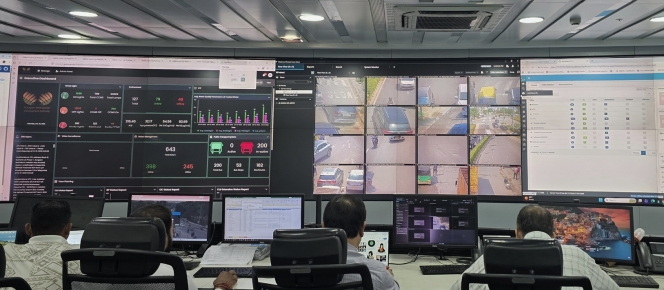
Maruti Suzuki India, the country’s largest passenger vehicle manufacturer, has announced the second phase expansion of its Integrated Traffic Management System (ITMS) in Gurugram under its corporate social responsibility initiative, allocating approximately INR 750 million to the project.
The expansion will see the installation of 1,000 additional radar-integrated cameras across 70 junctions and nine road stretches covering 65 kilometres in the city. Combined with the initial phase, which deployed 400 cameras across 23 junctions, the completed network will encompass 1,400 cameras across 93 junctions and 13 road corridors.
Implemented in partnership with the Gurugram Metropolitan Development Authority and the Gurugram Police, the automated system detects traffic offences including speed limit violations, red-light jumping, helmetless riding, triple riding and wrong-side driving. The camera units record registration plate details and transmit data directly to the Integrated Command and Control Centre for enforcement processing.
Sibash Kabiraj, Commissioner of Police, Gurugram, said, "We appreciate Maruti Suzuki’s continued support in strengthening Gurugram’s traffic management infrastructure through its CSR initiative. The expansion of the Integrated Traffic Management System will further strengthen our ability to monitor traffic violations, enable timely enforcement, and encourage greater compliance with traffic regulations."
P C Meena, CEO of the Gurugram Metropolitan Development Authority, said, "GMDA is committed to building a robust, technology-driven surveillance network to strengthen traffic management and road safety across Gurugram. The expansion of CCTV coverage in collaboration with Maruti Suzuki India Limited and Gurugram Police will enable more effective traffic monitoring, strengthen enforcement of traffic rules and promote greater road discipline. Connecting the CCTV network with GMDA’s Integrated Command and Control Centre will further enhance real-time surveillance, improve coordination among enforcement agencies and facilitate quicker action against traffic violations, contributing to safer roads for all commuters."
Rahul Bharti, Senior Executive Officer of Corporate Affairs, Maruti Suzuki India, said, "We are pleased to further strengthen our partnership with GMDA and the Gurugram Traffic Police in advancing road safety through technology-driven interventions. This advanced tracking system addresses issues like riding without helmets, triple riding, red-light violations, over-speeding, and wrong-side driving. These violations highlight a critical road-safety challenge, as human error continues to be the leading cause of road accidents in India. The findings reinforce the need for sustained, collaborative efforts to improve compliance with traffic regulations and foster safe road behaviour. Improving road safety requires a combination of responsible driving, robust driving license testing and effective traffic enforcement. We are committed to working alongside authorities in these areas to build a safer mobility ecosystem."
Volvo Cars Partners NVIDIA To Develop Autonomous Driving Technology
- By MT Bureau
- October 19, 2026
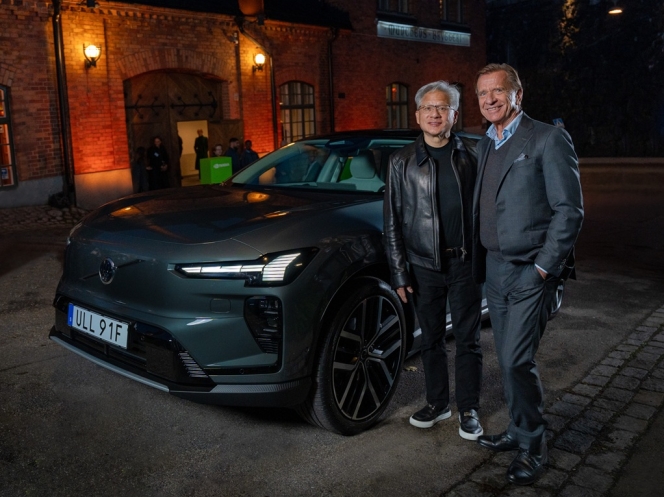
Swedish automotive company Volvo Cars has expanded its technology partnership with NVIDIA to integrate the computing firm's Hyperion sensor and compute architecture into its next-generation vehicle platform.
The system combines Volvo's vehicle safety architecture with NVIDIA's hardware, Halos operating system and Alpamayo Stack driving software. The technology is designed to navigate highway environments, urban traffic and parking scenarios, laying the foundation for the gradual introduction of eyes-off and mind-off driving capabilities. The system will make its commercial debut in an upcoming production model as part of Volvo Cars' vehicle development roadmap.
Hakan Samuelsson, President and CEO, Volvo Cars, said, "Volvo has been synonymous with car safety for almost 100 years. By working with NVIDIA, we bring together two distinct strengths: industry-leading safety knowledge and world-class AI technology. That combination gives us a unique opportunity to create safer and more attractive cars for our customers."
Jensen Huang, Founder and CEO, NVIDIA, said, "Accelerated computing has transformed the car into an intelligent machine that can understand the world around it. Volvo has spent nearly a century protecting people on the road. Together, we’re combining Volvo’s extraordinary vehicle safety systems with NVIDIA Hyperion and Halos to build a new generation of cars that make driving safer and more effortless."
The agreement marks a continuation of the collaboration between the two companies, which established their initial development partnership in 2017. The deployment of NVIDIA's computing stack will support Volvo's transition toward software-defined electric vehicles across its global product lineup.
Valeo And KE:SAI Partner On Open-Source Autonomous Driving System Initiative
- By MT Bureau
- October 14, 2026

French tier 1 supplier Valeo and open science research lab KE:SAI have launched a joint research collaboration to develop a generalist artificial intelligence (AI) driving system for autonomous vehicles. The partnership plans to publish models, code, weights and datasets as open-source resources.
The initiative brings together artificial intelligence teams from valeo.ai in Paris and the KE:SAI founding team in Tübingen, Germany. The collaboration focuses on training a unified AI model capable of operating across different vehicle platforms, sensor configurations and geographic environments. Initial development will utilise large-scale real-world driving data before integrating reinforcement learning within simulated environments to address rare driving scenarios.
KE:SAI was co-founded by research organisation Kyutai and the ELLIS Institute Tübingen. By making the underlying code, benchmarks and model weights accessible, the initiative aims to provide automakers, component suppliers and academic laboratories with a standardised reference system for autonomous driving research and development.
Marc Vrecko, CEO, Valeo Brain, said, "This open-science collaboration with KE:SAI marks a strategic milestone for Valeo and the broader European automotive ecosystem. By combining our deep industrial and technological expertise in autonomous driving with world-class open-source research, we are establishing a shared foundation to accelerate the development of physical AI and democratize next-generation self-driving technologies."
Andreas Geiger, CEO, KE:SAI, said, "For language models, open source compressed years of progress into months, yet frontier physical AI is still largely closed. Valeo shares our belief that open foundations create more innovation than any closed system ever could. Everything we develop will be open. Every step forward is a step forward for everyone."
- Chalmers University of Technology
- Nature Communications
- Albert Skegro
- Changfu Zou
- electric vehicle charging
Chalmers University Study Highlights 20% Battery Life Extension Using Reconfigurable Packs
- By MT Bureau
- October 09, 2026
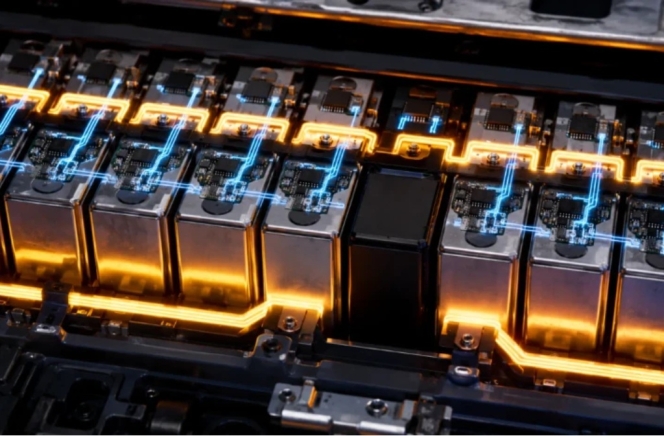
Researchers at Chalmers University of Technology, in collaboration with industry partners, have published a study in Nature Communications demonstrating that reconfigurable battery pack architectures can extend electric vehicle battery operational life by more than 20 percent under specific conditions.
In conventional electric vehicle battery packs, cells are wired in a fixed series configuration, meaning the weakest cell dictates the overall capacity, performance and lifespan of the entire pack. The architecture evaluated by the Chalmers engineering team uses integrated electronic switches and a centralised battery management system to monitor individual cells or cell groups. When a cell experiences accelerated degradation or reduced capacity, the system bypasses the degraded unit while electric current continues to flow through the remaining functional cells.
Albert Skegro, a PhD student at the Department of Electrical Engineering at Chalmers University of Technology, said, "They must all move at the pace of the slowest person and stop when that person stops, regardless of how much energy the others have left. With the architecture we have modelled, the battery can instead bypass the cell that is causing problems and continue using the remaining cells."
Changfu Zou, Professor at the Department of Electrical Engineering at Chalmers, said, "Reconfiguration is not an on-or-off choice. It is a spectrum. Where a manufacturer chooses to position itself on that spectrum determines how much of the potential benefit can be realised."
In a representative modelling scenario featuring an 80 kWh battery pack driven 12,000 kilometres annually over an 18.8-year vehicle lifespan, the reconfigurable system deferred battery replacement by approximately 14 months. The researchers noted that the technology yields the highest performance gains in high-voltage vehicles, including 400-volt and 800-volt electric passenger cars and commercial trucks, where higher cell counts in series increase the statistical probability of individual cell variance.
A techno-economic analysis included in the study determined that implementing cell-level switching hardware increases initial pack production costs by approximately nine per cent based on prototype-scale volumes of 1,000 units. The researchers identified an economic break-even threshold at a 12 percent cost increase, noting that volume manufacturing would lower component costs and increase financial viability for fleet operators and private owners. While prototype applications such as Volvo Cars' SmartCell concept and experimental road vehicles exist, mass-production vehicles using reconfigurable battery packs are yet to enter the commercial market.
Comments (0)
ADD COMMENT