

- Wavye
- Uber
- SoftBank Vision Fund 2
- Eclipse
- Balderton
- Ontario Teachers' Pension Plan
- Baillie Gifford
- British Business Bank
- NVIDIA
- Microsoft
- Mercedes-Benz
- Nissan
- Stellantis
- Alex Kendall
- Dara Khosrowshahi
- Satya Nadella
Wayve Raises $1.2 Billion To Scale Autonomous Driving Platform
- By MT Bureau
- February 26, 2026
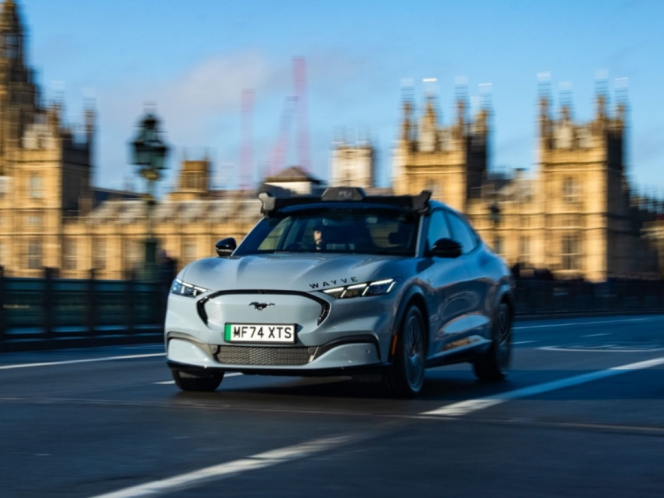
UK-headquartered Wayve, a developer of embodied AI for autonomous driving, has raised USD 1.2 billion in a Series D investment round. The funding brings the company’s valuation to USD 8.6 billion and marks a transition from research to the commercial deployment of its AI platform.
The round was led by SoftBank Vision Fund 2, Eclipse and Balderton. New participants include the Ontario Teachers’ Pension Plan, Baillie Gifford and the British Business Bank. Strategic investors Microsoft, NVIDIA and Uber also participated alongside automotive manufacturers Mercedes-Benz, Nissan and Stellantis.
Wayve’s platform uses end-to-end AI, which runs on onboard vehicle compute and embedded sensors. Unlike traditional autonomous systems, it does not require high-definition maps or location-specific engineering. This architecture allowed the company to test its technology in more than 500 cities across Europe, North America and Japan without city-specific fine-tuning.
Key milestones include:
- 2026: Launch of robotaxi trials on the Uber network, starting in London.
- 2027: Availability of passenger vehicles equipped with Wayve’s ‘AI Driver,’ featuring L2+ capability for steering and navigation under supervision.
- Licensing: Wayve will license its software to automakers, allowing for brand-specific customisation of driving models.
Uber has committed capital to support the deployment of Wayve-powered robotaxis in more than 10 markets globally. Under this agreement, Wayve provides the AI Driver for L4-capable vehicles, while Uber manages the fleet operations.
Alex Kendall, Co-Founder and CEO, Wayve, said: “With USD 1.5 billion secured, we are building for a total addressable market that spans every vehicle that moves. Autonomy will not scale through city-by-city robotaxi deployments alone. It will scale through a trusted platform that automakers and fleets can deploy globally and improve continuously. This investment accelerates our path to widespread commercial deployment and positions us to build the autonomy layer that will power any vehicle, anywhere.”
Dara Khosrowshahi, CEO, Uber, said, “We are very proud to continue to deepen our partnership with Wayve, with plans to deploy together in more than 10 markets around the world. Wayve’s powerful end-to-end approach is purpose-built for scale, safety, and effectiveness, and we’re excited to work with them across multiple OEMs and geographies, which we’ll share more about soon.”
Satya Nadella, Chairman and CEO, Microsoft, added, “Wayve is pushing the frontier of embodied AI for autonomous driving, and Azure supports the scale, reliability, and safety needed to bring that innovation into the real world. Through our partnership and investment, we’re helping accelerate the path from breakthrough research to scaled commercial deployment with automakers worldwide.”
- KPIT Technologies
- N-Dream
- AirConsole
- Tata Motors Passenger Vehicles
- Tata Sierra.ev
- Anthony Cliquot
- Vivek Srivatsa
- Pushpahas Joshi
KPIT Brings AirConsole’s In-Vehicle Gaming With Tata Sierra.ev Debut
- By MT Bureau
- July 22, 2026
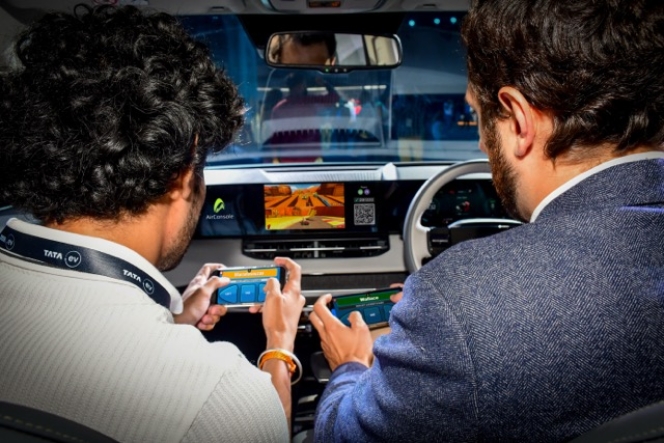
European technology company N-Dream has brought its AirConsole gaming platform to India through a collaboration with Tata Motors Passenger Vehicles and KPIT Technologies, with the marked debut on the Sierra.ev SUV.
AirConsole is integrated into the vehicle's connected services pack and the Arcade App, utilising the vehicle's display setup. Passengers connect smartphones as controllers by scanning a QR code on the screen. The initial launch brings approximately 15 games, including Kaun Banega Crorepati. The in-vehicle gaming technology will be exclusively available on the Sierra.ev for a period of four months, before it can be made available on other models and brands.
Anthony Cliquot, CEO, N-Dream / AirConsole, said, "India is one of the fastest-growing automotive markets in the world. Experiencing the Sierra.ev's launch event in Mumbai where AirConsole was so prominently featured, made our team proud. To see our gaming platform in the vehicle alongside other premium offerings, was a clear testament of how entertainment and passenger experiences are becoming paramount for consumer choice. TMPV is moving at a pace that few in this market can match right now, and this partnership with AirConsole will enable gaming to be part of that momentum."
Vivek Srivatsa, Chief Commercial Officer, Tata Passenger Electric Mobility, said, "The Sierra has always been an icon, and with the Sierra.ev, we have elevated that legacy for an electric era. Bringing AirConsole's in-car gaming experience to the Sierra.ev redefines what connected, immersive technology can add to the ownership experience. As the first vehicle in India to offer this capability, we are delighted to partner with AirConsole to deliver an entirely new dimension of entertainment and engagement for our customers."
Pushpahas Joshi, EVP at KPIT Technologies & Board Member at N-Dream, said, “KPIT is very excited to bring AirConsole to India. This is going to be the first among several launches that will enhance consumer experience in the Cockpit of the future. AirConsole is a category creating product loved by more than 4 million car owners worldwide. As part of its strategy towards futuristic Products & Solutions, AirConsole became part of KPIT family in November 2023. Since then, KPIT has enabled AirConsole to expand outside Europe -into Asia and USA. I am very sure, that, owners of Tata cars & their families will enjoy the cool In-car gaming experience with AirConsole”
- Applied AI Research Centre
- IIIT-Hyderabad
- Govind Krishnan
- INAI
- Ravi Kiran S
- Centre for Visual Information Technology
- CVIT
- Prithvi Jonnada
- Dr Ganesh Yalla
- iHub-Data
IIIT-Hyderabad Develops AI Traffic Enforcement System
- By MT Bureau
- July 21, 2026
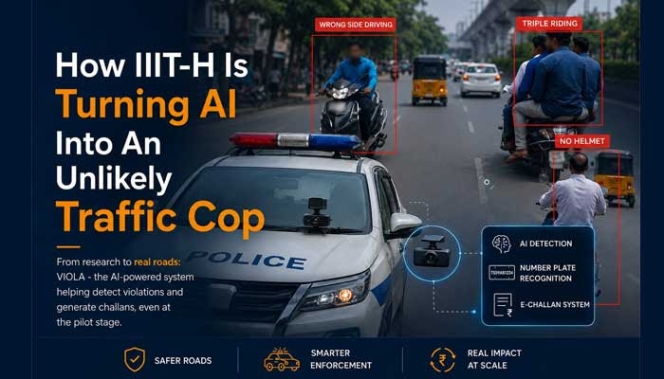
The Applied AI Research Centre (INAI) at IIIT-Hyderabad has developed an artificial intelligence traffic violation detection system named VIOLA. The project uses dashcams installed in police patrol vehicles to detect traffic infractions and integrate with the Telangana Police e-Challan workflow.
Govind Krishnan, who leads translational AI initiatives for mobility at INAI, said that the question is not why accidents happen. “We already know the answers. The real question is: How can we help solve this problem? Or more importantly, how can artificial intelligence help solve this?”
The system builds upon prior research from Prof. Ravi Kiran S at the Centre for Visual Information Technology (CVIT) regarding helmet detection. By mounting cameras on police vehicles, the setup monitors infractions such as helmet violations, triple riding and wrong-side driving across routes.
Prithvi Jonnada, Operations Manager at INAI, explained, “We let the cameras record their daily rounds, fed the footage into an AI system capable of detecting traffic violations, recognising licence plates and automatically forwarded verified cases to Telangana Police’s e-Challan system. This is a mandate from the police department to have a human in the loop thus ensuring the AI acts as an assistant, not a replacement, for human judgment.”
With four dashcams deployed, the system reports an accuracy rate for submissions. The INAI team is expanding the algorithm to include speed detection and road condition monitoring.
Dr. Ganesh Yalla, CEO, iHub-Data, added, “People don’t expect an academic institution to build a complete industrial-grade product that is deployed and generating real impact. We want to change that.”
Discussions are underway with police departments outside Telangana for broader implementation.
Cars24 Increases AI Integration Across Operations
- By MT Bureau
- July 19, 2026
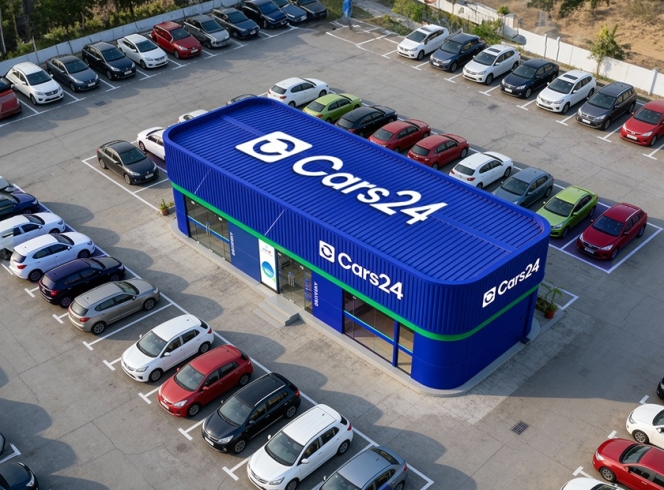
Cars24, a leading online vehicle selling and buying marketplace, has reported that it has processed 1.1 trillion AI (artificial intelligence) tokens during Q1 of FY2026, marking a shift in its business model.
The company stated that AI expenditure now represents 8.88 percent of the company's salary run-rate, with 95 percent of its employees use AI weekly and 89 percent of production code is AI-assisted, contributing to a reported 3x increase in engineer productivity.
Furthermore, for customer operations, AI platforms analysed 9.81 million conversations. Voicebots handled 2.58 million minutes and chatbots processed 550,000 requests.
In terms of inspections, 80 percent of vehicle inspections – totalling 288,000 – were conducted via AI-led systems, reducing the average inspection time from 45 minutes to 26 minutes.
AI-led loan disbursals accounted for 65 percent of the total, amounting to 4,158 disbursals. The company’s Document AI processed 850,000 documents, while its Agentic AI platform executed 5.71 million workflows.
At present, Cars24 operates six in-house platforms supporting 25 use cases, including computer vision, lending and workflow automation. Its imaging platform processes 50,000 vehicle images per month.
Vikram Chopra, Founder & CEO, Cars24, said: "AI is no longer improving isolated workflows, it is becoming the operating system of Cars24. Processing over one trillion AI tokens in a single quarter reflects the scale at which intelligence now powers every part of our business. From customer conversations and vehicle inspections to engineering and operations, we are building one AI that understands context, learns continuously and simplifies every stage of vehicle ownership."
Looking forward, Cars24 plans to develop a unified AI layer that integrates buying, selling, financing and ownership services by utilising its data from the past 11 years.
Tata Elxsi Clocks INR 1.7 Billion Net Profit In Q1 FY2027
- By MT Bureau
- July 15, 2026
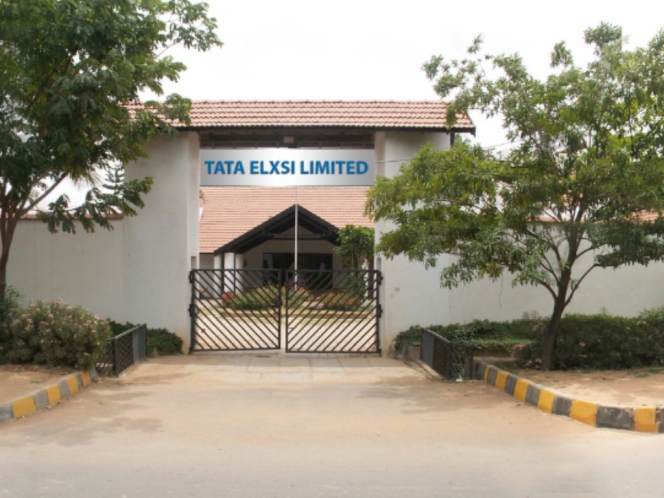
Tata Elxsi, a leading design and technology solutions company, has announced its financial results for Q1 FY2027, reporting operating revenue of INR 10.21 billion, up 2.8 percent over the previous quarter and 14.5 percent YoY.
For Q1 FY2027, the company’s EBITDA came at INR 2.16 billion with a margin of 21.2 percent and a profit after tax (PAT) of INR 1.7 billion, up 18.2 percent YoY.
The company’s revenue from the transportation segment grew 13.3 percent YoY, supported by engagements in off-road and aerospace segments. Automotive OEM revenue now accounts for 78 percent of the division's total revenue. The media & communications segment revenue grew 22.2 percent YoY, while healthcare and life sciences clocked 1.7 percent growth QoQ.
Manoj Raghavan, CEO and Managing Director, Tata Elxsi, said, “For the quarter, Tata Elxsi delivered a healthy performance with growth in our two primary verticals, supported by strong deal execution and continued momentum in large strategic engagements. We also crossed a key milestone of reporting operating revenue of more than Rs. 1,000 crores in the current quarter. The performance in the quarter reflects the strength and increasing relevance of our design-led and AI-enabled engineering capabilities in our chosen industries.”
“FY2027 marks a year of future focus for the company, as we prepare and equip ourselves for a world reshaped by AI. We are making targeted investments in specialized talent, AI powered platforms, tools and infrastructure, to pivot to a Domain + AI future. These investments are enhancing customer value creation with tangible outcomes and opening new avenues for growth and positioning us for the year and decade ahead,” he concluded.
Comments (0)
ADD COMMENT