

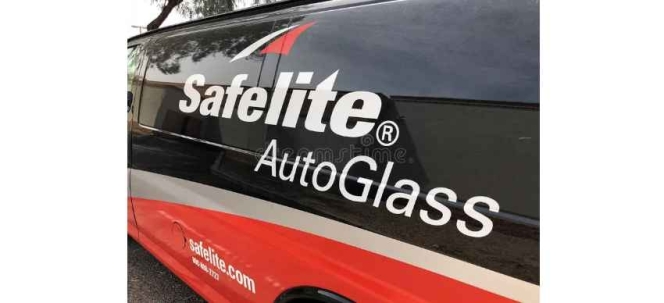
Early windshields were made of ordinary window glass, but that could lead to serious injuries in the event of a crash. Later versions were made of toughened glass and were fitted in the frame using a rubber seal. This type of glass shattered into mostly harmless fragments when the windshield broke but was prone to shattering from a simple stone chip.
Modern windshields are generally made of two curved sheets of tempered glass, with a PVB plastic layer laminated between them for safety, and bonded into the window frame. If one layer of glass breaks, the laminate and the inside layer of glass hold the windshield together, keeping pieces of glass from injuring occupants of the car or falling on the road.
The laminated safety glass for windshield first became available in France from 1911, and some high-end American auto manufacturers began to use it in 1913. Henry Ford ordered the use of laminated glass on all of his vehicles from 1919.
Repair or Replacement?
You are driving on a highway, minding your own business, and …. POW! After you have recovered from the unexpected hit, you know that something hit the windshield and there may be a visible sign of damage, such as a pit or crack. It’s generally not dangerous to drive with a small crack in the windshield. But with time, as moisture, dirt and even windshield washer fluid can seep into the glass sandwich layers, windshield becomes discoloured and further decreases visibility.
 Safety Tip
It’s important to avoid pressing on a broken windshield from the interior of the car. Because of its concave shape, a crack can severely weaken the windshield’s structural integrity, and the glass is likely to continue cracking if pressure is placed on it from the inside.
According to the U.S. National Windshield Repair Association (www. NWRASSN.org), a division of the Auto Glass Safety Council, many types of stone damage can be successfully repaired. Circular bullseyes, crack chips, dings, pits, star-shaped breaks and linear cracks up to six centimetres in length can be repaired without removing the glass, eliminating the risk of leaking or bonding problems sometimes associated with replacement.
Still, damaged glass is a serious issue and may render a car unsafe to drive. Therefore, it should be repaired or replaced as soon as possible for two important reasons:
Windshields weakened by damage provide less protection.
Cracked windshields decrease visibility.
Though not an immediate danger, if the crack is large or if it is near or touching the edge of the windshield, the glass may have to be replaced and driving the car is not recommended.
Buyer Be Aware!
Original equipment (OE) windshields have specified surface quality and built-in stress level. Many are solar-optimised to block UV, reduce interior heat buildup, and have better acoustic attenuation for a quieter ride.
The aftermarket windshields may be missing some or all of these qualities, and consumers may not be aware of these shortcomings.
Another difference between OE and aftermarket glass is residual stress levels around the perimeter called the ‘Weak Spot’ which causes windshield to crack from the edge.
A windshield repair costs much less than a replacement. A chip repair prevents a crack, and a crack repair prevents having to replace the windshield. Also, don’t be talked into ‘replacement’ if the damage could be ‘repaired.’ Just make sure, whether you have a chip or a crack and get it repaired ASAP.
The National Windshield Repair Association is recognised nationally and worldwide as a professional source of reliable information on the windshield repair industry. Their education and certification programme shows that those certified have successfully completed proficiency training to repair and replace laminated auto glass in compliance with ANSI/NWRA/ROLAGS 001-2014.
Whether you choose to drive to a glass shop or have a repair technician come to you, the choice is yours! Many companies offer mobile auto glass service at your home or office to perform needed windshield repair or replacement. It is especially convenient during the current pandemic lockdown.
Recycling Windshield Glass
In the US, about 13-14 million windshields are replaced each year, creating an environmental need for recycling. Although the composite nature of the windshield glass makes it difficult to recycle it, some patented technologies are available. Damaged windshields are processed through a crusher, which separates the glass from PVB interlayer.
Approximately 90 percent becomes ‘glass cullet,’ which can then be recycled into a number of new products including fibreglass insulation. Roughly seven percent becomes PVB plastic scrap, which is reprocessed into pellets and used for a number of new applications, such as carpet backing, paint and primer, and other plastic products. (MT)
Navnit Motors Inaugurates BMW Service Workshop In Mumbai
- By MT Bureau
- October 24, 2026
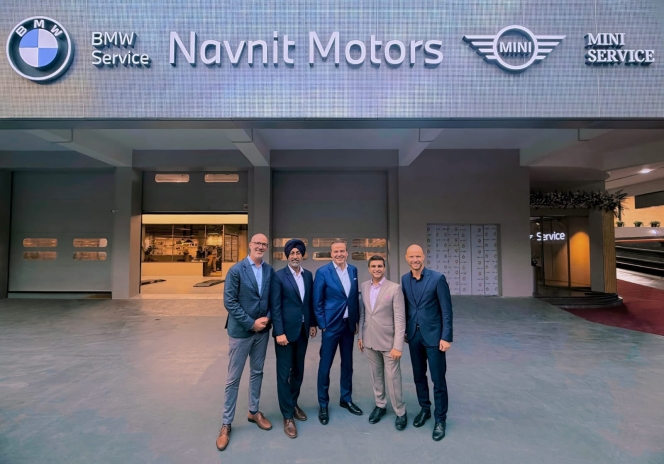
BMW Group India and Navnit Motors have opened a service workshop facility in Mumbai, designed in accordance with the manufacturer's Retail.NEXT standards.
Located in Andheri East, the facility covers approximately 115,000 square feet and operates 53 service bays, comprising six consultation bays, three diagnostic bays, 21 mechanical and electrical bays, and 23 body and paint bays.
The centre incorporates infrastructure for electric vehicle maintenance, high-voltage equipment, solar power generation covering 20 percent of electricity needs, rainwater harvesting and water recycling systems. Digital integrations include service scheduling via the MyBMW App, personalised video repair estimates with digital payment options, and real-time vehicle tracking. BMW Group India currently operates 56 service workshops across its national network.
Ralf Hattler, Senior Vice-President of Customer Support and Aftersales, BMW Group, said, "Aftersales is a strategic pillar of the BMW Group’s long-term relationship with its customers. As mobility evolves, our focus is to build a service ecosystem that is ready for every drivetrain, intelligently connected and consistently centred on individual customer needs. The new Retail.NEXT service workshop in Mumbai translates this global ambition into a powerful local reality - combining scale, specialist competence and responsible operations to safeguard vehicle performance. For our customers, this means peace of mind: knowing that BMW is always by your side and keeps you mobile throughout the entire ownership journey."
Hardeep Singh Brar, President and CEO, BMW Group India, said, "Customer experience does not end with the purchase of a BMW, it continues throughout the ownership journey. With Navnit Motors, we have established one of India’s largest automotive service workshops and the country’s largest BMW service workshop facility, bringing together scale, digital innovation, sustainability and future-ready expertise under one roof. It is a significant expression of our ‘Relax. We Care.’ promise and our commitment to making BMW ownership effortless, transparent and rewarding."
Krishna Kachalia, Dealer Principal, Navnit Motors, said, "As we celebrate 30 years of a strong and enduring partnership with the BMW Group, this landmark facility is a significant milestone in our shared journey. Our deep understanding of Mumbai and the evolving needs of BMW customers have shaped our vision to create this world-class service facility. As the largest BMW service workshop, it reflects our commitment to setting new benchmarks in aftersales excellence. With significantly enhanced service capacity, advanced diagnostic systems, dedicated EV facilities, connected service technologies and highly skilled specialists, the facility combines scale with precision and personalised care for BMW customers across Mumbai."
Taiwanese Suppliers To Showcase Automotive Solutions At AAPEX 2026
- By MT Bureau
- October 22, 2026
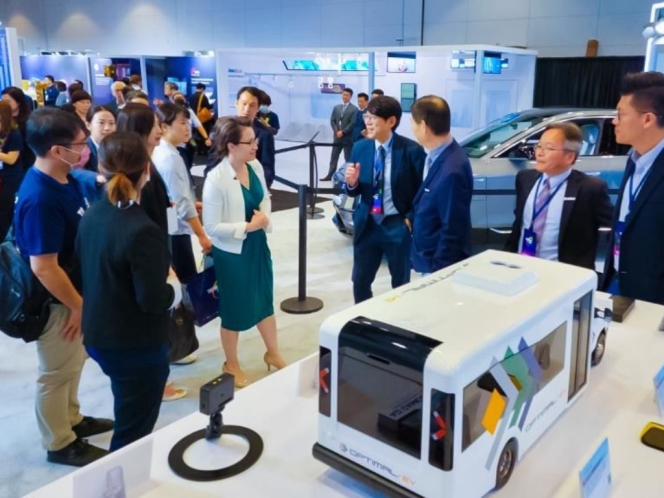
Over 200 suppliers from Taiwan will participate in AAPEX 2026, North America’s leading automotive aftermarket exhibition, scheduled to take place at the Venetian Expo in Las Vegas from 3rd November to 5th November.
Presented by the International Trade Administration and the Taiwan External Trade Development Council, the delegation will exhibit under the Team Taiwan banner at Booth V19622.
The display features products across categories including components, electronics, lighting, tools and collision repair parts. The showcase incorporates an industry scenario zone, digital kiosks, and scheduled presentations.
The events during the exhibition include an opening ceremony, networking sessions, procurement meetings and pitch demonstrations focusing on maintenance equipment, diagnostics and advanced driver assistance systems.
Image for representational purposes only.
Indraprastha Gas Deploys Nawgati Automated Safety Framework For CNG Stations
- By MT Bureau
- October 21, 2026
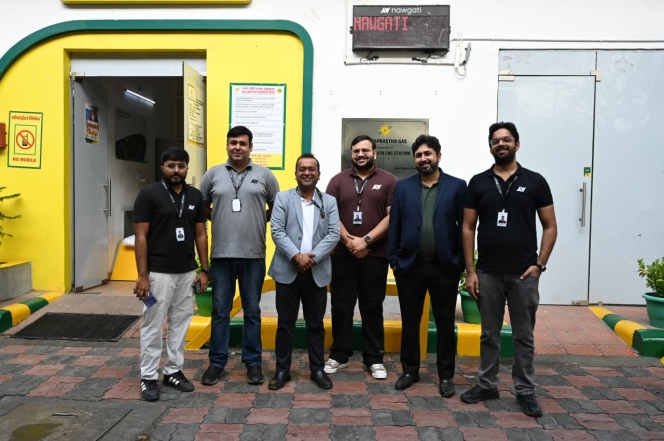
Indraprastha Gas has introduced Nawgati's artificial intelligence (AI) vehicle recognition and safety verification system at fuel stations in Delhi.
The rollout was inaugurated at the Shantipath CNG facility by Sanjay Kumar Singh, Joint Chief Controller of Explosives for the North Circle at the Petroleum and Explosives Safety Organisation (PESO). The initiative implements a three-pronged compliance framework to verify compressed natural gas cylinder hydrotest validity before refuelling.
The system incorporates the consumer-facing Nawgati app, the Aaveg compliance application used by queue marshals and automated license plate recognition cameras linked to digital LED displays and public announcement systems. Non-compliant vehicles with expired certifications trigger automated alerts to station staff to halt refuelling operations.
Ambuj Singh, Senior Vice President of Business and Operations, Nawgati, said, "Fuel retail safety relies on robust enforcement and friction-free technology. Having senior leadership inaugurate this rollout at IGL Shantipath is a testament to the urgency and impact of our solution. By combining our proprietary technology, the Aaveg Compliance app for queue marshals, and consumer-facing transparency through the Nawgati app, we are helping operators eliminate manual blind spots, prevent unverified cylinders from refuelling, and set a new benchmark for smart infrastructure safety."
The safety deployment is accompanied by public awareness campaigns across media channels and operational protocols implemented by Indraprastha Gas to support national energy targets and infrastructure expansion.
AXOR Introduces Agera Full-Face Helmet With Integrated Aerodynamic Rear Spoiler
- By MT Bureau
- October 19, 2026
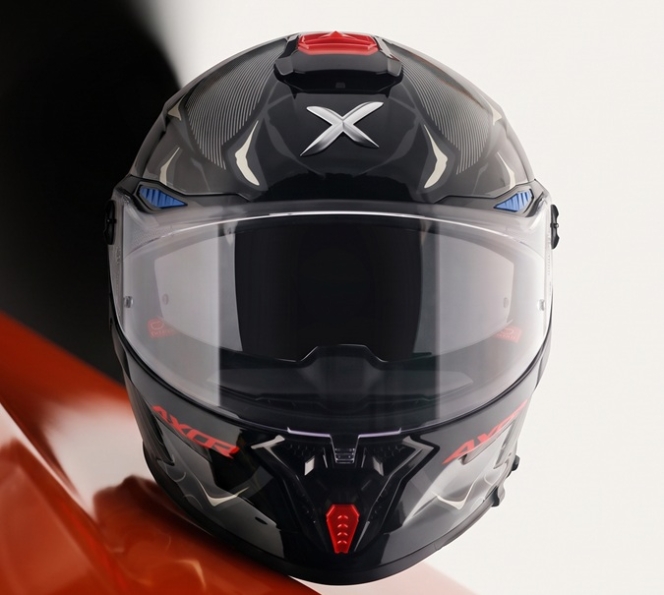
AXOR, the premium helmet brand from Vega Auto, has launched the Agera, a full-face helmet designed with aerodynamic engineering and ventilation features for high-speed riding.
The helmet features a shell profile with an integrated rear spoiler engineered to manage airflow, reduce aerodynamic drag, and lower neck strain at high speeds. The rear spoiler functions as an integrated exhaust vent to assist with thermal management and interior airflow extraction. The product will be retailed in domestic markets and exported across AXOR's international distribution network.
The Agera features a double D-ring retention system and an Emergency Quick Release System for cheek pad removal during emergency situations. The helmet is equipped with an optically correct, scratch-resistant, UV-protected Revo outer visor featuring a tool-free quick-release mechanism and Pinlock anti-fog compatibility, alongside an integrated internal smoke sun visor for glare reduction.
Uttam Chandak, Joint MD and Head of Research and Development, AXOR, said, "Aerodynamic engineering plays a critical role in the overall riding experience, particularly at higher speeds. With the Agera, our focus has been on developing a shell profile that manages airflow effectively. By combining aerodynamic considerations with functional ventilation and a race-inspired design, we aim to deliver a helmet that reflects our continued focus on engineering-led product development."
Comments (0)
ADD COMMENT