

Polestar 3 Sets Guinness World Record For Electric SUV Range On Single Charge
- By MT Bureau
- August 13, 2025
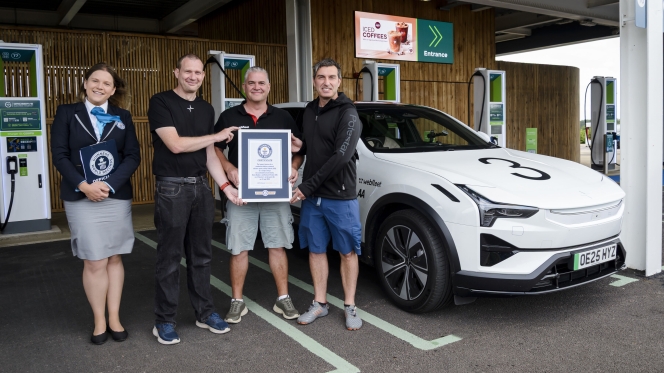
Polestar’s all-electric SUV, the Polestar 3, has set a new Guinness World Record for the longest distance travelled by an electric SUV on a single charge. The Long Range Single Motor model covered an impressive 581.3 miles (935.44 km), significantly surpassing its official WLTP range of 438 miles (706 km). Professional drivers Sam Clarke, Kevin Booker and Richard Parker meticulously optimised efficiency during the 22-hour, 57-minute test, achieving an energy consumption rate of 19.5 kWh per 100 miles (12.1 kWh/100 km).
Conducted under mixed weather conditions, including rain, the challenge followed strict protocols. Guinness World Records judge Paulina Sapinska oversaw the attempt, with Webfleet providing verified telematics data, including GPS tracking, battery levels and odometer readings. The unmodified Polestar 3 rode on standard 20-inch wheels with factory-fitted Michelin Pilot Sport 4 EV tyres.
Remarkably, the SUV still had 20 percent battery remaining when it reached its WLTP range and continued for an additional eight miles (12.87 km) after displaying zero percent charge. The drivers rotated every three hours to maintain focus, with the AA on standby for safety. The achievement highlights the Polestar 3’s real-world efficiency and endurance beyond laboratory estimates.
Matt Galvin, Polestar UK Managing Director, said, “While Kevin, Sam and Richard pushed the Polestar 3 to the boundaries of its range capability, it goes to show how battery range has improved exponentially over the past few years. For a large luxury SUV to go way beyond a London to Edinburgh distance is truly impressive. When this achievement is coupled together with real world independent tests such as Norway’s El Prix winter range test earlier in the year where the Polestar 3 Long Range Dual Motor won against 23 other electric vehicles, it goes to show: long distances are perfectly achievable with minimal fuss. Add to this rapid charging with up to 250 kW allowing a 10–80 percent charge in 30 minutes, the adage that ‘EVs can’t go far’ has been very much consigned to the history books.”
Driver Sam Clarke said: “Since we first started setting records, we have noticed how much more driving it is taking to achieve them! While we aim to push the car to the limits, the car is also pushing us to our limits. I am pleased to be setting the first electric SUV journey record, and to do it in such a capable EV like the Polestar 3 has been a real pleasure.”
Driver Kevin Booker said: “Setting this record alongside Sam and Richard is a great achievement – especially in a large SUV such as the Polestar 3. There’s always jeopardy, and our attempt could have been hampered by the adverse weather conditions and traffic we experienced – there was a lot of standing water during part of the day, meaning more resistance from the tyres and lower efficiency. But, finishing up on zero percent at nearly one o’clock in the morning knowing we’d beaten previous records was a fantastic feeling!”
Driver Richard Parker said: “After the rain subsided, we had a few more challenges on our hands including some interest from the local constabulary! When they realised our official attempt was ultra-efficiency, and they had wished us good luck – we were back on track and getting into our routine of driving shifts until a last-minute road closure near Melton Mowbray was an additional test for us to face. It was another proof point that the record isn’t just down to the driver but also the passenger – quick-thinking co-pilot navigation was just as vital as battery management for this attempt.”
Tesla Opens Reservations For New Roadster In India, Upgrades Model Y L
- By MT Bureau
- October 18, 2026
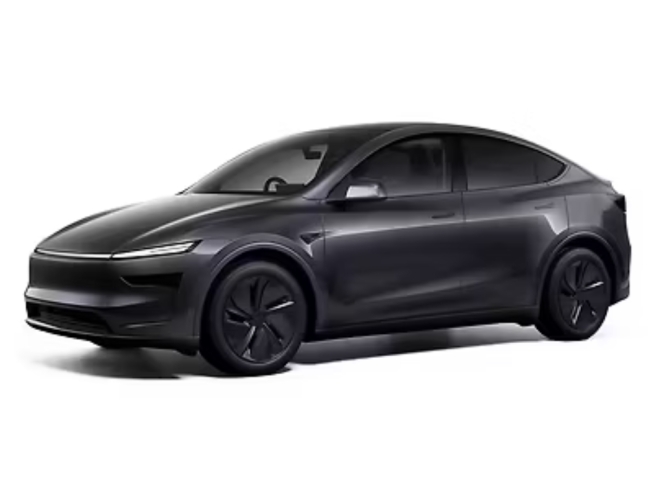
Tesla has opened online reservations for the new Roadster in select global markets, including India, with production scheduled to begin in 2028 for left-hand drive configurations. Alongside the reservation announcement, Tesla India has also introduced a complimentary Acceleration Boost for its Model Y L six-seater SUV.
The new Roadster design incorporates aerospace-inspired elements and SpaceX components. In the domestic product lineup, the Model Y L SUV receives an Acceleration Boost software update, reducing its zero-to-100 km/h acceleration time to 4.5 seconds while offering an operating range of up to 681 kilometres under WLTP testing standards.
Tesla currently offers the Model Y and Model Y L in India. The entry-level Model Y is priced at INR 5.08 million, while the Model Y L starts at INR 6.19 million. The EVs carry safety evaluations from global testing bodies, including NHTSA, Euro NCAP, ANCAP and C-IASI.
To support vehicle ownership, Tesla's domestic charging infrastructure comprises 20 Supercharger stalls and 28 Destination Charger stalls, with three additional sites planned by the end of 2026.
Home charging setup has been established for owners across 23 Indian states. The manufacturer has also introduced its Refer and Earn program in India, offering purchase discounts for buyers and referral credits for existing owners.
- VIDA
- Hero MotoCorp
- DIRT.E K3 6DAYS
- FIM International
- Fédération Internationale de Motocyclisme
- Kausalya Nandakumar
- Fabio Muner
VIDA Unveils DIRT.E K3 6DAYS Limited Edition At FIM International Six Days Enduro
- By MT Bureau
- October 16, 2026
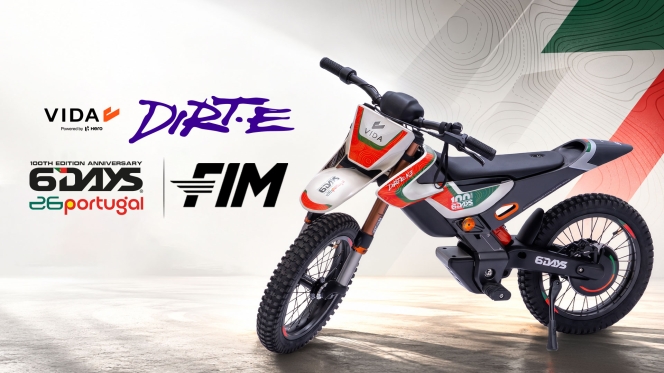
VIDA, the electric mobility brand powered by Hero MotoCorp, has unveiled the DIRT.E K3 6DAYS Limited Edition at the 100th FIM International Six Days Enduro in Grândola, Portugal.
The release marks the first collaboration between an Indian electric vehicle manufacturer and the event as an official partner of the Fédération Internationale de Motocyclisme.
The model is limited to 100 units, with each unit assigned a number corresponding to an edition of the event. The electric two-wheeler features Portuguese flag-inspired green and red livery, race competition typography and official 6DAYS branding.
First introduced in December 2025, the DIRT.E K3 is an electric off-road vehicle designed for youth riders. It incorporates a modular frame that adjusts without tools at three points, allowing handlebar height, footrest positioning, and seat height to be adjusted as the rider grows.
The DIRT.E K3 comes with a removable 360 Wh lithium-ion battery with a three-hour full charge cycle, three software-managed speed modes reaching up to 24 kmph via thumb throttle, a magnetic power cut-off kill switch and a 60 mm rear disc brake system.
Kausalya Nandakumar, CBO of the Emerging Mobility Business Unit, Hero MotoCorp, said, "Being part of the historic 100th edition of FIM ISDE is a proud milestone for VIDA and an opportunity to showcase how electric innovation can shape the future of off-road riding. The VIDA DIRT.E K3 brings together the spirit of motorsport with forward-looking technology, building on the recognition it received at CES 2026 and the Red Dot Design Award. With our Portuguese- inspired 6DAYS® Limited Edition, we are celebrating the legacy of this iconic event while bringing a fresh perspective to electric off-road mobility. At VIDA, we believe innovation should go hand in hand with a safe, engaging, and empowering riding experience for young riders."
Fabio Muner, Marketing and Digital Director, FIM, said, "On behalf of the FIM, I would like to sincerely thank Hero MotoCorp for its active participation in the 100th Edition of the FIM 6DAYS®. Thanks to the DIRT.E K3 6DAYS® Limited Edition bike, young riders have the chance to experience first-hand the beauty of motorcycling and enduro, an opportunity that is essential for building the future of our sport. The fact that these vehicles will be available on the market is a further great achievement for the FIM 6DAYS®. It is another example of how this historic FIM World Championship continues to widen its borders year after year, opening its doors to new generations and new ways of riding. Thank you, VIDA for sharing this vision with us."
Epsilon CAM And C4V Sign Agreement For Cathode Material Qualification In North America
- By MT Bureau
- October 14, 2026
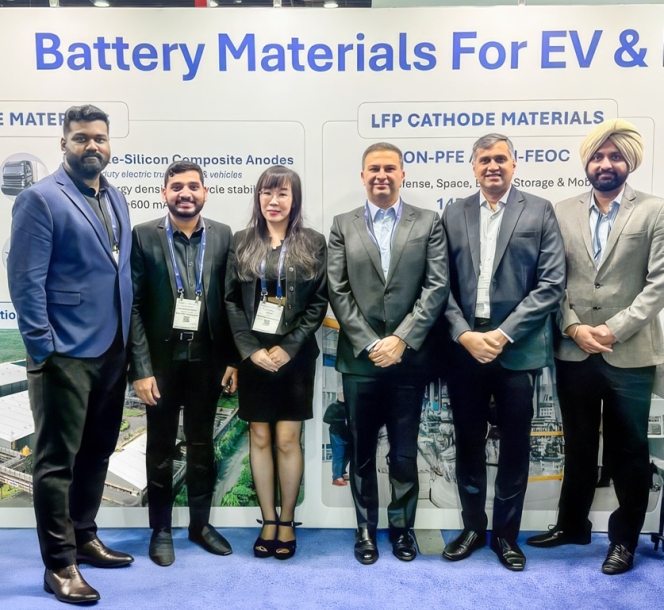
Epsilon CAM, one of the leading battery cathode active material manufacturers, and cell technology firm C4V have signed a Letter of Intent (LoI) to evaluate and qualify lithium iron phosphate and bio-mineralised lithium mixed metal phosphate cathode active materials.
The agreement establishes a framework to evaluate Epsilon CAM's cathode materials for cell-level integration across C4V's battery platforms and North American manufacturing programs, including those operated by sister company Near Prime Technologies.
As per the arrangement, Epsilon CAM will provide material samples and engineering data for testing, including electrochemical performance validation, cycle-life evaluation and process compatibility assessments. Subject to technical qualification and definitive contracts, the firms plan to explore multi-year material supply arrangements and technology integrations.
The evaluation will assess supply-chain sourcing for critical raw material inputs, including lithium, manganese and phosphorus, to align with North American content requirements.
Epsilon CAM is advancing plans for a 20,000-tonne-per-annum cathode active materials plant in India by 2028, positioning its production as a non-foreign-entity-of-concern source for global cell manufacturers.
Vikram Handa, MD, Epsilon CAM, said, "This LoI brings together complementary capabilities across cathode materials, cell technology and manufacturing. Our focus is to demonstrate material performance at the cell level and to work with C4V toward scalable, high-quality LFP and LMFP solutions that address the evolving needs of battery manufacturers and automotive customers."
Dr. Shailesh Upreti, CEO, C4V, said, "Epsilon is helping address one of the most important gaps in the U.S. battery supply chain: reliable access to scalable, ex-China phosphate cathode active materials. C4V is currently evaluating Epsilon’s materials through our Digital DNA qualification process for potential use across C4V cell platforms and U.S. manufacturing programs at Near Prime. Successful qualifications would create an important pathway connecting advanced cathode materials with C4V battery technology and domestic cell manufacturing."
JSW MG Motor India Launches MG Windsor INDULGE Edition At INR 1.79 Million
- By MT Bureau
- October 14, 2026
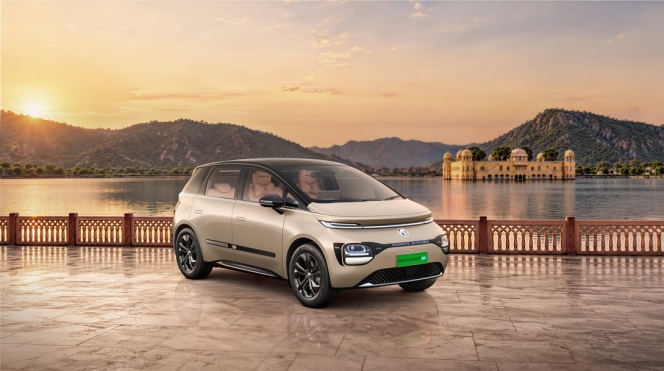
JSW MG Motor India, one of the leading passenger vehicle manufacturers, has launched the MG Windsor INDULGE Edition at INR 1.79 million ex-showroom.
The MG Windsor INDULGE Edition features a dual-tone exterior with a Shadow Gold body finish paired with a black roof, black exterior mirror housings, 18-inch black alloy wheels and edition badges on the C-pillar.
The interior adopts a tan and black upholstery scheme, embroidered headrests, and a rear-seat entertainment display screen supplied as standard equipment, alongside rear cabin accessories including themed cushions and window sunshades. The EV retains its 38 kWh battery pack delivering 100 kW of power and 200 Nm of torque, with a certified driving range of 332 kilometres per charge.
Vinay Raina, Chief Commercial Officer at JSW MG Motor India, said, "The MG Windsor is an important product not only for us but for the EV segment, as it has encouraged many fence-sitters to embrace electric mobility. Reaching over 80,000 families in just 24 months is a remarkable milestone and a testament to the value the Windsor delivers to customers. Building on this success, the INDULGE Edition introduces exclusive enhancements and an elevated cabin experience, offering customers a more premium and personalised expression of the Windsor lifestyle. It reflects our commitment to continuously evolving the product in line with changing customer preferences while retaining the qualities that have made the Windsor a preferred choice in the EV segment."
The SUV retains its structural layout, including rear seatbacks capable of reclining up to 135 degrees and a 15.6-inch central infotainment touchscreen, as JSW MG Motor expands its electric vehicle lineup across domestic retail networks.
Comments (0)
ADD COMMENT