

- Automotive Component Manufacturers Association
- ACMA
- Ernst & Young
- Vinnie Mehta
- Shradha Suri Marwah
- Rama Shankar Pandey
- Pralhad Joshi
ACMA Hosts Inaugural STEER 2025, Setting the Course For India’s Automotive Aftermarket
- By MT Bureau
- August 08, 2025
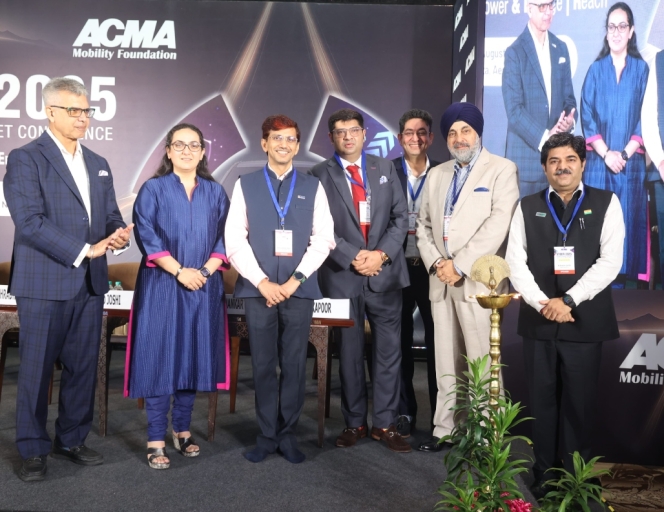
ACMA Hosts Inaugural STEER 2025, Setting the Course For India’s Automotive Aftermarket
The Automotive Component Manufacturers Association of India (ACMA) recently held the inaugural STEER 2025, a national aftermarket confluence designed to chart a course for the future of India’s automotive components industry.
The event, convened on 8th August, saw participation from leading government and industry voices, including Union Minister Pralhad Joshi, Shradha Suri Marwah, President, ACMA, Vinnie Mehta, Director General, ACMA and Ramashankar Pandey, Chairman, ACMA Aftermarket Sub-Committee.
In his keynote, Joshi praised ACMA’s commitment to consumer empowerment and highlighted the government’s Right to Repair initiative, stating that it would help make genuine spare parts and repair information more accessible and encourage sustainability and affordability while strengthening India’s presence globally.
Throughout the day, delegates engaged in lively discussions on sectoral challenges and opportunities around safety, technology adoption, skills development, market access and supply chain resilience. Actionable recommendations emerged to help advance the aftermarket in line with evolving consumer expectations and international trends.
According to data presented by Ernst & Young, India’s auto component sector has experienced robust growth, registering a compound annual growth rate (CAGR) of 12 percent from FY2018 to FY2024. The aftermarket segment itself expanded at around 8 percent CAGR over this period.
In FY2024, the industry’s turnover reached INR 6,147 billion, with exports climbing to INR 1,760 billion and constituting around 4 percent of India’s total national exports. The sector currently contributes approximately 2 percent to India’s GDP and provides employment to nearly five million people, highlighting its importance as one of the country’s largest employers.
Exports have become a significant driver, fuelled by strong domestic demand, supportive government incentives and India’s integration within the global ‘China+1’ supply strategy. Lower manufacturing costs give Indian exporters a competitive edge, with average factory wages 50-75 percent lower than those in China, allowing for 20-30 percent savings on labour-intensive components. Government schemes such as the Auto PLI Scheme have further boosted export growth, offering sales-linked incentives of 8–18 percent for advanced and electric vehicle components. Engine parts remain the largest export category, though substantial shares are also held by sectors such as suspension, braking, body/chassis, transmission and electronics.
Global opportunities abound in both developed and emerging markets. Key targets for Indian suppliers include Latin America, Indonesia, Poland, the UAE and Africa. Brazil’s automotive aftermarket alone is valued at USD 12,091 million (CY23), while Indonesia’s stands at USD 7,759 million, offering significant scope for further growth. Indian mechanical and consumable parts, particularly for two-wheelers, commercial vehicles and tractors, enjoy a reputation for quality in many of these regions; for instance, Nigerian purchasers are willing to pay up to 25 percent more for critical Indian spares compared to cheaper Chinese alternatives.
Trade agreements such as the India-UAE CEPA have facilitated access to high-growth markets by removing import duties, while bilateral pacts with African nations support expansion into West and East Africa. In Africa, car ownership remains relatively low at 40 per 1,000 people – far less than the global average – indicating substantial growth potential for automotive aftermarket products over the coming decade.
At STEER 2025, speakers emphasised strategies for further accelerating India's export momentum, including building stronger online and e-commerce presence, innovative branding, tailored product offerings, collaborative supplier initiatives, streamlined logistics and enhanced market access through local partnerships. ACMA reaffirmed its commitment to close collaboration with government and industry stakeholders, placing consumer empowerment and sustainability at the core of its vision to enhance India's reputation as a globally competitive supplier.
Hexpol To Acquire 80% Stake In Turkish Compounder Symplast For Euro 54 Mln
- By MT News
- October 22, 2026
Hexpol, the Swedish polymer group, has agreed to acquire an 80 percent stake in Symplast A.Ş., a Turkish manufacturer of thermoplastic elastomer compounds, for Euro 54 million on a cash- and debt-free basis.
The deal will expand Hexpol’s thermoplastic compounding operations and strengthen its presence in Türkiye, where Symplast supplies customers in the automotive, construction, consumer and electronics industries. The acquisition is expected to close by the end of the first quarter of 2027, subject to customary closing conditions, including competition authority approval.
Symplast, headquartered in İzmir, was founded in 2013 by four shareholders: Selahattin Dülger, Ali Rıza Kır, Yaşar Kurtuluş and Fahri Tolga Sarıkahya. The company has annual sales of about Euro 34 million and employs 135 people.
Its operations include a manufacturing facility, headquarters and research and development centre in İzmir, a semi-finished materials facility in Poti, Georgia, and a sales office in Germany. The İzmir site has available capacity and room for expansion within its existing footprint.
Symplast makes engineered thermoplastic elastomers for applications including automotive weather seals, window and door systems, construction membranes, consumer products, cable sheathing and connectors. Its in-house research and laboratory capabilities support the development of formulations tailored to customers’ requirements.
Sarıkahya and Kır will continue to run the business as a subsidiary of Hexpol’s Thermoplastic Compounding division.
“The acquisition of Symplast is another important step in executing the growth strategy for our Thermoplastic Compounding business area. Symplast gives HEXPOL a strong position in Turkey, an attractive and strategically located manufacturing market with a well-developed automotive and construction industry,” says Henrik Elmin CEO and President of HEXPOL.
“Symplast brings strong formulation and application expertise, modern production capabilities and an entrepreneurial organization with a clear focus on customer service. The company is highly complementary to our existing thermoplastic operations and provides an attractive platform for continued growth, both in Turkey and in export markets,” concludes Jan Wikström, President business area HEXPOL Thermoplastic Compounding.
“We are very pleased to have found a long-term industrial owner that shares our commitment to product quality, technical expertise and close customer relationships,” says Selahattin Dülger, Chairman of the Board and one of the founders of Symplast.
“HEXPOL has demonstrated a deep understanding of our business and a clear ambition to invest in its continued development. Becoming part of HEXPOL will give Symplast access to broader technical capabilities, an international customer base and the resources required to accelerate its growth, while preserving the entrepreneurial culture on which the company has been built,” concludes Dülger.
Hexpol said at its Capital Markets Day in November 2025 that it would increase its focus on thermoplastic compounding as a key growth platform. The Symplast acquisition adds a manufacturing presence in Türkiye and access to customers in the domestic market, Europe and neighbouring regions.
The Euro 54 million purchase price will be funded through a combination of bank facilities and cash. Hexpol will have an option to acquire the remaining shares, while the founders will have an option to sell their remaining holdings to the group.
- Mannol
- Euro 7
- European Automobile Manufacturers Association
- American Petroleum Institute
- International Lubricant Standardization and Approval Committee
- Molibden Ultra
- Legend
- Konstantin Gaab
- SCT Vertriebs
Mannol Highlights Role Of Advanced Lubricants For Euro 7 Emissions Standards
- By MT Bureau
- October 21, 2026
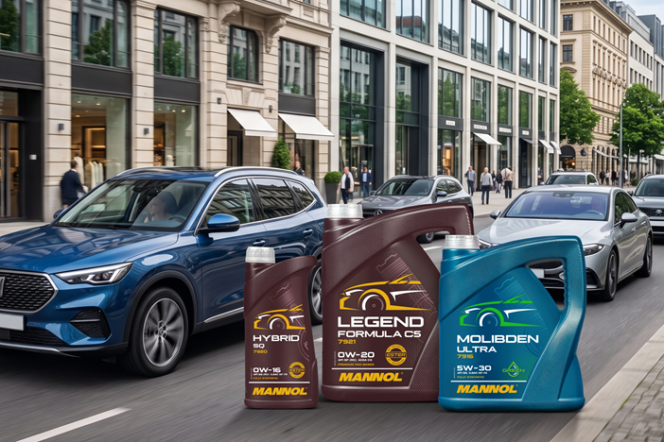
German lubricant manufacturer Mannol has stated that the introduction of European Euro 7 emissions regulations will increase the technical demands placed on engine oil durability and exhaust aftertreatment compatibility.
Scheduled to take effect for new vehicle types in categories M1 and N1 starting 29 November 2026, the Euro 7 framework extends regulatory oversight to particulate emissions from braking systems and minimum durability requirements for traction batteries, alongside stricter monitoring of tailpipe emissions over extended vehicle lifespans.
Because the standard mandates compliance over an eight-year or 160,000-kilometre period, the long-term stability of engine components and lubricants becomes critical to preventing deposit accumulation and catalyst fouling.
Mannol notes that specifications established by organizations such as the European Automobile Manufacturers Association, the American Petroleum Institute and the International Lubricant Standardization and Approval Committee provide the technical framework for lubricant selection. low- and mid-SAPS formulations limit sulphated ash, phosphorus and sulphur content to protect particulate filters and catalytic converters, while lower high-temperature high-shear viscosities reduce hydrodynamic friction losses in modern powertrains.
The company offers specialised products within its portfolio, including the Molibden Ultra 5W-30 formulation combining ACEA C2 and C3 with API SQ and ILSAC GF-7A standards, the Legend Formula C5 0W-20 for low-viscosity manufacturer approvals, and the Hybrid SP 0W-16 developed for hybrid powertrains and thermal cycling conditions.
Konstantin Gaab, Managing Director of SCT Vertriebs, said, "From our perspective, Euro 7 is not merely a further development of emissions legislation, but above all a signal that modern vehicles will need to meet increasingly stringent requirements for long-term technical durability. The challenge for the lubricant industry is to further reduce friction losses and, consequently, energy consumption without compromising wear protection or the performance of exhaust aftertreatment systems. Modern performance standards such as ACEA C5, C6 and C7, as well as API SQ and ILSAC GF-7, provide the industry with an important technical foundation. The key will be to translate these requirements into high-performance formulations tailored to specific engine designs. Our existing MANNOL portfolio already supports a range of modern powertrain technologies. At the same time, we regard the continuous development of our lubricants as essential to meeting the future requirements of vehicle manufacturers. Our aim is not simply to respond to regulatory changes, but to understand their technical implications at an early stage and incorporate them into the ongoing development of our product portfolio."
Varroc Engineering, Forsee Power Form JV For Indian EV Battery Market
- By MT Bureau
- October 16, 2026
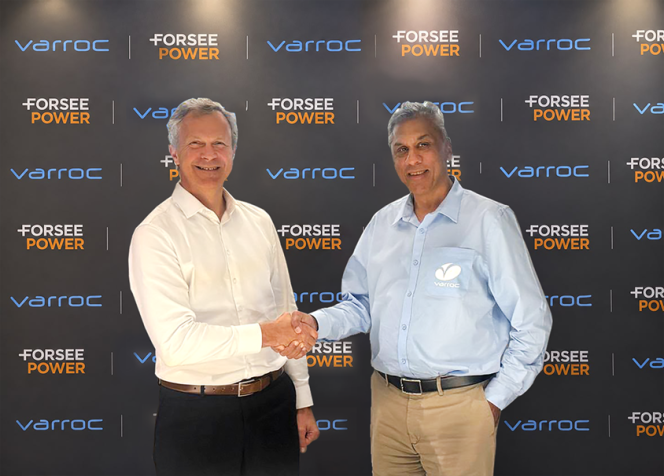
Pune-headquartered automotive component supplier Varroc Engineering and French battery system manufacturer Forsee Power have joined forces to produce electric vehicle battery packs in India.
Under the terms of the transaction, Varroc will acquire a 45 percent equity stake in Forsee Power's Indian subsidiary, Forsee Power India and will assume management and operational control of the entity.
Varroc will also subscribe to Optionally Convertible Redeemable Preference Shares to provide growth capital for the joint venture, subject to regulatory and corporate approvals. The joint venture will initially focus on battery pack development for three-wheeled electric vehicles, before expanding into two-wheelers, light commercial vehicles, buses, trucks and industrial equipment.
The agreement combines Forsee Power's battery system architecture and software with Varroc's component manufacturing, engineering infrastructure and vehicle manufacturer supply relationships across domestic assembly operations.
Arjun Jain, Whole Time Director and CEO – Business I, Varroc, said, "Electric mobility is both evolving and growing rapidly, thus creating new opportunities and new requirements for the automotive industry. Through this evolution we believe OEMs will need partners who can anticipate changes and translate them into reliable, cost-effective solutions at scale. Our partnership with Forsee Power brings together complementary strengths in battery-system technology, automotive engineering, manufacturing and customer relationships. It represents an important step in expanding Varroc’s portfolio to address the evolving needs of our market and the future of mobility. This will further enhance addressable content per electric vehicle in all the segment."
Christophe Gurtner, Chairman and CEO, Forsee Power, said, "With the rapid growth of electric mobility adoption in India, the opportunity is clear and we are ready to scale. Joining forces with Varroc combines our battery technology with local industrial strength and customer access. Three-wheelers are our starting point, with a clear ambition to expand across two-wheeler, commercial and industrial vehicles."
AUMOVIO To Debut MK 120 MAB Brake System At EICMA 2026
- By MT Bureau
- October 14, 2026

German technology company AUMOVIO will showcase a portfolio of braking, rider assistance and connectivity solutions for motorcycles and powersports vehicles at EICMA 2026 in Milan, scheduled from 3 to 8 November 2026.
The company's showcase centres on the launch of the MK 120 MAB brake system, which extends AUMOVIO's braking product line beyond two-wheeled applications. The system is engineered for three-wheeled scooters, side-by-side vehicles, utility terrain vehicles and all-terrain vehicles.
It integrates vehicle stability functions derived from passenger car and motorcycle architectures, including active yaw control and wheel lift mitigation, to assist vehicle control across varied terrain.
In addition to the MK 120 MAB, AUMOVIO will display its Motorcycle ABS 2.3 Base unit featuring an optional inertial measurement unit, alongside the MiniMAB EVO system designed for small-displacement scooters and commuters.
The company's display also features radar sensors for adaptive cruise control and blind-spot detection, digital instrument clusters ranging from 4 to 8.8 inches, a standalone Connected Infotainment Box and automated manual transmission control units.
The hardware, software and electronic systems on display utilise automotive development, cybersecurity and production standards adapted to motorcycle and powersports operational environments.
Comments (0)
ADD COMMENT