

- Tata Motors Ltd
- 10
- lakh
- vehicles
- one millionth
- commercial vehicle
- Lucknow
- plant
- Uttar Pradesh
- industrial excellence
- economic growth
- skill development
- sustained livelihood
Tata Motors Achieves 10 Lakh Commercial Vehicles Production Milestone at its Lucknow Plant
- By Bhushan Mhapralkar
- April 15, 2026
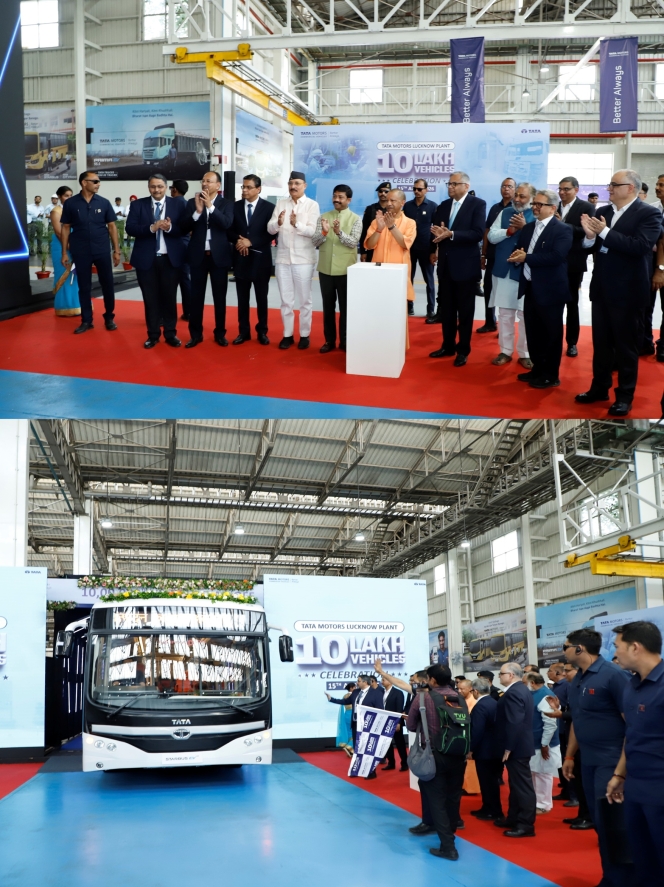
Tata Motors Ltd has rolled out the one millionth commercial vehicle from its Lucknow facility, commemorating more than three-and-a-half decades of its presence in Uttar Pradesh and its contribution to industrial excellence, economic growth, skill development and sustained livelihood creation.
At a time when India’s commercial vehicle industry is undergoing rapid transformation towards cleaner, smarter and more efficient mobility solutions, this milestone underscores Tata Motors’ leadership in shaping the future of mobility. The milestone vehicle, a zero-emission electric bus, highlighted the shared commitment of Uttar Pradesh and Tata Motors to green mobility, aligned with the state’s net-zero 2070 vision and the company’s net-zero target of 2045. It was flagged off by the Hon’ble Chief Minister of Uttar Pradesh, Yogi Adityanath, and N Chandrasekaran, Chairman, Tata Sons Ltd, in the presence of the Deputy Chief Minister Brajesh Pathak; Girish Wagh, Managing Director and Chief Executive Officer, Tata Motors Ltd, and eminent ministers as well as public representatives. Also present were senior bureaucrats, government officials and senior leaders from Tata Motors.
Speaking on the occasion, the Chief Minister said, “The rollout of 10 lakh trucks and buses from Tata Motors’ Lucknow facility is a moment of pride for the entire state. It is a recognition of the state’s capabilities and immense potential, as well as of its talented people. Our vision is to transform Uttar Pradesh into a one trillion-dollar economy, with industry and entrepreneurs playing a pivotal role in this journey. The state offers a conducive ecosystem for scalable businesses, supported by a vast consumer market, a young, skilled workforce and seamless connectivity.” “Tata Motors’ success in Uttar Pradesh reflects the strength of this ecosystem and reinforces our commitment to fostering responsible industrial growth, creating jobs, building skills and advancing sustainable socioeconomic development,” he added.
Established in 1992, Tata Motors’ Lucknow facility has evolved into one of its most significant commercial vehicles manufacturing hubs, producing trucks and buses that meet global standards across multiple powertrains, including zero emission electric and fuel cell electric vehicles. Spread over 600 acres, the plant combines manufacturing scale with a strong focus on people and sustainability—supporting over 8,000 livelihoods, building industry relevant skills through flagship training programmes, and operating as a water positive facility powered by 100 percent renewable energy, underscoring Tata Motors’ commitment to inclusive growth and sustainability ingrained responsible industrialisation.
The facility also supports a robust supplier ecosystem, enabling MSMEs and ancillary industries across Uttar Pradesh and beyond. Speaking on the occasion, Chandrasekaran averred, “The production of Tata Motors’ 10th lakh (one millionth) commercial vehicle from its Lucknow facility reflects the strength of our longstanding partnership with Uttar Pradesh. Over more than three decades, this collaboration has demonstrated how industry, government and communities can come together to drive industrial excellence, create livelihoods and build capabilities at scale. We are deeply grateful to the Hon’ble Chief Minister and the entire state for their continued support and for fostering a progressive, growth-oriented approach. As Uttar Pradesh accelerates its journey towards sustainable and inclusive growth, we remain firmly committed to contributing to its progress and to shaping a future ready mobility ecosystem.”
The landmark production milestone of 10 lakh (one million) vehicles underscores Tata Motors’ enduring commitment to Uttar Pradesh—anchored in manufacturing excellence, people-centric growth and responsible industrialisation. As the company advances its net zero journey, the Lucknow plant will continue to play a pivotal role in shaping a cleaner, smarter and more sustainable mobility future for India. It is the only Tata Motors’ plant that produces trucks and buses. Commercial vehicles above four tonnes and up to 55 tonnes are made at the plant on Dewa Road to the north of Lucknow city.
The integrated facility produced around 56,000 vehicles last year and is structured such that trucks and bus chassis are made in one half of the plant. Bus bodies are built in the other half and sent to the other half to be married with the chassis. The ratio of buses and trucks produced is 25:75. The integrated facility also has a vendor park that houses Tata Group suppliers under Tata AutoComp. There are other vendors that have facilities in the vicinity of the plant as well.
Ashok Leyland Opens New LCV Dealership In Raichur
- By MT Bureau
- September 11, 2026

Chennai-headquartered commercial vehicle major Ashok Leyland, the flagship company of the Hinduja Group, has inaugurated its new light commercial vehicle dealership in Raichur, Karnataka.
This marks the company's 12th light commercial vehicle dealership in Karnataka, expanding its national sales and service distribution network to more than 945 touchpoints.
Thew new dealership is operated by channel partner SB Motors, the facility is located in Mukram Gunj, Raichur. The location functions as a sales, service and spares outlet, equipped with seven service bays and maintenance tools. The dealership will retail and service Ashok Leyland's light commercial vehicle portfolio, which includes the Saathi, Dost, Bada Dost, Partner and MiTR models, all produced at the company's manufacturing plant in Hosur.
The product range targets various payload segments within small commercial vehicle and light commercial vehicle applications.
The Saathi, which operates in the entry-level small commercial vehicle category, powered by a 45-horsepower engine producing 110 Nm of torque, with a payload capacity of 1,120 kg.
The Bada Dost features an 80-horsepower BS VI engine available across six variants for urban and intercity transport. The Dost range includes the Dost XL and Dost+ XL models, while the Partner covers the four-tonne payload sector in four-wheel and six-wheel configurations using the ZD30 engine. The MiTR platform provides passenger transport options for staff and school bus applications.
Viplav Shah, Head of Light Commercial Vehicle Business, Ashok Leyland, said, "Karnataka has always been an important market for us, and we are excited to further strengthen our presence in this region. Our relationship with customers is built on trust, performance, and shared growth. Our products are known for their superior mileage, reliability, and performance with a robust network and an industry-leading service retention. We take pride in the continued confidence our customers place in us, and the opening of this new dealership marks yet another step in our commitment to delivering world-class products and unmatched service to our valued customers."
At present, Ashok Leyland has an operational base of over 600,000 light commercial vehicles across India.
Thermo King Expands All-Electric Refer Lineup With 4 New Models
- By MT Bureau
- September 10, 2026

Thermo King, a brand of Trane Technologies, has introduced four models to its all-electric EV series transport refrigeration lineup in the Asia Pacific region. The expanded series includes the EV500S, EV500e, EV300e and EV200e models, designed for urban temperature-controlled logistics.
The EV500S and EV500e units target urban distribution networks, including the transit of produce, e-commerce fresh goods and pharmaceutical supplies. The smaller EV200e and EV300e models are designed for short-haul last-mile retail deliveries from urban cold storage distribution facilities. The company shared that across the lineup, operating energy efficiency has increased by 8.3 percent compared to first-generation models.
Helen Ling, Vice-President, Thermo King Asia Pacific, said, "The shift to electric vehicles is transforming urban cold chain distribution, where balancing energy efficiency and temperature stability remains critical. Backed by more than a decade of electric refrigeration expertise, our new EV series marks another step forward in delivering greater energy efficiency, stronger reliability and smarter digital capabilities to customers while supporting more sustainable cold chain transport."
The units feature an intelligent control architecture that maintains interior cargo temperatures within a margin of 0.5 degrees Celsius. An economy mode option allows operators to limit power consumption during transport to conserve vehicle battery range. The hardware platform includes fault protection, automated defrost logic and waterproof casing to allow all-weather operation.
For fleet management, the series offers optional integration with an intelligent monitoring system using industrial-grade hardware. The telematics platform provides two-way remote control functionality, allowing operators to adjust compartment temperatures, modify operating states and clear system alarms via mobile applications, while retaining historical temperature records for compliance verification.
Mahindra Launches Veero 1.1 XXL CNG And Upgraded Veero Diesel
- By MT Bureau
- September 08, 2026
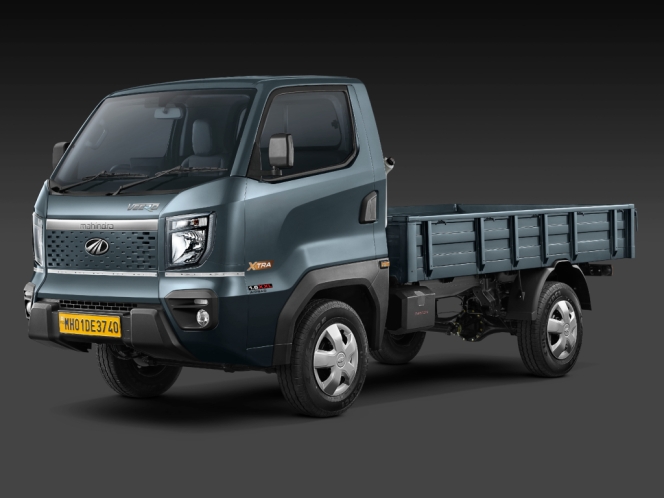
Mumbai-headquartered automotive major Mahindra & Mahindra has expanded its commercial vehicle lineup with the launch of the Veero 1.1 XXL CNG and the Upgraded Veero Diesel.
The under-3.5-tonne LCVs are built on the company's Urban Prosper Platform (UPP). The Upgraded Veero Diesel is available across dealerships from 8 September 2026, while customer deliveries for the Veero 1.1 XXL CNG are scheduled to begin on 20 September 2026.
The Veero 1.1 XXL CNG incorporates a 1.1-tonne payload capacity and a 2,900 mm cargo deck. It features a 5.1-metre turning radius and is powered by a 1.5-litre naturally aspirated engine delivering 48.5 kW of power and 98 Nm of torque. The LCV has an ARAI-certified fuel efficiency range of 21.4 km/kg, with a combined petrol and CNG driving range exceeding 450 kilometres. Ex-showroom prices for the CNG model start at INR 825,000 for the V2 1.1 XXL SD variant and INR 855,000 for the V4 1.1 XXL SD variant, with an INR 5,000 premium for the Pastel Riversand colour option.
The Upgraded Veero Diesel adds interior equipment updates, including a 26.03 cm touchscreen infotainment system supporting Android Auto, Apple CarPlay and multi-language voice commands. Additional mechanical and convenience additions include cruise control, Lean NOx Trap (LNT) exhaust treatment technology, power windows, fast-charging ports, and remote air conditioning control via the iMAXX telematics platform. Standard cab features include an air conditioning system with heater, a reclining driver's seat, flat-folding seating and a three-person seating layout.
The Upgraded Veero Diesel range spans multiple configurations and is priced at INR 829,000 for the 1.5 XL SD V2 variant, while 1.5 XXL variants range from INR 835,000 for the V2 CBC frame to INR 945,000 for the V6 SD trim.
The 1.6 XXL variants start at INR 8.49 for the V2 SD model, extending to INR 945,000 for the V6 SD option. Metallic grey paint options carry an INR 5,000 price premium across the diesel variants.
Transportation Sector Records Demand Growth Ahead Of Festive Season
- By MT Bureau
- September 06, 2026
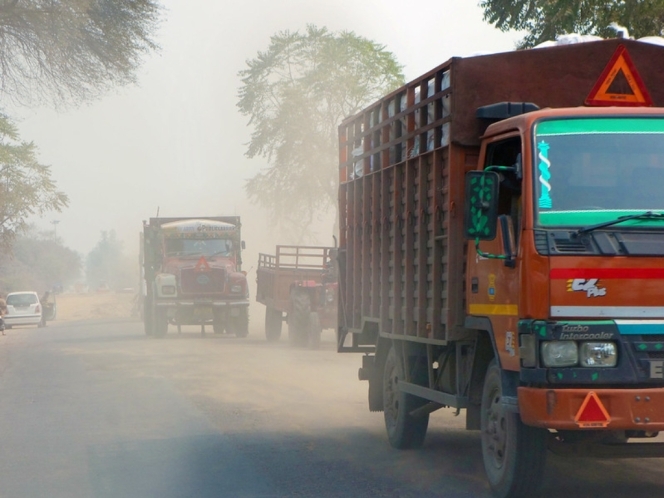
Truck rentals across trunk routes held firm in August, supported by demand ahead of the festive season, according to the Shriram Mobility Bulletin published by Shriram Finance.
The report states that month-on-month rental increases were led by the Mumbai–Kolkata–Mumbai and Bengaluru–Mumbai–Bengaluru corridors, which rose by 2 percent each. The Kolkata–Guwahati–Kolkata route recorded an increase of 1.9 percent, while the Delhi–Kolkata–Delhi route rose by 1.7 percent.
On the other hand, on a year-on-year basis, the Delhi–Kolkata–Delhi route recorded rental growth of 15 percent, followed by Bengaluru–Mumbai–Bengaluru and Kolkata–Guwahati–Kolkata at 11 percent each.
Shriram Finance states that vehicle sales data indicated sequential moderation across multiple categories in August. Commercial tractor and agricultural trailer sales fell by 35 percent MoM, while agricultural tractor sales declined by 27 percent. Sales of maxi cabs, buses and e-rickshaws decreased by 20 percent, 18 percent and 17 percent, respectively. Goods carrier sales dropped by 10 percent, while passenger motor cars and two-wheelers each recorded a 6 percent sequential decline.
In terms of YoY vehicle registrations, the automotive industry maintained growth across categories with the three-wheeler goods vehicles recording a 43 percent growth, maxi cabs by 29 percent and earth-moving equipment rose by 27 percent. Two-wheeler sales increased by 20 percent, goods carriers by 18 percent and passenger cars by 16 percent.
In Kerala, driven by Onam, two-wheeler sales grew by 17.90 percent MoM and 19.09 percent YoY, while four-wheeler sales declined by 3.73 percent MoM, while remaining 9.30 percent higher YoY.
Electric vehicle registrations experienced sequential reductions while expanding on an annual basis. Electric two-wheeler sales declined by 10 percent MoM, electric three-wheelers by 3 percent and electric cars by 13 percent. On a yearly basis, electric three-wheelers sales grew by 98 percent, electric two-wheelers by 90 percent and electric cars by 87 percent.
Fuel consumption patterns showed petrol consumption increasing by 1 percent MoM, while diesel consumption declined by 13 percent. For yearly basis, the same saw a growth of 7.9 percent and 6.4 percent, respectively.
FASTag toll collection volumes grew by 1 percent MoM with value increasing by 0.6 percent, while on yearly basis the same saw a decline by 5 percent, while total value increased by 8 percent.
Sudarshan Holla, Joint MD and COO, Commercial Vehicles, Shriram Finance, said, "The onset of the festive season, led by Onam celebrations in Kerala, has boosted sentiment across the transportation sector. Freight activity remained robust, with truck rentals holding firm on major trunk routes. Consumer demand also strengthened, as evidenced by a notable surge in two-wheeler sales during the festive period. At the same time, transporters are engaging with government authorities to seek relief from the upcoming restriction on BS-IV trucks entering the NCR, scheduled to take effect from November 1."

Comments (0)
ADD COMMENT