

JBM Electric Vehicles Unveils Four New E-buses
- By MT Bureau
- January 18, 2025
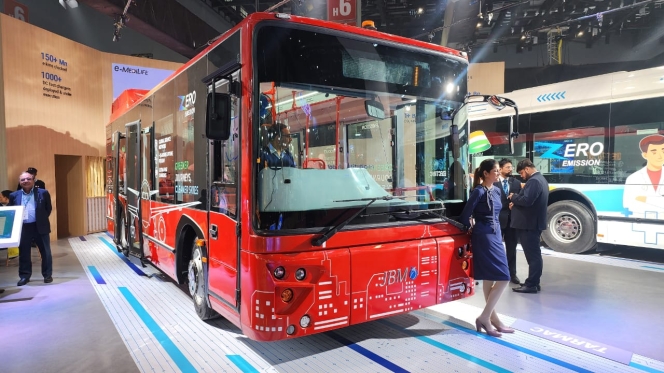
JBM Electric Vehicles showcased four new electric buses at the Bharat Mobility Global Expo 2025. These include the all-new electric luxury coach named Galaxy, the intercity bus called Xpress, a low-floor electric medical mobile unit called e-MediLife and the 9-metre electric tarmac coach called e-SkyLife. The buses were unveiled by Union Minister for Road Transport & Highways Nitin Jairam Gadkari alongside JBM Group Chairman S.K. Arya and others.
The company also showcased JBM E-Verse, an indigenously designed EV ecosystem. It encompasses in-house capabilities in fast charging infrastructure, efficient lithium-ion batteries, power infrastructure and a network that ensures zero downtime. The E-Verse demonstrates the company's commitment to providing end-to-end e-mobility solutions, designed in India for the world. The newly launched electric buses showcase cutting-edge technology, unmatched comfort and safety, and a steadfast commitment to environmental sustainability. In addition, these buses are designed to offer best-in-class total cost of ownership, providing customised solutions to meet diverse needs.
Currently, JBM has deployed over 1,800 electric buses across multiple geographies in India, Europe, the Middle East and Africa. The company has a robust order book of over 10,000 electric buses deployed and under execution. JBM has also set up the world’s largest (outside China) dedicated integrated electric bus manufacturing facility, located in the Delhi-NCR region with an annual production capacity of 20,000 electric buses.
The newly launched electric buses are meticulously designed to provide enhanced safety features, meeting the highest standards through rigorous side-impact and rollover testing. Advanced systems like EBS and ABS, combined with disc brakes, deliver exceptional road control and stability. ADAS (optional) offers unparalleled safety. The battery management system is designed to maintain thermal control, while Automatic Vehicle Location (AVL), surveillance cameras, and Vehicle Tracking Systems (VTS) provide comprehensive supervision and management of the buses. A high-temperature cut-off mechanism for the battery, along with a Fire Detection and Suppression System (FDSS), adds an additional layer of protection. Emergency exit doors and roof hatches are incorporated for uncompromised safety in critical situations. Features such as hill-hold assist, panic buttons, and larger glass panels eliminating blind zones further enhance driver and passenger security.
Speaking at the occasion, JBM Group Vice Chairman Nishant Arya said, "At JBM Electric Vehicles, we believe that the future of green mobility lies in creating vehicles that seamlessly blend innovation, sustainability and user-centric design. Our electric mobility solutions are not just about reducing carbon footprints— they are about elevating the quality of life for individuals and communities by making transportation smarter, safer, and more accessible. As we showcase our latest electric bus fleet at Bharat Mobility Global Expo 2025, we are excited to present vehicles that address diverse mobility needs, from luxury inter-city travel to doorstep healthcare services and greener tarmac transport services. These innovations underline our unwavering commitment to shaping a cleaner and more connected future for public transportation."
Eicher Trucks And Buses Launches AI-Powered Uptime NXT Services
- By MT Bureau
- October 13, 2026
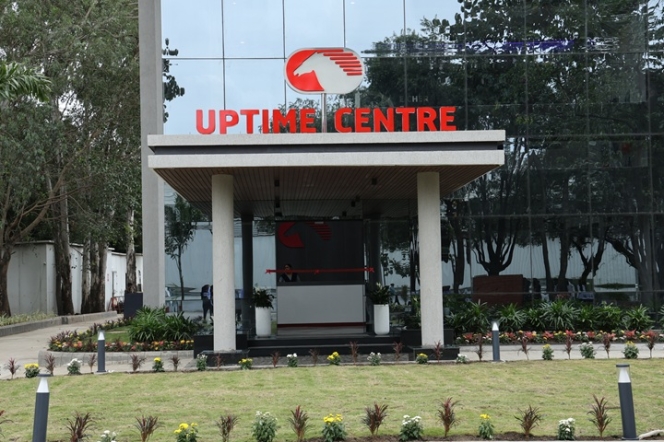
Eicher Trucks & Buses, a division of VE Commercial Vehicles, has introduced Uptime NXT Services supported by an AI-enabled (artificial intelligence) Uptime Centre. The initiative expands the company's aftermarket service ecosystem through connected vehicle data, predictive analytics and service support infrastructure to manage fleet operations.
The Uptime Centre functions as an operational hub connecting transport operators, technicians and engineering teams. Services delivered through the platform include fuel management advisory, driver performance scorecards, vehicle operation insights, remote immobiliser controls and proactive maintenance alerts.
The system integrates with the My Eicher application, which currently connects over 460,000 commercial vehicles across 200,000 fleet accounts to provide real-time vehicle tracking, trip tracking and maintenance monitoring.
B. Srinivas, MD and CEO, VE Commercial Vehicles, said, "For our customers, uptime directly impacts productivity, profitability and business continuity. At Eicher, our vision has therefore been to create an ecosystem that helps keep vehicles operating at their best - everyday. By bringing together connected technology, predictive insights, a responsive service network and strong aftermarket support, we are moving towards a more proactive approach to uptime — one that anticipates customer needs, minimises disruptions and enables customers to run their businesses with greater confidence and predictability. Our ambition is to make uptime a defining part of the Eicher ownership experience."
S S Gill, Chief Commercial Officer, VE Commercial Vehicles, said, "The new Uptime Centre brings together the people, technology and intelligence needed to manage uptime more proactively and at scale. The Uptime Control Tower gives our teams greater visibility across vehicle and service operations, while our Gen AI-powered platform bring actionable intelligence closer to our service teams and technicians. This enables faster diagnosis, better coordination and stronger First-Time-Right performance, helping us reduce disruptions and deliver a more seamless service experience for our customers."
The company first established a centralised Uptime Centre in 2019. The upgraded Uptime NXT architecture introduces an Uptime Control Tower for real-time monitoring of service operations and deploys generative artificial intelligence tools, designated as the Service One platform, to assist dealership technicians with fault diagnostics and repair procedures.
- Ashok Leyland
- Hinduja Group
- Union Bank of India
- Neelakantan
- Alok Kumar
- D S Madhusudhan
- Kapil Pandya
- K M Balaji
- Madhavi Deshmukh
Ashok Leyland Partners Union Bank Of India For Commercial Vehicle Financing
- By MT Bureau
- October 13, 2026
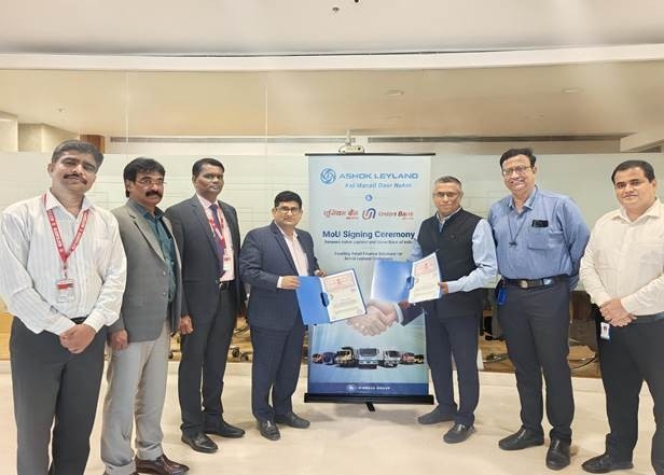
Chennai-headquartered commercial vehicle major Ashok Leyland, the flagship company of the Hinduja Group, has signed a Memorandum of Understanding with Union Bank of India to establish a vehicle financing agreement for purchasers of its commercial vehicles.
The agreement was signed by Neelakantan, Vice-President of Finance at Ashok Leyland and Alok Kumar, General Manager and Zonal Head at Union Bank of India, in the presence of D S Madhusudhan, Head of Sales Finance and Kapil Pandya, Head of Retail and Inventory Finance for Light Commercial Vehicles at Ashok Leyland.
As per the arrangement, Union Bank of India will provide end-to-end vehicle loans with structured repayment schedules across Ashok Leyland's line-up of trucks and buses.
K M Balaji, Whole-Time Director and CFO, Ashok Leyland, said, "Ashok Leyland is delighted to partner with Union Bank of India (UBI) to offer attractive and accessible financing solutions to our customers. This strategic partnership leveraging on UBI Network will further strengthen our market presence by enhancing access to our innovative range of commercial vehicles for businesses across the country. Built on advanced technology and engineered to deliver industry-leading total cost of ownership, our products are designed to drive greater efficiency, productivity and profitability for our customers."
Madhavi Deshmukh, Senior Vice-President and National Sales Head for Medium and Heavy Commercial Vehicles, Ashok Leyland, said, "At Ashok Leyland, we are committed to enabling our customers' growth through innovative products and seamless ownership experience. Our partnership with Union Bank of India (UBI) is a significant step towards making our industry-leading commercial vehicles more accessible with attractive and convenient financing solutions. Together, we aim to empower fleet operators and businesses with greater financial flexibility, while delivering superior value through our technologically advanced products and best-in-class total cost of ownership."
Alok Kumar, General Manager and Zonal Head, Union Bank of India, said, "Union Bank of India is pleased to partner with Ashok Leyland to offer seamless vehicle financing solutions. This collaboration underscores our commitment to enabling businesses with accessible and tailored financial solutions that simplify commercial vehicle ownership and facilitate sustainable growth. By enhancing access to convenient and customer-centric financing solutions, we aim to make vehicle ownership more seamless and accessible, while empowering our customers to strengthen their businesses and pursue new growth opportunities."
The partnership utilises Union Bank of India's national branch network to improve credit flow for transport operators, fleet owners and commercial enterprises acquiring vehicles ranging from light commercial models to heavy-duty trucks and passenger buses.
DRIVN And Purple Bus Expand Fleet Partnership To 276 Electric Intercity Coaches
- By MT Bureau
- October 12, 2026
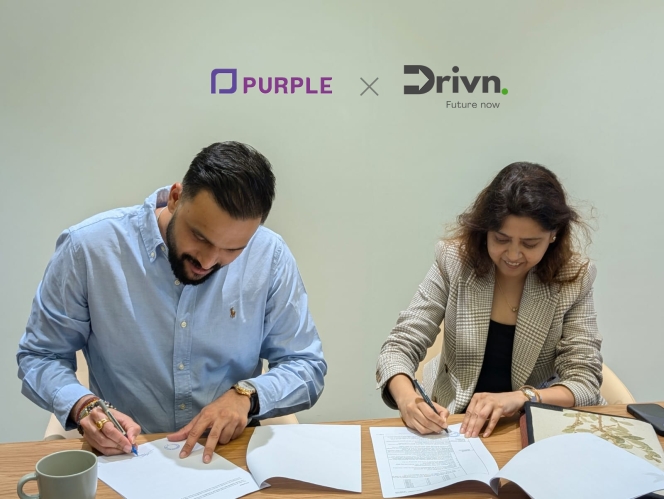
Electric commercial vehicle leasing platform DRIVN and private intercity bus operator Prasanna Purple Mobility Solutions, operating as Purple Bus, have expanded their electric fleet agreement to 276 buses.
The agreement increases the initial commitment of 100 electric buses, utilising an operating lease model and fleet management software.
The initial deployment covered intercity routes in Western and Southern India, including the Mumbai–Pune, Bengaluru–Chennai and Hyderabad–Vijayawada corridors. The expanded fleet under the Letter of Intent will cover additional routes, including Nagpur–Chandrapur, Nagpur–Amravati and Bengaluru–Tirupati.
DRIVN will supply asset financing, leasing, charging infrastructure management, real-time battery diagnostics and route performance analytics to support the deployment.
Alpna Jain, Co-Founder and Chief Business Officer, DRIVN, said, "Expanding our partnership with Purple Bus marks an important milestone for us at DRIVN. Increasing the initial agreement from 100 buses to a commitment of 276 reflects the strength of the relationship we have built with the team. Our focus is to simplify the transition to electric commercial vehicles by bringing together the financing, vehicles and tech capabilities operators need to run their fleets effectively. We look forward to continuing our work with Purple Bus as its requirements evolve."
Saurabh P Patwardhan, Director, Purple Bus, said, "Our experience with the initial deployment has reinforced a key learning: scaling electric mobility requires not only putting more electric buses on the road, but also building the right ecosystem around them. A nearly three-fold growth in the commitment from our partner reflects our confidence in that approach and our intention is to make electric mobility a larger part of our operations. DRIVN combines operational expertise with a strong technology platform, using real-time data and insights across routes, vehicles and fleet performance to support smarter deployment. We believe this combination will be critical to scaling electric intercity mobility sustainably and efficiently."
The partnership combines Purple Bus's route operations with DRIVN's leasing and data infrastructure to support the transition to electric intercity passenger transport in India.
Mahindra Commences Production Of MAXSEEDER Precision Zero-Till Seeding Machine
- By MT Bureau
- October 12, 2026
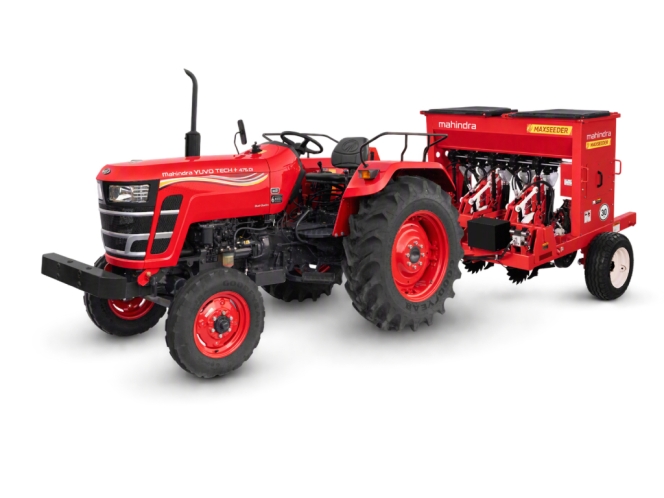
Mumbai-headquartered automotive major Mahindra & Mahindra has commenced commercial production and supply of the MAXSEEDER, a precision zero-till, multi-crop seeding machine manufactured under licence from Canadian firm Clean Seed Technologies.
Built at Mahindra's farm machinery plant in Pithampur, Madhya Pradesh, the machinery will launch initially through dealerships in Punjab and Haryana before expanding to other domestic and international agricultural markets.
The MAXSEEDER operates as a tractor-trailed unit compatible with tractors rated at 35 horsepower and above. Engineered for multi-crop seeding across wheat, rice, soybean, maize and cotton, the machine enables direct sowing into paddy residue to eliminate stubble burning.
It features five independent row units with adjustable spacing, multiple metering options and an Electronic Control Unit controlled via a smartphone application to regulate seed and fertiliser dispensing. The unit places urea approximately 1.5 inches below the seed line to improve nutrient uptake and lower input consumption.
Field trials conducted in Punjab and Haryana demonstrated the machine's ability to operate in heavy crop residue with minimal soil disturbance, reducing fuel, labour, and field preparation requirements ahead of planting cycles.
Veejay Nakra, President of the Farm Equipment Business at Mahindra & Mahindra, said, "Mahindra is proud to partner with Clean Seed to deliver sustainable, mechanisation solutions to farmers world over. The patented and innovative ‘zero-till’, multi-crop seeding machine – the MaxSeeder, combined with Mahindra’s world-class manufacturing, ensures benefits for both farmers and the environment. The collaboration also underscores Clean Seed’s confidence in Mahindra’s capabilities and our shared commitment to advancing access to modern farm machinery globally and in India, while showcasing Indian manufacturing excellence on the world stage."
Graeme Lempriere, Chairman and Chief Executive Officer of Clean Seed Capital Group, said, "Seeing our SMART Seeder MINI-MAX enter production at Mahindra is a proud milestone and a testament to years of innovation, collaboration and belief in our vision of delivering sustainable seeding and planting solutions for farmers in India and around the world. I am deeply impressed by Mahindra's scale and manufacturing capabilities and inspired by the commitment and passion the Mahindra team has brought to this project."

Comments (0)
ADD COMMENT