

NueGo Integrates ADAS Tech Across Its E-Bus Fleet
- By MT Bureau
- April 15, 2025

NueGo, a leading intercity electric bus brand by GreenCell Mobility in the country, has announced that it has integrated Advanced Driver Assistance Systems (ADAS) technology across its entire electric bus fleet consisting of over 275 e-buses.
The company began its operations in 2022 and focusses on providing clean mobility solutions along with integrating various industry-first technology in its fleet.
The strategic move will see NueGo e-buses come with Automated Emergency Braking (AEB), Electronic Stability Control (ESC) and Driver Drowsiness Detection.
In addition, the company has already mandated driver breath analyser test, reserved ‘PINK’ seats for women, real-time GPS tracking, AI-powered driver monitoring system, rigorous safety & service training, 24x7 dedicated women’s helpline, high-definition CCTV surveillance, clean & hygienic mid-point stops and 24x7 command control centre to ensure a safer experience for its users.
Devndra Chawla, MD & CEO, GreenCell Mobility, said, “At NueGo, guest safety is deeply embedded in our DNA. We were among the first in the industry to integrate Advanced Driver Assistance Systems (ADAS) across our entire fleet –setting a new benchmark for intercity travel. Our unwavering commitment is to deliver a journey that is comfortable, sustainable, and above all, exceptionally safe”
- EKA Mobility
- Pune
- Nitin Gadkari
- Devendra Fadnavis
- Sudhir Mehta
- Abhay Firodia
- Pinnacle Industries
- e-trucks
- e-buses
- electric vehicles
- bio-ethanol
- alternative fuels
- auto industry
- India
- manufacturing
Indian Auto Industry’s Journey To No. 1 Position And The Need For More CVs
- By Bhushan Mhapralkar
- November 03, 2026
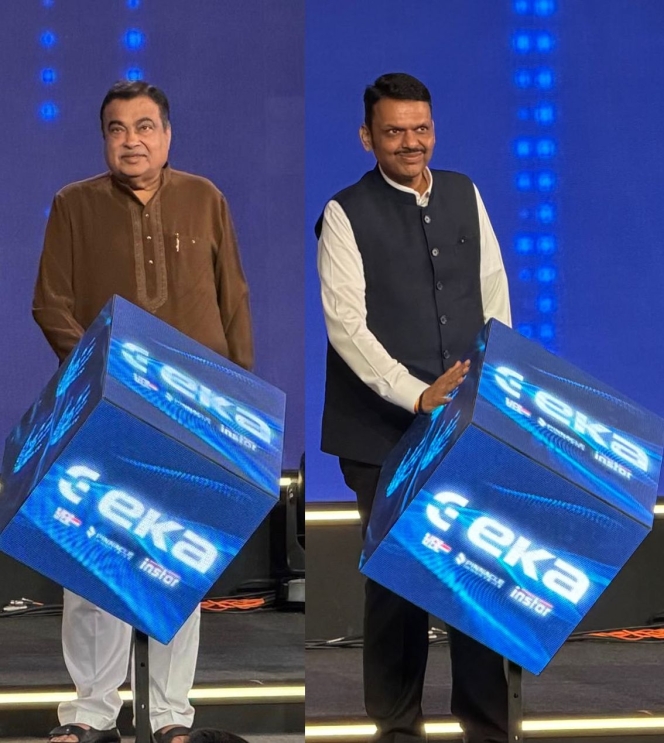
Describing the auto sector as the industrial backbone of India and India as the fastest growing economy in the world, the Union Transport and Highways Minister, Government of India, Nitin Gadkari, mentioned that from the time he assumed office he has been behind Abhay Firodia, Chairman, Force Motors, and Sudhir Mehta, Chairman, EKA Mobility, among others to promote electric mobility.
Stating that there is going to be a demand for 200,000 buses in the next two years in the country whereas the ability to make buses is limited to 60,000, Gadkari said, “I always told Sudhir whenever I met him that even you make as many buses, the demand for them will not be fulfilled.”
Emphasising that the demand of 200,000 buses is just for the domestic market whereas the potential for exports is much more, the union minister averred, “A big challenge the country faces is logistics costs. At 16 percent in comparison to the GDP, it was quite high. The improvement in road infrastructure has brought it down to nine percent as per a study conducted by IIT Madras, IIT Kanpur and IIM Bengaluru. Because of good roads, people are travelling in their personal vehicles more than they would earlier.”
Explaining that the reduction in fuel cost will further reduce logistics costs, the minister informed, “The cost of fossil fuel is very high. The shift from imported fuels to the ones that are procured locally will have a multiplying effect on the economy. The goal should be to make 100 percent indigenous electric vehicles.”
Drawing attention to the lithium-ion deposits been found in Jammu, he reasoned, “At the launch of an electric Mercedes-Benz car in India, the company chief told me that they will make and export electric vehicles from India.” Stating that two-wheeler manufacturers like Bajaj Auto are exporting 50 percent of their produce, Toyota and Suzuki are exporting cars to Japan, Gadkari observed, “Much progress will be made by the Indian auto industry in the future in areas like bio- and alternative fuels in its journey to the number one position in the world.” “Whatever I have said until now has proved correct,” he added.
Stating that pollution caused by fossil fuel vehicles has reduced human lifespan, the union transport and highways minister cited, “The auto industry is doing good on the innovation and research front. The start ups are doing a good job. The future of this sector looks very bright. Despite increasing their capacity to 100,000 units, manufacturers like EKA Mobility are going to experience a shortfall.”
Explaining that it has decided to increase the GCW of 60-tonne truck to 65-tonne to compensate for the five-tonnes battery weight, the union minister said, “Surpassing Japan, the Indian auto industry has become the world’s third largest with an increase in size from INR 15 trillion to INR 22 trillion.” Stating that he has had the good fortune of flagging off India’s first electric two-wheeler, three-wheeler, car and commercial vehicle, Gadkari, in his address at the EKA Mobility event in Pune, affirmed that the growth of the Indian auto industry will catapult it to the world’s number one position.
Describing the industry as the one that provides the most GST to the government and about 45 million jobs, the minister said, “India would have become truly ‘atmanirbhar’ when the auto industry will reach the number one position.” “I have been promoting bio- and alternative fuels since 2004 as the country with 22 lakh crore fossil fuel powered vehicles is the world’s third largest importer of crude,” he added.
Stating that there is a need to cut down crude import dependence by promoting ethanol, methanol and other alternative fuels, Gadkari informed, “India has received an order to export 500,000 tonnes of hydrogen.” “I use a Toyota hydrogen car to underline that it is possible to run vehicles on hydrogen fuel,” he added.
Referring to the reductio in lithium-ion battery prices over the last few years, the minister commented, “When I first flagged off an electric car in Delhi’s Taj Hotel, I was asked a question: What happens if it breaks down and who will push it to safety?” “The grow of electric vehicles in the country is limited by the supply constraint,” he added.
Urging Maharashtra Chief Minister, Devendra Fadnavis, who was also present at the event, to improve roadside amenities in the state, Gadkari said, “Please make the per unit charging rate during the day INR five. The State of Maharashtra is a progressive state and it should make electric vehicles more beneficial to its users in order to lower pollution.” “Hydrogen trucks have been launched in India. Flex-fuel vehicles will be launched soon and run on 100 percent bio-ethanol. The auto industry, I am confident, will travel on the path to indigenous fuels making for a true ‘atmanirbhar Bharat’ that is also a USD five trillion economy,” he added.
Making room for 50,000 e-buses in next three years
In response to Gadkari’s call for improving roadside amenities and reducing the per unit rate of electricity for electric vehicle users, Fadnavis informed that the State of Maharashtra needs approximately 50,000 electric buses over the next three to four years to meet growing demand for public transport electrification. “Of these, 10,000 buses are earmarked for Mumbai's civic body, 30,000 for the Maharashtra State Road Transport Corporation (MSRTC), and additional units for cities that include Pune and Nagpur,” he outlined.
Urging manufacturers to expand production capacity in response to the need, the Chief Minister emphasised, “In partnership with manufacturers like EKA Mobility, statewide highway EV charging network will be developed. The state will facilitate land allocation, statutory permissions, and underlying infrastructure, resolving bottlenecks that manufacturers face independently.”
Tata Motors Crosses 80 Percent Threshold In Iveco Takeover
- By Gaurav Nandi
- October 28, 2026
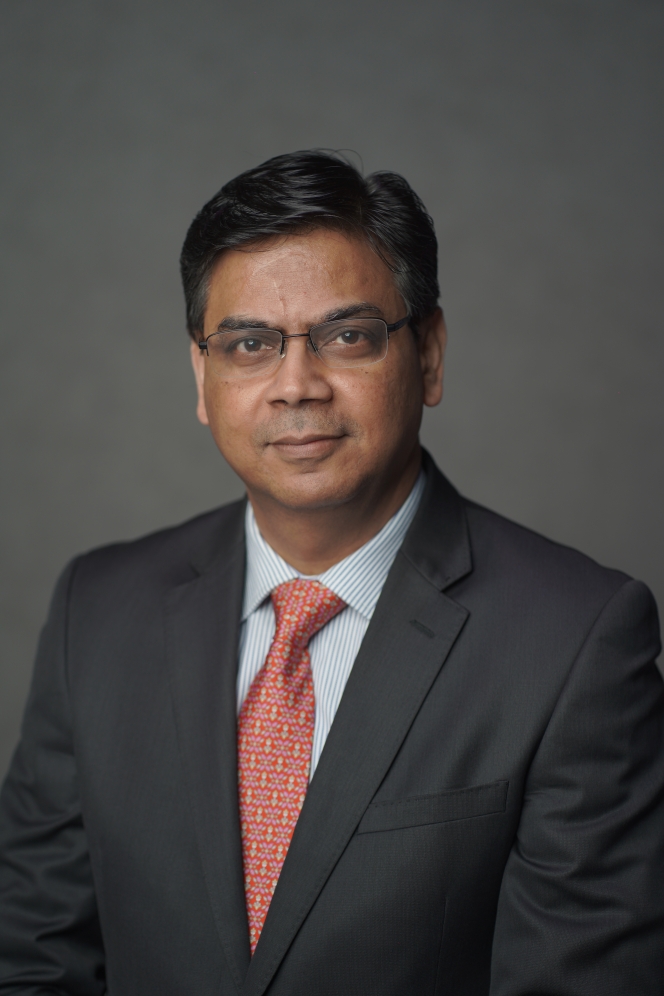
With the revised Euro 14.40-per-share offer securing provisional acceptances covering 87.81 percent of Iveco's common share capital as a key condition for the acquisition, Tata Motors has crossed perhaps the most crucial challenge in the takeover of the Italian commercial vehicle major. As and when the deal reaches finality, the Tata Motors’ subsidiary, TML CV Holdings B.V., would come to hold approximately 89.42 percent of Iveco's common share capital excluding treasury shares.
In a regulatory filing dated October 27, Tata Motors said 238.16 million Iveco common shares had been tendered under the voluntary takeover offer by the October 26 deadline. The shares represent approximately 87.81 percent of Iveco's common share capital covered by the offer.
The provisional results indicate that the revised 80 percent acceptance threshold has been met, subject to confirmation of the results and fulfilment of the remaining offer conditions.
The offer, made through TML CV Holdings B.V., values the tendered shares at approximately Euro 3.43 billion (at the revised price of Eur14.40 per share) including dividends. Tata Motors had initially offered Euro 14.10 per share before increasing the price by Euro 0.30 on 9 October 2026.
The company said the increase was intended to account for a delay of approximately four months in the acquisition process. Tata Motors managing director and chief executive Girish Wagh had described the increase as a goodwill gesture, maintaining that the revised Euro 14.40 offer was the company's best and final proposal.
The latest development follows Tata Motors' confidence expressed during its second-quarter FY27 earnings call that the offer would cross the 80 percent threshold. Management had also said the transaction structure provided a route towards full ownership once the threshold was achieved.
Under the offer timetable disclosed in the filing, payment for shares tendered during the initial acceptance period was scheduled for October 30, subject to the applicable conditions.
The offer period was also scheduled to reopen for five trading days from November 2 to November 6, allowing shareholders who had not tendered their shares during the initial period another opportunity to participate. Payment for shares tendered during this reopened period was scheduled for November 13.
The acquisition covers Iveco's commercial vehicle businesses and excludes its defence business, which is being separated from the group. The transaction is intended to combine Tata Motors' commercial vehicle operations with Iveco's international presence and product portfolio, expanding the Indian manufacturer's reach in global markets.
Export growth
The Iveco transaction was a key topic during Tata Motors' Q2 FY27 earnings call, where management also discussed the company's operating performance and international expansion.
Responding to a question from Motoring Trends on the sustainability of the 177 percent year-on-year increase in commercial vehicle exports during the quarter, Wagh attributed a significant part of the growth to an order secured from Indonesia.
The company expects the Indonesian order to contribute during the current financial year and a substantial part of the following financial year. Management also reported healthy double-digit quarter-on-quarter growth in exports outside Indonesia between the first and second quarters, supported by improvements in sub-Saharan Africa, Nepal and Sri Lanka.
The response indicates that the exceptional year-on-year growth was largely driven by the Indonesian order, although the company also reported an improvement in its other export markets.
The international expansion assumes added significance in the context of the Iveco acquisition, which would broaden Tata Motors' commercial vehicle presence beyond India. However, management did not provide a quantified estimate of the acquisition's future contribution to exports or specify how the combined businesses would affect individual market positions.
Pressure on margins
The management was also questioned about the company's ability to sustain profitability as revenue grew by around 42 percent while EBITDA margins declined by 90 basis points.
Wagh outlined three measures to protect profitability including improving cost efficiencies, particularly in variable costs, controlling expenses and implementing calibrated price increases.
He added that the company was seeking to balance cost recovery with the need to protect demand momentum, while maintaining EBITDA margins above 10 percent in line with its commitment to the market.
The response comes against a backdrop of rising commodity costs, which management said continued to put pressure on the business. Tata Motors has been using a combination of pricing actions and internal cost measures to absorb these increases without fully passing the burden on to customers.
EV profitability
The profitability outlook for electric commercial vehicles, following reported growth of around 2.4 times in electric commercial vehicle volumes during Q2 FY27, was also raised during the call.
Asked when Tata Motors expected its electric truck and bus business to achieve profitability compared with diesel vehicles, Wagh said it evaluates profitability at the individual-model level and was satisfied with the progress of its electric vehicle business.
Rather than providing a specific profitability timeline, he highlighted the company’s focus on pricing, accelerating total cost of ownership parity for customers and offering an integrated ecosystem solution.
The top executive noted that the approach went beyond the vehicle itself to support the transition from internal combustion engine vehicles to electric alternatives. He did not specify when electric commercial vehicles would achieve profitability parity with their diesel counterparts.
Q2 earnings
Wagh said the company had delivered another quarter of strong financial performance supported by disciplined execution, operational agility and a continued focus on profitable growth.
Standalone revenue for the quarter rose 42 percent year-on-year to INR 239.3 billion, the company's highest-ever revenue for a second quarter. EBITDA increased 31 percent to INR 28.06 billion, while the EBITDA margin stood at 11.7 percent, unchanged sequentially but down 90 basis points from a year earlier.
Operating leverage, disciplined pricing actions and cost-efficiency measures partially offset the impact of commodity inflation.
The EBIT margin declined 50 basis points year-on-year to 9.7 percent. Profit before tax and exceptional items increased 51 percent to INR 26.6 billion, while profit after tax rose 310 percent to INR 21.38 billion. The sharp increase in net profit reflected a lower comparison base following an investment impairment recognised in the second quarter of fiscal 2026.
Strong operating performance and working capital management generated free cash flow of INR 46.06 billion during the quarter, taking first-half fiscal 2027 free cash flow to INR 57.21 billion.
Net cash for the domestic business stood at INR 113.48 billion as of September 30, 2026. Return on capital employed in the automotive business remained robust at 65 percent.
Consolidated revenue increased 36 percent year-on-year to INR 253.38 billion in the second quarter of fiscal 2027.
EBIT rose 30 percent to INR 27.7 billion, while the EBITDA margin stood at 10.9 percent, down 40 basis points year-on-year but unchanged sequentially. The consolidated EBIT margin was 8.9 percent, an increase of 20 basis points from a year earlier.
Profit before tax and exceptional items rose 423 percent year-on-year to INR 17.8 billion, while profit after tax increased 244 percent to INR 12.53 billion.
The year-on-year increase in profit reflected a lower comparison base following a higher mark-to-market loss on Tata Capital investments recognised in the second quarter of fiscal 2026.
Tata Motors reported consolidated net cash of INR 158.8 crore as of September 30, 2026.
Tata Motors intends to build on the prevailing demand momentum while ensuring supply readiness, Wagh said.
Commodity costs are expected to remain a headwind. The company plans to mitigate the pressure through cost management, operating efficiencies and calibrated pricing actions.
Its priority remains sustainable, profitable growth and long-term value creation for stakeholders.
Blue Energy Motors Joins PARIVARTAN Scheme To Deploy Electric Heavy-Duty Trucks
- By MT Bureau
- October 23, 2026
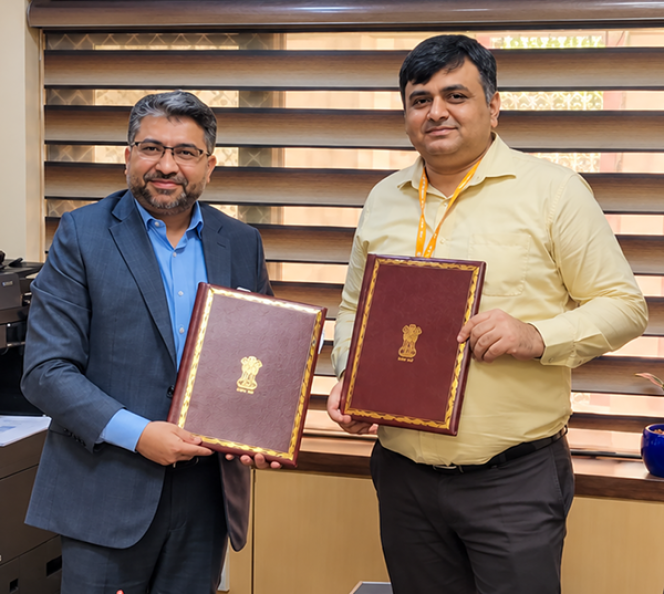
Pune-headquartered alternative commercial vehicle maker Blue Energy Motors has signed a Memorandum of Understanding (MoU) with the Ministry of Road Transport and Highways (MoRTH) under the PARIVARTAN Scheme. The partnership aims to facilitate the replacement of commercial vehicles with electric trucks within the Delhi-National Capital Region.
The initiative supports the transition to freight mobility options by incentivising the replacement of transport units. Blue Energy Motors deploys electric and liquefied natural gas truck platforms across freight routes, accumulating operational distance and reducing emissions.
Anirudh Bhuwalka, Founder & Managing Director, Blue Energy Motors, said, "The PARIVARTAN Scheme is an important step towards accelerating the transition to cleaner freight mobility in India. Our participation reflects Blue Energy Motors’ commitment to supporting the Government’s vision for sustainable transportation and enabling wider adoption of electric heavy-duty trucks. We believe that the right policy support, coupled with advanced technology and a strong domestic manufacturing ecosystem, can play a pivotal role in accelerating India’s transition towards zero-emission freight transportation."
SWITCH Mobility, PURPLE BUS Launch Vidarbha's First Electric Intercity Bus Service On Nagpur–Chandrapur Route
- By MT Bureau
- October 20, 2026
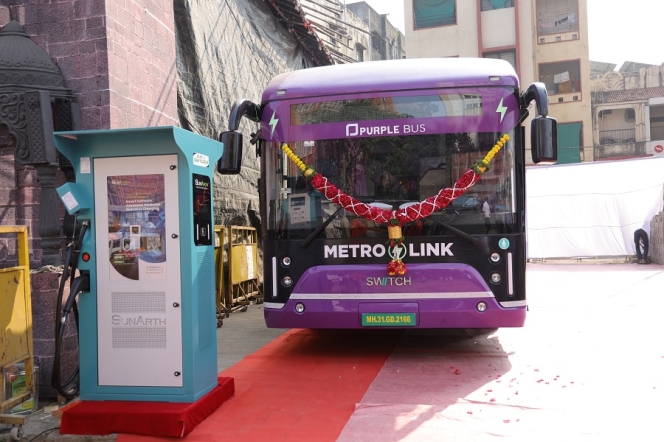
SWITCH Mobility Ltd, a global leader in electric buses and light commercial vehicles and part of the Hinduja Group, has joined forces with intercity operator PURPLE BUS to roll out the region's first electric bus service linking Nagpur and Chandrapur, widening the operator's Vidarbha footprint. Union Minister of Road Transport and Highways Nitin Gadkari oversaw the ceremonial dispatch of the inaugural six units, drawn from a 50-bus EiV12m intercity electric order placed by Purple Bus for deployments across Vidarbha.
Organisers chose Dussehra, a festival traditionally viewed as favourable for fresh ventures, as the launch date, a nod to the manufacturer's continuing push for safe, dependable and sustainable public transport in the region. Travellers between the two cities stand to gain better connectivity along with a safe, comfortable and eco-friendly way to travel.
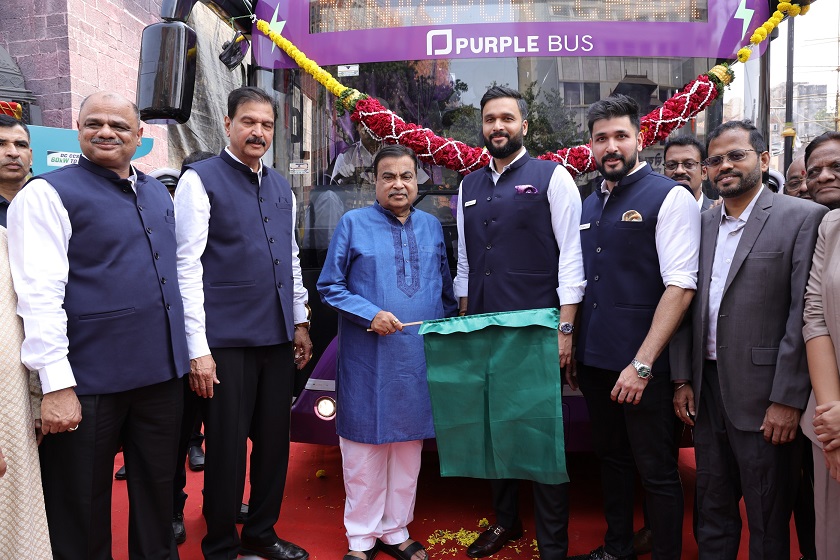
The Nagpur–Chandrapur service is the third intercity project this year between SWITCH Mobility and Prasanna Purple Mobility Solutions, building on electric coach launches along the Mumbai–Pune and Dombivli–Pune corridors in April 2026 and October 2026, respectively. The recurring tie-up points to rising operator confidence in electric buses for high-frequency intercity routes and to SWITCH Mobility's growing part in India's shift towards sustainable intercity travel.
The new route strengthens the partnership with Prasanna Purple Mobility Solutions and furthers the company's wider aim of making zero-emission public transport accessible in Indian cities and towns. Linking key Vidarbha centres, the service is expected to ease daily commutes, boost local economic activity and speed the move towards cleaner intercity mobility. The EiV12m coach, engineered for long-distance journeys, pairs 45 pushback seats and a 350 km per-charge range with fast-charging capability, advanced safety systems, a quiet ride and SWITCH iON connected technology for real-time monitoring.
Ganesh Mani, Chief Executive Officer, SWITCH Mobility, said, “Nagpur and Chandrapur share a close economic and cultural relationship, and strengthening this corridor with our partner Prasanna Purple Mobility Solutions is an important step in our mission to build future-ready public transport across India. Following our deployment on the Mumbai–Pune route earlier this year, we are glad to extend this partnership to Vidarbha and to contribute to the region’s growth by supporting the everyday movement of the people who depend on it. This launch reaffirms our commitment to sustainable, people-first mobility solutions in Maharashtra and beyond.”
Saurabh Patwadhan, Director, PURPLE BUS, said, “At PURPLE BUS, our goal is to make electric the default way people travel between cities, not the exception. We are building that future route by route, from Mumbai–Pune, one of India’s busiest corridors, to Nagpur–Chandrapur, where we now bring Vidarbha its first electric bus service. Our fleet has already covered more than one million kilometres (1,000,000 km) in electric intercity operations, and the data shows what many operators doubted: electric coaches deliver a lower total cost of ownership and a lower cost per passenger-kilometre than diesel. Our partnership with SWITCH Mobility has been central to proving that, and it gives us the confidence to scale sustainable intercity mobility across Maharashtra.”
Comments (0)
ADD COMMENT