

Toyota Kirloskar Motor Supplies Hydrogen Fuel Cell Module To Ashok Leyland
- By MT News
- January 05, 2023

Toyota claims that it continues to focus on the hydrogen technology and promotion of the fuel cell module usage across various sectors to enhance wider adoption and achieve scalability. According to the company, the hydrogen fuel cell module provides energy source to serve various applications which is essentially the key to realise competitiveness and the creation of future sustainable hydrogen society. Further to achieve zero CO2 emissions in more challenging applications, such as trucks and heavy transport, trains, buses, aviation, shipping, forklifts and industrial processes, hydrogen will play an important role. Towards this direction, Toyota Kirloskar Motor (TKM), today, announced the supply of its Fuel Cell Module (one unit) to Ashok Leyland to build fuel-cell commercial vehicle in India for proto examination and feasibility study purpose.
When it comes to hydrogen-based electrified vehicle technology, fuel cell module is the heart which powers the hydrogen electric powertrain. Toyota states that given its strong technological capabilities, it intends to move forward in sure-footed steps to promote and enhance the use of fuel-cell modules in India to develop zero carbon emission vehicles.
As per Toyota, its hydrogen fuel cell-based technology can help enable faster shift away from fossil fuels, promoting renewable energy, achieving energy self-reliance and mitigating carbon emissions. Moreover, given India’s energy mix, its unique consumer profile and needs, infrastructure readiness and the government’s diversified efforts towards becoming ‘Atmanirbhar’ in energy by 2047, Toyota claims that it is advancing mobility solutions with greater agility. This is resulting in introducing and supporting multiple clean technology pathways by joining hands with other stakeholders with mutual interests and the aim to contribute to the nation’s carbon neutral targets.
Commenting on the clean mobility initiative, Sudeep S Dalvi, Senior Vice President and Chief Communication Officer of Toyota Kirloskar Motor, said, “We are extremely happy to supply hydrogen fuel cell module to Ashok Leyland for building fuel cell commercial vehicle for proto examination and feasibility study purpose. Reducing tailpipe emissions and carbon footprint has always been extremely important for us at Toyota, and we are also committed to contribute towards the national target of energy self-reliance. Globally, the energy industry is working on the technological innovations of carbon-neutral fuels, such as hydrogen and biofuels. Through this initiative, we hope to promote a wider use of hydrogen as a fuel which can help to create a hydrogen society in harmony with nature.”
The Government of India announced the National Hydrogen Mission (NHM) in the Union Budget for 2021-2022. NHM has drawn a roadmap for the usage of hydrogen as an energy source. This mission aims to push for the implementation of hydrogen energy that will drive the country in the right direction of making the best out of the renewable energy sector. Aligning with this, Toyota states that it is enhancing its technological strengths to capitalise on the most abundant elements on earth for a better, safer and cleaner alternative fuel option.
Sharing his views, Dr N Saravanan, Chief Technology Officer of Ashok Leyland, said “Ashok Leyland is excited to collaborate with Toyota Kirloskar Motor to bring their globally renowned and proven fuel cell module system to the commercial vehicle sector in India. Ashok Leyland’s track record in bringing innovative and differentiated products, combined with Toyota’s technology leadership in fuel cells, has created a massive opportunity to conduct proto examination and feasibility study towards decarbonising both goods and people transportation.”
The fuel cell electric vehicles use a propulsion system like that of electric vehicles, where energy stored as hydrogen is converted to electricity by the fuel cell. According to Toyota, these FCEV are fuelled with pure hydrogen gas stored in a tank. Similar to conventional internal combustion engine vehicles, FCEVs are equipped with other advanced technologies to increase efficiency, such as regenerative braking systems that capture the energy lost during braking, and store it in a battery.
DRIVN And Purple Bus Expand Fleet Partnership To 276 Electric Intercity Coaches
- By MT Bureau
- October 12, 2026
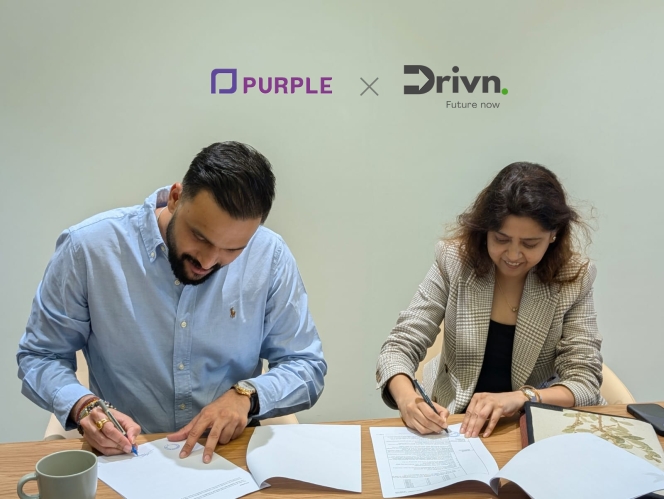
Electric commercial vehicle leasing platform DRIVN and private intercity bus operator Prasanna Purple Mobility Solutions, operating as Purple Bus, have expanded their electric fleet agreement to 276 buses.
The agreement increases the initial commitment of 100 electric buses, utilising an operating lease model and fleet management software.
The initial deployment covered intercity routes in Western and Southern India, including the Mumbai–Pune, Bengaluru–Chennai and Hyderabad–Vijayawada corridors. The expanded fleet under the Letter of Intent will cover additional routes, including Nagpur–Chandrapur, Nagpur–Amravati and Bengaluru–Tirupati.
DRIVN will supply asset financing, leasing, charging infrastructure management, real-time battery diagnostics and route performance analytics to support the deployment.
Alpna Jain, Co-Founder and Chief Business Officer, DRIVN, said, "Expanding our partnership with Purple Bus marks an important milestone for us at DRIVN. Increasing the initial agreement from 100 buses to a commitment of 276 reflects the strength of the relationship we have built with the team. Our focus is to simplify the transition to electric commercial vehicles by bringing together the financing, vehicles and tech capabilities operators need to run their fleets effectively. We look forward to continuing our work with Purple Bus as its requirements evolve."
Saurabh P Patwardhan, Director, Purple Bus, said, "Our experience with the initial deployment has reinforced a key learning: scaling electric mobility requires not only putting more electric buses on the road, but also building the right ecosystem around them. A nearly three-fold growth in the commitment from our partner reflects our confidence in that approach and our intention is to make electric mobility a larger part of our operations. DRIVN combines operational expertise with a strong technology platform, using real-time data and insights across routes, vehicles and fleet performance to support smarter deployment. We believe this combination will be critical to scaling electric intercity mobility sustainably and efficiently."
The partnership combines Purple Bus's route operations with DRIVN's leasing and data infrastructure to support the transition to electric intercity passenger transport in India.
Mahindra Commences Production Of MAXSEEDER Precision Zero-Till Seeding Machine
- By MT Bureau
- October 12, 2026
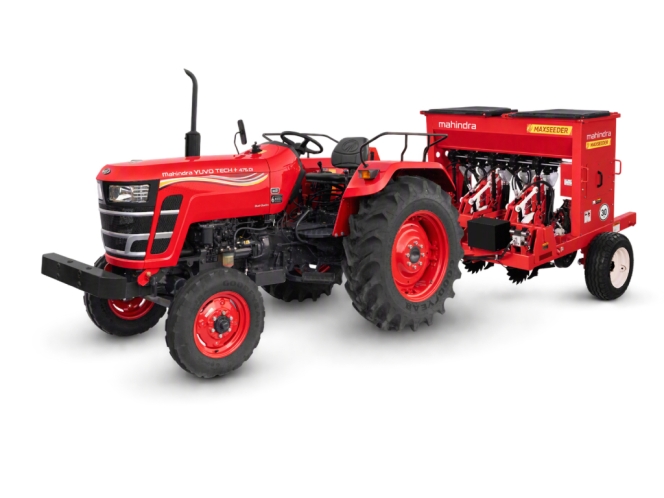
Mumbai-headquartered automotive major Mahindra & Mahindra has commenced commercial production and supply of the MAXSEEDER, a precision zero-till, multi-crop seeding machine manufactured under licence from Canadian firm Clean Seed Technologies.
Built at Mahindra's farm machinery plant in Pithampur, Madhya Pradesh, the machinery will launch initially through dealerships in Punjab and Haryana before expanding to other domestic and international agricultural markets.
The MAXSEEDER operates as a tractor-trailed unit compatible with tractors rated at 35 horsepower and above. Engineered for multi-crop seeding across wheat, rice, soybean, maize and cotton, the machine enables direct sowing into paddy residue to eliminate stubble burning.
It features five independent row units with adjustable spacing, multiple metering options and an Electronic Control Unit controlled via a smartphone application to regulate seed and fertiliser dispensing. The unit places urea approximately 1.5 inches below the seed line to improve nutrient uptake and lower input consumption.
Field trials conducted in Punjab and Haryana demonstrated the machine's ability to operate in heavy crop residue with minimal soil disturbance, reducing fuel, labour, and field preparation requirements ahead of planting cycles.
Veejay Nakra, President of the Farm Equipment Business at Mahindra & Mahindra, said, "Mahindra is proud to partner with Clean Seed to deliver sustainable, mechanisation solutions to farmers world over. The patented and innovative ‘zero-till’, multi-crop seeding machine – the MaxSeeder, combined with Mahindra’s world-class manufacturing, ensures benefits for both farmers and the environment. The collaboration also underscores Clean Seed’s confidence in Mahindra’s capabilities and our shared commitment to advancing access to modern farm machinery globally and in India, while showcasing Indian manufacturing excellence on the world stage."
Graeme Lempriere, Chairman and Chief Executive Officer of Clean Seed Capital Group, said, "Seeing our SMART Seeder MINI-MAX enter production at Mahindra is a proud milestone and a testament to years of innovation, collaboration and belief in our vision of delivering sustainable seeding and planting solutions for farmers in India and around the world. I am deeply impressed by Mahindra's scale and manufacturing capabilities and inspired by the commitment and passion the Mahindra team has brought to this project."
- Ashok Leyland
- Tamilnad Mercantile Bank
- Neelakantan
- R. Ananda Ganesan
- Salee S Nair
- K M Balaji
- Madhavi Deshmukh
- Salee S Nair
Ashok Leyland Partners Tamilnad Mercantile Bank For Commercial Vehicle Financing
- By MT Bureau
- October 12, 2026
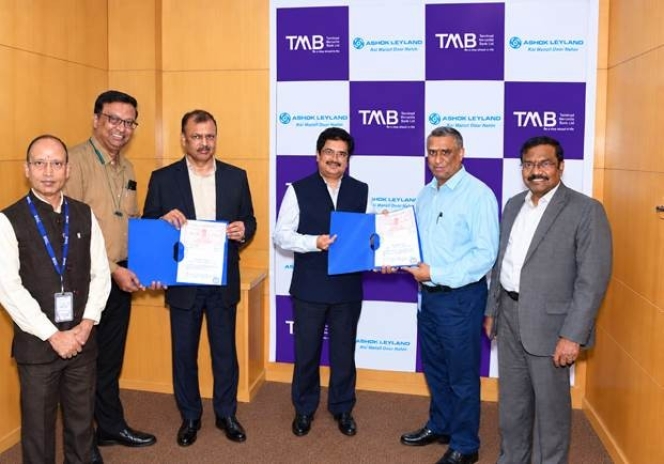
Chennai-headquartered commercial vehicle manufacturer Ashok Leyland, the flagship company of the Hinduja Group, has signed a Memorandum of Understanding with Tamilnad Mercantile Bank to provide financing solutions for purchasers of its trucks and buses.
The agreement was executed by Neelakantan, Vice-President of Finance at Ashok Leyland and R. Ananda Ganesan, Executive Vice-President and Country Head of Credit at Tamilnad Mercantile Bank, in the presence of Salee S Nair, Managing Director and Chief Executive Officer of Tamilnad Mercantile Bank.
Under the partnership, Tamilnad Mercantile Bank will extend end-to-end vehicle loans with structured repayment schedules across Ashok Leyland's range of light, medium and heavy commercial vehicles.
The partnership leverages Tamilnad Mercantile Bank's network of over 600 branches, with coverage across rural, semi-urban and commercial hubs in Tamil Nadu and South India. The initiative aims to increase credit accessibility for transport operators, fleet owners, small and medium enterprises and agricultural businesses purchasing commercial vehicles.
K M Balaji, Whole-Time Director and Chief Financial Officer, Ashok Leyland, said, "We are pleased to partner with Tamilnad Mercantile Bank (TMB) to provide accessible and convenient financing solutions to our customers. Financing plays an important role in enabling customers to invest in commercial vehicles and grow their businesses. This partnership will further strengthen our customer-centric approach by facilitating greater access to finance for customers purchasing Ashok Leyland trucks and buses. We look forward to a meaningful and long-term association with Tamilnad Mercantile Bank (TMB)."
Madhavi Deshmukh, Senior Vice-President and National Head of Sales for Medium and Heavy Commercial Vehicles, Ashok Leyland, said, "Our customers are at the heart of everything we do, and ensuring easy access to financing is an important part of supporting their business journeys. By joining hands with Tamilnad Mercantile Bank (TMB), we are extending another avenue for customers to access timely financing support. The partnership will help improve vehicle penetration across regions and ensure that customers can benefit from faster turnaround times and tailored financing offerings that suit their operational requirements."
Salee S. Nair, MD and CEO, Tamilnad Mercantile Bank, said, "We are delighted to partner with Ashok Leyland, a leading name in India’s commercial vehicle industry. Through this partnership, TMB will offer tailored financing solutions backed by seamless processes and customer-centric service. By leveraging the combined strengths of TMB's robust banking network and Ashok Leyland's extensive market presence, we aim to support business growth and drive greater mobility for transport operators and fleet owners."
Truck Rentals Hold Firm On Festive Dispatches And Core Sector Expansion
- By MT Bureau
- October 06, 2026
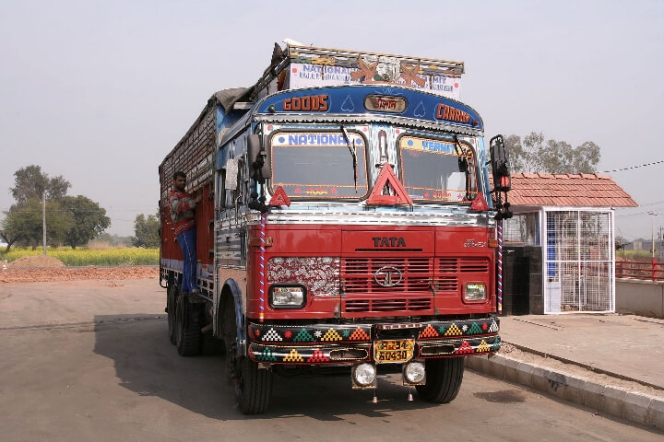
India’s transportation sector recorded growth across vehicle categories in September 2026, driven by festive dispatches and core sector demand, according to the Shriram Mobility Bulletin.
Truck rentals remained stable across key trunk routes, remaining above levels recorded during the same period in the previous year.
The company finds that on a MoM basis, rentals on the Bengaluru–Mumbai–Bengaluru route grew by 1.3 percent, followed by the Delhi–Mumbai–Delhi route at 1.1 percent and the Delhi–Hyderabad–Delhi route at 1 percent.
The YoY perspective showed increases on all monitored routes, led by Delhi–Kolkata–Delhi at 13 percent, Bengaluru–Mumbai–Bengaluru at 11 percent and Kolkata–Guwahati–Kolkata at 10 percent.
Vehicle dispatches reflected sequential expansion in core industries. Construction equipment sales rose 31 percent MoM, earth-moving equipment increased 17 percent and goods carriers grew 13 percent. Passenger cars and two-wheelers each recorded a 4 percent sequential rise, whereas agricultural tractors fell 15 percent and commercial tractors declined 22 percent.
On a YoY basis, maxi cab sales grew 75 percent, three-wheeler goods vehicles rose 63 percent and goods carriers increased 40 percent. Agricultural trailers recorded a year-on-year decline of 27 percent.
Electric vehicle adoption increased across all monitored segments. Electric two-wheelers recorded a 13 percent MoM rise and a 111 percent YoY gain. Electric passenger cars grew 12 percent sequentially and 143 percent YoY, while electric three-wheelers increased 8 percent MoM and 113 percent YoY.
Sudarshan Holla, Joint MD & COO, Commercial Vehicles, Shriram Finance, said, "Firm truck rentals amid festive dispatches, strong two-wheeler demand, accelerating EV adoption, and healthy sales of heavy-duty trucks and construction equipment all point to resilient economic activity. Importantly, the strength seen in commercial vehicles and construction equipment indicates continued momentum in infrastructure and core sectors, reinforcing a positive outlook for the broader economy. Concerns of a potential interest rate increase during the festive season may be a sentiment dampener."
Interestingly, fuel consumption data showed a 2 percent sequential rise in diesel use alongside a 5 percent decline in petrol consumption. On a YoY basis, petrol and diesel consumption increased by 7.2 percent and 4.9 percent, respectively. FASTag collections fell 3.9 percent in volume and 1.2 percent in value MoM, though YoY collection value increased by 11 percent.
Comments (0)
ADD COMMENT