

- Stellantis
- Antonio Filosa
- FaSTLAne 2030
- Jeep
- Ram
- Peugeot
- FIAT
- Chrysler
- Dodge
- Citroen
- Opel
- Alfa Romeo
- DS
- Lancia
- Maserati
- STLA
- Leapmotor International
- Dongfeng
- Tata Motors
- Jaguar Land Rover
Stellantis’ Targets EUR 60 Billion Investment, 60 New Launches By 2030 Under FaSTLane 2030 Strategy
- By MT Bureau
- May 21, 2026
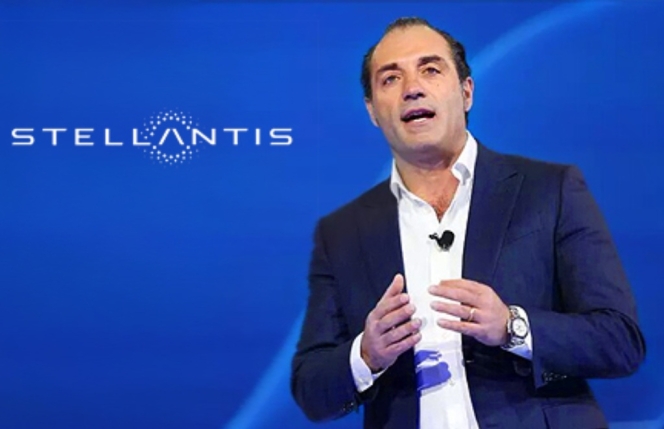
European auto major Stellantis has unveiled its FaSTLAne 2030 strategy, which will see it invest around EUR 60 billion over the course of the next five years.
The aim is to accelerate growth and profit, prioritising customer centrality and capital allocation across its global regions and brands.
Antonio Filosa, CEO, Stellantis, said, “FaSTLAne 2030 is the result of months of disciplined work across the Company and is designed to drive long-term profitable growth. With the customer at the centre of everything we do, the plan will deliver our purpose – ‘to move people with brands and products they love and trust’ – powered by our unique combination of strengths.”
The strategy focuses on an overhaul of the brand portfolio to improve capital efficiency, leading to more than 60 vehicle launches and 50 refreshes by 2030. The company will direct 70 percent of its product investments towards its four global brands – Jeep, Ram, Peugeot and FIAT – and its commercial vehicle unit, Pro One.
Its regional brands, including Chrysler, Dodge, Citroen, Opel and Alfa Romeo, will share global assets, while DS and Lancia will be managed as specialty brands. Maserati will add two vehicles to its lineup.
Filosa noted, “Every brand in Stellantis will play a clear role in delivering our FaSTLAne 2030 commitments.”
Stellantis will allocate over EUR 24 billion to global platforms, powertrains and technologies, including the new STLA One architecture. By 2030, half of its annual volumes will be produced on three global platforms. The company will also deploy its software and autonomous driving architectures – STLA Brain, STLA SmartCockpit, and STLA AutoDrive – starting in 2027.
The plan incorporates new and expanded corporate partnerships to access markets and share manufacturing capacity.
Through Leapmotor International, Stellantis will share capacity at its Madrid and Zaragoza plants in Spain. A joint venture with Dongfeng will produce Peugeot and Jeep models for China, while a European joint venture with Dongfeng will handle distribution and capacity sharing at the Rennes plant in France.
Stellantis is also working with Tata Motors to improve supply chain synergies in the Asia-Pacific, Middle East, Africa and South America regions, and will explore technology collaboration with Jaguar Land Rover in the United States.
Manufacturing capacity utilisation will be adjusted across regions, with European capacity expected to decrease by more than 800,000 units to raise utilisation from 60 percent to 80 percent by 2030. US capacity utilisation is also projected to reach 80 percent by 2030.
To improve execution, Stellantis aims to reduce vehicle development cycles to 24 months and implement a Value Creation Program to cut annual costs by EUR 6 billion by 2028.
“The success of FaSTLAne 2030 is built upon the great talent and strong commitment of our Stellantis team. We will execute as one team, hands-on, to deliver incremental, profitable growth for the benefit of all our stakeholders,” added Filosa.
Regional targets under the plan include 25 percent revenue growth in North America, supported by 11 vehicles. Enlarged Europe targets 15 percent revenue growth, featuring a new generation of electric vehicles built at the Pomigliano d'Arco plant in Italy. South America aims for 10 percent revenue growth via a pickup offensive, while the Middle East and Africa targets 40 percent revenue growth through local manufacturing. The Asia-Pacific region will focus on asset-light growth to support export requirements.
Caterham Confirmed For Built in Britain Zone At London International Motor Show 2027
- By MT Bureau
- October 23, 2026

Caterham has confirmed its participation in the London International Motor Show 2027, with the British manufacturer set to appear in the event's Built in Britain zone at Excel London from 26 to 28 February 2027. The maker of the legendary Seven, produced in Britain since 1973, will display a selection of its cars on stand 1920.
Visitors will have the opportunity to examine one of the purest driving machines available anywhere, with the Seven widely regarded as a definitive British sports car thanks to its light, simple, hand-built construction in Kent and driver-focused engineering. The Built in Britain zone celebrates the designers, engineers and craftspeople sustaining the country's automotive industry, with specialist sports car makers playing a central role.
Though small in scale, these manufacturers wield enormous influence through cars whose character and focus are admired by major global firms and sought after by enthusiasts. The zone offers them a capital stage before a national audience. The show runs alongside Motorsport Expo and Car Culture UK, with one combined ticket covering all three and around 90,000 visitors expected across the weekend. Friday 26 February serves as the press and trade day, running alongside the public opening.
Stephen Maitland-Oxley, Event Director, London International Motor Show, said, “Caterham is exactly the kind of company Built in Britain was created to celebrate. The Seven is a British icon, and the team behind it has spent more than 50 years proving that lightness, ingenuity and sheer driving fun never go out of fashion. Britain's niche sports car makers are a national asset and we are delighted to give them the spotlight they deserve. Having Caterham with us is a wonderful way to set the tone for the zone.”
Trevor Steel, Senior Vice President – Operations, Caterham Cars, said, “ "At its core, the Caterham Seven is engineered to deliver a driving experience that is as pure, enjoyable and rewarding to the driver, as any car on sale today. Since its inception by Colin Chapman nearly 70 years ago, and since becoming a Caterham in 1973, the Seven has always been proudly built here in Britain, and this is heritage we’re always wishing to celebrate. Built in Britain is a natural home for us, and we are looking forward to meeting enthusiasts, owners and a new generation of drivers in London next February.”
GP Petroleums Appoints Shirish Suvagia As Chief Financial Officer
- By MT Bureau
- October 23, 2026

GP Petroleums has appointed Shirish Suvagia as its new Chief Financial Officer and Key Managerial Personnel, effective 15 October 2026.
Suvagia is a Chartered Accountant with over 23 years of experience in corporate finance, treasury, strategic planning, mergers & acquisitions, and debt and equity fundraising.
He holds Bachelor's and Master's degrees in Commerce from the University of Mumbai, an Executive MBA from IIM Indore, a CISA certification from ISACA, and an IFRS certification from the ICAI.
In his role as CFO, Suvagia will manage the company's financial strategy, treasury, business planning, capital allocation, risk management and reporting functions as GP Petroleums expands its IPOL lubricants brand across domestic and international markets.
Ayush Goel, Chairman & Managing Director of GP Petroleums, said, "We are delighted to welcome Suvagia to GP Petroleums. His experience across corporate finance, treasury, fundraising and mergers & acquisitions will be a valuable asset to the Company, particularly as we focus on capital allocation, business expansion and long-term value creation. We look forward to his contribution as we take the company forward. We are confident that his leadership and financial expertise will support the Company in creating sustainable value for all stakeholders."
"I am excited to join GP Petroleums at an important stage of its growth journey. IPOL is a well-established and respected brand with strong market fundamentals and significant opportunities ahead. I look forward to partnering with the Board and leadership team to further strengthen the Company's financial capabilities, support strategic growth initiatives, and drive long-term value creation for stakeholders," said Suvagia.
SAEINDIA to Host Asia Pacific Automotive Engineering Conference In New Delhi
- By MT Bureau
- October 23, 2026
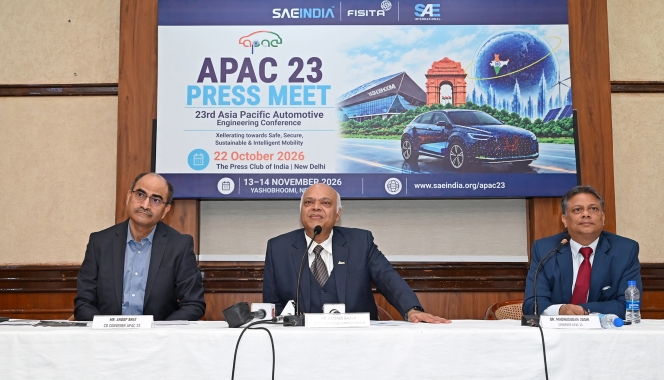
SAEINDIA is set to host the 23rd Asia Pacific Automotive Engineering Conference (APAC 23) from 13 to 14 November 2026 at the Yashobhoomi Convention Centre in New Delhi.
The event, held under the theme ‘Xellerating towards Safe, Secure, Sustainable & Intelligent Mobility,’ returns to India for the second time following a 15-year interval. The conference will convene more than 1,000 delegates and 500 mobility experts representing vehicle manufacturers, component suppliers, technology firms, research organisations and regulatory bodies across 11 countries in the Asia-Pacific region.
The agenda comprises 150 technical presentations and 80 exhibitors covering subject areas such as powertrains, automated driving, cybersecurity, software-defined vehicles, vehicle dynamics, advanced materials and regulatory standards.
The venue features an exposition hall, a technology theatre for product demonstrations, and the TechHive platform designed to connect mobility start-up ventures with industry leaders, technology experts, and investors.
“APAC 23 represents an important opportunity for India to engage with the Asia-Pacific mobility engineering community at a time when our industry is undergoing fundamental transformation. By bringing together industry, academia, researchers, innovators and policymakers, we aim to create meaningful conversations and collaborations that can contribute to safer, smarter and more sustainable mobility,” said Saurabh Dalela, President of SAEINDIA.
Anoop Bhat, Co-Convenor, APAC 23, said, “The scale and diversity of APAC 23 have been designed to create an environment where engineering knowledge, technology innovation and business opportunities come together. From technical presentations and the exposition to TechHive and the Technology Theatre, participants will have multiple opportunities to discover technologies, exchange ideas and build collaborations across the mobility ecosystem.”
Bosch Reorganises German Operations And Mobility Division Into Separate Subsidiaries
- By MT Bureau
- October 23, 2026
Global technology company Bosch has announced a restructuring of its corporate framework in Germany, transferring the activities of its Mobility business sector and central service units into legal entities.
Under the plan, the Mobility division alongside Bosch Digital, Global Business Services and Global Real Estate will operate as wholly-owned limited liability subsidiaries within the Bosch Group from 1 August 2027.
The transition aligns the Mobility sector with the structure already utilised across the group's Industrial Technology, Consumer Goods, and Energy and Building Technology divisions. Following the reorganisation, Robert Bosch GmbH will function primarily as corporate headquarters and central research operations, with approximately 62,500 associate employment contracts in Germany transferring to the subsidiaries.
The Mobility division remains the largest business unit within the group, generating EUR 55.8 billion in sales revenue in 2025, accounting for 60 percent of group sales.
Dr. Christian Fischer, Chairman of the Board of Management, Robert Bosch GmbH, said, "We are operating in an increasingly challenging environment across our markets. New competitors, particularly from Asia, are intensifying the competitive pressure. For us at Bosch the implication is that we need to bring innovations to market even faster, substantially simplify structures and processes, and accelerate our overall pace to keep up. The goal is to sustainably increase the profitability of the Bosch Group as a whole so that we can continue to fund technological breakthroughs from our internal resources. With the planned reorganisation of our corporate structure, we are creating the conditions that will allow each operating unit to unfold its full potential – with greater entrepreneurial freedom, short decision-making paths, and closer customer focus. It will also mean that our internal service units can contribute more significantly to the performance of our operating units, offering competitive and first-class services. One thing is clear: all legal entities will remain an integral part of the Bosch Group, irrespective of their new legal form."
Dr. Markus Heyn, Deputy Chairman of the Board of Management, Robert Bosch GmbH and Chairman of the Mobility business sector, said, "We’re starting from a position of strength. But to defend our lead in the long term, we must consistently realign with new customer requirements, markets, and the competition. Going forward, we’ll be able to take an even more customer-centric approach, act more powerfully as one team, and shape change faster in one of the world’s most demanding industries. Our ambition is to continue setting the pace for the automotive industry. That requires speed, clarity, and business resolve – and we have all three."

Comments (0)
ADD COMMENT