

TVS Motor Co Reports INR 27.11 Billion Net Profit For FY2025
- By MT Bureau
- April 28, 2025
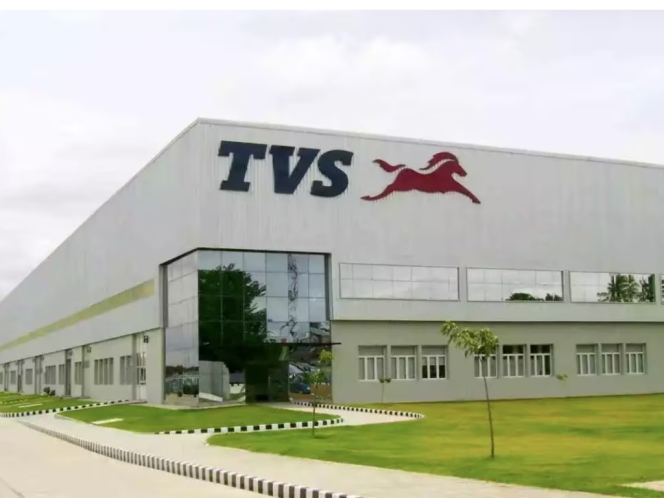
Chennai-headquartered two-wheeler and three-wheeler major TVS Motor Company has announced its financial results for FY2025. The company reported a record revenue of INR 362.51 billion, up 14 percent YoY, as against INR 317.76 billion a year ago.
The operating EBITDA came at 12.3 percent, while the net profit grew by percent at INR 27.11 billion, as against INR 20.83 billion last year.
During the year the company sold a total of 4.74 million vehicles, up 13 percent, as against 4.19 million vehicles last year. This includes 2.19 million motorcycles and 1.90 million scooters, clocking a growth of 10 percent YoY and 21 percent YoY respectively.
Electric vehicles sales grew by 44 percent to 279,000 units, as against 194,000 units last year. Three-wheeler sales came at 135,000 units, as against 146,000 units last year.
- Maruti Suzuki India
- Adobe
- NEXA
- ARENA
- Adobe Experience Platform
- Sunil Kakkar
- Shobhit Mittal
- Tapan Sahoo
Maruti Suzuki India Partners Adobe To Implement Digital Transformation Across Ownership Journey
- By MT Bureau
- October 21, 2026
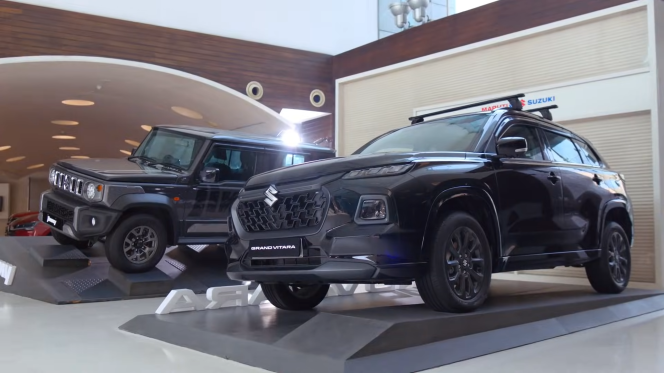
Maruti Suzuki India has partnered with Adobe to modernise its digital ecosystem across marketing, sales, service and vehicle ownership lifecycle touchpoints.
The initiative integrates legacy systems to unify customer profiles and content delivery platforms. The automaker utilises Adobe Experience Manager Sites as a Cloud Service alongside Edge Delivery Services to manage brand web portals, including NEXA and ARENA, achieving reduced page load times and incorporating 3D showroom interfaces.
Additionally, Adobe Experience Platform consolidates customer data to support campaign orchestration, loyalty initiatives and service workflows. The manufacturer is also integrating artificial intelligence capabilities through journey orchestration tools and content optimisation solutions.
Sunil Kakkar, Director of Corporate Planning and Executive Committee Member at Maruti Suzuki India, said, "This collaboration has enabled us to respond to the market shifts very effectively, innovate faster and create a meaningful experience that strengthens our leadership in the quickly evolving digital landscape, so we can deliver superior products with high value while shaping the future of the automotive ecosystem."
Shobhit Mittal, Executive Vice-President of Digital Enterprise, Maruti Suzuki India, said, "One of the biggest challenges during Maruti Suzuki’s website revamp was integrating multiple legacy systems. We had to ensure data consistency and smooth connectivity across platforms while delivering a modern, intuitive interface. Adobe's live “See-to-Believe” proof of concept was a game changer. It allowed us to experience the platform's capabilities in real time, demonstrating how their solutions could handle complex integrations and deliver personalized experience at scale. Adobe's consultative approach, involving global experts, showcased strong commitment for us and assured us that they were the right partner to deliver a seamless, future-ready digital experience."
Tapan Sahoo, Senior Executive Officer of Digital Enterprise, Maruti Suzuki India, said, "Transformation is about people coming together with a shared vision, collaborating across teams and co-creating value for customers."
KUKA Opens Innovation And Technology Development Centre In Mexico
- By MT Bureau
- October 21, 2026
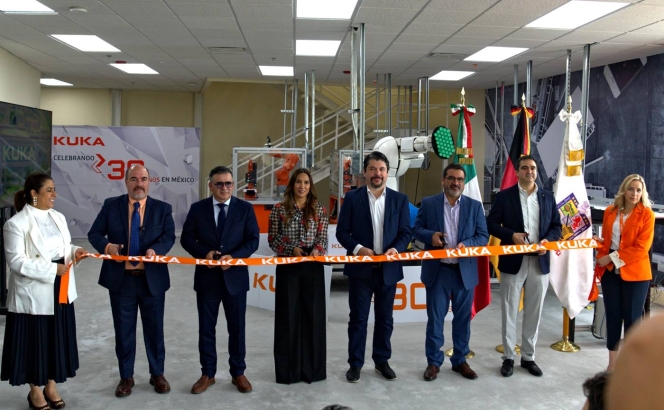
KUKA Mexico has opened its Innovation and Technology Development Centre in Monterrey, expanding operations in Northern Mexico.
The R&D setup is located within the Centre for Innovation, Research and Technology Development at the Universidad Autonoma de Nuevo Leon within the Technological Research and Innovation Park.
Spread across the 500-square-meter facility, it provides automation technologies, training programmes, technical support and product demonstrations for sectors including automotive, intralogistics, electronics and metalworking.
The facility houses educational cells from the KUKA College training initiative, autonomous mobile robots for intralogistics and industrial robots for welding applications.
Through a collaboration with the university, the centre aims to double KUKA Mexico's annual training capacity from approximately 550 engineers to support technicians, students and partners in robotics and automation deployment. The opening coincides with KUKA marking 30 years of operations in Mexico since its establishment in 1996.
Christopher Hernandez Moya, MD, KUKA Mexico, said, "Opening this new facility marks an important step in KUKA Mexico’s continued growth. By establishing a stronger presence in Northern Mexico, we are working more closely with our customers, partners and educational institutions to expand robotic automation training. At the same time, we are providing greater access to KUKA technologies, services and technical expertise. We are excited to continue supporting the development of automation and manufacturing talent in the region."
Hyundai Motor India Inaugurates New Pune Manufacturing Plant
- By MT Bureau
- October 14, 2026
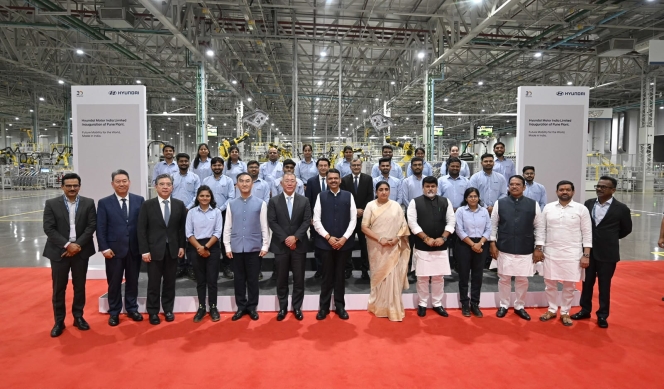
Hyundai Motor India, one of the leading passenger vehicle manufacturers, has formally inaugurated its manufacturing plant in Talegaon, Pune.
The Chief Minister of Maharashtra Devendra Fadnavis, accompanied by Hyundai Motor Group Executive Chair Euisun Chung and Hyundai Motor India Managing Director and Chief Executive Officer Tarun Garg inaugurated the new facility.
The plant operates with an installed annual production capacity of 170,000 units, which the company plans to scale to 320,000 units by 2030 through a phased investment of up to INR 110 billion.
Combined with Hyundai's Chennai facility, total manufacturing capacity in India for the company will reach approximately 1.14 million units annually by 2030. The Talegaon facility incorporates artificial intelligence (AI) quality control systems, automated assembly platforms and an engine plant producing 150,000 units per year. To support plant operations, 55 supplier partners have invested nearly INR 46 billion in the state.
"The inauguration of Hyundai Motor India's Pune plant and the company's achievement of 4 million cumulative passenger vehicle exports reflect India's growing strength as a global automotive manufacturing hub. Hyundai's continued investments in advanced manufacturing technologies, innovation, localization and skill development will contribute significantly to economic growth, employment generation and development of a robust automotive ecosystem in Maharashtra. We welcome Hyundai's long-term commitment to the state and the nation. The Government of Maharashtra shall extend our full support to Hyundai's future growth journey," said Devendra Fadnavis.
Euisun Chung said, "India remains one of Hyundai's most important and strategic markets globally. The inauguration of the Pune plant reflects our long-term commitment to India's growth and our confidence in its bright future. HMIL’s milestone of 4 million cumulative vehicle exports demonstrates the global competitiveness of Indian manufacturing and highlights India's growing role within Hyundai Motor Group's worldwide operations."
Tarun Garg, MD and CEO, Hyundai Motor India, said, "The inauguration of our Pune plant marks the beginning of HMIL’s next chapter of growth in India. We will invest INR 110 billion in phases at this facility. Beyond expanding manufacturing capacity, the facility will drive industrial development, innovation and employment generation in the region. Supporting this vision is a strong regional supplier ecosystem, with 55 supplier partners having already invested nearly INR 46 billion in the state. Together with tier-II vendors, the ecosystem has created more than 18,000 employment opportunities in Maharashtra, reinforcing the region’s emergence as a key automotive manufacturing hub. As we celebrate 30 years in India, we remain committed to creating long-term value for our customers, partners and communities. We sincerely thank the Government of Maharashtra, under the leadership of Chief Minister Devendra Fadnavis and the Government of India, for fostering a progressive ecosystem that continues to strengthen manufacturing, investment and economic growth in India."
The ceremony also marked Hyundai Motor India's milestone of 4 million cumulative passenger vehicle exports from India since 1999, alongside domestic sales approaching 10 million units. The Venue model produced at the Pune facility will be exported to more than 35 countries as part of the company's global supply chain strategy.
Six Sense Mobility Opens Noida Electronics Plant, Targets INR 5 Billion Revenue
- By MT Bureau
- October 14, 2026
Automotive technology firm Six Sense Mobility has opened its first manufacturing facility in Noida, Uttar Pradesh, following an investment of over INR 150 million. The launch coincides with the company's fourth anniversary and supports a target revenue of INR 5 billion backed by an INR 1.6 billion order book.
The company, supported by IIT Delhi and funded by Piper Serica and investor Ashish Kacholia, currently supplies automotive devices to markets in India and Europe. Six Sense Mobility plans to expand operations into North America and Southeast Asia, while tripling its workforce over the next two years by adding approximately 300 engineering and manufacturing positions.
The new 40,000-square-foot plant features integrated electronics manufacturing and assembly capabilities with an annual installed capacity exceeding one million units. The facility brings hardware development, firmware engineering, software integration and serial assembly under one roof to manufacture connected-vehicle electronics, vehicle-to-everything (V2X) communication devices, radar systems, and advanced driver assistance systems (ADAS).
Sumit Roy, Co-Founder 7 CEO, Six Sense Mobility, said, "Four years ago, we set out to build automotive electronics with full control over the hardware and software. This facility gives us the capacity to support larger customer programmes and take technologies like V2X from the lab into vehicles at scale. Designing and manufacturing them here in India is our contribution to Make in India and the journey toward Viksit Bharat".




Comments (0)
ADD COMMENT