

Automotive Transformation Group Launched To Cater To Global Online Car Sales
- By MT Bureau
- July 13, 2021

Automotive Transformation Group (ATG) has been launched as the new entity and brand name of the recent merger between leading automotive suppliers Autofutura and GForces.
Created to revolutionise the entire vehicle sales process, the new group offers the industry’s first market-ready, global and scalable solution for consistent, automated vehicle cycle management optimisation. It will enable billions of pounds in online sales and efficiencies across the global automotive industry.
In an industry first, by integrating the data, products, services and technology across its portfolio, the company will connect car makers, financiers, dealers and consumers in the most efficient way possible, simplifying the customer journey and improving customer retention.
The commercial gains on offer are vast. Based on the 77 million new cars sold across the globe in 2020, with a value of USD 2.5 trillion, a one percent shift in e-commerce sales would equate to USD 25 billion in revenue. Additionally, the forecast for Europe in 2025 alone is EUR 357 billion.
The new group, led by CEO Christian Erlandson, already handles one transaction every 3.5 minutes (USD 4.25 billion annually) and has a depth of experience and operational scale in the industry. From its three UK offices, including its headquarters, and offices in Australia, Canada, Dubai, Germany, Vietnam and the USA, the company serves more than 20 car manufacturers in over 10,000 locations across 96 countries.
Commercially, ATG’s two brands, Autofutura and GForces, will continue to successfully manage their customers independently. However, the Group will naturally be offering the full breadth of its combined product and service portfolio to all of its current and future customers.
David Riemenschneider, Chairman, ATG, said, “The Automotive market, which is one of the largest in the world, has lagged other sectors in terms of the speed of transition to online sales, but that is changing rapidly. Until now, the cost and complexity of integrating each element of an online and offline experience into a brand-consistent omnichannel one has prevented it from being delivered at scale. The Automotive Transformation Group aims to change that. By joining up the dots, we will enable car manufacturers, financiers and retailers to unlock the huge potential and efficiencies in today’s sales process and overall value chain. And now is the time to act.”
Christian Erlandson, CEO, ATG, added, “Since we announced the merger between Autofutura and GForces, we have been engaged in strategic discussions with some of the biggest players in the industry. This demonstrates just how dynamic the automotive industry is and how fast it is shifting towards digitalisation. We offer something truly unique. By connecting vehicles and consumers, serving the right offer, at the right time, to the right customer and then facilitating the seamless transition from one vehicle to another, we are streamlining the customer journey, right from the first transaction.” (MT)
- BMW India
- BMW Motorrad India
- Nurburgring
- BMW M2 Coupé
- BMW M3 Sedan
- BMW M4 Coupé
- BMW M5 Sedan
- BMW M5 Touring
- BMW M 1000 R
BMW And BMW Motorrad Introduce 100 Jahre Nurburgring Limited Edition Vehicles In India
- By MT Bureau
- October 02, 2026
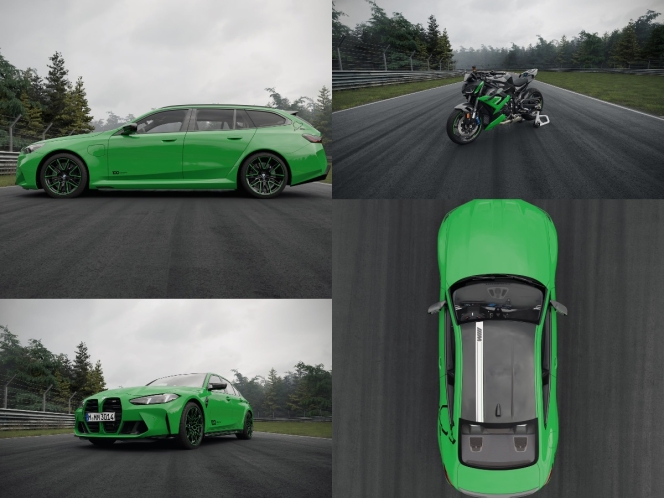
German automotive luxury brand BMW India and BMW Motorrad India have opened pre-orders for the ‘100 Jahre Nurburgring’ edition vehicles to mark the upcoming 100th anniversary of the Nurburgring racetrack in 2027.
The limited collection includes five BMW M car models – the BMW M2 Coupé, BMW M3 Sedan, BMW M4 Coupé, BMW M5 Sedan and the BMW M5 Touring – alongside the BMW M 1000 R motorcycle. The release marks the entry of the BMW M5 Touring into the Indian market.
The edition models feature specific paint finishes in Nurburgring Green and Sapphire Black metallic with green accents, incorporating the ‘100 Years’ logo, Nurburgring since 1927 lettering and the Nurburgring circuit outline.
Exterior details include carbon fibre roofs, model-specific graphics and green wheel accents across select models, while the M5 Touring features a steel roof with custom stripes. Interior specifications across the car lineup include black leather with green and white stitching, door sills, carbon fibre trims, M Carbon bucket seats with individual upholstery, and an M Alcantara steering wheel with a 12 o'clock marker.
The BMW M 1000 R motorcycle features a painted fuel tank with the Nurburgring outline, an airbox cover with ‘one of 100’ numbering, carbon wheels with green accent stripes, an Alcantara seat with embroidered ‘100’ logos and black components for the rear swingarm and frame.
Honda Cars India Sales Decline 19% In September 2026
- By MT Bureau
- October 02, 2026
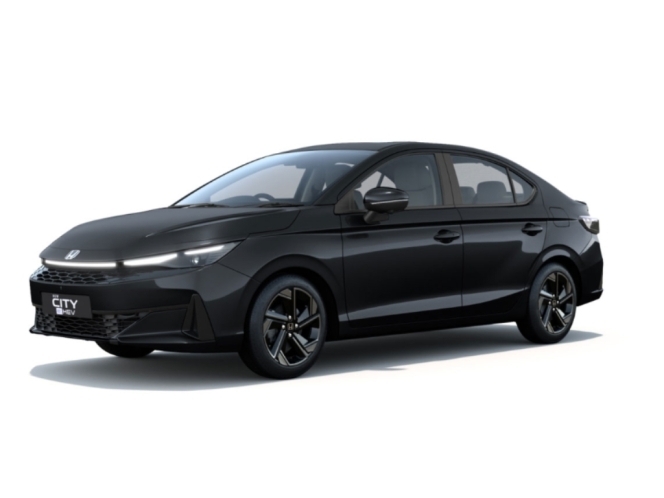
Honda Cars India (HCIL), one of the leading manufacturers of passenger vehicles in the country, has announced its wholesales for September 2026.
The company reported total sales of 6,955 units, down 16 percent YoY, as compared to 8,296 units sold for the same period last year.
In the domestic market, the company sold 4,465 units, down 19 percent YoY, as compared to 5,503 units sold a year ago. On the exports front, the company shipped 2,490 units, down 11 percent YoY, as compared to 2,793 units last year.
Kunal Behl, Vice-President, Marketing & Sales, Honda Cars India, said, We are pleased to see positive sales momentum for the Honda City and Honda Amaze during the month. We are also gearing up for the launch of new Elevate, which will further strengthen our SUV offering with a refreshed and enhanced package. With the festive season underway and an exciting product introduction ahead, we look forward to building stronger momentum in the coming months.”
Kia India Clocks Highest-Ever Monthly Sales Of 32,017 Units In September 2026
- By MT Bureau
- October 01, 2026
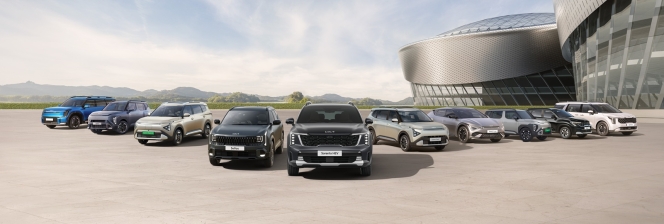
Kia India, one of the leading passenger vehicle manufacturers, has reported its best-ever monthly wholesale performance of 32,017 units in September 2026, representing a 41 percent increase compared to 22,700 units sold last year.
For Q3 of CY2026, the company recorded sales of 89,259 units, reflecting a 38.5 percent growth over 64,443 units for the same period last year.
In terms of YTD (January – September 2026) cumulative sales reached 253,008 units, marking a 22.5 percent increase from 206,582 units reported during the corresponding period in 2025.
Kia India attributed the robust performance to healthy demand across its portfolio incuding Seltos and Sonet models, alongside contributions from the Carens, Carens Clavis, Clavis EV, Syros EV and Sorento, which is offered in diesel and hybrid powertrain options. The company's powertrain options now span petrol, diesel, CNG, hybrid, and electric configurations across its product range.
Atul Sood, Senior Vice-President of Sales and Marketing, Kia India, said, "Our strong performance in September and across the third quarter reflects the continued trust of our customers and the strength of Kia’s evolving portfolio. The Seltos and Sonet continue to be key contributors to our growth, while the strong response to the Sorento and Syros EV reinforces our strategy of expanding into new segments and powertrain categories in line with evolving customer aspirations. As mobility needs become increasingly diverse, we are focused on providing meaningful choice across conventional, CNG, hybrid and electric powertrains, supported by ownership solutions that address real customer needs. We remain committed to building on this momentum through distinctive products, advanced technologies and differentiated experiences designed around the needs of Indian customers."
At present, Kia India operates a retail and service network comprising 915 touchpoints across 425 cities, alongside 137 certified pre-owned outlets across the country.
Toyota Kirloskar Motor Sells 25,027 PVs In September 2026
- By MT Bureau
- October 01, 2026
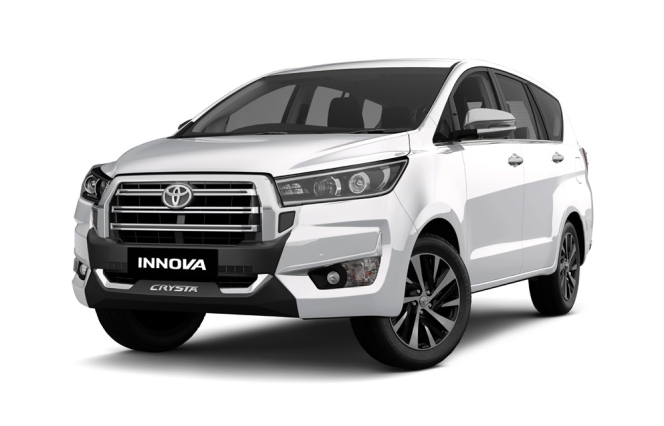
Toyota Kirloskar Motor (TKM), one of the leading passenger vehicle manufacturers, has reported its total wholesales of 28,218 units in September 2026, comprising 25,027 units sold in the domestic market and 3,191 units exported.
For the YTD period (January – September 2026), the automaker reported cumulative total sales of 294,914 units, representing an 8 percent increase compared to 272,824 units sold last year.
Domestic sales for the 9-month period rose 9 percent to 269,619 units, up from 247,081 units in the previous year, while exports reached 25,295 units, compared to 25,743 units a year ago.
Sabari Manohar, Executive Vice-President of Sales-Service-Used Car Business, Toyota Kirloskar Motor, said, "September witnessed continued customer interest across segments, supported by our focus on quality, durability and reliability. As we enter the festive season, we remain committed to strengthening customer engagement and working closely with our dealer partners to deliver enhanced mobility experiences and address evolving customer needs."
Comments (0)
ADD COMMENT