

Citroen C5 Aircross Asks Customers To See Five Attributes
- By T Murrali
- February 15, 2021
By T Murrali
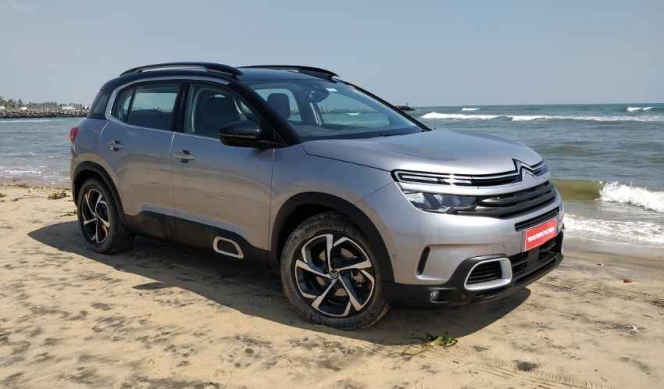
In a few weeks from now, customers in India will have yet another choice of not only a new SUV but also a new brand, though it has been around elsewhere for over a century. The entry of the brand Citroen, now part of Stellantis, is made through C5 Aircross SUV that the company claims to be developed for Indian customers, with comfort as its key philosophy encapsulating the ideas of practicality and versatility to make driving and travel enjoyable.

According to the company, C5 Aircross SUV is introduced in India after rigorous testing of the vehicle for over 2.5 lakh kilometres in different terrains and varied weather conditions across the country. Globally, the brand is illustrated by its unique comfort signature accomplished by five key objectives of the brand’s advanced comfort, illustrated in the new vehicle. These include flying carpet effect - for cushioning the discomfort from road bumps through the progressive hydraulic cushion equipped suspension system, exclusively developed by the vehicle maker.
Comfortable interiors – for a stress-free travel environment the design cocoons the occupants in comfort with acoustic windscreen & front window glasses, advanced comfort seats with memory foam. It offers panoramic life with brighter and airier cabin and panoramic (only in the top-end variant) sunroof. Intuitive Technologies - to simplify life onboard through its offerings including grip control system with multiple drive surface options, blind-spot monitoring system, park assist feature which enables parking of the car with only the brake and accelerator control while the car steers itself. Besides, the engine stop & start function help conserve fuel. It has a 12.3-inch digital driver display, a 8-inch infotainment touchscreen with phone mirroring function. All these are fuelled by the 2.0-litre diesel engine and 8-speed automatic transmission with shift and park by wire control, giving a comfortable drive.
Well, does the car offer all that the manufacturer has promised? To check this out, we took a spin yesterday on a stretch with has the mix of traffic, a reasonable rough-patch and a highway.

Though a host of technologies offers the occupants’ comfort, the prime amongst them is the progressive hydraulic cushions, which is different from the suspension system in other cars in the same segment or below. These specialised suspension systems are primarily used in high-end cars, and the speciality is that, unlike the conventional suspension system having shock absorbers, springs, and mechanical stops, the system offered by Citroen has two progressive hydraulic cushions – one at the top and the other at the bottom – for rebound and compression. While driving on normal surfaces, the shock absorbers and springs control vertical movement without progressive hydraulic cushions. In potholes and rough patches, the shock absorbers and springs work together with the progressive hydraulic cushions. As they are located at both the ends of the vehicle’s suspension travel, they help cushion slow movement more gradually than a conventional mechanical stop. In the conventional system, the absorbed energy is partially returned, giving discomfort to the vehicle’s occupants. In the case of progressive hydraulic cushions, the absorbed energy is dissipated due to dual hydraulic cushions, eventually delivering ‘magic carpet ride’ for the C5 Aircross. Besides, specific design, structural bonding and seats amply the comfort inside the car.
The first impression that the car gives when onboard is the feeling of comfortable seating for the driver and other occupants. A thick, textured foam flown over the high-density foam, at the surface, makes the seat really comfortable. Three separate seats are provided in the rear with individual tracks to move forward and backwards. In addition to seats, clear outside view for the driver that is accentuated by the cut-glass beyond the C-pillar.

The clean dashboard with the infotainment system gives a nostalgic feeling of a component system or deck with turntable, amplifier and cassette player sandwiched between two towers of speakers boxes. There is enough storage in the car – about 36 litres, in addition to 580L boot space; 720L when the rear seats moved forward and 1,630L with the modular rear seats folded away. The boot can be opened by moving your foot under the rear bumper and close with the touch of a button.
Citroen has gone one step ahead in providing even aircon controls in the touchscreen. Though it may be a good innovation to remove cluster of knobs from the dashboard, it may not give the touch and feel of the knob, which does not need the attention of the driver to divert it to control, while is it not the case in the touch screen.
The DNA of an SUV is to take varied and challenging surfaces in its stride. The Citroën C5 Aircross SUV does precisely that with grip control, which provides secure traction in all conditions, through five modes – standard (ESC), snow, all-terrain (mud, damp grass, etc.), sand and traction control off – that you can select instantly using a dial on the centre console. Besides, it has hill descent assist feature.
The exterior looks are different and pleasing, which makes the vehicle a head-turner. The feminish looks may attract many women customers as they would like to be behind an SUV’s wheels.
Though the company claims that the vehicle is meant for India, it was not evident on several fronts:
- Like the other European and American vehicles, the C5 Aircross maintained the turn indicator lever on the left and the wiper on the right.
- The bonnet opening lever is placed near the door hinges of the left-hand side. This is very difficult while entering star hotels and other secured areas as they expect to open the bonnet for security checks. While driving alone, the driver has to either step out and go to the co-passenger side, open the front door, lift the lever or he or she may have to seek others help to open it.
- The vehicle is assembled at the company’s Chennai plant with SKD kits that comprise painted body shells. The kit includes even tyres, seats and battery, that can be easily localised. These will inflate the cost.
Still the new brand - Citroen and its new SUV C5 Aircross can make it in the Indian market provided it is prices aggressively. (MT)
NB: See detailed story in March-April 2021 edition.
- BMW India
- BMW Motorrad India
- Nurburgring
- BMW M2 Coupé
- BMW M3 Sedan
- BMW M4 Coupé
- BMW M5 Sedan
- BMW M5 Touring
- BMW M 1000 R
BMW And BMW Motorrad Introduce 100 Jahre Nurburgring Limited Edition Vehicles In India
- By MT Bureau
- October 02, 2026
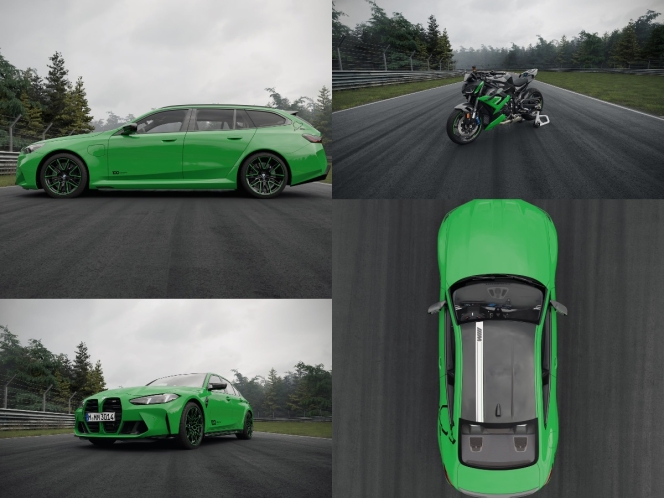
German automotive luxury brand BMW India and BMW Motorrad India have opened pre-orders for the ‘100 Jahre Nurburgring’ edition vehicles to mark the upcoming 100th anniversary of the Nurburgring racetrack in 2027.
The limited collection includes five BMW M car models – the BMW M2 Coupé, BMW M3 Sedan, BMW M4 Coupé, BMW M5 Sedan and the BMW M5 Touring – alongside the BMW M 1000 R motorcycle. The release marks the entry of the BMW M5 Touring into the Indian market.
The edition models feature specific paint finishes in Nurburgring Green and Sapphire Black metallic with green accents, incorporating the ‘100 Years’ logo, Nurburgring since 1927 lettering and the Nurburgring circuit outline.
Exterior details include carbon fibre roofs, model-specific graphics and green wheel accents across select models, while the M5 Touring features a steel roof with custom stripes. Interior specifications across the car lineup include black leather with green and white stitching, door sills, carbon fibre trims, M Carbon bucket seats with individual upholstery, and an M Alcantara steering wheel with a 12 o'clock marker.
The BMW M 1000 R motorcycle features a painted fuel tank with the Nurburgring outline, an airbox cover with ‘one of 100’ numbering, carbon wheels with green accent stripes, an Alcantara seat with embroidered ‘100’ logos and black components for the rear swingarm and frame.
Honda Cars India Sales Decline 19% In September 2026
- By MT Bureau
- October 02, 2026
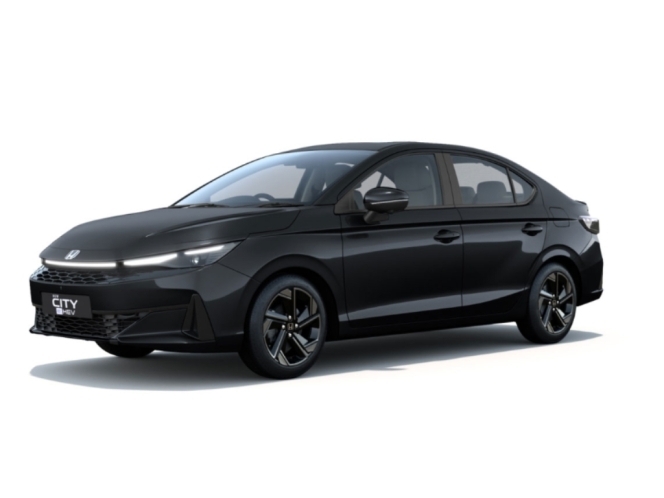
Honda Cars India (HCIL), one of the leading manufacturers of passenger vehicles in the country, has announced its wholesales for September 2026.
The company reported total sales of 6,955 units, down 16 percent YoY, as compared to 8,296 units sold for the same period last year.
In the domestic market, the company sold 4,465 units, down 19 percent YoY, as compared to 5,503 units sold a year ago. On the exports front, the company shipped 2,490 units, down 11 percent YoY, as compared to 2,793 units last year.
Kunal Behl, Vice-President, Marketing & Sales, Honda Cars India, said, We are pleased to see positive sales momentum for the Honda City and Honda Amaze during the month. We are also gearing up for the launch of new Elevate, which will further strengthen our SUV offering with a refreshed and enhanced package. With the festive season underway and an exciting product introduction ahead, we look forward to building stronger momentum in the coming months.”
Kia India Clocks Highest-Ever Monthly Sales Of 32,017 Units In September 2026
- By MT Bureau
- October 01, 2026
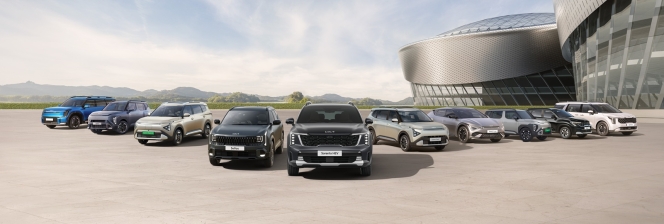
Kia India, one of the leading passenger vehicle manufacturers, has reported its best-ever monthly wholesale performance of 32,017 units in September 2026, representing a 41 percent increase compared to 22,700 units sold last year.
For Q3 of CY2026, the company recorded sales of 89,259 units, reflecting a 38.5 percent growth over 64,443 units for the same period last year.
In terms of YTD (January – September 2026) cumulative sales reached 253,008 units, marking a 22.5 percent increase from 206,582 units reported during the corresponding period in 2025.
Kia India attributed the robust performance to healthy demand across its portfolio incuding Seltos and Sonet models, alongside contributions from the Carens, Carens Clavis, Clavis EV, Syros EV and Sorento, which is offered in diesel and hybrid powertrain options. The company's powertrain options now span petrol, diesel, CNG, hybrid, and electric configurations across its product range.
Atul Sood, Senior Vice-President of Sales and Marketing, Kia India, said, "Our strong performance in September and across the third quarter reflects the continued trust of our customers and the strength of Kia’s evolving portfolio. The Seltos and Sonet continue to be key contributors to our growth, while the strong response to the Sorento and Syros EV reinforces our strategy of expanding into new segments and powertrain categories in line with evolving customer aspirations. As mobility needs become increasingly diverse, we are focused on providing meaningful choice across conventional, CNG, hybrid and electric powertrains, supported by ownership solutions that address real customer needs. We remain committed to building on this momentum through distinctive products, advanced technologies and differentiated experiences designed around the needs of Indian customers."
At present, Kia India operates a retail and service network comprising 915 touchpoints across 425 cities, alongside 137 certified pre-owned outlets across the country.
Toyota Kirloskar Motor Sells 25,027 PVs In September 2026
- By MT Bureau
- October 01, 2026
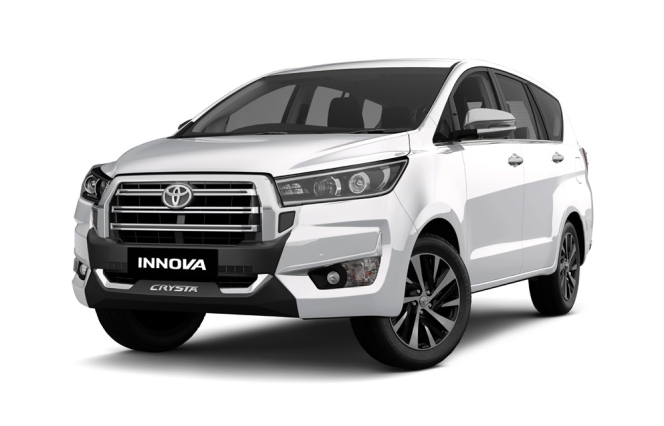
Toyota Kirloskar Motor (TKM), one of the leading passenger vehicle manufacturers, has reported its total wholesales of 28,218 units in September 2026, comprising 25,027 units sold in the domestic market and 3,191 units exported.
For the YTD period (January – September 2026), the automaker reported cumulative total sales of 294,914 units, representing an 8 percent increase compared to 272,824 units sold last year.
Domestic sales for the 9-month period rose 9 percent to 269,619 units, up from 247,081 units in the previous year, while exports reached 25,295 units, compared to 25,743 units a year ago.
Sabari Manohar, Executive Vice-President of Sales-Service-Used Car Business, Toyota Kirloskar Motor, said, "September witnessed continued customer interest across segments, supported by our focus on quality, durability and reliability. As we enter the festive season, we remain committed to strengthening customer engagement and working closely with our dealer partners to deliver enhanced mobility experiences and address evolving customer needs."
Comments (0)
ADD COMMENT