

Citroën India’s Research Reveals Changing Nature & Sources Of Comfort
- By MT Bureau
- January 05, 2021
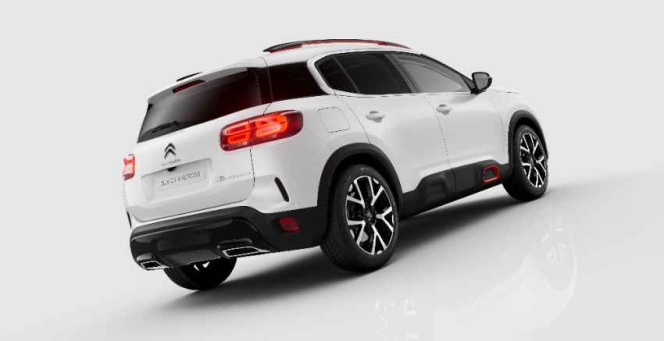
Around 50 percent Indian experience back ache, neck ache and other physical strains, while driving, reveals a research conducted by Citroën India on where and how Indians seek comfort.
Citroën India conducted the research across ten cities in India with total of 1801 respondents from diverse ages and genders.
Citroën India’s ‘Comfortology’ research revealed some fascinating insights to Indians’ comfort levels at varied stages, with larger weightage to mobility. 19% of respondents said their drive to work as ‘the most uncomfortable hour of their day’ because of potholes and jerks, while 29% of respondents admitted that the drive to work is so full of noises and honking from outside, that they can barely concentrate on anything. The research also added that 16% of respondents try to call up their friends and try to catch up; but it is very difficult and uncomfortable because of traffic disturbances.
Citroën India’s ‘Comfortology’ report will be published, in full, in January 2021.
Roland Bouchara, Senior Vice President, Sales & Marketing, Citroën India, highlights the objective and a key finding from the research, “Comfort – or its absence – represents a defining element of the driving experience; it is also a key consideration for road users and vehicle purchasers. This research provides unique insight into how and where Indians seek comfort, with respect to the daily lives, but also with respect to how they travel. Initial findings, for instance, demonstrate the profound impact the pandemic has had on people’s sense and definition of comfort; 25% respondents would have been most comfortable in a private car for short journeys (up to 3km) prior to the pandemic, a figure that has risen to 34% today. Preference for shared/public transport (buses/trains)) has declined from 28% to just 12% in the same period.”
Citroën India’s ‘Comfortology’ research also revealed some fascinating differences between Indians’ comfort levels; nearly a quarter (23%) find working from home (WFM) ‘extremely comfortable’, while a similar proportion (22%) describe it as quite the opposite (‘extremely uncomfortable’).
In terms of gender, women appeared more comfortable managing the demands of work and home life during confinement than their male counterparts; two thirds (66%) of female respondents were ‘comfortable’ or ‘extremely comfortable’ juggling both responsibilities during COVID-19, compared to just 49% of men.
The findings were published in advance of a detailed report examining the changing nature and sources of comfort in India being published by Citroën India.
The company will launch Citroën C5 Aircross SUV soon in India. . Roland Bouchara reinforced the brand’s link and commitment to comfort and explained that comfort – in all its forms – represented a core value of the brand. “Since 1919, Citroën has been at the forefront of automotive comfort, from the revolutionary ‘Moteur Flottant’ [floating engine] to the innovative Suspension with Progressive Hydraulic Cushions. Citroën’s benchmark in comfort is reflected in the Citroën Advanced Comfort programme, aimed at bringing unprecedented comfort to every passenger. For us, comfort is a principal consideration for the entire driving experience. Our designs and features aim to reduce the mental load on the driver, combining clever driver aids with light, spacious cabin formats. All these elements translate into a stress-free travelling environment, innovative solutions and smart technology dedicated to ensuring the well-being of body and mind for all passengers.” (MT)
- BMW India
- BMW Motorrad India
- Nurburgring
- BMW M2 Coupé
- BMW M3 Sedan
- BMW M4 Coupé
- BMW M5 Sedan
- BMW M5 Touring
- BMW M 1000 R
BMW And BMW Motorrad Introduce 100 Jahre Nurburgring Limited Edition Vehicles In India
- By MT Bureau
- October 02, 2026
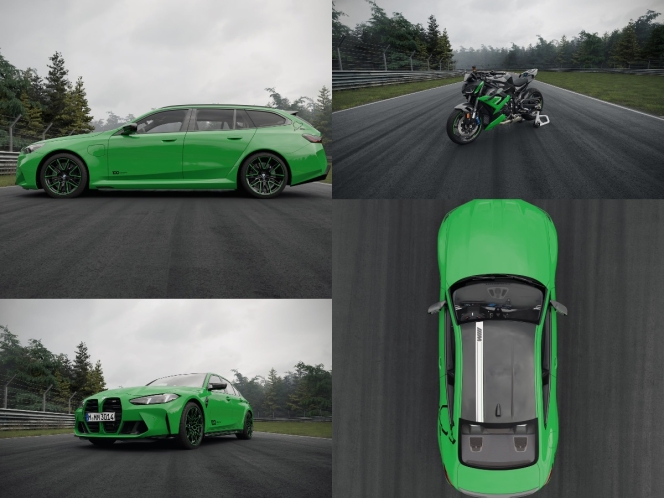
German automotive luxury brand BMW India and BMW Motorrad India have opened pre-orders for the ‘100 Jahre Nurburgring’ edition vehicles to mark the upcoming 100th anniversary of the Nurburgring racetrack in 2027.
The limited collection includes five BMW M car models – the BMW M2 Coupé, BMW M3 Sedan, BMW M4 Coupé, BMW M5 Sedan and the BMW M5 Touring – alongside the BMW M 1000 R motorcycle. The release marks the entry of the BMW M5 Touring into the Indian market.
The edition models feature specific paint finishes in Nurburgring Green and Sapphire Black metallic with green accents, incorporating the ‘100 Years’ logo, Nurburgring since 1927 lettering and the Nurburgring circuit outline.
Exterior details include carbon fibre roofs, model-specific graphics and green wheel accents across select models, while the M5 Touring features a steel roof with custom stripes. Interior specifications across the car lineup include black leather with green and white stitching, door sills, carbon fibre trims, M Carbon bucket seats with individual upholstery, and an M Alcantara steering wheel with a 12 o'clock marker.
The BMW M 1000 R motorcycle features a painted fuel tank with the Nurburgring outline, an airbox cover with ‘one of 100’ numbering, carbon wheels with green accent stripes, an Alcantara seat with embroidered ‘100’ logos and black components for the rear swingarm and frame.
Honda Cars India Sales Decline 19% In September 2026
- By MT Bureau
- October 02, 2026
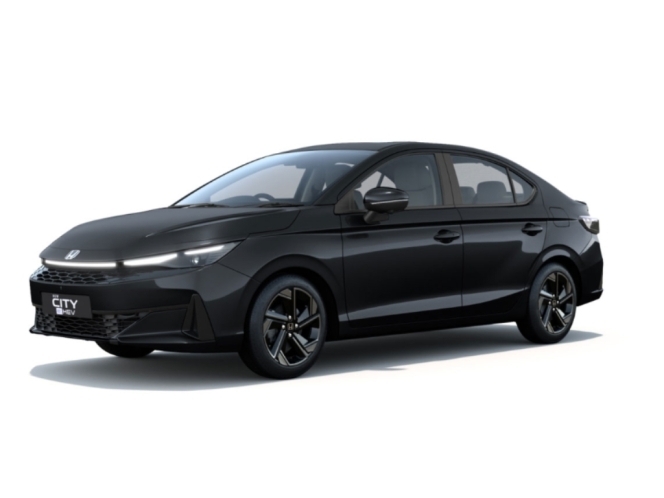
Honda Cars India (HCIL), one of the leading manufacturers of passenger vehicles in the country, has announced its wholesales for September 2026.
The company reported total sales of 6,955 units, down 16 percent YoY, as compared to 8,296 units sold for the same period last year.
In the domestic market, the company sold 4,465 units, down 19 percent YoY, as compared to 5,503 units sold a year ago. On the exports front, the company shipped 2,490 units, down 11 percent YoY, as compared to 2,793 units last year.
Kunal Behl, Vice-President, Marketing & Sales, Honda Cars India, said, We are pleased to see positive sales momentum for the Honda City and Honda Amaze during the month. We are also gearing up for the launch of new Elevate, which will further strengthen our SUV offering with a refreshed and enhanced package. With the festive season underway and an exciting product introduction ahead, we look forward to building stronger momentum in the coming months.”
Kia India Clocks Highest-Ever Monthly Sales Of 32,017 Units In September 2026
- By MT Bureau
- October 01, 2026
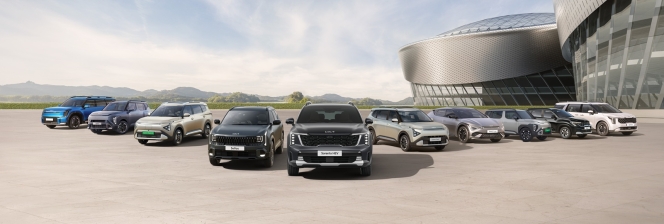
Kia India, one of the leading passenger vehicle manufacturers, has reported its best-ever monthly wholesale performance of 32,017 units in September 2026, representing a 41 percent increase compared to 22,700 units sold last year.
For Q3 of CY2026, the company recorded sales of 89,259 units, reflecting a 38.5 percent growth over 64,443 units for the same period last year.
In terms of YTD (January – September 2026) cumulative sales reached 253,008 units, marking a 22.5 percent increase from 206,582 units reported during the corresponding period in 2025.
Kia India attributed the robust performance to healthy demand across its portfolio incuding Seltos and Sonet models, alongside contributions from the Carens, Carens Clavis, Clavis EV, Syros EV and Sorento, which is offered in diesel and hybrid powertrain options. The company's powertrain options now span petrol, diesel, CNG, hybrid, and electric configurations across its product range.
Atul Sood, Senior Vice-President of Sales and Marketing, Kia India, said, "Our strong performance in September and across the third quarter reflects the continued trust of our customers and the strength of Kia’s evolving portfolio. The Seltos and Sonet continue to be key contributors to our growth, while the strong response to the Sorento and Syros EV reinforces our strategy of expanding into new segments and powertrain categories in line with evolving customer aspirations. As mobility needs become increasingly diverse, we are focused on providing meaningful choice across conventional, CNG, hybrid and electric powertrains, supported by ownership solutions that address real customer needs. We remain committed to building on this momentum through distinctive products, advanced technologies and differentiated experiences designed around the needs of Indian customers."
At present, Kia India operates a retail and service network comprising 915 touchpoints across 425 cities, alongside 137 certified pre-owned outlets across the country.
Toyota Kirloskar Motor Sells 25,027 PVs In September 2026
- By MT Bureau
- October 01, 2026
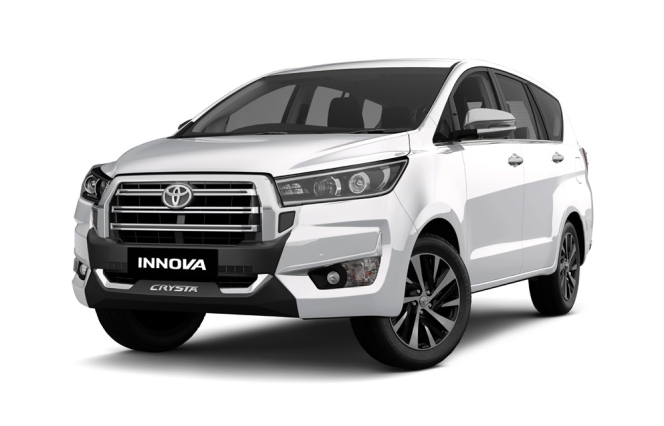
Toyota Kirloskar Motor (TKM), one of the leading passenger vehicle manufacturers, has reported its total wholesales of 28,218 units in September 2026, comprising 25,027 units sold in the domestic market and 3,191 units exported.
For the YTD period (January – September 2026), the automaker reported cumulative total sales of 294,914 units, representing an 8 percent increase compared to 272,824 units sold last year.
Domestic sales for the 9-month period rose 9 percent to 269,619 units, up from 247,081 units in the previous year, while exports reached 25,295 units, compared to 25,743 units a year ago.
Sabari Manohar, Executive Vice-President of Sales-Service-Used Car Business, Toyota Kirloskar Motor, said, "September witnessed continued customer interest across segments, supported by our focus on quality, durability and reliability. As we enter the festive season, we remain committed to strengthening customer engagement and working closely with our dealer partners to deliver enhanced mobility experiences and address evolving customer needs."
Comments (0)
ADD COMMENT