

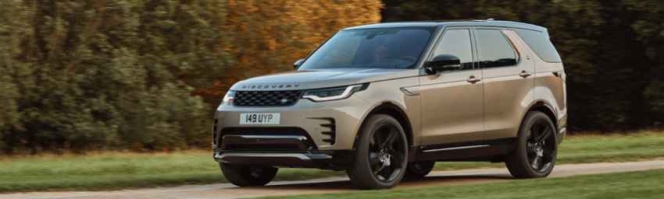
 The design on the outside remains unchanged mainly, but the interior has received a makeover with the inclusion of new connected car technology. The split analogue dials with the InControl Touch Pro infotainment system on the old car has now been updated to a new 12.3-inch Interactive Driver Display along with a bigger 11.4-inch Pivi Pro infotainment screen. The redesigned centre console provides a fast and intuitive interface with a simplified menu structure and pioneering design.
The connectivity on the inside is provided by dual-sim technology, with two LTE modems enabling the system to carry SOTA updates without compromising performance. Discovery owners can update as many as 44 individual electronic modules without the inconvenience of visiting a retailer.
The full-digital instrument cluster along with the Pivi Pro system allows for high-definition 3D mapping within the driver’s instrument cluster, with the central touchscreen free to control other applications. Besides, the customers can also add a full-colour Head-Up Display, putting high-resolution driving information directly into the driver’s eye line.
Another feature introduced with the Discovery is the Cabin Air Ionisation with PM2.5 air filtration technology. The system actively scans incoming air for quality and automatically uses advanced filters to reduce the level of allergens, toxins and harmful particulates in the cabin, enhancing driver wellbeing. Rear seat passenger comfort and convenience has been enhanced by the introduction of Land Rover’s Click and Go tablet holders instead of fixed rear screens. The tablets can use the onboard 4G Wi-Fi hotspot to stream content to keep the rear passengers entertained. Conveniently located USB-A charging sockets take care of maintaining the battery of the tablet charged and also help in cable management. This system adds to the versatility of the vehicle.
At the front, the steering wheel has received an update with the introduction of a new-look four-spoke steering wheel with hidden-until-lit switches and metal gearshift paddles. The old rotary gear selector has made way for a new tactile gear selector that provides instinctive control.
All new to the Discovery is the electric seat folding mechanism that can all be controlled from the central screen, improving the versatility of the vehicle. Customers also get access to a Remote app that lets them keep a tab on the fuel status, location of their car and also unlock and lock the doors. Owners can complete their connected car technology by choosing Land Rover’s new second-generation Activity Key that features touchscreen controls, a digital watch, unlock, lock and also remotely start the vehicle as an addition to the conventional fob.
Jaguar Land Rover’s Chief Creative Officer termed the car as “a beautifully proportioned and sophisticated premium SUV”. He also added that the team has worked to enhance the characterful exterior and hugely versatile interior to maintain the Discovery’s position in the market as “the most capable and family-friendly full-size SUV in the world”.

The carmaker has introduced a trio of new straight-six Ingenium engines with 48V Mild Hybrid Electric Vehicle (MHEV) technology for enhanced efficiency, performance and smoothness. The MHEV system harvests and stores energy during deceleration and deploys it to assist the engine when accelerating. This setup provides the engine six-cylinder performance and four-cylinder efficiency and also helps refine the operation of the Stop/Start system. Along with the new engines, the Discovery is also available with the companies tried and tested four-cylinder P300 Ingenium petrol powertrain.
The 5th generation Discovery also comes equipped with advance driveline technology that can intelligently switch between two-and four-wheel drive as conditions demand, combining both the fuel-saving benefits of two-wheel-drive with the all-terrain capability of four-wheel drive. Four-wheel-drive is continuously engaged to provide large reserves of traction from a standstill, but a clutch completely disconnects the four-wheel-drive hardware when there is no tractive requirement. Should the system detect wheel slip or a more dynamic driving style, four-wheel drive is re-engaged within 350 milliseconds. This helps the car maximise traction and on-road dynamics resulting in improved fuel efficiency and reduced CO2 emissions without compromising on the vehicle’s trademark all-terrain capability.
Also, the Discovery comes with air suspension as standard that helps in better isolation of bumps and an enjoyable ride. The system also intelligently lowers the cars ride height while doing motorway speed to increase the aerodynamic efficiency and stability of the vehicle. Apart from the 250HP diesel model, every other Discovery gets adaptive dampers that firm up the suspension going into corners to provide better stability and soften them when the going gets easy. Owners can also choose to add the Terrain Response 2 technology to their cars that automatically primes the vehicle to suit the driving conditions. The new Wade mode helps the Discovery drive through deep water (up to 90cm) and even applies the brakes automatically when the driver disengages it to restore the full performance of the brakes from the first application.
The Discovery borrows the ClearSight Ground View technology from the Defender. This new technology provides the driver with a clear view of the obscured ground directly beneath the front of the vehicle using the central touchscreen and a combination of forward-facing cameras. This is the closest Land Rover has come to their futuristic transparent bonnet concept. The system supports the drivers when negotiating steep off-road inclines or hidden urban obstacles.
Talking about the technology inside the car Land Rover’s Chief Engineer, Mike Cross said “New Discovery combines superb all-terrain suspension geometry with rewarding dynamics and excellent body control while maintaining our family SUV’s famed ride quality and comfort”. He also added, the changes made to the suspension design and the new platform has allowed the company to create a seven-seat SUV that is versatile, capable, refined and yet fun to drive.
In conclusion, the Discovery is a seven-seat sophisticated premium SUV that encapsulates Land Rover’s design evolution with an intelligently packaged interior that embodies the spirit of family adventure which has characterised the SUV for more than 30 years. The latest future-ready fifth-generation Discovery is available with four engine options with more than one Mild Hybrid Electric Vehicle technology model. The Discovery starts at £53,050 and extends up to £67,290 for the range-topping HSE diesel variant in the UK. (MT)
- BMW India
- BMW Motorrad India
- Nurburgring
- BMW M2 Coupé
- BMW M3 Sedan
- BMW M4 Coupé
- BMW M5 Sedan
- BMW M5 Touring
- BMW M 1000 R
BMW And BMW Motorrad Introduce 100 Jahre Nurburgring Limited Edition Vehicles In India
- By MT Bureau
- October 02, 2026
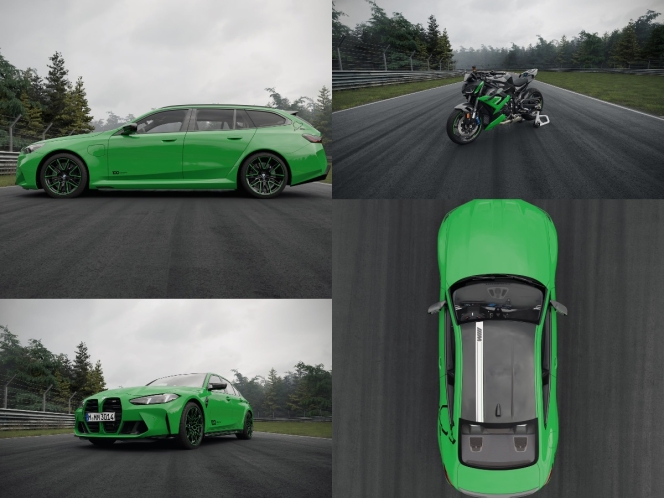
German automotive luxury brand BMW India and BMW Motorrad India have opened pre-orders for the ‘100 Jahre Nurburgring’ edition vehicles to mark the upcoming 100th anniversary of the Nurburgring racetrack in 2027.
The limited collection includes five BMW M car models – the BMW M2 Coupé, BMW M3 Sedan, BMW M4 Coupé, BMW M5 Sedan and the BMW M5 Touring – alongside the BMW M 1000 R motorcycle. The release marks the entry of the BMW M5 Touring into the Indian market.
The edition models feature specific paint finishes in Nurburgring Green and Sapphire Black metallic with green accents, incorporating the ‘100 Years’ logo, Nurburgring since 1927 lettering and the Nurburgring circuit outline.
Exterior details include carbon fibre roofs, model-specific graphics and green wheel accents across select models, while the M5 Touring features a steel roof with custom stripes. Interior specifications across the car lineup include black leather with green and white stitching, door sills, carbon fibre trims, M Carbon bucket seats with individual upholstery, and an M Alcantara steering wheel with a 12 o'clock marker.
The BMW M 1000 R motorcycle features a painted fuel tank with the Nurburgring outline, an airbox cover with ‘one of 100’ numbering, carbon wheels with green accent stripes, an Alcantara seat with embroidered ‘100’ logos and black components for the rear swingarm and frame.
Honda Cars India Sales Decline 19% In September 2026
- By MT Bureau
- October 02, 2026
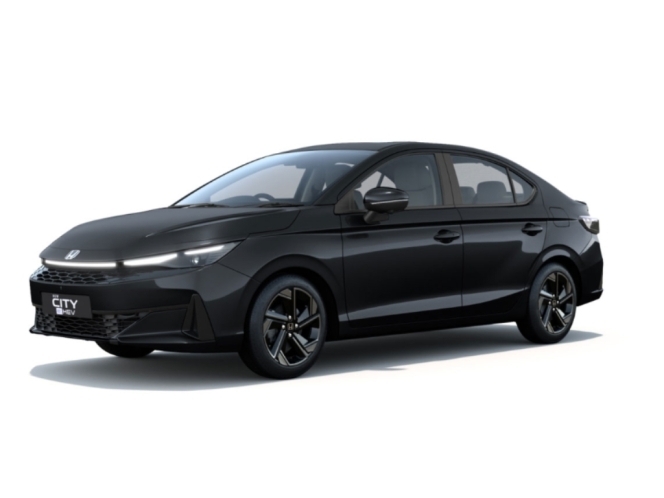
Honda Cars India (HCIL), one of the leading manufacturers of passenger vehicles in the country, has announced its wholesales for September 2026.
The company reported total sales of 6,955 units, down 16 percent YoY, as compared to 8,296 units sold for the same period last year.
In the domestic market, the company sold 4,465 units, down 19 percent YoY, as compared to 5,503 units sold a year ago. On the exports front, the company shipped 2,490 units, down 11 percent YoY, as compared to 2,793 units last year.
Kunal Behl, Vice-President, Marketing & Sales, Honda Cars India, said, We are pleased to see positive sales momentum for the Honda City and Honda Amaze during the month. We are also gearing up for the launch of new Elevate, which will further strengthen our SUV offering with a refreshed and enhanced package. With the festive season underway and an exciting product introduction ahead, we look forward to building stronger momentum in the coming months.”
Kia India Clocks Highest-Ever Monthly Sales Of 32,017 Units In September 2026
- By MT Bureau
- October 01, 2026
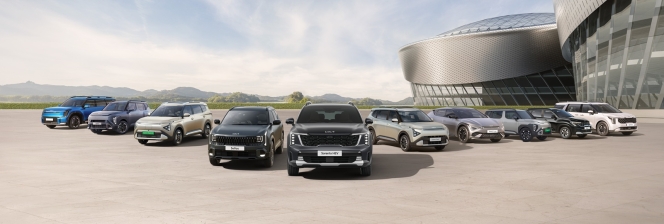
Kia India, one of the leading passenger vehicle manufacturers, has reported its best-ever monthly wholesale performance of 32,017 units in September 2026, representing a 41 percent increase compared to 22,700 units sold last year.
For Q3 of CY2026, the company recorded sales of 89,259 units, reflecting a 38.5 percent growth over 64,443 units for the same period last year.
In terms of YTD (January – September 2026) cumulative sales reached 253,008 units, marking a 22.5 percent increase from 206,582 units reported during the corresponding period in 2025.
Kia India attributed the robust performance to healthy demand across its portfolio incuding Seltos and Sonet models, alongside contributions from the Carens, Carens Clavis, Clavis EV, Syros EV and Sorento, which is offered in diesel and hybrid powertrain options. The company's powertrain options now span petrol, diesel, CNG, hybrid, and electric configurations across its product range.
Atul Sood, Senior Vice-President of Sales and Marketing, Kia India, said, "Our strong performance in September and across the third quarter reflects the continued trust of our customers and the strength of Kia’s evolving portfolio. The Seltos and Sonet continue to be key contributors to our growth, while the strong response to the Sorento and Syros EV reinforces our strategy of expanding into new segments and powertrain categories in line with evolving customer aspirations. As mobility needs become increasingly diverse, we are focused on providing meaningful choice across conventional, CNG, hybrid and electric powertrains, supported by ownership solutions that address real customer needs. We remain committed to building on this momentum through distinctive products, advanced technologies and differentiated experiences designed around the needs of Indian customers."
At present, Kia India operates a retail and service network comprising 915 touchpoints across 425 cities, alongside 137 certified pre-owned outlets across the country.
Toyota Kirloskar Motor Sells 25,027 PVs In September 2026
- By MT Bureau
- October 01, 2026
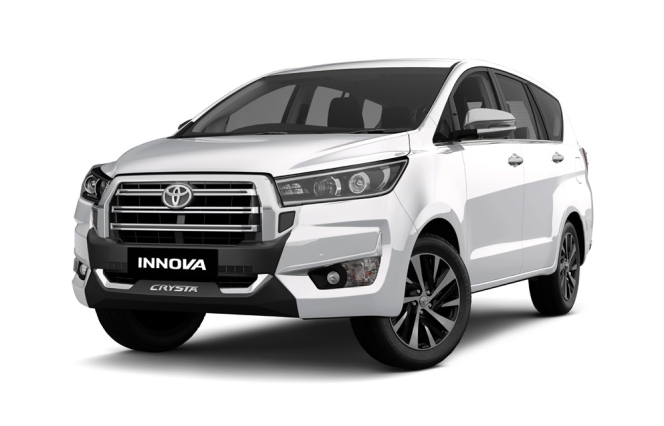
Toyota Kirloskar Motor (TKM), one of the leading passenger vehicle manufacturers, has reported its total wholesales of 28,218 units in September 2026, comprising 25,027 units sold in the domestic market and 3,191 units exported.
For the YTD period (January – September 2026), the automaker reported cumulative total sales of 294,914 units, representing an 8 percent increase compared to 272,824 units sold last year.
Domestic sales for the 9-month period rose 9 percent to 269,619 units, up from 247,081 units in the previous year, while exports reached 25,295 units, compared to 25,743 units a year ago.
Sabari Manohar, Executive Vice-President of Sales-Service-Used Car Business, Toyota Kirloskar Motor, said, "September witnessed continued customer interest across segments, supported by our focus on quality, durability and reliability. As we enter the festive season, we remain committed to strengthening customer engagement and working closely with our dealer partners to deliver enhanced mobility experiences and address evolving customer needs."
Comments (0)
ADD COMMENT