


General Motors announced in November 2020 that it’s speeding up its plan towards electrification and is aiming to have 30 electric vehicles on the market by 2025. This was followed by CEO Mary Barra’s announcement on January 28, 2021, that General Motors will stop producing vehicles that run on petrol or diesel fuel over the next 14 years, replacing the fleet with all-electric cars SUVs and light trucks. Barra also promised the company would be net carbon-neutral by 2040, reducing the greenhouse gas pollution it produces and purchasing carbon offsets to make up for existing emissions. President Biden administration is “encouraging” this shift through the Federal Government’s procurement budget and policies to accelerate an EV transition.
GM’s brand identity logo has been a familiar one worldwide:


But as part of the new initiative, GM is retiring the familiar blue square and has rolled out a new brand identity to focus on full electrification, it also changed its logo and kicked off an ad campaign promoting its commitment to E’s – EV and Environment.

GM claims its new look – created by in-house designers – is more “modern and vibrant” than the previous logos. The rebrand consists of a light blue lower-case ‘gm’ with a colour gradient, which sits in a white box outlined by the same light blue. Instead of having both letters underlined, there’s now a line under just the letter m’. GM insists that much like the logos of the past, the look is clean and simple. The new colour scheme - dark blue fading to light blue - and the lower-case letters, are intended to project a new era.
Sharon Gauci, GM’s executive director of Global Industrial Design, said, “The new GM logo features colour gradient of vibrant blue tones, evoking the clean skies of a zero-emissions future and the energy of the Ultium platform. The rounded edges and lower-case font create a more modern, inclusive feel.”
Some industry observers do not like the choice of lower-case typeface, which may not project strength that the previous logo’s bold letters did. According to them, the fading colour scheme and lower-case letters do not feel strong or enticing enough.
Interestingly, the automaker says that there is more to that ‘m’ than you might have immediately noticed! There is an optical illusion hidden in the new logo, and GM hopes that the world will not miss it. Still, just in case you missed it, the blank space above the underline and between legs of the “m” is supposed to look like an electric plug! Compare that to the FedEx logo, which is well-known for its not-so-hidden optical illusion. Even a cursory look is enough to spot a white arrow, signifying speed and accuracy.
GM’s campaign for the new brand identity is labelled ‘Everybody In’, and while the world is certainly up for ways to make driving less damaging to the environment, it remains to be seen if the new logo is up to the job. Whether GM needs to make a U-turn on the logo remains to be seen, but, right now it’s full-speed-ahead for GM with this new logo! All legacy automakers, who specialised in building and selling fossil-fueled vehicles for over a century, need to build entirely new strengths in a hurry. GM could see its big risk pay off - the company will just have to bet everything it has to find out. (MT)

- BMW India
- BMW Motorrad India
- Nurburgring
- BMW M2 Coupé
- BMW M3 Sedan
- BMW M4 Coupé
- BMW M5 Sedan
- BMW M5 Touring
- BMW M 1000 R
BMW And BMW Motorrad Introduce 100 Jahre Nurburgring Limited Edition Vehicles In India
- By MT Bureau
- October 02, 2026
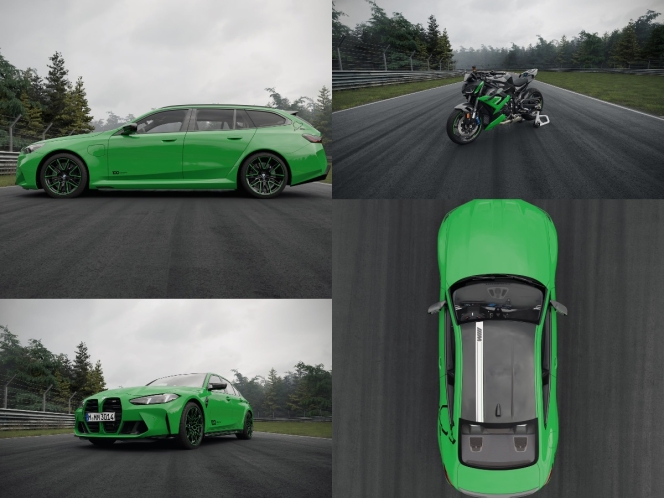
German automotive luxury brand BMW India and BMW Motorrad India have opened pre-orders for the ‘100 Jahre Nurburgring’ edition vehicles to mark the upcoming 100th anniversary of the Nurburgring racetrack in 2027.
The limited collection includes five BMW M car models – the BMW M2 Coupé, BMW M3 Sedan, BMW M4 Coupé, BMW M5 Sedan and the BMW M5 Touring – alongside the BMW M 1000 R motorcycle. The release marks the entry of the BMW M5 Touring into the Indian market.
The edition models feature specific paint finishes in Nurburgring Green and Sapphire Black metallic with green accents, incorporating the ‘100 Years’ logo, Nurburgring since 1927 lettering and the Nurburgring circuit outline.
Exterior details include carbon fibre roofs, model-specific graphics and green wheel accents across select models, while the M5 Touring features a steel roof with custom stripes. Interior specifications across the car lineup include black leather with green and white stitching, door sills, carbon fibre trims, M Carbon bucket seats with individual upholstery, and an M Alcantara steering wheel with a 12 o'clock marker.
The BMW M 1000 R motorcycle features a painted fuel tank with the Nurburgring outline, an airbox cover with ‘one of 100’ numbering, carbon wheels with green accent stripes, an Alcantara seat with embroidered ‘100’ logos and black components for the rear swingarm and frame.
Honda Cars India Sales Decline 19% In September 2026
- By MT Bureau
- October 02, 2026
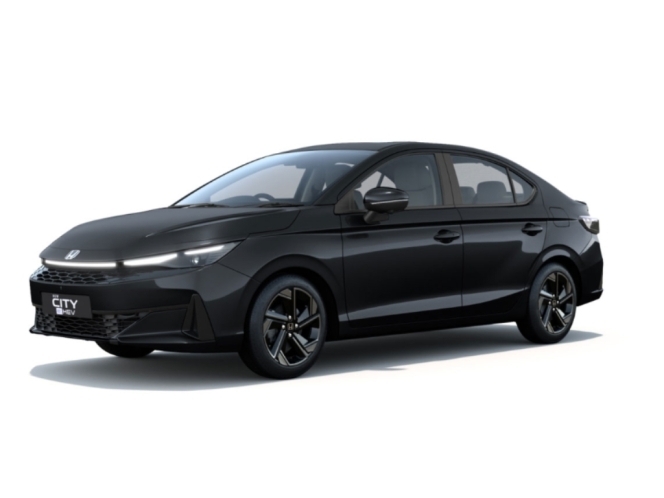
Honda Cars India (HCIL), one of the leading manufacturers of passenger vehicles in the country, has announced its wholesales for September 2026.
The company reported total sales of 6,955 units, down 16 percent YoY, as compared to 8,296 units sold for the same period last year.
In the domestic market, the company sold 4,465 units, down 19 percent YoY, as compared to 5,503 units sold a year ago. On the exports front, the company shipped 2,490 units, down 11 percent YoY, as compared to 2,793 units last year.
Kunal Behl, Vice-President, Marketing & Sales, Honda Cars India, said, We are pleased to see positive sales momentum for the Honda City and Honda Amaze during the month. We are also gearing up for the launch of new Elevate, which will further strengthen our SUV offering with a refreshed and enhanced package. With the festive season underway and an exciting product introduction ahead, we look forward to building stronger momentum in the coming months.”
Kia India Clocks Highest-Ever Monthly Sales Of 32,017 Units In September 2026
- By MT Bureau
- October 01, 2026
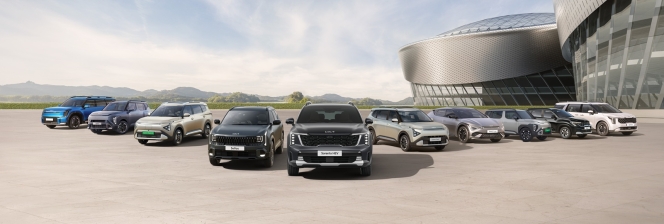
Kia India, one of the leading passenger vehicle manufacturers, has reported its best-ever monthly wholesale performance of 32,017 units in September 2026, representing a 41 percent increase compared to 22,700 units sold last year.
For Q3 of CY2026, the company recorded sales of 89,259 units, reflecting a 38.5 percent growth over 64,443 units for the same period last year.
In terms of YTD (January – September 2026) cumulative sales reached 253,008 units, marking a 22.5 percent increase from 206,582 units reported during the corresponding period in 2025.
Kia India attributed the robust performance to healthy demand across its portfolio incuding Seltos and Sonet models, alongside contributions from the Carens, Carens Clavis, Clavis EV, Syros EV and Sorento, which is offered in diesel and hybrid powertrain options. The company's powertrain options now span petrol, diesel, CNG, hybrid, and electric configurations across its product range.
Atul Sood, Senior Vice-President of Sales and Marketing, Kia India, said, "Our strong performance in September and across the third quarter reflects the continued trust of our customers and the strength of Kia’s evolving portfolio. The Seltos and Sonet continue to be key contributors to our growth, while the strong response to the Sorento and Syros EV reinforces our strategy of expanding into new segments and powertrain categories in line with evolving customer aspirations. As mobility needs become increasingly diverse, we are focused on providing meaningful choice across conventional, CNG, hybrid and electric powertrains, supported by ownership solutions that address real customer needs. We remain committed to building on this momentum through distinctive products, advanced technologies and differentiated experiences designed around the needs of Indian customers."
At present, Kia India operates a retail and service network comprising 915 touchpoints across 425 cities, alongside 137 certified pre-owned outlets across the country.
Toyota Kirloskar Motor Sells 25,027 PVs In September 2026
- By MT Bureau
- October 01, 2026
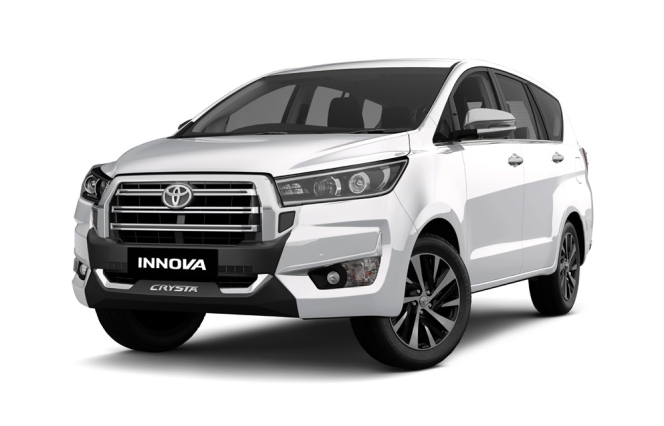
Toyota Kirloskar Motor (TKM), one of the leading passenger vehicle manufacturers, has reported its total wholesales of 28,218 units in September 2026, comprising 25,027 units sold in the domestic market and 3,191 units exported.
For the YTD period (January – September 2026), the automaker reported cumulative total sales of 294,914 units, representing an 8 percent increase compared to 272,824 units sold last year.
Domestic sales for the 9-month period rose 9 percent to 269,619 units, up from 247,081 units in the previous year, while exports reached 25,295 units, compared to 25,743 units a year ago.
Sabari Manohar, Executive Vice-President of Sales-Service-Used Car Business, Toyota Kirloskar Motor, said, "September witnessed continued customer interest across segments, supported by our focus on quality, durability and reliability. As we enter the festive season, we remain committed to strengthening customer engagement and working closely with our dealer partners to deliver enhanced mobility experiences and address evolving customer needs."
Comments (0)
ADD COMMENT