

Hyundai Banks On Aura To Boost Compact Segment Market Share
- By 0
- December 21, 2021
MT Bureau
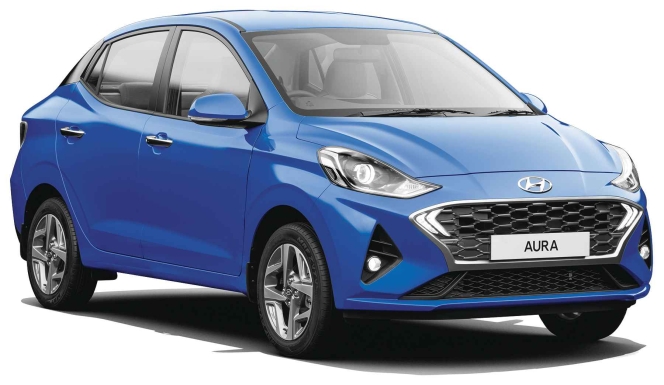
Hyundai Motor India (HMI), beating the slowdown, increased in 2019 its market share by 1 percent to 17.3 percent and contributed about 15 percent to the total volume of Hyundai Motor Corporation. The company begins 2020 with the resolve to offer premium experience through world-class products including the newly-launched Aura, a compact sedan having several first-in-segment features.
Compact segment in India accounted for 338,000 units, about 11 percent of industry volumes, in 2019. HMI’s share was 5.5 percent of this; with Aura it hopes to raise its position further. Developed at an investment of INR 1,000 crore the vehicle has four engine types with manual and AMT options. Hyundai is segregating its offering in the compact sedan segment with Xcent for taxis and Aura for private vehicle customers. The ex-showroom price of Aura ranges from INR 5.59 lakh to INR 9.22 lakh.
S S Kim, MD and CEO, HMI, said the all new Aura marks the industry’s first and most significant launch of the Decade 2020. It offers versatile characteristics, “exhibiting elegant styling and bold character form to deliver a fresh interpretation to Hyundai’s signature design language of ‘Sensuous Sportiness’ specifically crafted for progressive urban and millennial customers.” It will be India’s only sedan equipped with BS-VI diesel 1.2Litre Eco TORQ engine that offers improved power and performance. Aura will be a game changer product creating a new excitement and establishing new benchmarks in the automobile industry, he said.
HMI is also looking at options to introduce MPV and EV which will be developed totally for the Indian market. Globally, Hyundai Motor Company has been offering all kinds of new mobility solutions right from EVs, hybrids, plug-in hybrids, and fuel cells. The company hopes to sell about 10,000 fuel cell cars during this calendar year, Kim said.
Enthusiastic Powertrain
Aura comes with four engine options: 1.2 Kappa Dual VTVT petrol engine that gives 83PS power at 6,000 rpm and the same with CNG that gives 69PS power at 6,000 rpm; the third is 1.2 Eco TORQ Diesel engine that spews 75PS at 4,000 rpm; and the fourth is 1.0 Turbo GDi petrol engine that delivers 100PS at 6,000 rpm.
The powertrain of Aura has several firsts, including the 1.0 BS-VI T-GDI Petrol and 1.2 BS-VI EcoTorq diesel engine. While the 1 litre petrol engine is mated with 5-speed manual transmission only, the other engines get five-speed manual and AMT.
Aura’s turbo petrol engine option, first in the segment, is based on its success in the recently-introduced compact SUV, the Venue. Interestingly more than 90 percent of petrol version and more than 45 percent of the total sales of Venue comes from the variant powered by this engine. Therefore, the company is replicating this in Aura. However, there is only one variant.
The Kappa 1.0 T-GDI engine, developed by Hyundai Motor Group's R&D division, delivers a perfect combination of performance, fuel efficiency and compliance with emission norms under BS-VI fuel guidelines, as it injects fuel at high pressure of 250 bar. It has a compact layout as the exhaust manifold is integrated into the cylinder head, volume of water jacket is higher (than MPi engines) to improve cooling and to reduce the exhaust gas temperature. The intake port is designed to be straighter than in conventional engines. The piston ring comes with Si-DLC (silicon doped hydrogenated Diamond-Like Carbon) coating to reduce friction. All these innovations help improve fuel efficiency at higher RPM ranges.
The Eco TORQ Diesel BS-VI Engine has 2,000 bar fuel injection system that allows better combustion and fuel efficiency. Emissions are controlled through LNT DPF (Lean Nox Trap and Diesel Particulate Filter), validated for Indian conditions. Low-end torque is improved by 10 percent to give better drivability in city traffic.
The cutting-edge technology of the BS-VI diesel Aura is capable of running on BS-IV and BS-VI fuels. Therefore, the non-availability of BS-VI fuel is not a concern for the company, Kim said.
The crankshaft bearing with optimized thickness and material reduces friction and allows smooth driving even in city traffic, and enhances engine life. The transmission has been subjected to rigorous durability tests for ensuring high gear strength and better clutch friction materials to offer better performance at high speeds, off-road, hillsides and harsh climatic conditions. The new curved timing chain reduces friction further and the new piston design improves durability and fuel efficiency.
For comfort and seamless driving experience the new car comes with Smart AMT. It uses electric motors for gear shifting and clutch operations, guided by a separate control unit. Electric motor control offers superior durability when compared to hydraulic actuator, with faster actuator response leading to smooth shifting of gears.
Taking through the design elements of Aura, Ju Hyun Ha, Designer, HMC, said the concept is to build a new compact sedan with vibrancy of positivity and innovation of technology for the new Indian millennia. Aura has been specifically developed targeting Indian customers and the development falls in four categories of stunning and modern design, premium and spacious interiors, convenience and technology, with advanced and enthusiastic powertrain.
The development direction of the vehicle is defined by 'Vibrance of Positivity' and 'Spirit to Go the Distance' of Indian millennials. It is developed specifically as an elegant sedan dedicated to young-at-heart customers.

Styling
Modern design of the car is conveyed through a unique design that gives the vehicle a versatile characteristic exhibiting elegant styling and bold character. It delivers a fresh interpretation of the company’s signature design language of 'Sensuous Sportiness.' The vehicle’s front profile showcases unique Twin Boomerang Daytime Running Lamps (DRL) integrated with Premium Satin Front Grille with Projector type Head Lamps and Fog Lamps.
Modern and sporty design along with the image, unique DRL and 3-dimensional mesh design decorate the front, while it gets a distinctive rear design by emphasizing wide stance with sporty bumper design. The sporty side profile and solid wheel-arches created by two character lines give the car the luxurious voluminous look.
The side profile indicates unique sportiness through its coupe-like styling and luxurious volume and solid wheel-arches created by two unique character lines with R15 diamond cut type alloy wheels. It has a distinctive rear design with emphasis on wide stance, robust sporty bumper design and LED tail lamp with stylish 3-dimensional outer lens. The trunk lid garnish of chrome strip with glossy black wrap-around makes it the most stylish sedan in its segment.
Ride And Handling
Aura has been given a well-balanced ride and handling performance compared to segment position. The Turbo GDi version has agile and reliable handling with quick settled comfort. Interestingly, a higher capacity motor is deployed in the steering system that gives quicker response while the increased steering ratio gives better feedback. The suspension spring stiffness has been increased for controlled body motion and damper valve tuned for improved round feel.
Advanced Safety
Hyundai AURA is built on strong body structure with integrated 65 percent Advanced High Strength Steel (AHSS) + High Tensile Steel (HSS) application that ensures light body weight with high strength. About 23 percent of the body is made of AHSS, 42 percent HSS and the rest mild steel.
The vehicle’s rigid structure is equipped with advanced ring structure application allowing increased static and dynamic stiffness for superior safety, low NVH and improved handling. This structure has been provided at engine room, B and C pillars for better rigidity. Higher reinforcements are added in the side structure and frontal area for improved crash-worthiness. The underbody load path is distributed across the body for better crash energy absorption. These advanced safety systems provide improved active and passive safety for stress-free driving and better crash energy absorption.
To contain NVH, the engine, transmission and roll mounts have been tuned further while road noise is controlled by optimising sound insulation methods using acoustic baffles and cowl panel reinforcement, and by enhancing structural stiffness.
Hyundai Aura has been tested and evaluated over 7,500 km across India to assess its reliability and durability with different powertrain configurations on diverse road conditions and climatic environment. Good noise Isolation and enhanced sealing for low NVH, with silent cabin, enhances driving pleasure.
Comfort, Convenience
HMI has been creating products that suit the needs of the young. This philosophy is evident in Aura's comfort and convenience features. Its interior space and comfortable cabin provide adequate space for the versatile urban commuter. The car is equipped with convenient technological features like Advanced 8.0 touchscreen infotainment with smart phone connectivity (Android Auto and Apple Car Play) along with Arkamys Premium Sound, 5.3 digital speedometer cum multi-information display and wireless charging. It has a unique ‘driving rear view monitor’ for rear view display on screen while driving forward, iBlueAudio remote smart PhoneApp, cabin with bronze colour inserts and a spacious rear cabin.
Aura has the ‘Wonder Warranty’ with options of 3 Years/100,000 km, 4 Years /50,000 km or 5 Years /40,000 km along with road-side assistance. (MT)
- BMW India
- BMW Motorrad India
- Nurburgring
- BMW M2 Coupé
- BMW M3 Sedan
- BMW M4 Coupé
- BMW M5 Sedan
- BMW M5 Touring
- BMW M 1000 R
BMW And BMW Motorrad Introduce 100 Jahre Nurburgring Limited Edition Vehicles In India
- By MT Bureau
- October 02, 2026
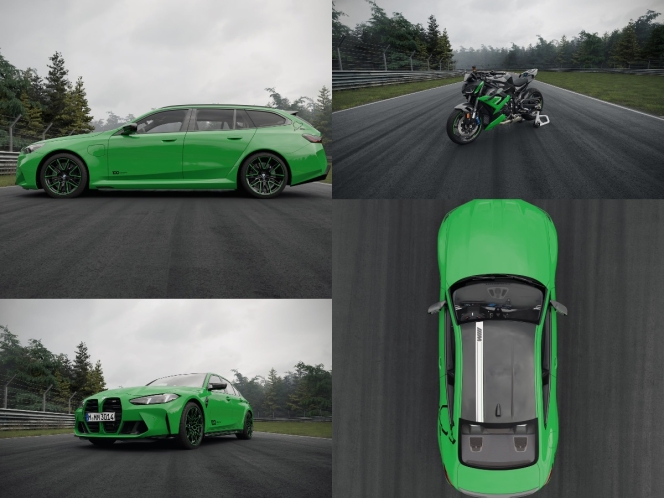
German automotive luxury brand BMW India and BMW Motorrad India have opened pre-orders for the ‘100 Jahre Nurburgring’ edition vehicles to mark the upcoming 100th anniversary of the Nurburgring racetrack in 2027.
The limited collection includes five BMW M car models – the BMW M2 Coupé, BMW M3 Sedan, BMW M4 Coupé, BMW M5 Sedan and the BMW M5 Touring – alongside the BMW M 1000 R motorcycle. The release marks the entry of the BMW M5 Touring into the Indian market.
The edition models feature specific paint finishes in Nurburgring Green and Sapphire Black metallic with green accents, incorporating the ‘100 Years’ logo, Nurburgring since 1927 lettering and the Nurburgring circuit outline.
Exterior details include carbon fibre roofs, model-specific graphics and green wheel accents across select models, while the M5 Touring features a steel roof with custom stripes. Interior specifications across the car lineup include black leather with green and white stitching, door sills, carbon fibre trims, M Carbon bucket seats with individual upholstery, and an M Alcantara steering wheel with a 12 o'clock marker.
The BMW M 1000 R motorcycle features a painted fuel tank with the Nurburgring outline, an airbox cover with ‘one of 100’ numbering, carbon wheels with green accent stripes, an Alcantara seat with embroidered ‘100’ logos and black components for the rear swingarm and frame.
Honda Cars India Sales Decline 19% In September 2026
- By MT Bureau
- October 02, 2026
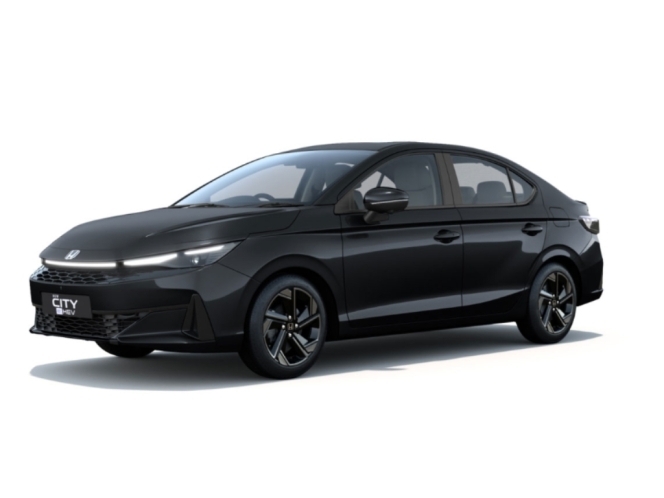
Honda Cars India (HCIL), one of the leading manufacturers of passenger vehicles in the country, has announced its wholesales for September 2026.
The company reported total sales of 6,955 units, down 16 percent YoY, as compared to 8,296 units sold for the same period last year.
In the domestic market, the company sold 4,465 units, down 19 percent YoY, as compared to 5,503 units sold a year ago. On the exports front, the company shipped 2,490 units, down 11 percent YoY, as compared to 2,793 units last year.
Kunal Behl, Vice-President, Marketing & Sales, Honda Cars India, said, We are pleased to see positive sales momentum for the Honda City and Honda Amaze during the month. We are also gearing up for the launch of new Elevate, which will further strengthen our SUV offering with a refreshed and enhanced package. With the festive season underway and an exciting product introduction ahead, we look forward to building stronger momentum in the coming months.”
Kia India Clocks Highest-Ever Monthly Sales Of 32,017 Units In September 2026
- By MT Bureau
- October 01, 2026
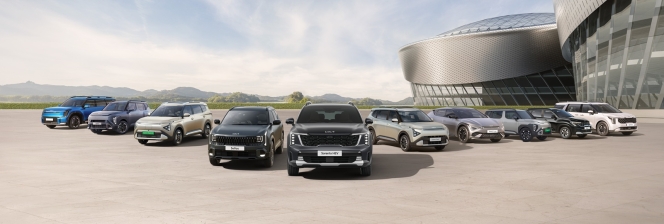
Kia India, one of the leading passenger vehicle manufacturers, has reported its best-ever monthly wholesale performance of 32,017 units in September 2026, representing a 41 percent increase compared to 22,700 units sold last year.
For Q3 of CY2026, the company recorded sales of 89,259 units, reflecting a 38.5 percent growth over 64,443 units for the same period last year.
In terms of YTD (January – September 2026) cumulative sales reached 253,008 units, marking a 22.5 percent increase from 206,582 units reported during the corresponding period in 2025.
Kia India attributed the robust performance to healthy demand across its portfolio incuding Seltos and Sonet models, alongside contributions from the Carens, Carens Clavis, Clavis EV, Syros EV and Sorento, which is offered in diesel and hybrid powertrain options. The company's powertrain options now span petrol, diesel, CNG, hybrid, and electric configurations across its product range.
Atul Sood, Senior Vice-President of Sales and Marketing, Kia India, said, "Our strong performance in September and across the third quarter reflects the continued trust of our customers and the strength of Kia’s evolving portfolio. The Seltos and Sonet continue to be key contributors to our growth, while the strong response to the Sorento and Syros EV reinforces our strategy of expanding into new segments and powertrain categories in line with evolving customer aspirations. As mobility needs become increasingly diverse, we are focused on providing meaningful choice across conventional, CNG, hybrid and electric powertrains, supported by ownership solutions that address real customer needs. We remain committed to building on this momentum through distinctive products, advanced technologies and differentiated experiences designed around the needs of Indian customers."
At present, Kia India operates a retail and service network comprising 915 touchpoints across 425 cities, alongside 137 certified pre-owned outlets across the country.
Toyota Kirloskar Motor Sells 25,027 PVs In September 2026
- By MT Bureau
- October 01, 2026
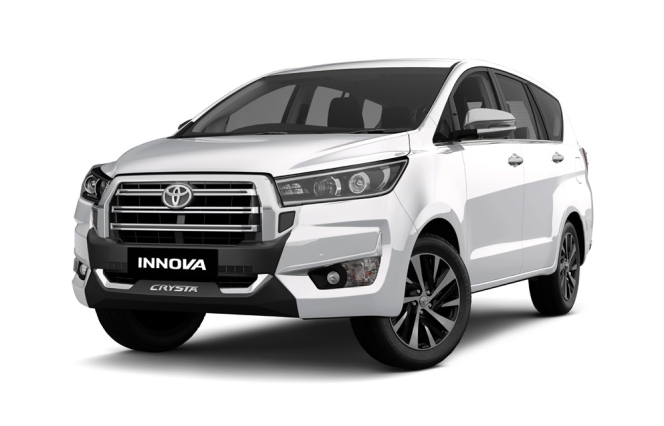
Toyota Kirloskar Motor (TKM), one of the leading passenger vehicle manufacturers, has reported its total wholesales of 28,218 units in September 2026, comprising 25,027 units sold in the domestic market and 3,191 units exported.
For the YTD period (January – September 2026), the automaker reported cumulative total sales of 294,914 units, representing an 8 percent increase compared to 272,824 units sold last year.
Domestic sales for the 9-month period rose 9 percent to 269,619 units, up from 247,081 units in the previous year, while exports reached 25,295 units, compared to 25,743 units a year ago.
Sabari Manohar, Executive Vice-President of Sales-Service-Used Car Business, Toyota Kirloskar Motor, said, "September witnessed continued customer interest across segments, supported by our focus on quality, durability and reliability. As we enter the festive season, we remain committed to strengthening customer engagement and working closely with our dealer partners to deliver enhanced mobility experiences and address evolving customer needs."
Comments (0)
ADD COMMENT