

JSW MG Motor India Sells 8,013 PVs In October 2026
- By MT Bureau
- November 01, 2026
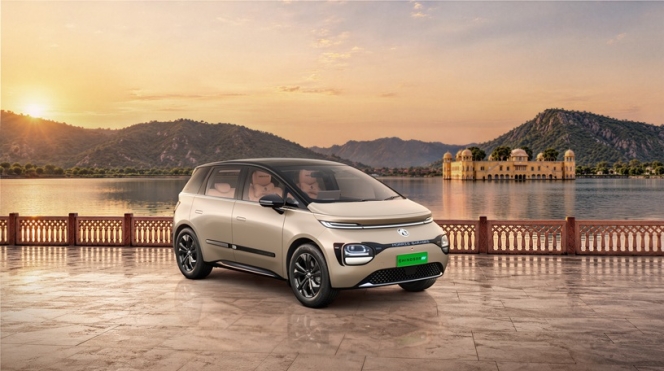
JSW MG Motor India, one of the leading passenger and electric vehicle manufacturers, has announced its wholesales for October 2026.
The automaker reported witnessing a strong response for its recently introduced MG Hector Tomahawk EV across India.
Last month, the company reported sales of 8,013 units, which was 19 percent higher YoY.
Mahindra Records Highest-Ever Monthly Sales Of 73,338 SUVs In October 2026
- By MT Bureau
- November 01, 2026
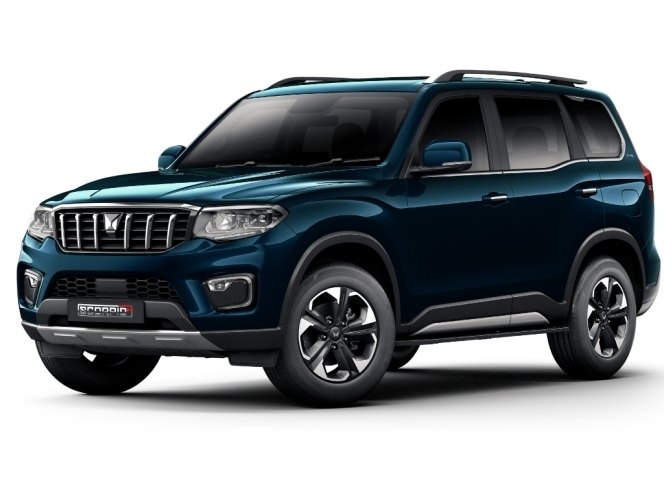
Mumbai-headquartered SUV major Mahindra & Mahindra has announced its wholesales of 73,338 units in the domestic market for October 2026, which was 2 percent higher than 71,624 units sold last year. Exports came to 1,566 units.
On the other hand, the company sold 33,037 commercial vehicles in the domestic market, up 4 percent YoY, as compared to 31,741 units sold last year.
Dr. Velusamy R, President, Automotive Business, Mahindra & Mahindra, said, “October was a landmark month for us, with SUV sales topping at 73,338 units and total vehicle sales of 131,109, both the highest we have ever clocked in a month. The festive season, together with a refreshed portfolio, kept demand strong across SUVs, pick-ups and three-wheelers. Our first CNG vehicle, the XUV 3XO ZNG has also seen strong traction with customers.”
Hyundai India Reports Record Wholesales Of 62,799 PVs In October
- By MT Bureau
- November 01, 2026
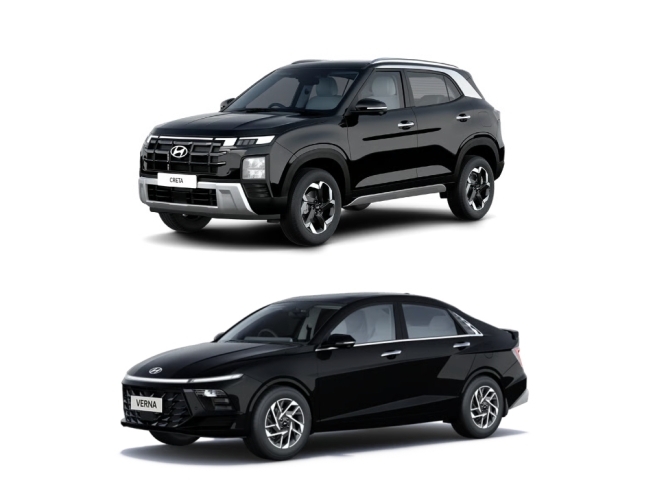
Hyundai Motor India, one of the leading passenger vehicle manufacturers, has announced domestic wholesales of 62,799 units in October, which was 16.7 percent higher YoY.
On the other hand, exports came at 19,500 units, up 21.1 percent YoY, taking the total sales last month at 82,299 units.
Interestingly, the robust domestic wholesales last month were the highest-ever monthly sales recorded by the company in its operations, which also enabled it to witness the highest-ever total wholesales (domestic + export).
The Hyundai Venue compact SUV continued to witness a robust demand clocking sales of 13,017 units last month, its highest-ever domestic performance.
Tarun Garg, MD & CEO, Hyundai Motor India, said, “October 2026 has been an exceptional month for Hyundai Motor India, with total sales of 82,299 units, our highest-ever monthly sales since inception with a robust 17.7 percent YoY growth. Strong festive demand, coupled with healthy momentum in both domestic and export markets, helped us set this new sales record. Going forward, the newly launched Hyundai Bayon - our Intelligent Utility Vehicle, will provide further impetus to our growth in India as well as across 50+ export markets, reinforcing India’s role as a strategic manufacturing and export hub for Hyundai.”
Indian Passenger Vehicle Segment To Clock 6% Growth In FY2027: ICRA
- By MT Bureau
- October 31, 2026
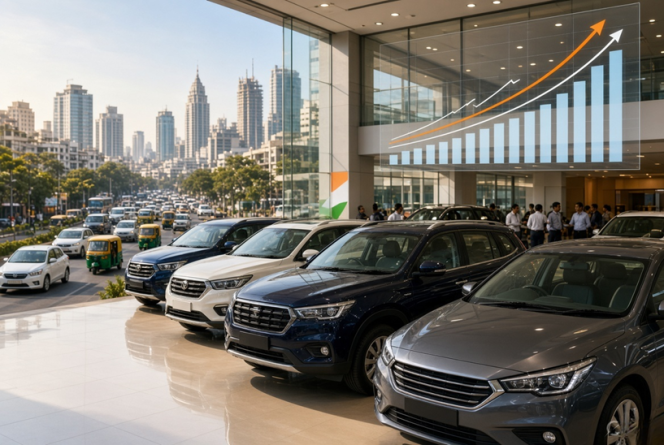
The Indian passenger vehicle wholesale volumes expanded by 22 percent YoY to 460,000 units in September 2026, while retail sales grew by 43 percent over the same period, according to a latest report by rating agency ICRA.
But despite the fireworks, ICRA projects the overall full-year wholesale volume growth to moderate to 4–6 percent for FY2027.
The rating agency cited factors including an elevated base in H2 FY2026, the normalisation of pent-up demand, potential impacts from a below-average monsoon on rural sentiment, and vehicle price increases announced by manufacturers to offset rising input costs.
ICRA stated that the high-volume growth in September was supported by replacement demand following Goods and Services Tax (GST) rate cuts, sustained traction for new model launches and pre-festive stocking by original equipment manufacturers.
For H1 of FY2027, wholesale dispatches and retail registrations grew by 28 percent and 29 percent YoY, respectively, compared to a lower base in H1 FY2026. Dealer inventory levels rose to 43–45 days at the end of September 2026 due to pre-festive channel filling, remaining below the 60-day inventory level recorded in September 2025.
The report stated that SUVs accounted for approximately 68 percent of overall passenger vehicle volumes in H1 FY2027, maintaining its position as the primary segment driver, while entry-level and compact car segments recorded volume recoveries following the GST adjustments.
Electric vehicle penetration increased to 7.5 per cent in H1 FY2027, up from 4.2 percent in FY2026. In the export market, dispatches rose 25.8 percent sequentially in September 2026, led by Maruti Suzuki India and Hyundai Motor India.
- VEHICLE FINANCING
- PASSENGER VEHICLE LOANS
- TWO-WHEELER LOANS
- TRANSUNION CIBIL
- VEHICLE PREMIUMISATION
- EV FINANCING
- NBFCs
- CREDIT GROWTH
- AUTO LOANS
- CONSUMER CREDIT
Vehicle Premiumisation Drives 49 Percent Rise in Passenger Vehicle Loan Sizes: TransUnion CIBIL
- By Gaurav Nandi
- October 29, 2026
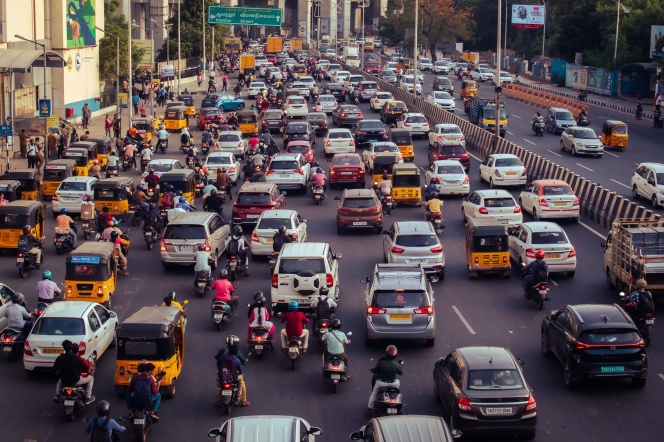
The average passenger vehicle loan ticket size in India has increased by approximately 49 percent over seven years with vehicle price inflation and a shift towards higher-value models both contributing to the rise, according to TransUnion CIBIL.
The increase compares with estimated inflation of 30–31 percent over the same period, indicating that consumers' preference for better-equipped vehicles and a changing vehicle mix have contributed to the growth in financing amounts.
“Of course, there is the premiumisation play which is coming in. The underlying value of the vehicles has also gone up, which has led to this premiumisation that we are seeing beyond the normal inflation rate," said Managing Director Bhavesh Jain during an interaction with Motoring Trends on the sidelines of its presentation of its Shifting Gears 2026: How Credit Drives India's Mobility report.
Jain said the shift in consumer preferences from entry-level cars towards entry-level sport utility vehicles (SUVs) had also contributed to the increase. Higher prices for base-model cars were another factor.
The report found that the outstanding passenger vehicle loan portfolio including used-car financing had expanded 2.6 times since June 2019 to approximately INR 1,110 billion.
The average blended passenger vehicle loan ticket size stood at around INR 820,000, up nearly 50 percent from June 2019.
NBFCs dominate
Non-banking financial companies (NBFCs) account for approximately 73 percent of active two-wheeler loans, up from 63 percent in June 2019. The concentration has raised questions about financing costs and repayment risks for borrowers, particularly in semi-urban and rural markets.
Jain said borrowers could choose between banks and NBFCs with accessibility playing an important role in determining their financing options.
“Today, the consumer has choices. The consumer can choose between any of the lender types,” Jain said, adding that vehicle purchases and financing in semi-urban and rural markets were often facilitated through dealerships.
TransUnion CIBIL said loan portfolio quality had improved across lender categories over the seven-year period.
Two-wheeler loans with payments overdue by more than 90 days accounted for 1.4 percent of the portfolio. However, the executive did not provide a separate comparison of delinquency rates between NBFCs and banks during the discussion.
The report's findings indicate that the two-wheeler financing market has expanded alongside an improvement in borrower credit profiles. The share of new-to-credit customers among two-wheeler loan originations fell from approximately 60 percent in 2019 to 39 percent in the first half of 2026.
Entry point
The declining share of first-time credit borrowers in two-wheeler financing reflects a shift in how younger consumers enter the formal credit system, according to Jain.
Consumer durable loans including phone financing have increasingly become the first credit product for younger borrowers before they move on to vehicle financing.
“Today, consumer durable financing brings in the bulk of new-to-credit borrowers,” Jain said.
He added that consumers often take a consumer durable loan before purchasing a two-wheeler and may return to the same category of financing after acquiring the vehicle.
In metropolitan and urban markets, 68 percent of two-wheeler customers over the preceding three to four years had subsequently taken at least one consumption-related credit product including a consumer durable loan, personal loan or credit card, Jain said.
Although gold loans may also feature in borrowers' credit histories, Jain identified consumer durable and phone financing as the primary entry points for many younger consumers.
The trend suggests that two-wheeler financing is increasingly serving borrowers who already have established relationships with formal lenders rather than acting as their first exposure to credit.
EV financing grows
TransUnion CIBIL said it does not currently have sufficient visibility to distinguish loans for electric vehicles (EVs) from financing for conventional vehicles in its reported two-wheeler and passenger vehicle loan categories.
Jain said banks and NBFCs had introduced programmes focused on EV financing and that the segment was growing. He estimated that electric vehicles accounted for approximately 6–7 percent of two-wheeler sales.
However, the bureau's current data does not separately identify EV loans, preventing it from quantifying the segment's share of vehicle financing or tracking its delinquency trends independently.
Jain said the broader financing figures included both conventional and electric vehicles, noting that approximately six out of 10 two-wheelers and nine out of 10 passenger vehicles purchased in India were financed.
He added that the company would seek greater visibility into EV financing as the segment expands.
The credit bureau also said it could not determine how many financed two-wheelers were being purchased specifically for income generation including use in the gig economy.
Jain said two-wheelers served multiple purposes but the bureau did not have data identifying the end use of individual vehicles.
As vehicle financing expands, the distinction between personal mobility, income-generating use and borrowers' wider credit relationships remains an area where more granular data could help lenders better understand demand and assess financing needs.
Report insights
TransUnion CIBIL recorded 63 lakh two-wheeler loan originations in the first half of 2026, the highest first-half figure since 2019. The company had recorded 69 lakh originations in the six months ended December 2025.
The outstanding portfolio serves approximately 3.3 crore borrowers, nearly twice the number recorded in June 2019.
Borrowers below 30 years accounted for 43 percent of two-wheeler loan originations, while men represented 79 percent of new originations.
The report also found that two-wheeler financing often precedes further borrowing. Approximately two-thirds of customers continued to access credit after taking a two-wheeler loan.
Within three years, 41 percent had taken a consumer durable loan and 21 percent had obtained a personal loan exceeding INR 50,000. The average interval before taking another credit product was 12–18 months.
These findings indicate that two-wheeler borrowers represent a potential customer base for lenders offering additional financial products.
PV financing grows
The passenger vehicle loan portfolio serves approximately 2.5 crore active consumers with the borrower base increasing 1.7 times since June 2019.
Used-car loans accounted for 24 percent of passenger vehicle loan originations. Although originations moderated following an increase in delinquencies in 2024, the segment subsequently improved and remained above earlier levels on an indexed basis.
The report also found that 47 percent of passenger vehicle borrowers held a consumer durable loan, personal loan or credit card when taking vehicle financing. Approximately 7 percent had an existing two-wheeler loan, indicating some overlap between the two borrower segments.
TransUnion CIBIL identified four broad categories of passenger vehicle borrowers including first-time vehicle buyers, repeat buyers, consumers moving towards higher-value cars and borrowers transitioning from two-wheelers to passenger vehicles.
First-time buyers accounted for 37 percent of originations, while repeat passenger vehicle borrowers represented 31 percent. Customers moving towards higher-value cars and those graduating from two-wheelers each accounted for 11 percent.
Credit profiles varied across these groups. Among consumers transitioning from two-wheelers to passenger vehicles, 22 percent belonged to the below-prime segment. By comparison, 19 percent of first-time vehicle buyers were classified as super-prime borrowers.
Delinquency rates also differed by borrower category. Below-prime customers moving from two-wheelers to passenger vehicles recorded a delinquency rate of 4.7 percent compared with approximately 3.5 percent for repeat passenger vehicle borrowers.
The findings highlight the importance of assessing borrowers according to their credit histories and borrowing patterns, rather than relying solely on broad credit score classifications as India's vehicle financing market continues to expand.


Comments (0)
ADD COMMENT