

Kia Introduces New K5 Fastback Sedan
- By 0
- December 21, 2021
MT Bureau
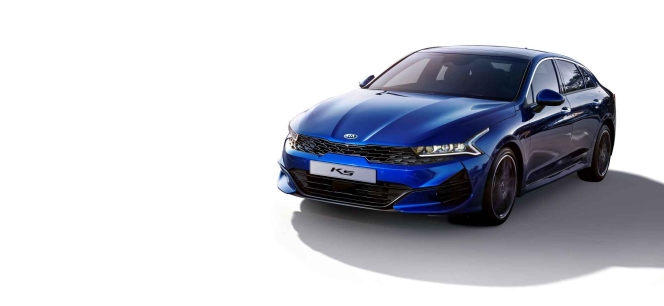
The new Kia K5 is a fastback evolution of Kia’s global best-selling sedan, combining a striking new design with driver-focused interior, cutting-edge technologies, and new powertrain options. It will go on-sale in many markets during the first half of 2020.
Thomas Schemera, Head of Product Division, Kia Motors Corporation, said, “When we launched K5 in 2010, it marked the dawn of a new era for Kia, with a design which heralded a change in how the brand was perceived in markets globally. Now, two generations later, we believe the new K5 will do the same. With a fastback design, the new K5 is one of the sportiest cars that we have ever created. With its comprehensive range of cutting-edge technologies, revised engines and transmissions, and a luxurious new interior, it is also one of the most advanced. K5 will play a central role in strengthening Kia’s presence in the global sedan segment and represent Kia’s transformation into a creator of desirable, world-class cars.”
 Exterior Design
K5 presents Kia’s next generation design direction and a new fastback sedan silhouette. It was designed in collaboration among its design studios in North America, Europe and Korea.
The front of the car is characterized by an evolution of Kia’s ‘tiger nose’, integrating its LED headlamps into the grille, with a ‘heart beat’ daytime running light signature expressing the raised levels of emotion the car is meant to inspire. K5 features a more aggressive front, with the grille nestled beneath a subtle overhang on the hood’s leading edge, parenthesized by angular air curtains and a wider air intake in the lower half of the bumper.
In profile, the K5 displays a greater sense of muscularity, with the body narrowing slightly at the midpoint between wheel arches – inspired by the ‘coke bottle’ shape of the Stinger’s body. The shoulder line gradually rises, narrowing the glasshouse towards the rear of the car and giving the car a sportier, ‘lean-forward’ stance when viewed from the side.
The car also features a modern interpretation of the chrome window line that has historically adorned executive sedans. Topped by this flash of chrome, its rear also has a new lighting signature. The light units have a new LED daytime running light which spans the width of the rear deck.
The new K5 is available with a choice of 16, 17 and 18-inch machine-cut aluminium alloy wheel designs and a wide range of paint colours. K5 GT models will also be offered with a 19-inch wheel design, more aggressive front and rear bumpers, special ‘GT’ badges, and dual twin exhaust tips.
The Interior
Elegant by design, and with a timeless, minimalist layout, the interior of the new K5 provides the driver and passengers a peaceful retreat in which to spend time. The futuristic driver-oriented interior of the new K5 is trimmed in a selection of tactile materials.
The wide dashboard shape is characterized by the integration of Kia’s latest infotainment systems, showing the next-generation design language that the brand will adopt across other models in the future. The new car sports a wide infotainment display which is physically attached to the instrument cluster in front of the driver. In certain models, the optional 10.25-inch touchscreen sits alongside Kia’s new 12.3-inch digital instrument cluster.
Additional technologies are subtly integrated into the cabin of the K5, with an available Mood Lighting system, emitting soft ambient light from panels in the doors and crash pad, and wireless phone charging. K5 also features a powerful 12-speaker BOSE surround-sound audio system.
The cabin of the new K5’s can be upholstered in a wide range of single and two-tone colour schemes, with cloth, synthetic leather and leather options. The dashboard is finished in a series of metallic and wood-effect surfaces depending on vehicle specification.
 Performance
The new K5 is available with a range of new ‘Smartstream’ powertrains from Kia, and – for the first time – a new all-wheel drive system available with certain engines. Its powertrain delivers greater confidence, better efficiency and more refinement in performance than ever. The new car remains front-wheel drive as standard.
The new K5 is available with a choice of gasoline engines. For customers in North America and Kia’s domestic Korean market, a new ‘Smartstream’ 1.6-liter T-GDi (turbocharged gasoline direct injection) engine is available, featuring Kia’s new Continuously Variable Valve Duration (CVVD) technology.
Other engine options include 2.0-liter MPI (multi-point injection) engine (152 ps, 192 Nm); 2.0-liter engine with continuously-variable valve lift (CVVL) technology (160 ps, 196 Nm); and 2.5-liter GDi engine (194 ps, 246 Nm). As with previous generations of K5, hybrid powertrain options will also be available.
All engines are paired as standard with six or eight-speed automatic transmissions, while the 2.5-liter T-GDi engines are also available with Kia’s new eight-speed wet double-clutch transmission (8DCT).
The new K5 offers a tailored driving experience thanks to its Drive Mode Select system, which enables drivers to adapt the car’s acceleration, steering and gear shift characteristics on the fly. ‘Smart’, ‘Comfort’, ‘Eco’, ‘Sport’ and ‘Custom’ modes allow drivers to alternately maximize fuel efficiency, refine the handling experience, or enhance the responses of their vehicle to driver inputs.
Technologies
The K5’s suite of advanced safety, connectivity and infotainment technologies make it one of the most high-tech, comprehensively-equipped cars in its class. Its voice recognition software allows drivers to use voice commands to control a range of features in the car, including climate control, electric windows, heating for the steering wheel, seats and rear glass, and the audio system.
The cabin incorporates an optional 10.25-inch touchscreen infotainment system, incorporating audio-visual navigation, and Kia’s new 12.3-inch high-resolution digital instrument cluster, providing crystal-clear information to the driver.
The new car is also available with an 8.0-inch head-up display, which projects driving information on to a small glass panel in the driver’s line of sight. The system displays alerts from the car’s numerous driver assistance technologies, details of vehicle speed, and turn-by-turn navigation instructions.
Safety
The new K5 has a range of passive and active safety and driver assist systems, protecting occupants and other road users on every journey. Kia’s Advanced Driver Assistance Systems (ADAS) help reduce many of the inherent hazards and stresses of driving.
Depending on market and vehicle specifications, the ADAS range in the new K5 includes Forward Collision-avoidance Assist (FCA), Blind-spot View Monitor (BVM) with Surround View Monitor (SVM) and Blind-spot Collision-avoid Assist (BCA), Smart Cruise Control (SCC) or Navigation-based SCC (NSCC), Lane Following Assist (LFA), Driver Attention Warning (DAW), and Highway Driving Assist (HDA).
Kia’s ‘Level 2’ autonomous driving technology, Lane Following Assist (LFA), controls steering depending on the vehicles in front. LFA uses camera to monitor road markings to keep the K5 in the centre of its lane. In addition, the K5 features a Rear View Monitor (RVM) with Reverse Parking Collision-Avoidance Assist (PCA) and Rear Cross-traffic Collision-avoidance Assist (RCCA).The new K5 is also the first Kia available with the company’s new Remote Smart Parking Assist (RSPA),
The K5 is fitted with up to nine airbags, as well as a suite of electronic vehicle safety systems. All K5 models are equipped as standard with Kia’s Vehicle Stability Management (VSM) and Electronic Stability Control, helping drivers maintain control under braking and cornering. (MT)
- BMW India
- BMW Motorrad India
- Nurburgring
- BMW M2 Coupé
- BMW M3 Sedan
- BMW M4 Coupé
- BMW M5 Sedan
- BMW M5 Touring
- BMW M 1000 R
BMW And BMW Motorrad Introduce 100 Jahre Nurburgring Limited Edition Vehicles In India
- By MT Bureau
- October 02, 2026
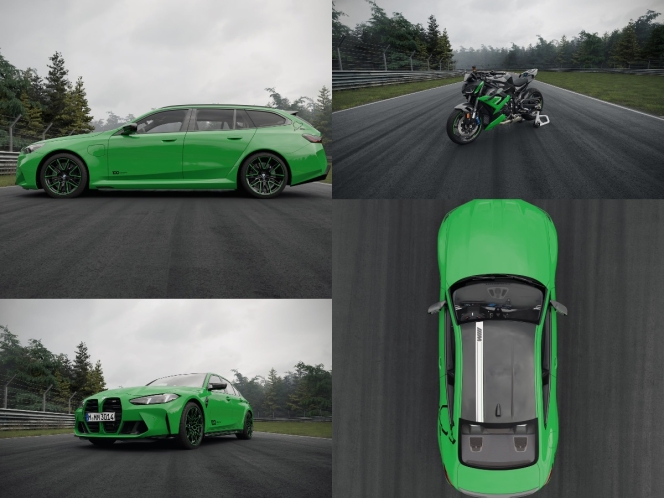
German automotive luxury brand BMW India and BMW Motorrad India have opened pre-orders for the ‘100 Jahre Nurburgring’ edition vehicles to mark the upcoming 100th anniversary of the Nurburgring racetrack in 2027.
The limited collection includes five BMW M car models – the BMW M2 Coupé, BMW M3 Sedan, BMW M4 Coupé, BMW M5 Sedan and the BMW M5 Touring – alongside the BMW M 1000 R motorcycle. The release marks the entry of the BMW M5 Touring into the Indian market.
The edition models feature specific paint finishes in Nurburgring Green and Sapphire Black metallic with green accents, incorporating the ‘100 Years’ logo, Nurburgring since 1927 lettering and the Nurburgring circuit outline.
Exterior details include carbon fibre roofs, model-specific graphics and green wheel accents across select models, while the M5 Touring features a steel roof with custom stripes. Interior specifications across the car lineup include black leather with green and white stitching, door sills, carbon fibre trims, M Carbon bucket seats with individual upholstery, and an M Alcantara steering wheel with a 12 o'clock marker.
The BMW M 1000 R motorcycle features a painted fuel tank with the Nurburgring outline, an airbox cover with ‘one of 100’ numbering, carbon wheels with green accent stripes, an Alcantara seat with embroidered ‘100’ logos and black components for the rear swingarm and frame.
Honda Cars India Sales Decline 19% In September 2026
- By MT Bureau
- October 02, 2026
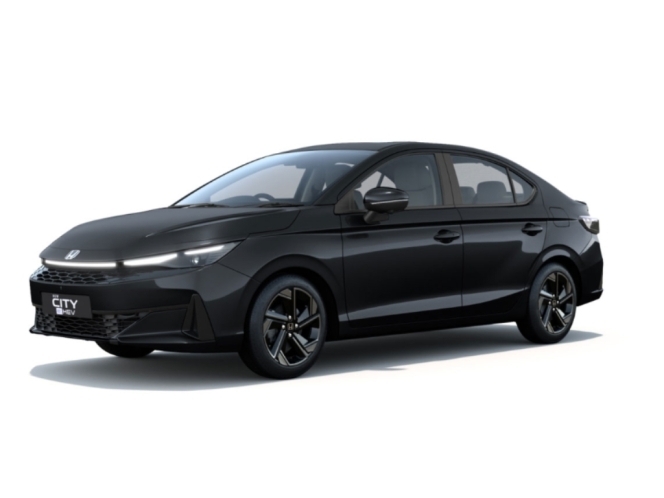
Honda Cars India (HCIL), one of the leading manufacturers of passenger vehicles in the country, has announced its wholesales for September 2026.
The company reported total sales of 6,955 units, down 16 percent YoY, as compared to 8,296 units sold for the same period last year.
In the domestic market, the company sold 4,465 units, down 19 percent YoY, as compared to 5,503 units sold a year ago. On the exports front, the company shipped 2,490 units, down 11 percent YoY, as compared to 2,793 units last year.
Kunal Behl, Vice-President, Marketing & Sales, Honda Cars India, said, We are pleased to see positive sales momentum for the Honda City and Honda Amaze during the month. We are also gearing up for the launch of new Elevate, which will further strengthen our SUV offering with a refreshed and enhanced package. With the festive season underway and an exciting product introduction ahead, we look forward to building stronger momentum in the coming months.”
Kia India Clocks Highest-Ever Monthly Sales Of 32,017 Units In September 2026
- By MT Bureau
- October 01, 2026
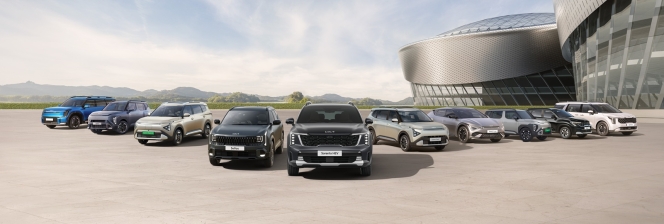
Kia India, one of the leading passenger vehicle manufacturers, has reported its best-ever monthly wholesale performance of 32,017 units in September 2026, representing a 41 percent increase compared to 22,700 units sold last year.
For Q3 of CY2026, the company recorded sales of 89,259 units, reflecting a 38.5 percent growth over 64,443 units for the same period last year.
In terms of YTD (January – September 2026) cumulative sales reached 253,008 units, marking a 22.5 percent increase from 206,582 units reported during the corresponding period in 2025.
Kia India attributed the robust performance to healthy demand across its portfolio incuding Seltos and Sonet models, alongside contributions from the Carens, Carens Clavis, Clavis EV, Syros EV and Sorento, which is offered in diesel and hybrid powertrain options. The company's powertrain options now span petrol, diesel, CNG, hybrid, and electric configurations across its product range.
Atul Sood, Senior Vice-President of Sales and Marketing, Kia India, said, "Our strong performance in September and across the third quarter reflects the continued trust of our customers and the strength of Kia’s evolving portfolio. The Seltos and Sonet continue to be key contributors to our growth, while the strong response to the Sorento and Syros EV reinforces our strategy of expanding into new segments and powertrain categories in line with evolving customer aspirations. As mobility needs become increasingly diverse, we are focused on providing meaningful choice across conventional, CNG, hybrid and electric powertrains, supported by ownership solutions that address real customer needs. We remain committed to building on this momentum through distinctive products, advanced technologies and differentiated experiences designed around the needs of Indian customers."
At present, Kia India operates a retail and service network comprising 915 touchpoints across 425 cities, alongside 137 certified pre-owned outlets across the country.
Toyota Kirloskar Motor Sells 25,027 PVs In September 2026
- By MT Bureau
- October 01, 2026
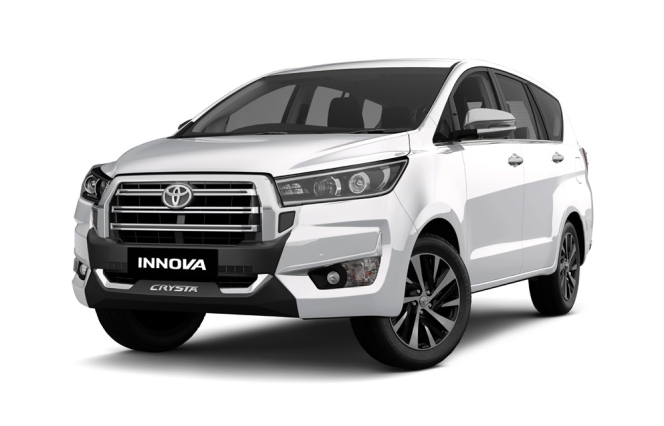
Toyota Kirloskar Motor (TKM), one of the leading passenger vehicle manufacturers, has reported its total wholesales of 28,218 units in September 2026, comprising 25,027 units sold in the domestic market and 3,191 units exported.
For the YTD period (January – September 2026), the automaker reported cumulative total sales of 294,914 units, representing an 8 percent increase compared to 272,824 units sold last year.
Domestic sales for the 9-month period rose 9 percent to 269,619 units, up from 247,081 units in the previous year, while exports reached 25,295 units, compared to 25,743 units a year ago.
Sabari Manohar, Executive Vice-President of Sales-Service-Used Car Business, Toyota Kirloskar Motor, said, "September witnessed continued customer interest across segments, supported by our focus on quality, durability and reliability. As we enter the festive season, we remain committed to strengthening customer engagement and working closely with our dealer partners to deliver enhanced mobility experiences and address evolving customer needs."

Comments (0)
ADD COMMENT