

- Mercedes-Benz India
- Forex
- Santosh Iyer
- C200
- GLC 300 4MATIC
- E 200
- GLE300d 4MATIC AMG Line
- EQS SUV 450 4MATIC
- GLS 450 4MATIC
- Maybach S 680
Mercedes-Benz India Announces Two-Stage Price Hike Amid Forex Pressure
- By MT Bureau
- May 09, 2025
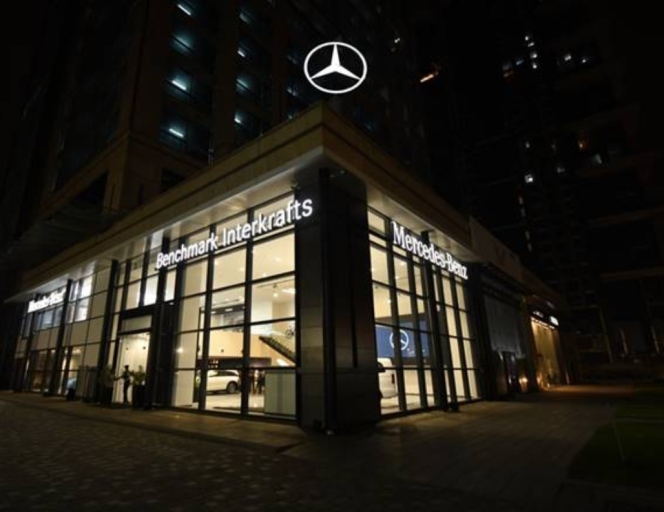
Mercedes-Benz India, the country’s leading luxury carmaker, has announced that it will revise the ex-showroom prices of its model range in two phases, starting 1 June 2025. The company attributes it to a steep depreciation of the INR against the Euro and the resulting spike in import costs.
The first increase, ranging from INR 90,000 for the C-Class to INR 1.2 million for the Mercedes-Maybach S 680, will be implemented in June. A further nominal 1.5 percent hike will follow from 1 September 2025. This two-stage strategy aims to give customers financial flexibility and minimise the immediate impact.
To soften the effect, Mercedes-Benz Financial Services will offer innovative financing options, including flexible EMIs and partial ownership plans. For models like the GLA and GLC, EMI changes will be under INR 2,000
Santosh Iyer, MD & CEO, Mercedes-Benz India, said, “Over the last four months, the rupee has depreciated in the market, with an approximate 10 percent drop in the Euro to INR exchange rate, causing significant cost pressures on our business operations. This steep swing in the Euro-INR rate has been severely impacting the cost of imports, for both components and CBU cars. Though we have been absorbing most of the exchange rate difference to date and increasing our localisation initiatives, we are now compelled to pass on a small portion of it to customers. The continuous rise in operational costs, influenced by forex movement, necessitates this slight price correction, which we will pass on to the market, for sustained business of the company and our Franchise Partners. This staggered approach for price revision, along with the value-added flexible financing programmes from MBFS, will not only minimise any financial burden, but will also offer customers a robust leeway to plan their purchases, best suited to their requirements.”
| MERCEDES-BENZ INDIA | |||
| Model | Current Price (INR lakh) | New Price (INR lakh) | Change (INR lakh) |
| C 200 | 59.4 | 60.3 | 0.9 |
| GLC 300 4MATIC | 76.8 | 78.3 | 1.5 |
| E 200 | 79.5 | 81.5 | 2 |
| GLE 300d 4MATIC AMG Line | 99 | 101.5 | 2.5 |
| EQS SUV 450 4MATIC | 128 | 131 | 3 |
| GLS 450 4MATIC | 133.9 | 137 | 3.1 |
| Maybach S 680 | 347.8 | 360 | 12.2 |
Hyundai Bayon To Feature 69% High-Strength Steel Grade For Enhanced Safety
- By MT Bureau
- October 21, 2026
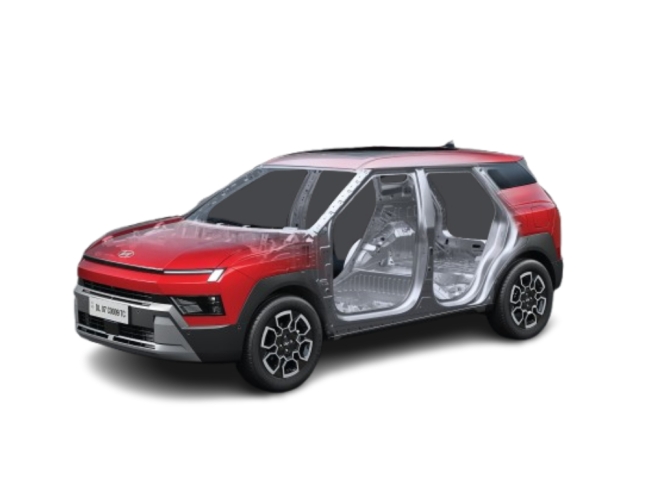
Hyundai Motor India, one of the leading passenger vehicle manufacturers, has detailed the safety specifications and platform architecture for its upcoming Bayon SUV model ahead of its official launch in India on 26 October 2026.
Built on the Global K Enhanced Platform, the Bayon utilises a body structure comprising of 69 percent high-strength steel grades, integrating hot-stamped components across the front apron, dashboard, rear floor and side reinforcements.
The vehicle incorporates Hyundai SmartSense Level 2 Pro ADAS, providing 23 driver assistance features supported by three radar units and 12 parking sensors. Over 35 safety features are fitted as standard across all variants, including six airbags, electronic stability control, hill-start assist control, a tyre pressure monitoring system (TPMS) and ISOFIX child seat anchors.
The Bayon will be powered by a 1.5-litre MPi four-cylinder petrol engine producing 84.4 kW (115 PS) and 143.8 Nm of torque, paired with a six-speed manual or an Intelligent Variable Transmission. Exterior options will span 10 colour configurations across monotone, dual-tone, and matte finishes.
Tarun Garg, Managing Director and Chief Executive Officer of Hyundai Motor India, said, "At Hyundai, we believe that true innovation is meaningful only when it enhances the everyday experiences of our customers. With the Hyundai BAYON, we have combined a robust body structure, advanced safety technologies, and intelligent driver assistance systems to deliver a comprehensive safety experience. From its reinforced chassis and high-strength steel construction to Hyundai SmartSense Level 2 Pro ADAS, the BAYON is engineered to inspire confidence not only in challenging situations, but throughout every journey. This reflects our commitment to delivering intelligent mobility solutions that are safe, connected, and progressive for modern India."
Mitsubishi Motors Launches All-New Pajero In Thailand Ahead Of Global Rollout
- By MT Bureau
- October 21, 2026
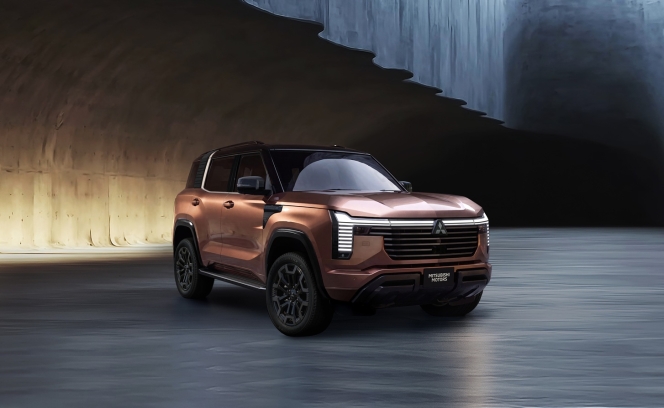
Japanese automotive major Mitsubishi Motors has commenced sales of the Pajero cross-country SUV in Thailand, serving as the initial market for the model’s international release.
The Pajero’s production takes place at the Laem Chabang facility operated by Mitsubishi Motors in Chonburi Province, which functions as a manufacturing hub for export operations.
Shipments to Australia and Japan are scheduled ahead of market releases in mid-December, followed by sequential introductions across approximately 100 countries and regions in the Middle East and Latin America starting in fiscal 2027.
The Pajero integrates four-wheel-drive capability with passenger car handling characteristics and positioning as a flagship offering.
Keisuke Kishiura, President and Chief Operating Officer, Mitsubishi Motors, said, "We are delighted to begin sales of the all-new Pajero in Thailand as the first market for its global rollout. Thailand is not only an important market for Mitsubishi Motors, but also a key hub for our production and exports. The all-new Pajero is a flagship model that embodies Mitsubishi Motors and is positioned among the top-tier cross-country SUVs in the Thai market. We will continue to deliver appealing products from Thailand to customers around the world and provide value that exceeds expectations."
Param Automotive Inaugurates Upgraded Mahindra Showroom In Ahmedabad
- By MT Bureau
- October 20, 2026
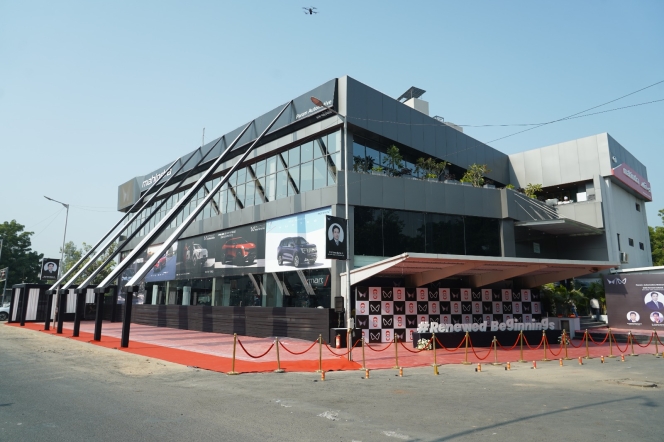
Param Automotive Group has inaugurated an upgraded dealership facility in Ahmedabad to mark its silver jubilee year.
Located at the site established in 2002, the facility spans 40,000 square feet and features display space for 18 vehicles.
The showroom includes customer lounges, delivery zones, accessory bays, test-drive areas and hospitality spaces to support vehicle sales and customer service operations.
BMW Group Expands Lucknow Facility To House MINI Brand Operations
- By MT Bureau
- October 19, 2026
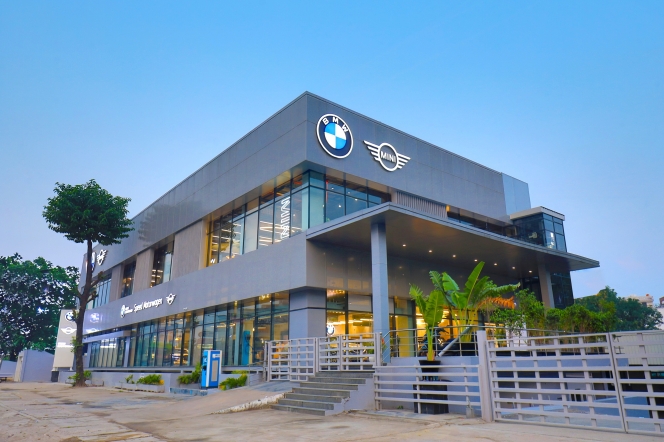
BMW Group India has integrated the MINI brand into its Speed Motorwagen dealership in Lucknow, creating a multi-brand retail facility representing BMW, MINI and BMW Motorrad under one roof.
The Retail.NEXT facility is spread across a 12,142-square-foot showroom for BMW and MINI alongside a 2,088-square-foot pre-owned vehicle display area. The showroom accommodates eight BMW vehicles, three certified pre-owned units and two MINI vehicles.
The site also includes a 2,100-square-foot BMW Motorrad display area featuring 11 motorcycles, supported by dedicated service workshops comprising mechanical, electrical and programming bays. MINI's introduction in Uttar Pradesh aligns with the brand's national retail footprint, which spans 18 sales touchpoints across 17 cities.
Hardeep Singh Brar, President and CEO, BMW Group India, said, "Lucknow is an important luxury market, with customers increasingly seeking brands that reflect their individuality and aspirations. Since 2012, BMW has shaped this market through a compelling portfolio, exceptional experiences and a strong local presence. We lead the luxury electric vehicle segment in Uttar Pradesh, reflecting the growing preference for progressive, sustainable mobility and the strength of our electric portfolio. MINI with its unmistakable style, spirited performance and distinctive character, is a natural fit for Lucknow’s refined taste and appreciation for self-expression. Together with Speed Motorwagen, we are strengthening the power of choice by bringing BMW, MINI and BMW Motorrad under one roof, supported by personalised attention and seamless ownership support."
Divij Narain, Dealer Principal of Speed Motorwagen, said, "The arrival of MINI marks a significant milestone for Speed Motorwagen and discerning automotive enthusiasts in Lucknow. Alongside BMW’s progressive luxury and BMW Motorrad’s spirit of freedom and adventure, MINI adds a distinctive new dimension to our portfolio. Our team is committed to bringing each brand to life through thoughtfully curated product discovery, expert consultation and comprehensive aftersales care. We look forward to nurturing passionate communities across all three brands and ensuring every customer interaction is as memorable and individual as the mobility experience they choose."
Comments (0)
ADD COMMENT