

Mercedes Benz India Launches AMG C63 Coupe and AMG GTR Coupe
- By 0
- June 17, 2020

The company added it’s the widest range of performance and dream cars by launching AMG C63 Coupe and AMG GTR Coupe recently.
Launching it virtually, Martin Schwenk, Managing Director, and CEO, Mercedes-Benz India, announced the features and price of the new cars. Priced at INR 1.33 crore the new C63 Coupe is cheaper than its predecessor model while it is not the case with the new GT R, which is priced INR 2.48 crore.

AMG C63 Coupe
The new C63 Coupe is powered by 4 litre V8 engine. It combines sportiness with emotion and intelligence offering design and driving pleasure. The interior offers an authentic sports car atmosphere. Every facet of the inside of the vehicle reflects the performance philosophy. There are perfectly matched elements, characteristic touches and an ambience geared to sportiness in every detail.
The steering wheel is lined with fine Nappa leather and perforated in the grip area. Ergonomically positioned touch control buttons ensure intuitive user-friendliness and are conducive to focused driving. The fully digital instruments and larger displays, including a new infotainment generation, are state-of-the-art features that make operating the car a highly individual affair. Depending on the precise specification, the instruments can also feature the ‘Classic,’ ‘Sporty, or ‘Progressive display styles.
The high-resolution media display with 10.25-inch screen diagonal adds a particularly high-quality touch to the interior of the car. Using finger movements (multi-touch), the touchpad is as intuitive to operate as a smartphone. The head-up display transforms the windscreen into an exciting digital cockpit.
In the exterior the front splitter, diffuser and spoiler lip reduce lift at the front and rear, and make the car look even sportier in combination with the inserts in the side skirts. The adaptive multi-beam LED headlamps with individually controllable LEDs react to the traffic situation. Partial main beam omits other road users without dazzling them. Ultra-range high-beam increases the range to the permitted maximum. The cornering light and active light functions also illuminate the field of vision to optimum effect.
The electric panoramic sliding sunroof is opened either continuously or by using the one-touch function. When the vehicle is parked, the panoramic sliding sunroof can also be opened and closed from outside – using the vehicle key with the functions ‘summer opening’ and ‘comfort closing.’ Electrically folding exterior mirrors protect the car vehicle from annoying damage when parking, the lowerable exterior mirror on the front passenger side makes parking easier and the self-dimming function protects the eyes.
Carbon-fibre has been used lavishly to reduce weight and improve performance and aesthetics. The material has been used in several places including front apron A-wing, side sill panels, rear apron, side facings for the air vents, mirror housings and spoiler lip.

AMG GTR Coupe
Demonstrating AMG's development and racing expertise the GT R Coupe pushes the limits of dynamic driving even further, making AMG’s DNA even more enjoyable. Thanks to direct knowhow transfer from motorsport the sports car impresses with a top speed of 318 kmph and acceleration from 0 to 100 kmph in 3.6 seconds. With rear-axle steering the car offers maximum agility and stability even at critical limits.
The lower a vehicle’s centre of gravity, the better its performance and this phenomenon is achieved through the installation of a low-set front mid-engine in a transaxle configuration, in GT R Coupe. This results in beneficial weight distribution of 47 to 53 percent between front and rear axles. The torque tube, as it is called – made out of carbon fibre in GT R provides a flexurally and torsionally rigid connection between the engine and the transmission. At the same time an extremely light and torsion-resistant drive shaft made of carbon fibre rotates inside the tube, which ends up in saving about 14kg of weight. This transfers the output from 4-litre V8 bi-turbo engine to Speedshift DCT 7-speed sports transmission, which has been redesigned for the vehicle with a longer first and shorter seventh gear. The uniball joints are wear resistant metal linking elements attached to the lower wishbones of the rear axle in a design that allows minimal play, so facilitating even more precise driving.
With the rear axle differential lock, the car is even more agile offering greater driving pleasure. The electronically controlled differential lock enables optimum power distribution between both wheels when cornering. It continually adjusts to the driving situation and increases driving stability even when changing lanes. The interventions of rear axle differential lock are optimized for the respective driving situation and ESP mode. As such it widens the spread between driving dynamics and handling, comfort and driving safety.
The ride control suspension contributes to improving driving safety. The spring rate of the shock absorbers is increased in ‘Sport’ and ‘Sport+’ modes. The stiffer suspension configuration together with the continual damping adjustment for each individual wheel reduces pitching and rolling of the body during dynamic driving manoeuvres. This increases safety and ride comfort at the same time.
Among the many notable features in the exterior is the headlamp that spits uniform warm-white light quality, which is close to the colour temperature of daylight and illuminate the road considerably more precisely than conventional halogen or xenon headlamps. The LED tail lights impress with their extremely flat and horizontal lines.


Carbon-fibre has been judiciously used in GT R Coupe. For instance, the roof is made of carbon fibre yielding maximum performance. In addition this material has been used in air curtains in the front bumper, active panels in the front bumper for better aerodynamics, long bonnet with power domes and A-type grille.
A look at the interior gives a glimpse of the high-tech features beginning with the cockpit. The user interface concept with fully digital instruments cluster of 12.3 inches and a 10.25-inch display fills the eyes. The steering wheel in Dinamica microfibre with steering wheel buttons gives the freedom to focus on the road when looking away is not an option. High-quality materials give the interior a handcrafted character. The centre console turns the interior of the sports car into something very special. The stylized V8 arrangement of the controls has been enhanced with the facelift and supplemented with innovative display switches to select the various settings. The centrally positioned touchpad enables intuitive control of the infotainment system.

Adds Top-end Petrol, Diesel Variant To LWB GLE
Mercedes-Benz has also strengthened its SUV offering by adding two new top-end variants to its popular GLE portfolio - 450 4MATIC LWB and 400 d 4MATIC LWB. The current LWB GLE range comprises the BS-VI GLE 300 d 4MATIC LWB and the top-end CBU GLE 400 d 4MATIC LWB Hip Hop variants.
The locally made GLE 450 4MATIC LWB and 400 d 4MATIC LWB features the same design, power, plush interiors, just like the other variants in the current generation GLE range. The differentiation is in the packaging of latest technology, including the cutting-edge Mercedes-Benz MBUX system with interior assistant. The permanent 4MATIC all-wheel drive with variable torque distribution capability together with 9G-TRONIC transmission ensures it is just as agile and capable as an off-roader as its diesel siblings.
Schwenk said, “The new long wheelbase GLE has already created a benchmark in the luxury SUV segment and we are very satisfied with the customer response. Encouraged by this response we are now introducing a petrol and a diesel variant of the GLE LWB. We are confident that the GLE 450 4MATIC and the 400 d 4MATIC will help this SUV retain its top billing in the luxury SUV segment. The GLE LWB is an important pillar in our expansive SUV portfolio, leading our product offensive in the SUV segment and it remains Mercedes-Benz’s highest selling SUV in India. With the addition of these two new variants, we once again reiterate our customer focus and our commitment to the Indian market.”
An in-line six-cylinder engine systematically electrified with 48-volt technology powers the Mercedes-Benz GLE 450 LWB 4MATIC. Its performance data of 270 kW (367 hp) and 500 Nm of torque, with a further 250 Nm of torque and 16 kW/22 hp available via EQ Boost over short periods is quite commendable. The integrated starter/alternator (ISG) is responsible for hybrid functions such as EQ Boost or energy recuperation, while allowing fuel savings that were previously reserved for high-voltage hybrid technology.
Integrated Starter Generator (ISG) eliminates the need for a belt drive for ancillary components at the front of the engine, which reduces its overall length. The slim design, together with the physical separation of intake/exhaust, creates space for near-engine exhaust after treatment. The 48-volt on-board power supply serves not only high power consumers such as the water pump and air-conditioning compressor, but also the Integrated Starter Generator (ISG), which also supplies energy to the battery by means of highly efficient energy recuperation.
The GLE 400 d 4MATIC LWB comes equipped with an OM 656 in-line six-cylinder diesel engine which generates 243 kW (330 hp) and 700 Nm of torque. The most powerful diesel engine in the history of Mercedes-Benz bundles together state-of-the-art technology components. As a result, the engine sets standards in terms of agility and consumption.
Other interesting features of both the variants include multi-beam LED headlamps with ultra range high beam, 4MATIC with VTD (Variable Torque Distribution), Airmatic suspension with ADS+, 20-inch 5-twin-spoke light-alloy wheels, Auto Park Assist 360 degree surround view camera, widescreen cockpit, easy pack tailgate, electric sun blinds, blind spot assist and Active Brake Assist. (MT)
Hyundai Bayon To Feature 69% High-Strength Steel Grade For Enhanced Safety
- By MT Bureau
- October 21, 2026
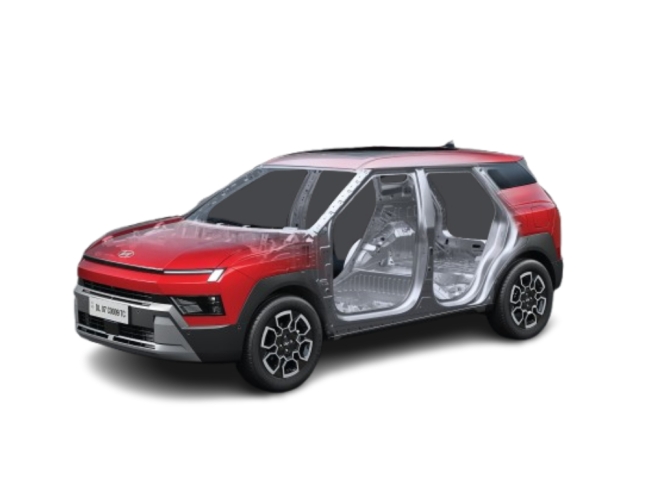
Hyundai Motor India, one of the leading passenger vehicle manufacturers, has detailed the safety specifications and platform architecture for its upcoming Bayon SUV model ahead of its official launch in India on 26 October 2026.
Built on the Global K Enhanced Platform, the Bayon utilises a body structure comprising of 69 percent high-strength steel grades, integrating hot-stamped components across the front apron, dashboard, rear floor and side reinforcements.
The vehicle incorporates Hyundai SmartSense Level 2 Pro ADAS, providing 23 driver assistance features supported by three radar units and 12 parking sensors. Over 35 safety features are fitted as standard across all variants, including six airbags, electronic stability control, hill-start assist control, a tyre pressure monitoring system (TPMS) and ISOFIX child seat anchors.
The Bayon will be powered by a 1.5-litre MPi four-cylinder petrol engine producing 84.4 kW (115 PS) and 143.8 Nm of torque, paired with a six-speed manual or an Intelligent Variable Transmission. Exterior options will span 10 colour configurations across monotone, dual-tone, and matte finishes.
Tarun Garg, Managing Director and Chief Executive Officer of Hyundai Motor India, said, "At Hyundai, we believe that true innovation is meaningful only when it enhances the everyday experiences of our customers. With the Hyundai BAYON, we have combined a robust body structure, advanced safety technologies, and intelligent driver assistance systems to deliver a comprehensive safety experience. From its reinforced chassis and high-strength steel construction to Hyundai SmartSense Level 2 Pro ADAS, the BAYON is engineered to inspire confidence not only in challenging situations, but throughout every journey. This reflects our commitment to delivering intelligent mobility solutions that are safe, connected, and progressive for modern India."
Mitsubishi Motors Launches All-New Pajero In Thailand Ahead Of Global Rollout
- By MT Bureau
- October 21, 2026
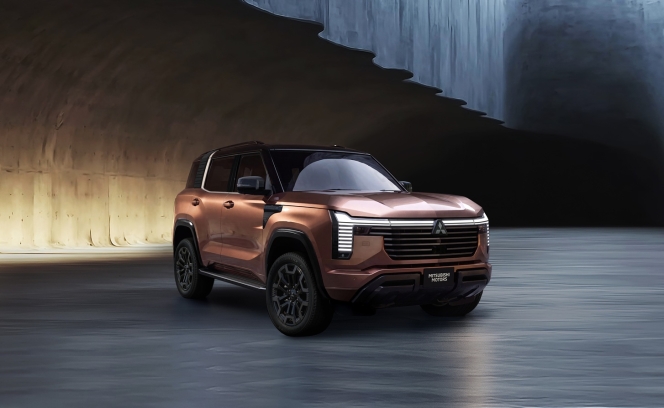
Japanese automotive major Mitsubishi Motors has commenced sales of the Pajero cross-country SUV in Thailand, serving as the initial market for the model’s international release.
The Pajero’s production takes place at the Laem Chabang facility operated by Mitsubishi Motors in Chonburi Province, which functions as a manufacturing hub for export operations.
Shipments to Australia and Japan are scheduled ahead of market releases in mid-December, followed by sequential introductions across approximately 100 countries and regions in the Middle East and Latin America starting in fiscal 2027.
The Pajero integrates four-wheel-drive capability with passenger car handling characteristics and positioning as a flagship offering.
Keisuke Kishiura, President and Chief Operating Officer, Mitsubishi Motors, said, "We are delighted to begin sales of the all-new Pajero in Thailand as the first market for its global rollout. Thailand is not only an important market for Mitsubishi Motors, but also a key hub for our production and exports. The all-new Pajero is a flagship model that embodies Mitsubishi Motors and is positioned among the top-tier cross-country SUVs in the Thai market. We will continue to deliver appealing products from Thailand to customers around the world and provide value that exceeds expectations."
Param Automotive Inaugurates Upgraded Mahindra Showroom In Ahmedabad
- By MT Bureau
- October 20, 2026
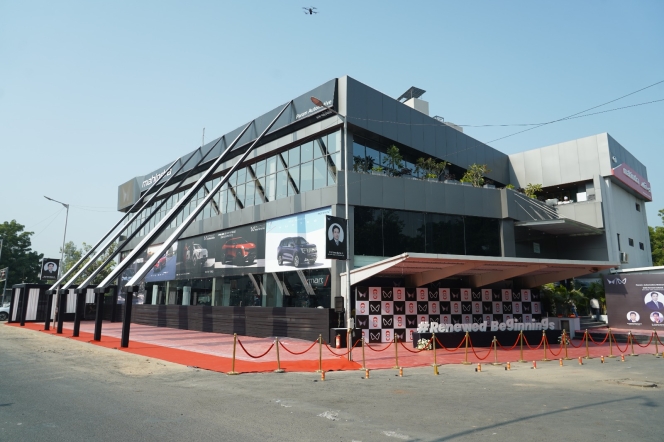
Param Automotive Group has inaugurated an upgraded dealership facility in Ahmedabad to mark its silver jubilee year.
Located at the site established in 2002, the facility spans 40,000 square feet and features display space for 18 vehicles.
The showroom includes customer lounges, delivery zones, accessory bays, test-drive areas and hospitality spaces to support vehicle sales and customer service operations.
BMW Group Expands Lucknow Facility To House MINI Brand Operations
- By MT Bureau
- October 19, 2026
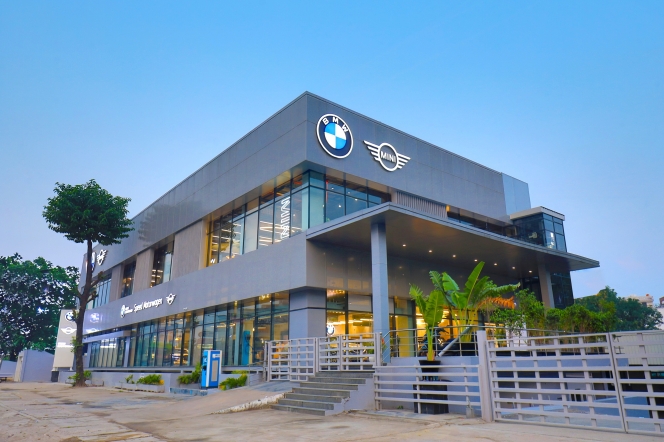
BMW Group India has integrated the MINI brand into its Speed Motorwagen dealership in Lucknow, creating a multi-brand retail facility representing BMW, MINI and BMW Motorrad under one roof.
The Retail.NEXT facility is spread across a 12,142-square-foot showroom for BMW and MINI alongside a 2,088-square-foot pre-owned vehicle display area. The showroom accommodates eight BMW vehicles, three certified pre-owned units and two MINI vehicles.
The site also includes a 2,100-square-foot BMW Motorrad display area featuring 11 motorcycles, supported by dedicated service workshops comprising mechanical, electrical and programming bays. MINI's introduction in Uttar Pradesh aligns with the brand's national retail footprint, which spans 18 sales touchpoints across 17 cities.
Hardeep Singh Brar, President and CEO, BMW Group India, said, "Lucknow is an important luxury market, with customers increasingly seeking brands that reflect their individuality and aspirations. Since 2012, BMW has shaped this market through a compelling portfolio, exceptional experiences and a strong local presence. We lead the luxury electric vehicle segment in Uttar Pradesh, reflecting the growing preference for progressive, sustainable mobility and the strength of our electric portfolio. MINI with its unmistakable style, spirited performance and distinctive character, is a natural fit for Lucknow’s refined taste and appreciation for self-expression. Together with Speed Motorwagen, we are strengthening the power of choice by bringing BMW, MINI and BMW Motorrad under one roof, supported by personalised attention and seamless ownership support."
Divij Narain, Dealer Principal of Speed Motorwagen, said, "The arrival of MINI marks a significant milestone for Speed Motorwagen and discerning automotive enthusiasts in Lucknow. Alongside BMW’s progressive luxury and BMW Motorrad’s spirit of freedom and adventure, MINI adds a distinctive new dimension to our portfolio. Our team is committed to bringing each brand to life through thoughtfully curated product discovery, expert consultation and comprehensive aftersales care. We look forward to nurturing passionate communities across all three brands and ensuring every customer interaction is as memorable and individual as the mobility experience they choose."



Comments (0)
ADD COMMENT