

New Fourth Generation Skoda Fabia Is Here
- By MT Bureau
- May 05, 2021
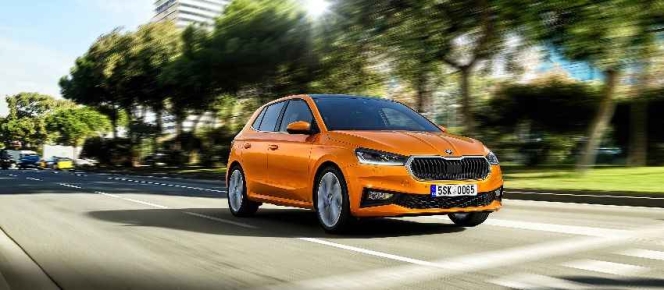
Skoda launched the fourth generation of its popular small car, the Fabia, at the DOX Centre for Contemporary Art on May 4, 2021.
Twenty-two years after the debut of the Fabia, Skoda has now launched the fourth-generation model built on Volkswagen's MQB-A0 platform. The introduction of the new platform and some clever engineering makes the new Fabia a more spacious car than its peers. In its latest avatar, the Fabia boasts of improved comfort features and numerous advanced safety and assistance systems previously only reserved for high-tier vehicles.
Exterior:
The new Fabia has grown, with the length increasing by 111 mm to exceed the four-metre mark at 4,108 mm and the width by 48 mm. The wheelbase has also increased from 2470 mm to 2564 mm, freeing up more space on the interiors for added comfort and freeing 50l of additional boot space to a total of 380l, the largest boot in the segment.
As shown in the design renders, the new Fabia features sculpted lines on the bonnet with dynamic proportions and the SKODA-typical crystalline structures, creating a particularly emotive look. Skoda has managed to incorporate the triangle on the Czech flag with the body lines on the front doors as a small Easter egg.
The modern light unit with LED technology features Razor-sharp headlights, as well as taillights. The full-LED headlights feature cornering and adaptive light functions.

Skoda has computed more than 3,000 CFD simulations (computational fluid dynamic) to create a design that sets industry benchmarks with a low drag coefficient of 0.28. An essential part of the car's aerodynamics is the new type of cooling shutter in the front bumper's lower air inlet. These actively adjustable slats shut when slight cooling is needed. This helps improve the aerodynamics and results in better fuel savings and lower carbon emissions at constant speeds of 120 km/hr.
At the rear, the new Fabia features a large roof spoiler with side finlets that optimise the airflow at the back. The new wing mirror housings also reduce drag and direct the airflow to the rear in a targeted manner, while the vents in the front bumper, called air curtains, help channel the air in a particular way close to the side of the body and the wheels. Twelve panels now cover a large part of the underbody instead of three in crucial aerodynamics areas. One can see Skoda's clever engineering feat in the unique plastic trims fitted in the Fabia to reduce the drag created by the wheels.
Interior:
The interior of the new Fabia is characterised by a free-standing infotainment display measuring up to 9.2 inches at the centre with a 10.25-inch digital instrument cluster for the first time. Facilitated by the new architecture, features like a heated windscreen and heated steering wheel will now debut on the Fabia.
The use of the MQB-A0 platform has helped free more space inside, making the new Fabia the most spacious car in its segment. The use of symmetry in the interior design and horizontal decorative strips emphasise the cabin's width, making it bigger and airy. Skoda is also offering fabric upholstered dashboard with contrast stitching on some models of the Fabia. The large circular AC vents are finished in chrome along with the newly designed door handles.

Making the interiors of the new Fabia colourful, Skoda is offering LED ambient lighting that allows the driver to illuminate that decorative dashboard trim in white or red along with the centre console and front door handles. As part of the LED ambient lighting package, Skoda also offers LED reading lights at the front and the rear. A three-spoke multi-functional steering wheel finished in leather adds a touch of sportiness to Fabia's cabin, along with the paddle shifter on the DSG model.
The optional 10.25-inch digital instrument cluster lets the drivers choose from layouts to suit their needs, including classic, modern, reduced and extended layouts along with a sports layout on the dynamics pack. The virtual cockpit also displays radio stations, album covers, maps and more.

Another first for the Fabia is the dual-zone Climatronic AC with rear vents that help cool the cabin faster. The AC system features eight buttons that operate all the functions.
Users can select from three different infotainment systems with the new Fabia based on the trim level selected. The entry-level system Swing features a modern 6.5-inch colour touchscreen, a radio with a digital DAB receiver and four front speakers as standard. Moving higher, the Bolero offers a radio, an 8-inch screen, a Bluetooth hands-free system and two additional surround-sound speakers in the rear doors along with wireless SmartLink and Android Auto or Apple CarPlay. The range-topping Amundsen features a 9.2-inch touchscreen with gesture control, the Laura digital voice assistant and navigation function that is online backed.

The Fabia also features outstanding NVH levels thanks to the aero-acoustic simulation methods used during the car's aerodynamic development to reduce wind noise by understanding the flow of air around the vehicle.
Connectivity:
Skoda has equipped the new Fabia's 9.2-inch infotainment system with an eSIM that lets users control specific functions of the car using the SKODA Connect app. This range-topping trim also includes options for Wi-Fi hotspot, music streaming services and maps that can be stored on the 64-GB SSD hard drive and updated online. Keeping in line with the current technology, Skoda has included five USB-C sockets for charging mobile devices – one of which can be found on the rear-view mirror to charge a dashcam.

With the help of SKODA Connect, app users can transfer their existing account into the new Fabia and use the Amundsen system's display to access weather reports and news, allow access to a personal Google calendar or warn of hazards.
Safety:
The new MQB-A0 platform has made the body of the new Fabia stiffer, offering excellent active and passive safety.
Exploiting the possibilities of the new platform, Skoda has equipped the new Fabia with Travel Assist, which provides automatic support with longitudinal and lateral steering. Features like Adaptive Cruise Control (ACC), Lane Assist, Park Assist, Blind Spot monitoring up to 70m away from the car, and Manoeuvre Assist use sensors to detect obstacles in front or behind the vehicle to apply brakes automatically and actively help in the safety of the occupants and the surroundings.

Another step up in safety, the Fabia comes equipped with up to nine airbags in the higher trims for occupants’ safety. Another standard across the range is the ISOFIX anchors and top tether anchor points on the back seats.
Powertrain:
Skoda has equipped the new Fabia with three engines from Volkswagen Group's latest EVO generation in five states of tune. Four of the five EURO 6d compliant engines produce a WLTP range of more than 900km.
The 1.0l MPI EVO three-cylinder petrol engine is available in either a 65 or 80hp tune while the 1.0l TSI EVO engine is available in either a 95 or 110hp tune. The 1.0l naturally aspirated engine is available with only a 5-speed manual while the 1.0l TSI engine is available with a choice of either with either a 5-speed manual, 6-speed manual, or 7-speed DSG. The more powerful 1.5l TSI EVO four-cylinder engine is available in 150hp guise mated to a 7-speed DSG. (MT)
- BMW India
- BMW Motorrad India
- Nurburgring
- BMW M2 Coupé
- BMW M3 Sedan
- BMW M4 Coupé
- BMW M5 Sedan
- BMW M5 Touring
- BMW M 1000 R
BMW And BMW Motorrad Introduce 100 Jahre Nurburgring Limited Edition Vehicles In India
- By MT Bureau
- October 02, 2026
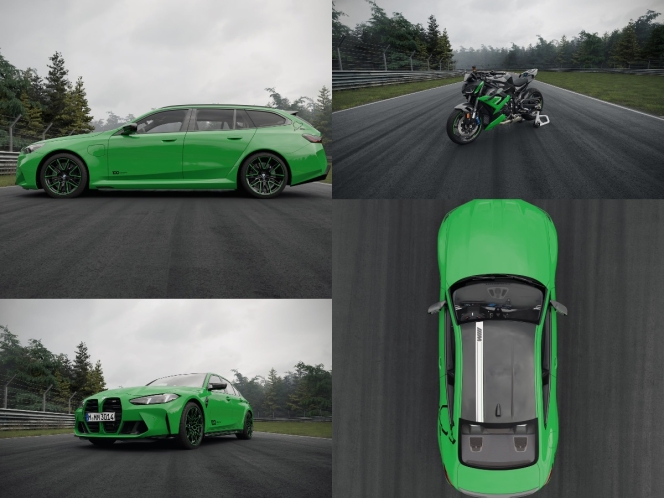
German automotive luxury brand BMW India and BMW Motorrad India have opened pre-orders for the ‘100 Jahre Nurburgring’ edition vehicles to mark the upcoming 100th anniversary of the Nurburgring racetrack in 2027.
The limited collection includes five BMW M car models – the BMW M2 Coupé, BMW M3 Sedan, BMW M4 Coupé, BMW M5 Sedan and the BMW M5 Touring – alongside the BMW M 1000 R motorcycle. The release marks the entry of the BMW M5 Touring into the Indian market.
The edition models feature specific paint finishes in Nurburgring Green and Sapphire Black metallic with green accents, incorporating the ‘100 Years’ logo, Nurburgring since 1927 lettering and the Nurburgring circuit outline.
Exterior details include carbon fibre roofs, model-specific graphics and green wheel accents across select models, while the M5 Touring features a steel roof with custom stripes. Interior specifications across the car lineup include black leather with green and white stitching, door sills, carbon fibre trims, M Carbon bucket seats with individual upholstery, and an M Alcantara steering wheel with a 12 o'clock marker.
The BMW M 1000 R motorcycle features a painted fuel tank with the Nurburgring outline, an airbox cover with ‘one of 100’ numbering, carbon wheels with green accent stripes, an Alcantara seat with embroidered ‘100’ logos and black components for the rear swingarm and frame.
Honda Cars India Sales Decline 19% In September 2026
- By MT Bureau
- October 02, 2026
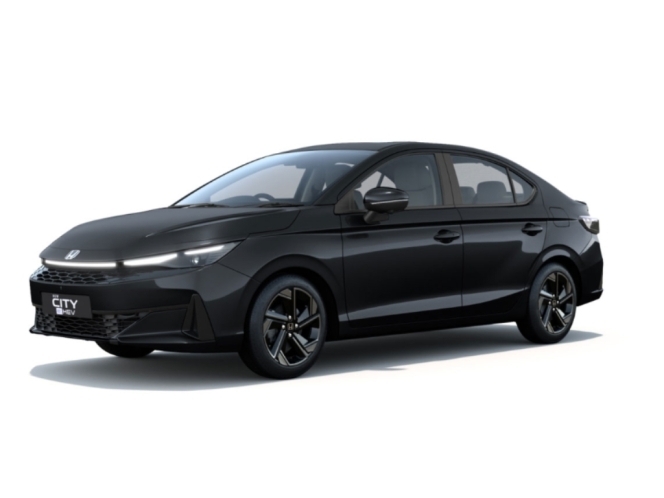
Honda Cars India (HCIL), one of the leading manufacturers of passenger vehicles in the country, has announced its wholesales for September 2026.
The company reported total sales of 6,955 units, down 16 percent YoY, as compared to 8,296 units sold for the same period last year.
In the domestic market, the company sold 4,465 units, down 19 percent YoY, as compared to 5,503 units sold a year ago. On the exports front, the company shipped 2,490 units, down 11 percent YoY, as compared to 2,793 units last year.
Kunal Behl, Vice-President, Marketing & Sales, Honda Cars India, said, We are pleased to see positive sales momentum for the Honda City and Honda Amaze during the month. We are also gearing up for the launch of new Elevate, which will further strengthen our SUV offering with a refreshed and enhanced package. With the festive season underway and an exciting product introduction ahead, we look forward to building stronger momentum in the coming months.”
Kia India Clocks Highest-Ever Monthly Sales Of 32,017 Units In September 2026
- By MT Bureau
- October 01, 2026
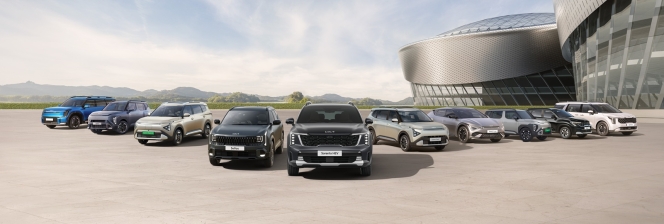
Kia India, one of the leading passenger vehicle manufacturers, has reported its best-ever monthly wholesale performance of 32,017 units in September 2026, representing a 41 percent increase compared to 22,700 units sold last year.
For Q3 of CY2026, the company recorded sales of 89,259 units, reflecting a 38.5 percent growth over 64,443 units for the same period last year.
In terms of YTD (January – September 2026) cumulative sales reached 253,008 units, marking a 22.5 percent increase from 206,582 units reported during the corresponding period in 2025.
Kia India attributed the robust performance to healthy demand across its portfolio incuding Seltos and Sonet models, alongside contributions from the Carens, Carens Clavis, Clavis EV, Syros EV and Sorento, which is offered in diesel and hybrid powertrain options. The company's powertrain options now span petrol, diesel, CNG, hybrid, and electric configurations across its product range.
Atul Sood, Senior Vice-President of Sales and Marketing, Kia India, said, "Our strong performance in September and across the third quarter reflects the continued trust of our customers and the strength of Kia’s evolving portfolio. The Seltos and Sonet continue to be key contributors to our growth, while the strong response to the Sorento and Syros EV reinforces our strategy of expanding into new segments and powertrain categories in line with evolving customer aspirations. As mobility needs become increasingly diverse, we are focused on providing meaningful choice across conventional, CNG, hybrid and electric powertrains, supported by ownership solutions that address real customer needs. We remain committed to building on this momentum through distinctive products, advanced technologies and differentiated experiences designed around the needs of Indian customers."
At present, Kia India operates a retail and service network comprising 915 touchpoints across 425 cities, alongside 137 certified pre-owned outlets across the country.
Toyota Kirloskar Motor Sells 25,027 PVs In September 2026
- By MT Bureau
- October 01, 2026
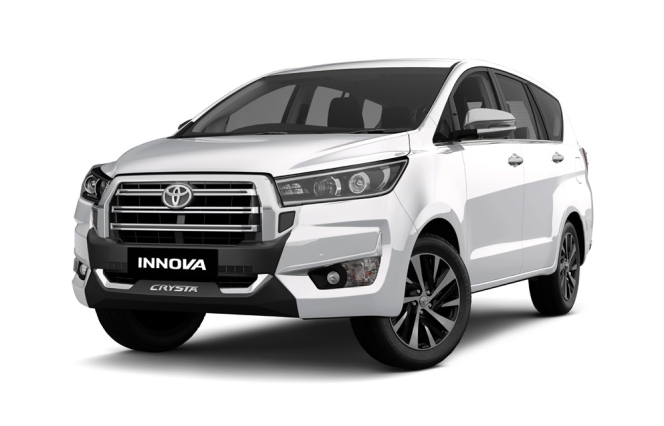
Toyota Kirloskar Motor (TKM), one of the leading passenger vehicle manufacturers, has reported its total wholesales of 28,218 units in September 2026, comprising 25,027 units sold in the domestic market and 3,191 units exported.
For the YTD period (January – September 2026), the automaker reported cumulative total sales of 294,914 units, representing an 8 percent increase compared to 272,824 units sold last year.
Domestic sales for the 9-month period rose 9 percent to 269,619 units, up from 247,081 units in the previous year, while exports reached 25,295 units, compared to 25,743 units a year ago.
Sabari Manohar, Executive Vice-President of Sales-Service-Used Car Business, Toyota Kirloskar Motor, said, "September witnessed continued customer interest across segments, supported by our focus on quality, durability and reliability. As we enter the festive season, we remain committed to strengthening customer engagement and working closely with our dealer partners to deliver enhanced mobility experiences and address evolving customer needs."

Comments (0)
ADD COMMENT